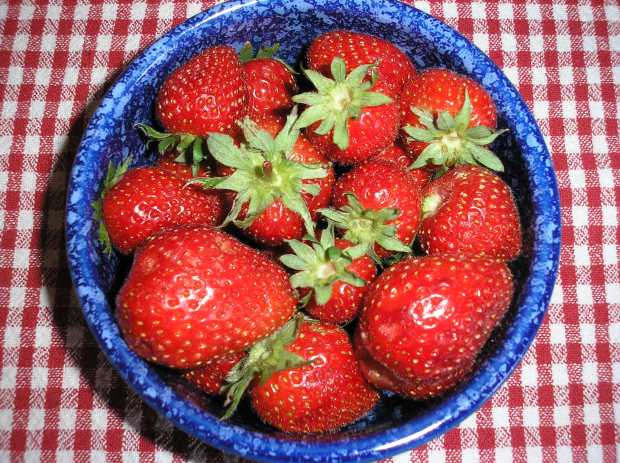
It’s strawberry season again, but this year seems to be a washout. Blame it on the rain and the lack of sunny days. The local berries are just coming in but they are so sour I’ve decided to wait a week hoping we’ll get some sunnier weather. The kitchen reno is still ongoing so I can’t bake a shortcake or make jam anyway.
For every one sweet one ripening in my little garden plot, there are two that make your mouth pucker. Maybe that’s why the birds are leaving them alone? And here I thought those plastic snakes I bought at the dollar store were working!
This was a tip from another blogger last summer, as plastic snakes are supposed to act as a deterrent to the birds. Walmart was out of snakes, so these are cheaper versions from Dollarama and the clerk told me they work so well they can’t keep them in stock. They look more like skinny worms to me – and neon pink and blue? Those birds must be color blind, but upon further research it appears birds have better visual acuity than humans and can see UV light and a wider range of colors. I suspect they must be waiting for sweeter fare too.
So I’ll leave you with a link to better days and last year’s blog, Strawberry Fields Forever,plus some Jane Austen.
The only positive thing about this cool rainy spring is that I haven’t had to water anything…not even once. Mother Nature has done it for me. In fact it’s rained so much this past month that most of the farmers haven’t even been able to get their crops planted, the latest season ever as many recall. It’s sad to drive through the countryside and see all those bare soggy fields. The crop insurance has been extended a few days, but things are looking desperate, and the forecast is more of the same. Let’s send out a few prayers for our farmers – because if they don’t plant, we don’t eat.
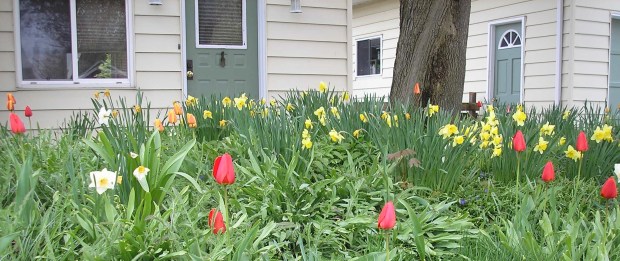
I’ve been preoccupied with the kitchen reno, but here’s a recap of the best of the spring flowers, even if I’ve been too busy and it’s been too rainy to enjoy them.
The hyacinths at the corner always make going to the mailbox a treat.
These little purple violets scattered in the grass are always so pretty, especially if you ignore the weeds!
The nicest thing about this picture, also taken near the mailbox, is the shade, which means the trees are finally leafing out. I love the play of the shadows on the lawn.
The squirrels dug up most of my tulips,
so I really appreciate it when someone else makes an effort. It’s always a treat to drive down this street and see this yard, and this one.
Last year I transplanted a few blue forget-me-nots from my neighbour – they were so pretty I hope they are invasive.
My only purchase earlier in the spring was a pink and yellow dahlia and a couple of bright pink begonias, my first for both types of plants. I didn’t know what to do with them, and read that the dahlia had to be dug up in the fall so I just stuck them in bigger pots. The dahlia has flourished, with many buds again, but the begonias got too water-logged.
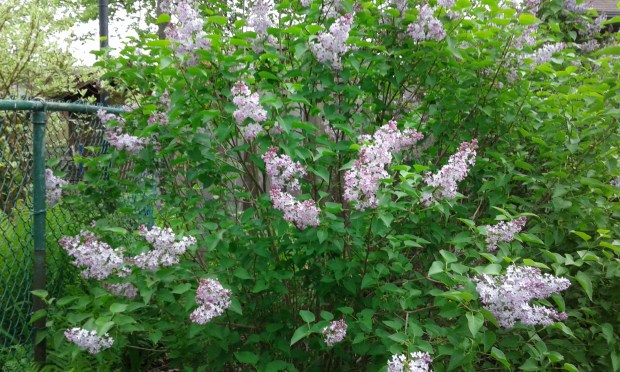
The lilacs finally bloomed, mine pale and anemic, so I enjoyed the neighbors dark purple ones which hang over my fence. The bloom-again lilac was a few weeks later, but I was disappointed in it’s smell. We’ll see if it lives up to it’s name.
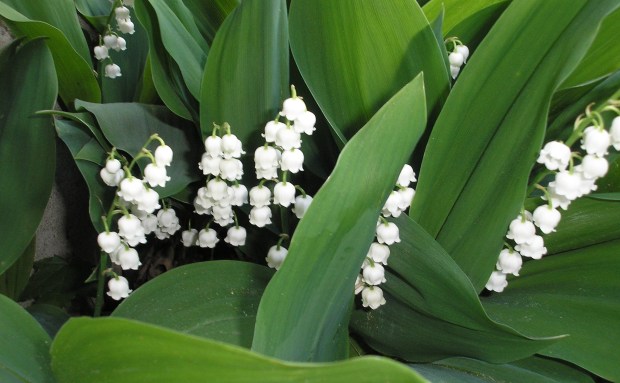
The lily of the valley was plentiful too, another invasive gift from a fellow gardener.
My 50 cent bargain iris from last years horticultural sale bloomed for the first time, all of them coming up purple, except for one ugly burgundy one I gave away as it didn’t fit the color scheme. The second year for this fuchsia clematis. My new one, planted last fall, is not out yet but as it is a Jackmanii, it may be later.
Sometimes I’m not sure if things will bloom the first year, but the half-price peonies planted last fall burst forth a pretty pink.
When I finally got to the nursery again, these were my selections. I’ve never had a dipladenia plant before (smaller than a Mandevilla), but it looks very tropical. And one can never have enough lavender.
I may pick up some half-price geranium pots if I can find any, but even the nursery plants are struggling this year. Many look so pathetic no one would want to take them home, which is just as well, as man does not live by flowers alone. I planted lettuce in early May and all the rain has made me the Lettuce Queen of the neighborhood. Let us be grateful for homegrown salads!
Our old white farmhouse was surrounded by lilac bushes, which were often out in time for Mother’s Day, an occasion we always celebrated on the farm with a big family meal which my mother prepared. Looking back, it seems strange we made her cook on Mother’s Day, but then my grandmother always came over, so she probably considered it her daughterly duty, and was happy having all her kids home, even if it did mean we ended up doing two hours of dishes by hand in the days before the dishwasher. Out would come the lace tablecloth and the good china, and the long farm table, dating from 1870, would be extended to its maximum length, with later another set up in the kitchen for the ever-growing collection of grandchildren. Of course, this was in the days before going out for brunch became popular, which we tried occasionally but which was often a disappointment, restaurants always being so busy that day, and the kids not being able to play outside, where the lawn and orchard would be sunny with dandelions.
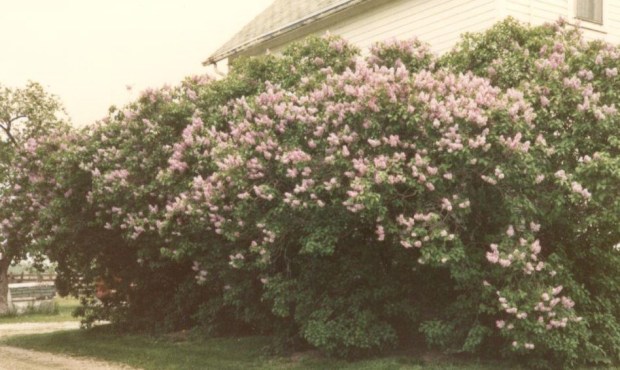
Those old farm lilacs were common in the countryside, with almost every farmhouse (which back then only came in two types, white clapboard or yellow brick), sporting a bush or two. But ours were special, as they surrounded the house on three sides. If it was a nice day with a south breeze and the windows open, the smell was heavenly. The fragrance would waft in through the kitchen and living room windows, and also the upstairs bedrooms, as the bushes were quite tall.
We also picked some to bring inside and put in vases, something I still do to this day. Even when I was older, I would always take a bouquet or two home, wrapped up in tinfoil, to put on the kitchen counter.
After my father passed away and my mother moved into town, my sister brought her two lilac bushes as a house warming present. They lasted about fifteen years and then had to be cut down. I planted two lilac bushes in the corner of my yard ten years ago, and they are now starting to look spindly. One bush smells like what I remember, the other does not. Of course, they are late this year, like everything else, so these are pictures from last year.
There are over 2000 varieties of lilacs, according to the International Lilac Society, in a wide range of colors, sizes and blooms. Common lilacs generally prefer cold winters, well drained soil and full sun. They are low maintenance and require little watering, once established – my kind of plant!
My neighbor has the darker purple kind, which does not smell nearly as nice, but then maybe I’m just being nostalgic.
All lilacs are lovely, (except those four foot Korean Dwarfs, my Miss Kim never bloomed once), but it is the old-fashioned kind I love the most. While the nursery sold me the variety known as “common lilac” they certainly don’t seem as hardy as those old farm lilacs, which must have been heirloom stock, as they were still going strong at eighty years plus. (Some varieties only last 10 to 15 years.) The “common lilac” has the largest and longest blooms and the most fragrant flowers and can grow up to twenty feet. Ours would be pruned back once in awhile when they got too tall, (only prune immediately after the spring bloom), but they were always leafy and full, and the branches made excellent spears for roasting hot dogs and marshmallows over a backyard bonfire.
I was told my grandmother planted them sometime in the 1920’s when she was newly married, after the house was raised, a basement put under it and a veranda added. She also planted a row of white spirea bushes beside them, so it formed a little alcove. I would sometimes take a book or magazine there and sit and read, sheltered from the wind, stopping once in awhile just to breathe in the scent. Here’s the view, looking out.
Someone needs to cut the grass!
After my mother moved, the house and the lilacs were bulldozed down to make room for more acreage – a sad fate after so many years of providing beauty. I wish I had thought to take a cutting or two, but I was busy with life and not much interested in gardening then.
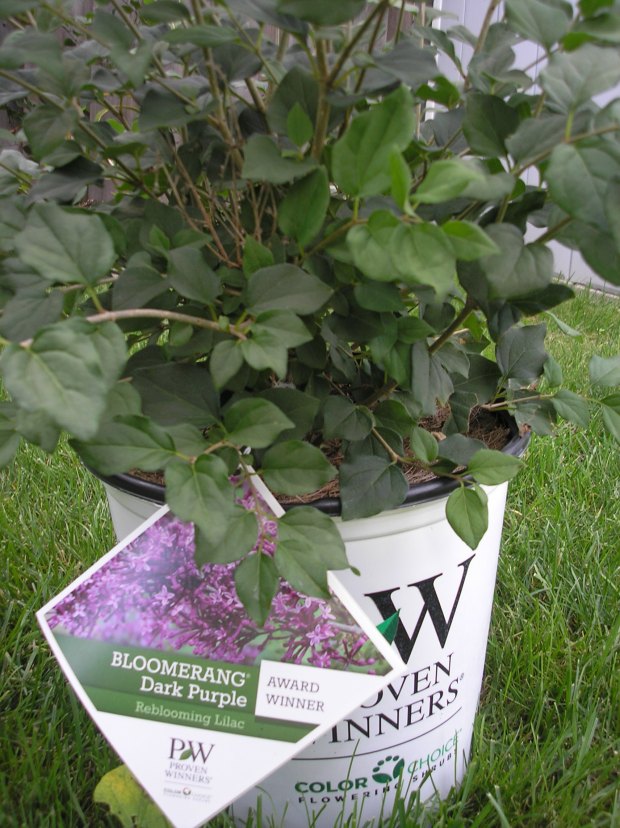
Last fall, I bought two Bloomerang Lilacs on sale, a variety new to me, but then I’m always behind on the latest gardening trends. (Here’s a link to more info.) They are similar to the popular Bloom Again Hydrangeas, and will rebloom in the summer and fall after a short rest. They will only grow to 5 feet, making them more like a shrub than a tree. Mine seem to have survived the winter nicely and even have buds on them. I like the idea of having lilacs for three seasons, as a week or two in May seems much too short.
This would make a nice Mother’s Day gift!
If you’re ever in northern Michigan in early June, check out the famous Mackinac Island Lilac Festival (link – added to bucket list). No cars are allowed on the island, but you can cross on the ferry and stay at the Grand Hotel (where Somewhere in Time was filmed) and tour via bike or horse drawn carriage – now that really is going back in time. Visiting this lilac paradise is a nice way to welcome summer after a cold and snowy winter. Here are a few pictures from Victoria Magazine, May 2000 issue.
Spring is late again this year. Having survived a particularly brutal winter, which started early and never let up, we’re all tired of the snow and the cold, and anxious for the first signs of spring. So, here’s my take on the Six on Saturday Garden post….
March 20 – The first official day of spring – saw my first robin, who was uncooperative for a photo-shoot, hopping away every time I got near. Unfortunately the zoom lens on my camera is broken so this is as close as I got.
March 22 – The tulip and daffodil tips are peeking through on the south side of the house and some of the rose bush stems are starting to turn green.
March 23 –Went out for a walk for the first time in weeks, the wind was cold but the sun was bright, and the neighbor’s snowdrops were out in full force.
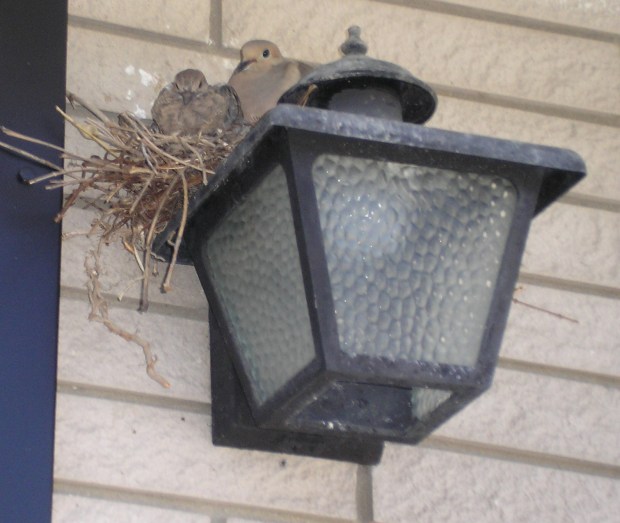
March 25 – The Angry Bird – I opened the front door to check the temperature this morning and saw the morning doves have returned. One was sitting on the front step, looking quite perturbed now that it has to find a new place to nest. They are life long lovers and creatures of habit, but as they didn’t build a nest last year I thought it was safe to install new light fixtures. I’m feeling guilty but my new lights are so much nicer than the old.
Mr. And Mrs. Lovebird
March 26 – So nice to see a blue sky again, especially against a budding maple tree.
March 27 – saw my first crocus while returning a book to the library. Their flower beds are always gorgeous because they have professional gardeners maintain them.
March 28 – first spring-like day, 15 C, and first milkshake from the Dairy Queen – chocolate of course. Drove home with the windows down.
March 29 – The ice is gone from the river and the sunlight is sparkling on the water again.
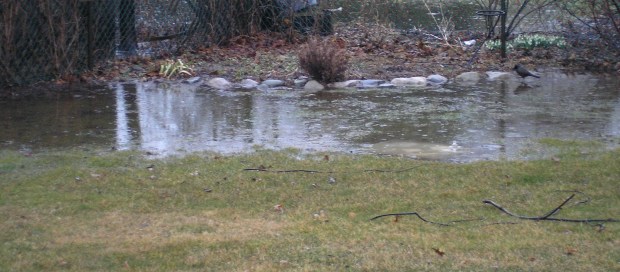
March 30 – our first all day spring rain flooded the back forty, but brought a tinge of green to the grass.
March 31 – brought a return to winter and a couple of inches of snow – the robin was not amused. The snow hung around for a more few days – is this some kind of April Fools joke?
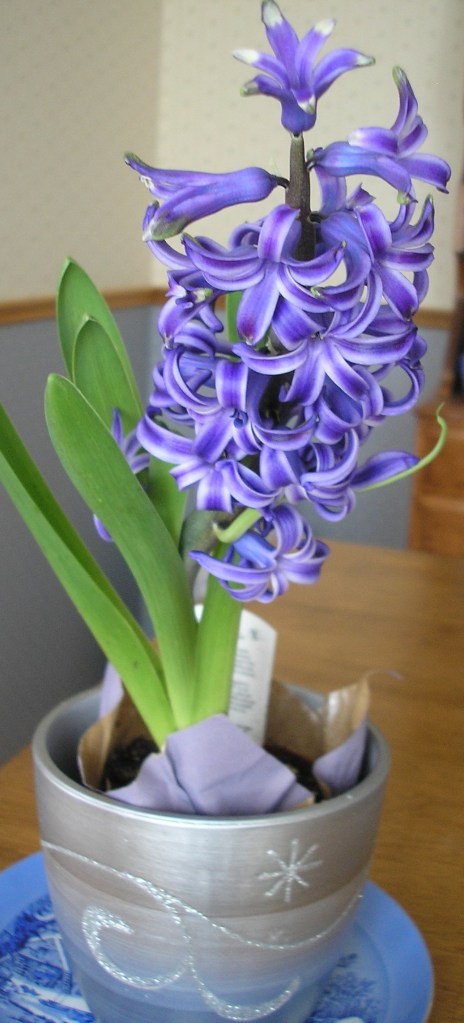
A pot of hyacinths can provide a small dose of beauty,
while we wait for this.
What wonderful sights await us in a few more weeks. Happy Spring!
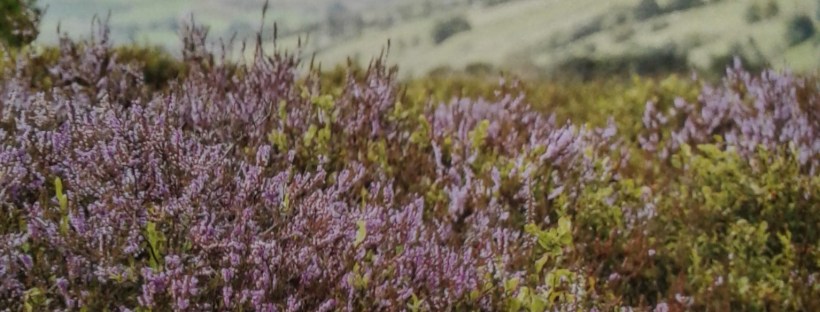
Heathcliff is dead……again. This is the third time I have tried to grow heather, but alas, it was not meant to be. I have resigned myself to the fact that you can not grow heather in North America, there is a reason it is only to be found in abundance on the windswept moors of the UK. Here is a photo of Heathcliff (the-Plant-formerly-known-as-Heather), from last June, all healthy and blooming and alive.
And here is a picture of him in September at his funeral.
I arranged a few red maple leaves around his skeletal remains, for a more poetic look, otherwise he might have been mistaken for a stringy birds nest which had fallen to the ground. I had planted him in the same kind of poor rocky soil I imagined on the moors, and basically neglected him for the rest of the summer. Heather likes full sun, (see care sheet), but the days were cloudy and melancholy and he took up drinking and drowned his roots in sorrow, (kind of like Branwell). I must console myself though, that while we were not meant to be, he died young at the end of the rainiest season ever. It was nothing personal, he just did not like our Canadian soil or climate.
While doing some postmortem research, I discovered too late that heather likes well-drained acidic soil, and mine is clay and clumpy, so once again I had been lured in by a pot of pretty flowers. I had thought they were more hardy souls (like lavender), who would grow anywhere. Apparently there are many different types, and this Better Homes and Gardens article says anyone can grow heather and heaths……well perhaps not the truly heartbroken gardener like myself who may never fully recover.
I have occasionally seen heather for sale in nurseries here in early spring, sometimes with pinkish flowers. One July I bought some half-dead half-price specimens from the bargain bin. I knew when I bought them they were probably beyond CPR, but they were only a dollar. I planted them one week and dug them up the next. My other futile attempt involved a specimen which the nursery clerk told me was the only heather they stocked. It lived one short season, spread out a bit, produced 2 or 3 purplish blooms, then died off never to be seen again. I knew it was not real heather because the foliage was too soft. A friend who used to visit Scotland regularly, brought me back a piece of heather once as a souvenir – lucky for him the plant police did not catch him as smuggling plants is generally against the law. I was surprised by how coarse it was. I had expected from the pictures that it would be softer to the touch.
The moors must be beautiful in the summer and early fall, with all that heather blooming and the sky a bright blue, very Wuthering Heightish.
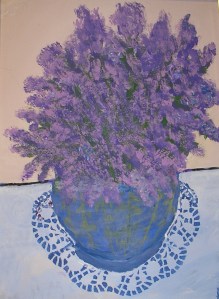
Before Heathcliff, my only exposure to heather was from the window of an tour bus in a downpour. I was in Ireland in September where it rained every day – so why did my poor heather not survive? The Irish heather (which was near a bog where they were cutting turf), was not nearly as stunning as the English heather in Downton Abby, the last episode of Season Five where they pack up the whole household and go grouse hunting at a castle on the moors and Mary and Edith meet their future husbands. (You see, heather does inspire romance). That was a beautifully filmed scene and inspired my mother to paint a picture called The Moors, which she included in her last art exhibit, (but then she has been known to paint shipwrecks from Poldark too).
The Moors
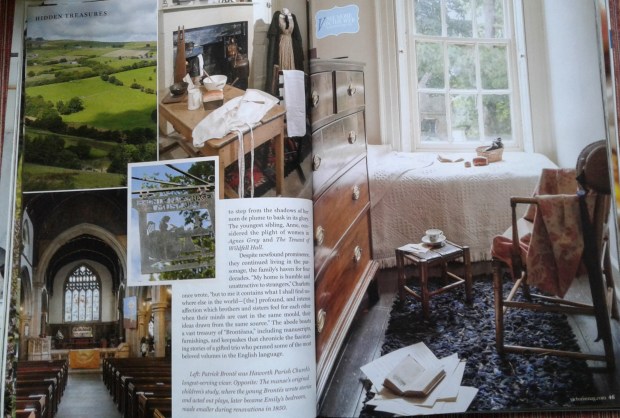
Victoria magazine is one of my favorite sources for inspiration, and in this past September issue they had a feature on Exploring the Bronte Legacy and the village of Haworth where they lived. (September is always the British issue and there was also a Susan Branch picnic party in the Lake District for any Beatrice Potter fans).
Here are some of the pages, including the famous heather.
We have Emily to thank for the popularity of heather, as we will forever associate it with her descriptions of the moorland in Wuthering Heights, as this quote attests, “I have fled my country and gone to the heather.” Although I have never been to England, I hope some day to put those words into action, as a literary tour is definitely on my bucket list.
No wonder the Bronte sisters wrote such wonderful books, having that lovely vista to gaze at during their daily constitutional on the moors. (Although no matter the scenery, I find that after a particularly fruitful writing session, a little walk can be beneficial for mulling things over).
Below, the steep cobblestoned streets of the small village of Haworth.
Here’s the dining room table where they wrote their works of art and paced and plotted how to find a publisher, and no doubt discussed what to do about Branwell.
The magazine article mentioned the 2017 PBS movie, To Walk Invisible, the story of the Bronte’s, which I watched and was somewhat disappointed in, although it is certainly worthwhile for any Bronte fan. In truth I found the movie as dark and dreary as the moors must be on an overcast winter’s day. There did not seem to be much joy in that household, but maybe I am confusing their rather bleak existence with that of the moors.
I thought Charlotte and Anne well-cast, Emily miscast, and Branwell just plain annoying. The movie ends with them walking on the moors after Branwell’s death, so it is not as depressing as if they had ended it later after they had all died. But then their story is not a happy one. I wonder if they would have traded their fame for more happiness and a longer life.
This year is the bicentenary of Emily’s birth in 1818. Here is Emily’s small and cozy room with a wonderful window view, as befitting a genius at work.
Emily remains the most puzzling one, so reclusive, yet the creator of such a stormy and passionate tale. No doubt she drew inspiration from her beloved moors but perhaps it’s very wildness was a reaction to their isolated existence. She had a lot of time to think and imagine. Her novel was considered dark and disturbing and somewhat shocking at the time, while Charlotte’s more conservative Jane Eyre was the more popular. In the movie there was a scene where Emily was talking about where she got the idea for Wuthering Heights, but she spoke so quickly I could not follow, and I have since tried to research it to no avail. Although googling did reveal plenty of theories about Asperger’s syndrome, as it seems popular these days to slap anyone the least bit anti-social with that label (think Doc Marten). There are plenty of books about Charlotte, (see postscript), but not so many about Emily or Anne (who I think of as the forgotten middle child). After seeing disheveled, weak, whiny immature Branwell it seems unlikely he could have been the muse for such a strong character as Heathcliff. (But would any sane woman want a Heathcliff in real life? All that anger and rage and jealousy just creates a whole lot of drama and angst, and wasn’t he a bit too possessive? Somewhat stalkerish? Better to marry someone more stable and level-headed if you want a happy home life, but I suppose if a wild passionate affair is your aim, then Heathcliff is your man).
The movie contained nothing new, if you have already read such bio’s before, including the usual dose of family dynamics. The ending was well done, three bright suns who were expected to dim their literary lights and walk invisible, in order to prevent embarrassment for the male heir of whom much had been expected, but little produced. As for the issue of addiction so rampant in our modern world, that too is an age old question. Their clergyman father could not decide whether to give in and supply his feckless son with drinking/opium money or just say no – the parent’s universal dilemma, to be an enabler or an enforcer of tough love? In the end, it didn’t matter anyway – TB won out. Tuberculosis caused by a drafty old parsonage and those windblown moors. Unfortunately, he took his two sisters with him.
I have to admit the part I found most disappointing in the movie was the cinematography of the moors. They must have filmed the outdoor scenes in winter for there was no heather to be seen, just a bleak and brown landscape and overcast skies. Perhaps they didn’t have a choice, or more likely they wanted that gloomy depressing atmosphere, for it all looked as dull and dreary as a November day.
Now that we are in late November, the weather has grown chilly and darkness descends early, and tonight the winds are howling and there is sleet against the windowpane. The perfect night to settle in by the fire with a cup of tea, and re-read Wuthering Heights, Emily Bronte’s masterpiece. Although, I noticed that her name is not even on the cover of my 1984 copy, one of those classic editions with the fancy gold edging that are hard to find anymore.
I must confess, it has been a long time since that high school book report, and I cannot recall much of the story, other than it was a sad tale with a layered multi-generational plot. But I do remember the descriptive imagery of those famous windswept moors, and the tragic ending of Cathy and Heathcliff, two star-crossed lovers who were never meant to be, but who remain immortalized forever between a marble and gilt cover.
Postscript: Most likely Charlotte, Anne or Emily never dreamt at the time that their books would still be bestsellers over 150 years later. I wonder how those classics would fit into the Best Seller Code, which I will be blogging about next week.
Postscript: A goodreads review of Charlotte Bronte: A Fiery Heart
This latest 2016 biography of Charlotte Bronte is well worth the read, even if I do wonder why Charlotte always gets all the attention. I enjoyed it so much, I bought a bargain bin copy. A good choice for fans, both old and new.
After the Harvest – An Update on the Potager plus what to do with a twelve pack of snakes.
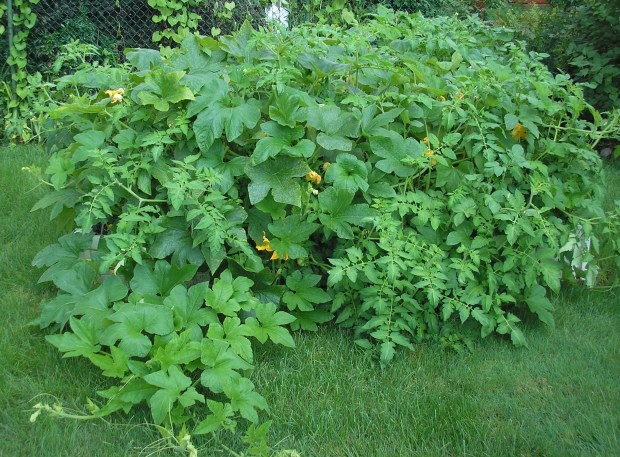
I had high hopes for The Potager back in June, but there may have been a reason my dad planted his garden in the corn field where it could sprawl among the rows of corn. Sprawl is the key word here. My potager was a testament to good soil, it was so prolific, but then it was a hot humid summer with lots of rain, ideal conditions for a rain forest.
Where are the monkeys?
It rained every weekend, and during the week, every few days in fact. This made the mosquitoes plentiful, and some new species of tiny black bug called no-see-ums appeared and left bites which itched for days. I had never seen a no-see-um before, but they left a lasting legacy of scratch marks. I gave up and refused to go out. Luckily, I did not have to water as Mother Nature did it for me, even as she left us bereft of any beach days.
The romaine lettuce was bountiful, and after the first crop, I replanted and it was bountiful too.
Three cucumbers sprouted from the small-garden plant, just the right amount for a Greek salad, with some tomatoes if only I could find them, and when I did find them, many had split from too much rain.
The tomatoes threatened to strangle everything so in early August I gave it a haircut. By mid-Sept it had grown back, requiring a regular trim every 4 to 6 weeks.
I untangled the sole squash, mistakenly uprooting it’s lifeline, and leaving the fruit to wither on the vine. Not deterred, it re-blossomed, producing a final harvest of five smallish orbs.
I was anxiously awaiting the arrival of the multi-colored carrots, and so were the bunnies. We were both disappointed.
While the tops were luxurious, the carrots were sparse, spindly and white, (and maybe useful for the Simply White Dinner). They say you reap what you sow, except I planted three seed potatoes, and got two.
In mid-October (no frost yet, leaves barely changing), I dug up the rest of the russet gems. Not bad for a first crop, but hardly enough to get me through the winter like my Irish ancestors.
Luckily the orange carrots were plentiful, if somewhat deformed from being crammed into too small a space. The bunnies were delighted, as God is my witness, they would never go hungry again. (Scarlet O’Hara – Gone with the Wind). Due to the intricate web of netting I set up, the birds didn’t get as many of the strawberries, but then neither did I – it was too much of a hassle to open and re-close all those wires to pick one or two berries. While reading about another bloggers garden adventures, she recommended rubber snakes be set among the strawberry plants and moved every few days in order to fool the birds. Thank god she told me Walmart sells them online, because I don’t know where you would buy a twelve pack of snakes, and also thank god, those birds aren’t too bright. I’ll keep that in mind for next year, or maybe I’ll just freeze some of the carrots. I also wish I had put spacing and gravel around my boxes like Empty Nest Adventures did, for easier access.
Next years orange snakes?
After the Harvest is a time to reflect on lessons learned….next year plant less, no matter how much you may anticipate the early specimens being carried off by nighttime woodland creatures.
Plant one of everything, one squash, one cucumber, if it’s something you don’t want to breed like rabbits or possibly two like Noah and the Ark, two tomatoes, two potatoes, but no zucchini – ever.
Or just buy more boxes……the New England Arbor charity sale is coming up…..
After the Harvest
PS. There is nothing so wonderful as a golden field of wheat being harvested, or so awful as After the Harvest when you would have to bale all that straw into small bales, with a baler which was forever breaking down, and then load them into the hayloft, a process which was hot and dusty and took hours. Now every time I pass a field with those really big bales that are scooped up by a front end loader, I wonder, why didn’t someone think of that sooner?
If you have ever dreamed of packing in city life and moving to the country then this book is for you. Canadian author, Brent Preston turned fantasy into reality in this account of starting an organic vegetable farm and ten years of trial and error and back breaking labor before finally achieving a profitable outcome.
A must read manual for city dwellers and lovers of the organic food movement about a family who chose to leave the rat race and follow their dream of running a profitable organic vegetable farm. Dust off those fantaseeds and learn the gritty reality of where your food comes from.
Although he might have started out with a simple plan in mind, by the end of the ten years he had mechanized his operations, hired agricultural co-op students for summer labor, perfected a delivery service and marketing campaign, and ended up specializing in just three crops, one of which was lettuce. One of the things he did initially was to participate in the local farmer’s market every Saturday morning, but after a few years of this he packed it in. If you think about it, never a weekend off for you or your kids, up at 4 am to load up the truck and then later in the day unloading the unsold produce. Plus, while he said while he enjoyed the social aspect with the regular customers and the other vendors, there just wasn’t enough profit in it to continue. Better to cater to the fancy restaurants who would pay premium for anything fresh and organic.
There is no doubt we are what we eat and organic food is in – food in it’s natural state. Ask a person who has been lucky enough to live to be over ninety and chances are they grew up on a farm. So farmers markets are booming because organic food is so popular, but are the farmers doing well? I grew up on a farm, 100 acres, so I know how hard it is to make a living on one and how much work is involved. We had a dairy farm with Holsteins when I was a child and my dad had a small herd, three milking machines and a cream contract. He got up at 4:30 am every day to milk the cows, then he would come in, shave and have breakfast (bacon and eggs and perked coffee), as we were getting up for school, by 7:30 he would have left for his other job, home at 4:30, early supper, then milk the cows again, and he would be in bed by ten or falling asleep while reading the paper. On the weekends there were all the other chores to do. Even back then you couldn’t quite make a living on a farm without a second job, and with a growing family, he finally switched to beef cattle instead and cash cropped corn, soybeans and wheat, and while that was a lot of work too, we were finally able to take a family vacation without being tied to the milking schedule. Now farming is big business, a thousand acres or bust. There was an article in the local paper recently about the International Plowing Match which listed a combine as worth $500,000, and a tractor with GPS the same. My dad’s first tractor in 1948 cost $1000 and had a side seat upon which we kids would ride – heaven forbid, no one would let kids do that now. My elderly grandfather who died in 1951, was against the new-fangled modern machinery, as they had to sell his beloved Clydesdale horses in order to buy it. The last tractor my dad bought came equipped with air conditioning and a few years after he died, they had CD players, now they are steering themselves. While farming may be mostly mechanized now, organic vegetable farming is still labor intensive, especially during the harvest. It’s not a job many people want to do, and often the farmers must hire seasonal workers from Mexico or Jamaica to help out.
September is the best time of year to visit a farmer’s market as it is bursting with the last of the summer produce and the early fall harvest. While the peaches and berries may be almost done, the plums, pears, squash, cucumbers, tomatoes, new potatoes and onions are coming in.
Our local market is open Wednesdays in the summer and Saturdays year round. Even in the winter, the inside of the old building is full of root vegetables and cheese and butcher shops, but in the nice weather the outside stalls see the most action. They really need more space, but it’s been in the same place for eighty plus years and you don’t mess with tradition. Located in an older residential part of town, there is one small parking lot and you have to drive round and round waiting for someone else to leave. With about 50 spaces for 200 people it’s kind of like musical chairs for grownups. Luckily, no one lingers long. While you can get a pour over coffee with freshly roasted beans, there is no cafe to sit in or cooked food available. We don’t see a lot of homeless people here but one day a woman with her cart piled high with all her worldly possessions asked me for some money, and with my hands full I shook my head no, but then after putting my produce in the car, I went to find her, and gave her ten dollars, which I suspected might go to drugs but who knows? A friend of mine keeps Tim Horton’s coffee shop gift cards to hand out for this reason, but there is something so very sad about begging in front of a place with so much plenty.
Even in the winter I will visit about once a month, because there is still cheese, and apples and oranges to buy, but I’ve often wondered why they open at 6 am. All the vendors are yawning by noon, or closing up early as they have been up since four loading their trucks. Wouldn’t 8-2 be more civilized hours? If they are supplying restaurants do they need to buy that early? If I don’t get there by 11:30 (or I’m still playing musical chairs), I may miss my favorite cheese stall or they might be out of Gouda.
The cheese wars can be fierce. There are two cheese vendors, right across from each other, and the Battle of The Gouda got so bad last year, they both decided not to post their prices. They will glare across the aisle if they think you have abandoned camp, but if they have run out, what is the alternative? My grandmother was Dutch, so I grew up on Gouda, the mild form, not the spicy seeded variety she bought from The European Shop.
Dutch Inheritance
The market cheese is better than at the grocery store and they will give you a sample if you are undecided. Even if you know you will like it, a sample will often tied you over if you got up early and missed breakfast. Buying cheese at the market is also much cheaper than in the grocery store so I usually stock up on aged cheddar as well as the Gouda. The one cheese vendor has recently retired and been bought out by the egg lady beside them, who I don’t think has gotten the hang of the weigh scale yet as she is very generous with her pounds, or kgs. I don’t buy eggs from her though as I can’t stomach those brown eggs with the bright yellow yolks. It reminds me of the eggs growing up on the farm, but I know free range chickens are all the rage and I am sure they are full of omega-3’s.
I like to look at the flowers, the glads are out now, but I seldom buy as I have lots of flowers at home.
I have my own semi-successful potager, so I don’t feel the need to buy tomatoes, cucumbers or lettuce, but one whiff of the dill brings back memories of my mother canning dill pickles. You can get a free bunch of dill with every large purchase.
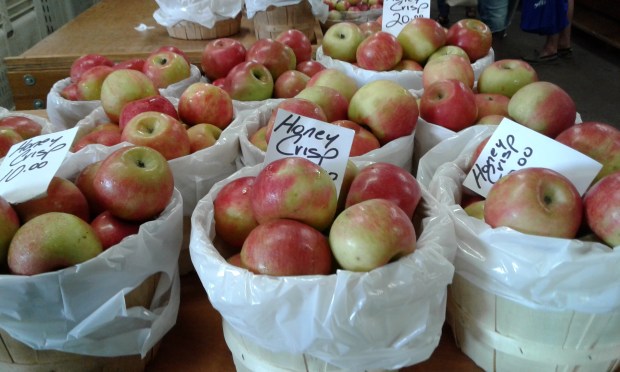
The early apples are starting to come in, which will soon mean spies and pies. I can smell the cinnamon now.
My favorite time of year is when the summer fruits are available, the strawberries and peaches. You can get a bushel of overripe fruit for ten dollars and make a whole batch of jam for what you might pay for two jars. There is a jam vendor also, for when you run out, who also sells homemade fruit pies. So definitely there is a cost savings, and the food is so much fresher and better tasting, not to mention not loaded with tons of preservatives and artificial ingredients.
Not everything is better at the market though. Sadly, it is home to the world’s worst bakery which sells the most tasteless bread ever baked, not to mention tarts with uncooked dough and a scant quarter inch of fruit filling. The next time I walk pass, the owner asks if I want something so I venture a tactful complaint – I figure if no one tells him he can’t fix it. He tells me he hired a new baker so I bought butter tarts this time. Same thing. I gave up. There must be an art to making play-doh like that? Butter tarts are a national institution in Canada but I have a fine recipe inherited from my mother. We have much better bakeries in town but I suppose once a vendor has tenure in the building, it’s for life, and so many people don’t know what good pastry tastes like. But the bread – there’s simply no excuse. Bread is the staff of life, but so is good nutritious food. If you ate today, thank a farmer!
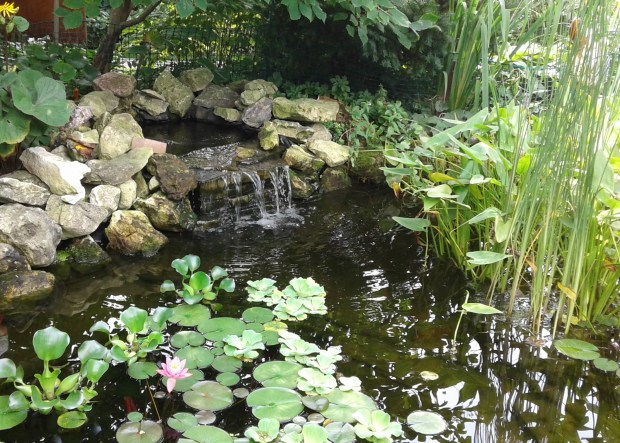
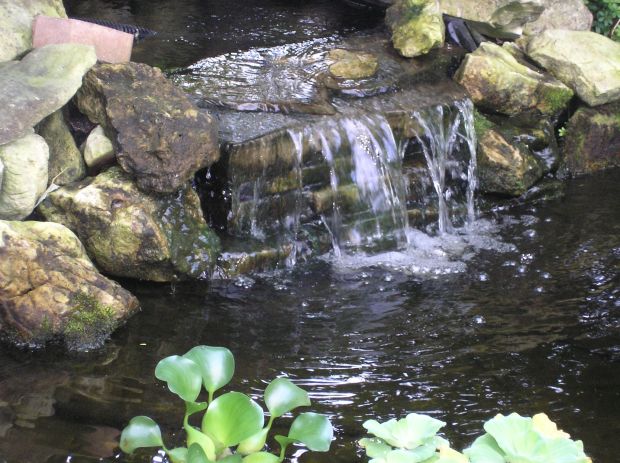
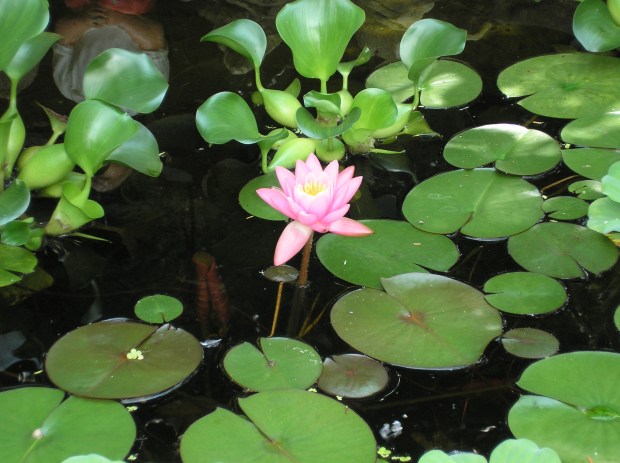
While trying to take a picture of a water lily in my neighbors fish pond I was struck by how lovely the music of the waterfall was.
There’s something about the tinkling of water in the background that is so relaxing, be it a small backyard waterfall or fountain, or one in a local park or in a big city like Rome.
The Trevi Fountain in Rome is one of the most famous fountains in the world. They say if you throw a coin in the Trevi that your return visit to Rome is guaranteed. Back in the last century during the Audrey Hepburn/Roman Holiday craze there was a movie called Three Coins in the Fountain, a 1950’s chick flick, about this same legend. I watched it recently (inter-library loan having managed to locate it in some obscure archives, thus saving me the $60 advertised on Amazon), and while as a movie it was rather dated, the scenery and especially the fountains were…….bellisimo. (Coins are meant to be thrown using the right hand over the left shoulder. An estimated 3,000 euros are thrown into the fountain each day. The money has been used to subsidize a supermarket for Rome’s needy; however, there are regular attempts to steal coins from the fountain, even though it is illegal to do so. Wikepedia)
If you are a Frank Sinatra fan like me, the best thing by far about the movie, other than the stylish clothes of the era, was the song of the same name.
While replying to a comment back in August, I stumbled upon a travel blog about Rome, with lots of gorgeous photos. So if you wish more information check out this blog……there’s no point in me recapping the whole history of the Trevi fountain when there is a very excellent blogger (Musings of a Whimsical Soul) who already has.
There are two fountains near where I live, one in a local park where I should be walking every day for exercise but don’t. There is often a cold wind off the river in the winter and in the summer it is too hot, but I have no excuse for spring or fall. Still, is is lovely to look at while driving by.
The other one is a larger more expensive fountain downtown. Someone with a lot of money and no heirs (or spending their inheritance), bequeathed $250,000 to the city for a waterfront legacy. Although officially named after it’s benefactor, it is commonly known as the Fish Fountain, because of the fish on the sculpture, thus destroying any hope he might have had for lasting fame. It looks nicer on a clear blue sky day, not foggy like here. Although still warm, we have had many cloudy, rainy days in September and a whole week of the same forecast ahead.
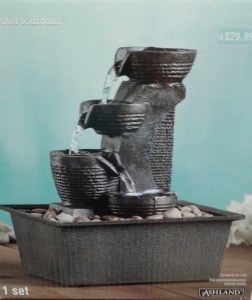
For those of us with less money, the craft store, Michael’s has their fountains on end of season clearance now.
Not quite the Trevi…..
A small indoor fountain can provide some tranquility over the winter as well as add moisture to the dry air.
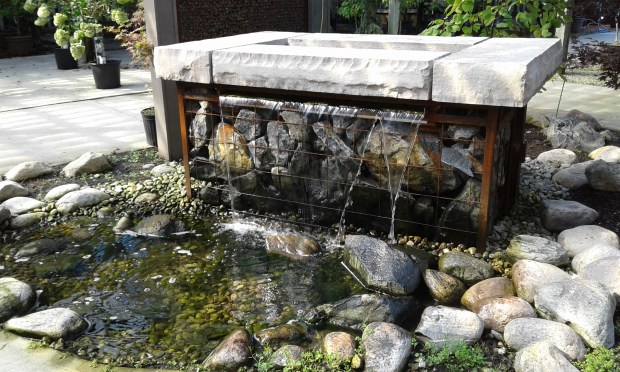
The local garden center was all sold out of outdoor fountains, although they assured me that one of their landscape architects could design me something like this.
No thanks, it looks like a cross between a fake fireplace and a sacrificial alter/crypt. Still, something smaller for next summer would be nice – gardeners like to plan ahead. In the meantime, I will throw a coin in one of the fountains, and make a wish that the warm weather would never end.
Arrivederci Summer! I know someday you will return…
Please join me while we take a last peek at summer and enjoy the first signs of fall….no pumpkin spice or mums involved!
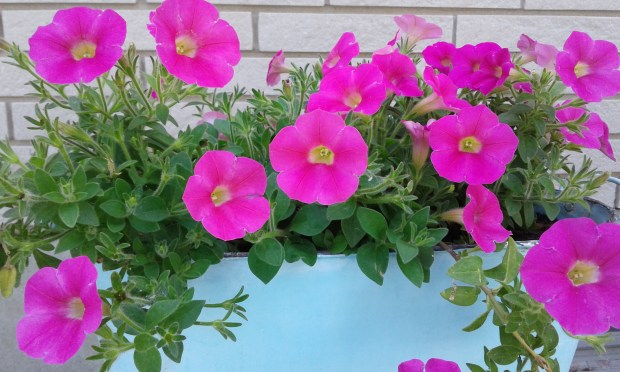
Let’s say goodbye to the flowers first.The petunias fared well with all thatrain.
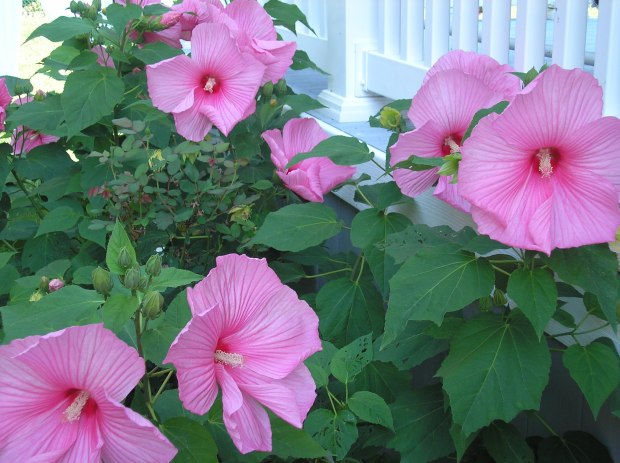
The dinner plate hibiscus are always late to the party, but they are like Beyonce, they make such a statement when they finally arrive that nobody minds.
The Rose of Sharon was so full of flowers it bowed down to Mother Nature.
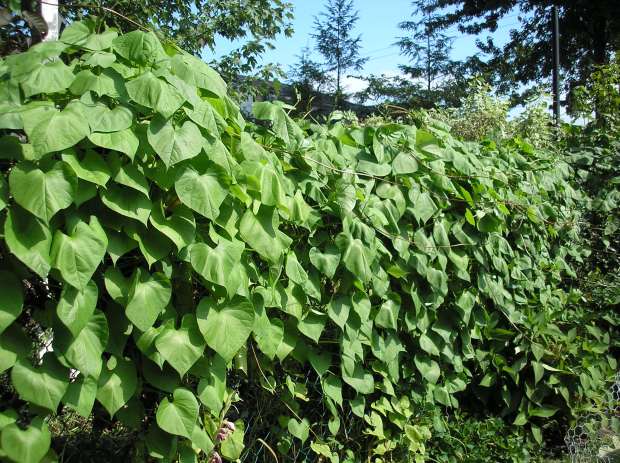
But the morning glories were not so glorious, lots of foliage draped over the back fence but no buds in sight.
They were very late last year so I still have hope, but here’s a link to last years (unpublished blog), A Glorious September Morning, plus a bee having his last drink of the summer.
The nectar of the gods
My mother always grew glads and zinnias in the farm garden, but this year my glads were a disaster both in color and form. My vision of them lining the back fence like little pink soldiers faded into the sporadic appearance of a spike of pale lavender or orange. Lavender is okay, and peach I could handle, but I dislike orange, and pale orange is even worse. Is it too much to expect the color on the box is the color you get?
glads
OLYMPUS DIGITAL CAMERA
Next year I’ll just buy some at the farmer’s market.
I have never had any luck growing zinnias but my neighbors were prolific,
Zinnias
and the water lilies in their pond finally bloomed.
The sunflowers are drooping but are decorative enough for a vase.
Sunflowers in a Vase
The lavender was late as I replanted it all in the spring, but it still bloomed if not extravagantly.
The hot humid rainy summer produced a rain forest jungle of a vegetable garden which desperately needs sorting out. More on the potager in another blog, after the harvest.
Where are the monkeys?
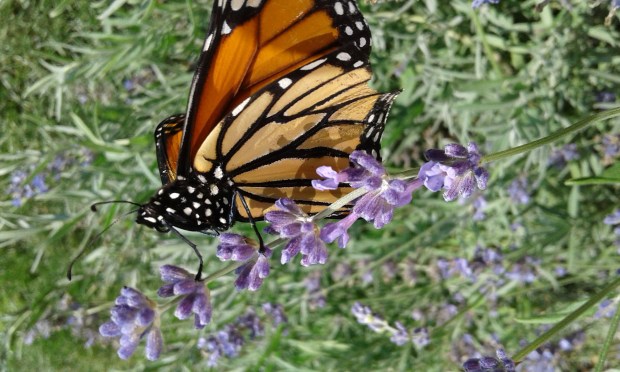
The monarchs have all flown south, except this little guy with an injured leg/wing who I rescued from a parking lot. He was able to crawl a bit so I brought him home to lie among the lavender.
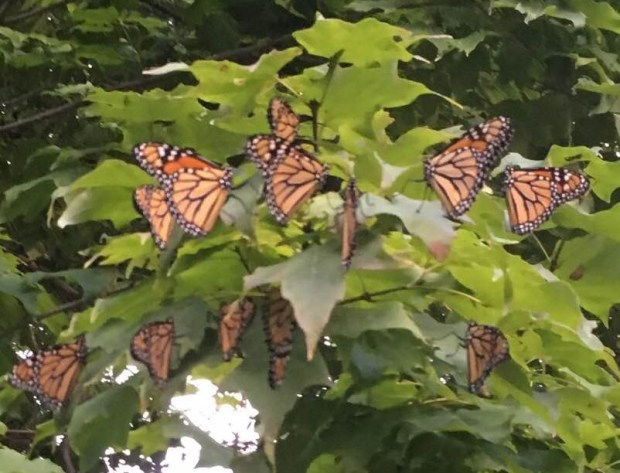
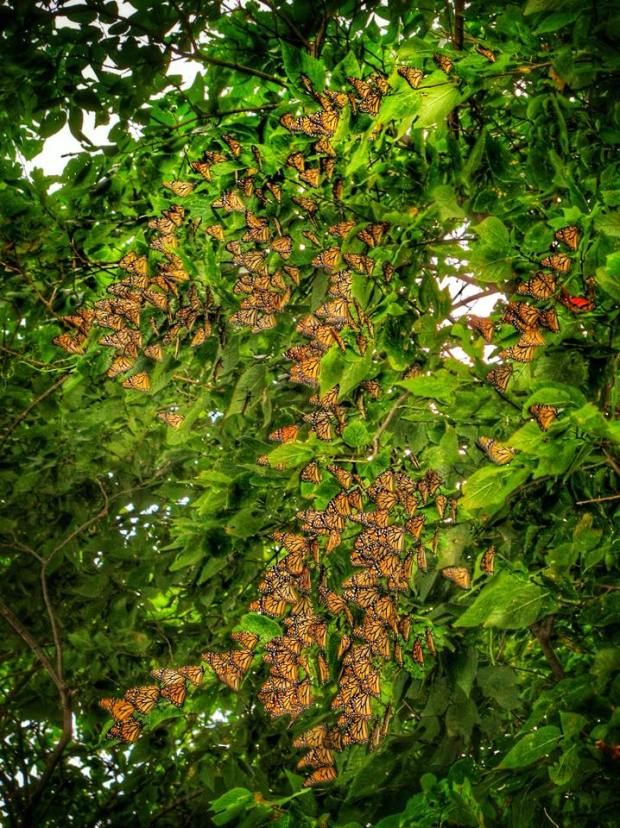
This year I have seen more monarchs than I have in years. After the township sprayed all the ditches, they almost became extinct, but now that gardeners are planting milkweed again, they are slowly making a comeback. They tend to congregate in Point Pelee Park in southern Ontario on their annual migration route, before crossing Lake Erie to the US and eventually Mexico. Tens of thousands cluster to rest and wait for the right wind conditions to cross the 40 km stretch of lake – the park posts the daily monarch counts on it’s social media pages. One picture is of a friends backyard near the lake, and one is a weather-watcher picture of Point Pelee. I wonder how such a small creature can make such a long journey? For more information on monarchs, check out garden blogger Invitation to the Garden‘s wonderful post on The King of Butterflies. She also has posts about the different kinds of milkweed you can plant to attract butterflies.
just dropping in to say goodbye
Rendevous at Point Pelee Park
Our last look at the beach, and my favorite photo of this summer.
Beach Day
Our first look at fall, the maple leaves they are a changing….
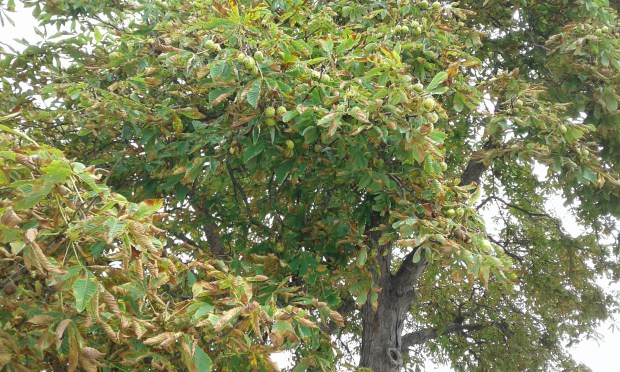
The chestnuts are starting to fall from the trees near the library. Chestnuts always bring back memories of gathering them on my grandmother’s farm at Thanksgiving. Last year one of the librarians made the nicest wreath from chestnuts…..nothing I would attempt as I’m sure it involved lots of glue.
The crab-apples are ripening and getting ready to drop and annoy all the grass cutters.
The first of the apples are being harvested. We stopped at an orchard last week and they had Galas and Mac’s just picked that morning, a bumper crop.
The scarecrow festival has started with a large party in the town square.
The crunch of dry leaves underfoot and the smell of wood smoke reminds us summer is winding down. The days are growing shorter, it’s getting dark by 7:30, time to go inside, light the candles and welcome fall. And if you are in the mood to feather your nest check out last years (unpublished) Autumn Decor blog for some cozy fall ideas.
Fall Flowers
There will be a harvest moon on Sept 24, so here’s some music for a fall night. This song is about as jazzy as I get but it has great lyrics and it always reminds me of my student days and walking home through a park after pub crawling….not sure anyone would do that now in downtown Toronto, they’d probably be mugged or shot.
“Well, it’s a marvelous night for a moondance
With the stars up above in your eyes
A fantabulous night to make romance
‘Neath the cover of October skies
And all the leaves on the trees are falling…”
It must be a bad year for garden tours as I have not seen anything advertised and July is almost over. We had a late spring, then it got very hot very suddenly. We had too many days of over 40 C and very little rain and were fast approaching the crispy grass dried out part of summer where everyone but the most die-hard enthusiasts has given up, when the skies opened to a whole week of torrential downpours. Now everything is green again but soggy. Mother Nature is being temperamental this year, but at least we can go to the beach guilt free.
It’s nice to go on garden tours to get inspiration and new ideas, plus it gives you a good excuse to wear a stylish hat, perhaps something with a broad brim and a navy grosgrain ribbon? (I’m always in search of the perfect hat and sometimes the hats are more fun to look at than the flowers). Two years ago, while on a garden tour I snapped a picture of this shady oasis of calm.
While purple and green are not colors that I would ever have thought of for a garden bench, the combination was eye-catching, and I believe the homeowner was ahead of the trend, or maybe I was two years behind as usual. It wasn’t something I thought would work in my predominately pink garden, but I did steal their idea for the birdcage with the ivy flowing from it. (Check Michael’s end of summer sale for birdcage bargains). My ivy did not fare as well being exposed to too much sun, so this year I tried wave petunias which also did not do well either in the small space. Maybe next year a fake ivy plant from the thrift store? Would anyone notice?
I noticed the purple and green theme back in the spring when the nurseries started carrying colored pots. Purple looks particularly striking with pots of herbs,
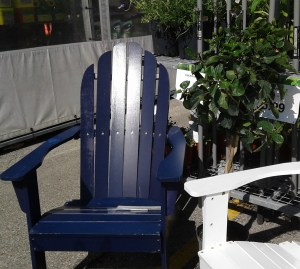
and since then I have seen deep purple Adirondack chairs as well.
So onto my own little garden space. I will spare you the bedraggled bits and concentrate on the things which looked lovely in June, the most popular time for garden tours.
It was not a great year for the Knock-out roses as I pruned them the first of April and then we had two more weeks of winter, so lots of buds but not as much foliage and many dead branches. For those unfamiliar, Knock-Out roses bloom all summer and are essentially maintenance free.
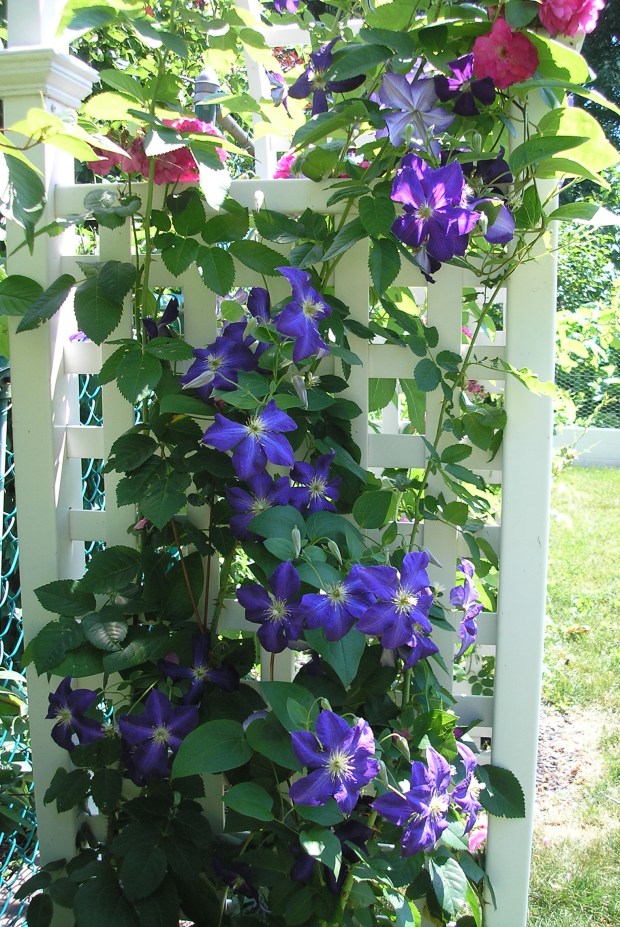
I have lots of pink roses in my garden and purple can be a great accent color for pink. It can be a dark shade, as in these Jackmanii clematis vines next to the John Cabot climbing roses,
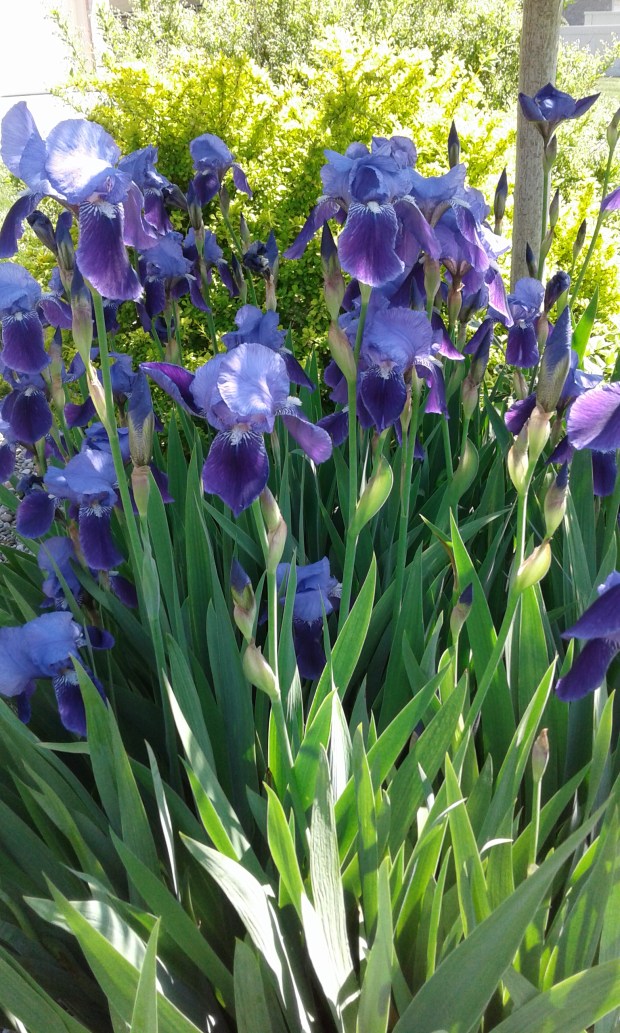
orthepurple Salvia, next to the pink Knock-Outs. It can be a mixture of both dark and lighter shades as in this Purple Iris belonging to a neighbor. I bought two clumps of this at the horticultural plant sale in May anticipating next spring. Or it can be a pale lavender shade as in this Russian Sage, and Rose of Sharon. The Russian sage has been in for five years now and is thriving at over three feet tall. It is drought resistant. The Rose of Sharon, eight years old and covered with blooms every year, was another wise choice.
Then there are the mauve hydrangeas who can’t make up their mind if they are pink or blue, (wrong with the aluminum sulfate again).
And of course we can’t forget the lilacs, the delight of every May.
The majority of my lavender plants did not survive the winter so I had to replant, leaving me with a few spiky survivors. This two year old French lavender plant in the back corner although not very full compared to my older English ones, blends in well with the pink wildflowers. Then there were the mistakes. Not every shade of purple is attractive. These foxglove seedlings from the farmer’s market came up a fuchsia color I did not care for at all as I was expecting a rosy pink.
And the Pink Champagne clematis I planted last year bloomed the same bright shade, lovely in it’s own way but clashing with the bubblegum pink of the rose bush beside it. It’s unfortunate these two fuchsia friends could not be together but one is in the side yard and one at the back. Some days I swear I will never buy anything again unless it is in flower and able to speak the truth.
This year I planted multi-colored morning glories in front of this old recycled trellis…..twice. They came up and then seemed to disappear. I suspect the rabbits who lounge in my backyard in the evenings have been munching them for desert. (They were upset because they couldn’t get at all those glorious carrots in the potager. They have now moved on to sampling the petunias). I was pleasantly surprised to see how much purple I actually have in my garden, but as every gardener knows there is always room for more and that neglected corner was telling me to buy a purple clematis to go with the lime green cart, and to think it all started with a garden tour…..
What great ideas have you discovered at a garden tour?



 I love the play of the shadows on the lawn.

 and this one.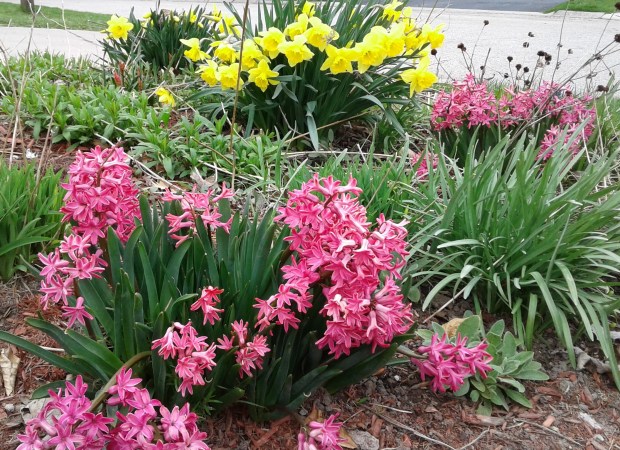

 The dahlia has flourished, with many buds again, but the begonias got too water-logged.


 The second year for this fuchsia clematis. My new one, planted last fall, is not out yet but as it is a Jackmanii, it may be later.

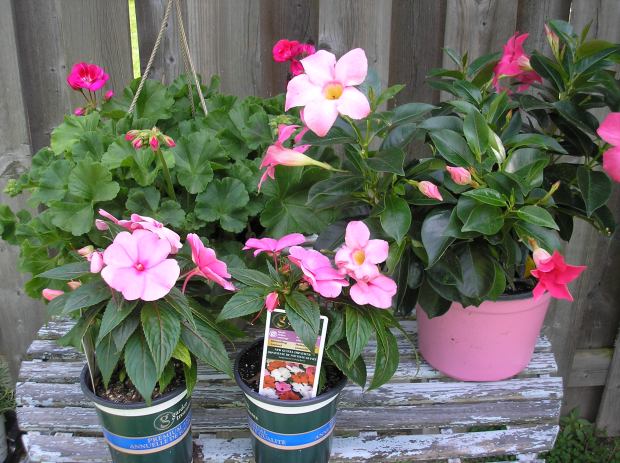 And one can never have enough lavender.





 I would sometimes take a book or magazine there and sit and read, sheltered from the wind, stopping once in awhile just to breathe in the scent. Here’s the view, looking out.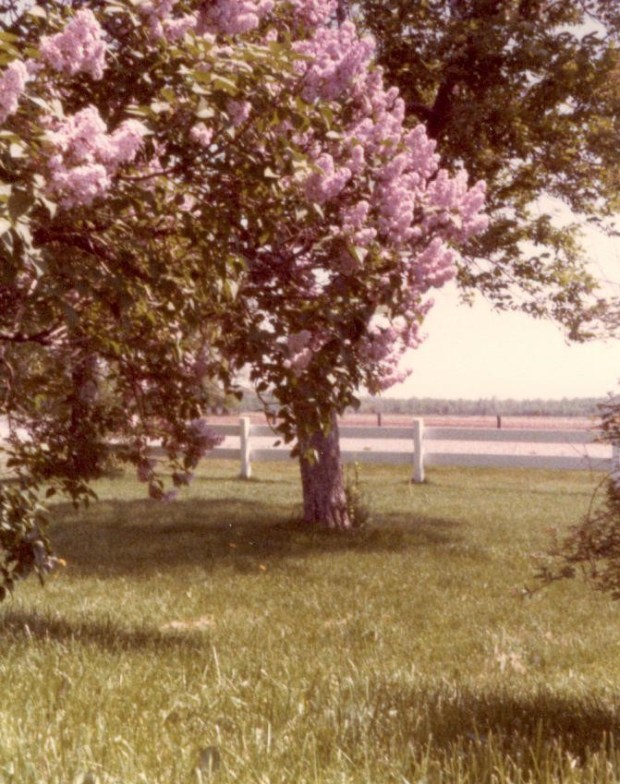








 And here is a picture of him in September at his funeral.








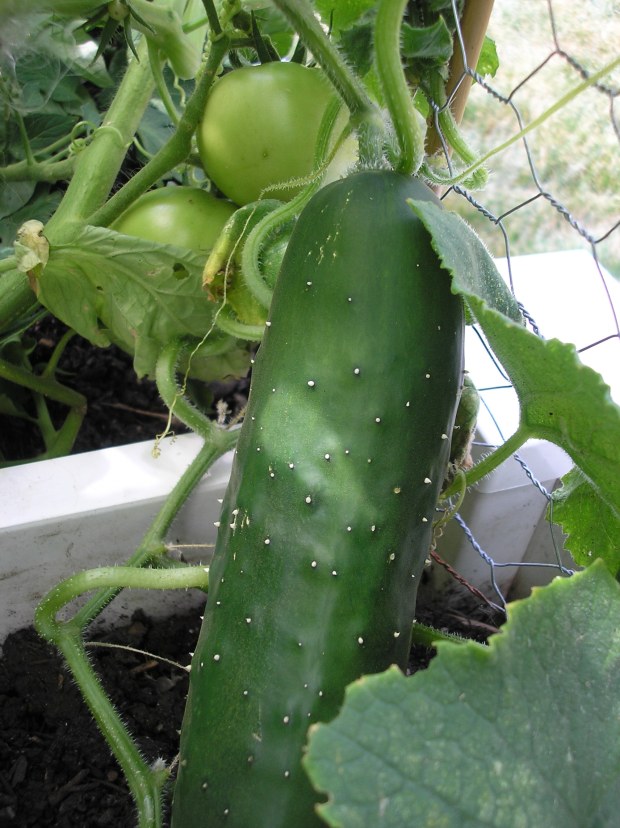


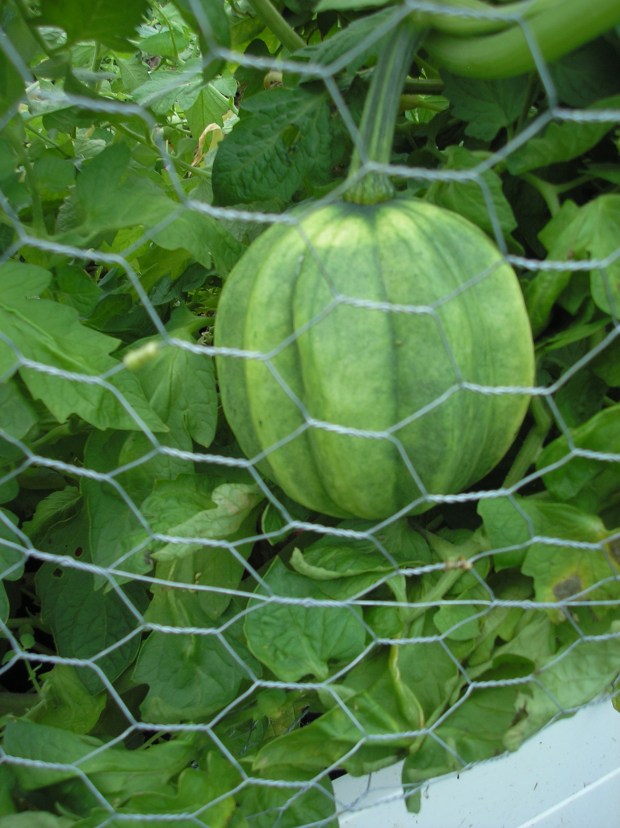


 Due to the intricate web of netting I set up, the birds didn’t get as many of the strawberries, but then neither did I – it was too much of a hassle to open and re-close all those wires to pick one or two berries. While reading about another bloggers

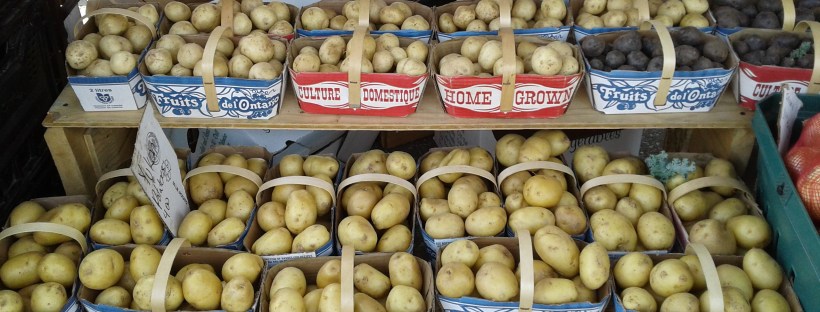

 The last tractor my dad bought came equipped with air conditioning and a few years after he died, they had CD players, now they are steering themselves. While farming may be mostly mechanized now, organic vegetable farming is still labor intensive, especially during the harvest. It’s not a job many people want to do, and often the farmers must hire seasonal workers from Mexico or Jamaica to help out.

















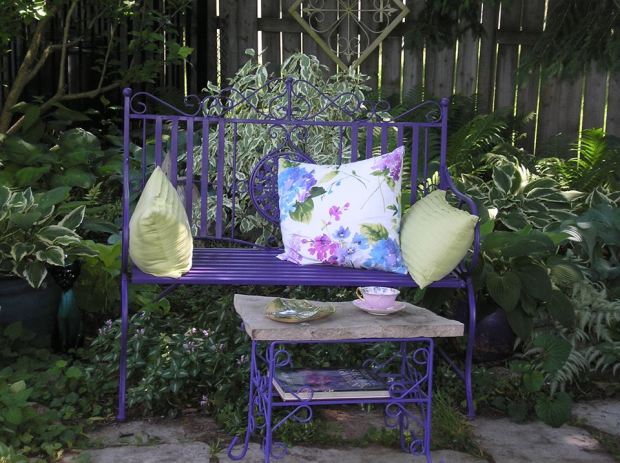 While purple and green are not colors that I would ever have thought of for a garden bench, the combination was eye-catching, and I believe the homeowner was ahead of the trend, or maybe I was two years behind as usual. It wasn’t something I thought would work in my predominately pink garden, but I did steal their idea for the birdcage with the ivy flowing from it.
  (Check Michael’s end of summer sale for birdcage bargains). My ivy did not fare as well being exposed to too much sun, so this year I tried wave petunias which also did not do well either in the small space. Maybe next year a fake ivy plant from the thrift store? Would anyone notice?



 It can be a mixture of both dark and lighter shades as in this Purple Iris belonging to a neighbor. I bought two clumps of this at the horticultural plant sale in May anticipating next spring.
  Or it can be a pale lavender shade as in this Russian Sage,
  and Rose of Sharon.
 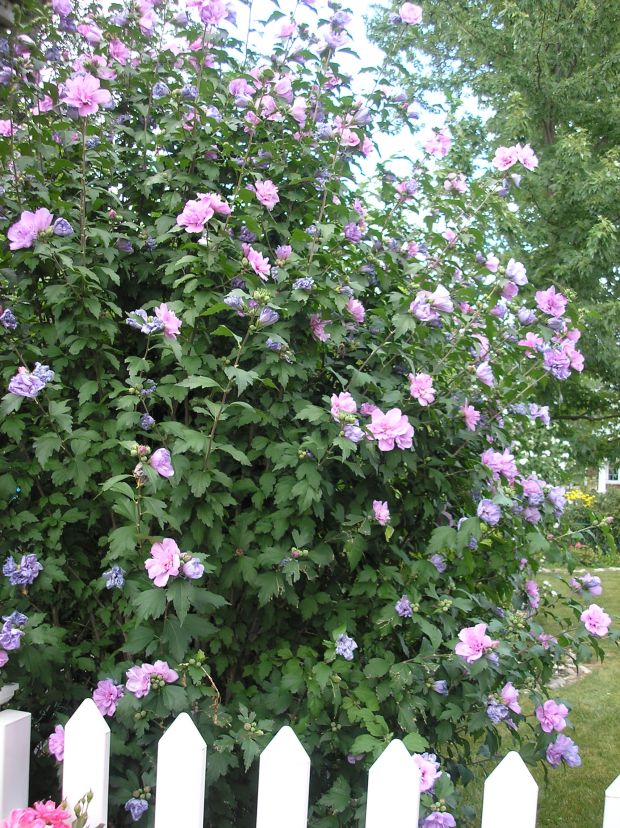 The Russian sage has been in for five years now and is thriving at over three feet tall. It is drought resistant. The Rose of Sharon, eight years old and covered with blooms every year, was another wise choice.


 Then there were the mistakes. Not every shade of purple is attractive. These foxglove seedlings from the farmer’s market came up a fuchsia color I did not care for at all as I was expecting a rosy pink.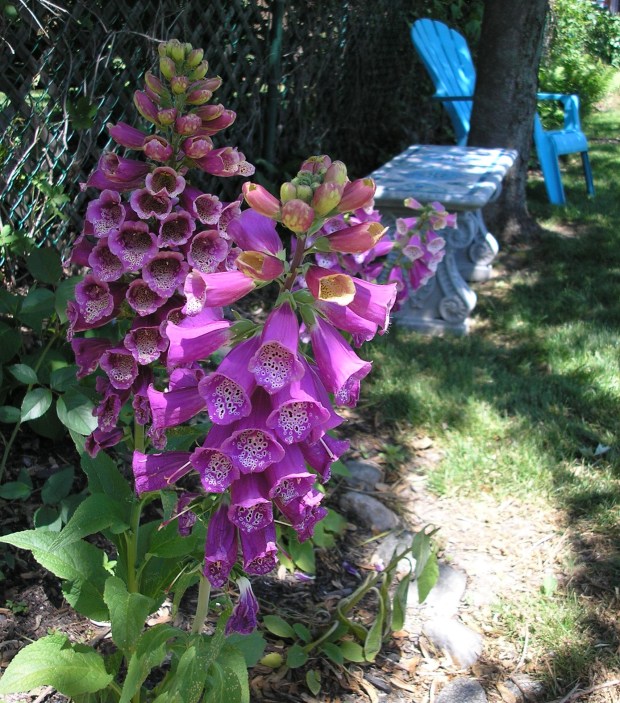
 lovely in it’s own way but clashing with the bubblegum pink of the rose bush beside it. It’s unfortunate these two fuchsia friends could not be together but one is in the side yard and one at the back. Some days I swear I will never buy anything again unless it is in flower and able to speak the truth.
  I suspect the rabbits who lounge in my backyard in the evenings have been munching them for desert. (They were upset because they couldn’t get at all those glorious carrots in
  I was pleasantly surprised to see how much purple I actually have in my garden, but as every gardener knows there is always room for more and that neglected corner was telling me to buy a purple clematis to go with the lime green cart, and to think it all started with a garden tour…..
