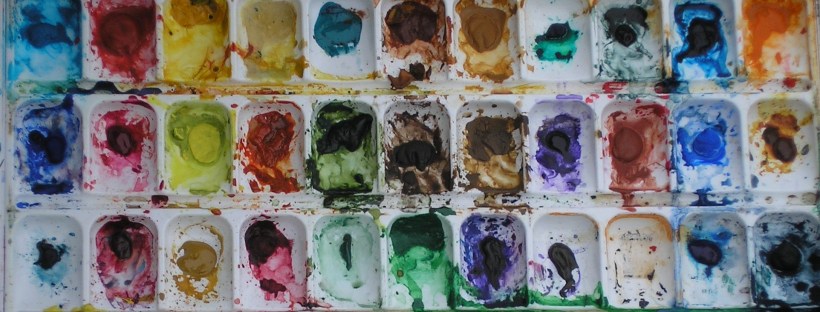
Last Wednesday I joined a group of local artists for a plein air painting session. They meet once a week during the summer, always at a different location, (garden, park or water view), paint from 9:30 until noon, then break for lunch and social hour – and show and tell if you wish to participate. I did not, as my mother is the artist in the family. I was only there as the driver and unofficial brownie-baker. I never took art in high school, can’t draw a straight line and have no desire to learn. The few times I have attempted to paint I sit there with a clenched jaw, frustrated that the end result does not in any way resemble the vision in my head. My mother on the other hand, finds it pure bliss, and paints almost every day, although she has no formal training. Still, plein air painting looks like fun, if you enjoy dabbling with a brush.
Plein air is the act of painting outdoors. Artists have always worked outdoors, but in the mid-19th century, the en plein air approach became more popular as painting in natural light became important to groups such as the Barbizon school, Hudson River School, and Impressionists. In Canada, the Group of Seven and Tom Thomson are examples of en plein air artists. (Wikipedia source)
The invention of a portable box easel which held paint and palette, as well as the availability of paint in tubes, made this outdoor activity much more convenient. Previously oil paint was made from pigment powders mixed with linseed oil. As there was no photography to record a scene, if you wanted to paint a landscape you either conjured up the image in your head, or went straight to the source, be it harbor, garden, or field of wheat.

Impression, Sunrise – Monet
For the Impressionists, like Monet and Renoir, it was all about the Light. How the play of light affects and influences a painting was important to them, especially if you were lolling about in the south of France where the light is reported to be particularly inspiring. Imagine a sketching tour there!
Monet painted his famous Haystack series (25 paintings) after visiting a wheat field near his home at all hours, seasons and weather conditions, in order to capture the effect of different variations of light.

Haystacks Series – End of Summer – Monet
Below is my favorite Renoir painting – a testament to natural light, shade and color – plus it looks like a fun outing.

The Luncheon of the Boating Party – Renoir
No problem getting your friends to pose for hours if you ply them with enough food and drink and a boat ride down the Seine.
The Group of Seven were Canada’s first famous artists, painting outdoors in Algonquin Park in the early 1900’s. They would often take summer tours where they would do preliminary sketches in the great Canadian wilderness, then return to their studios to finish the work over the winter.

The Jack Pine – Tom Thomson
Our Canadian summer is almost over. It’s cooler now in September and nice weather can no longer be depended upon. This outing was the last of the year and an add-on for a session which was rained out earlier.

While not Monet’s famous garden,
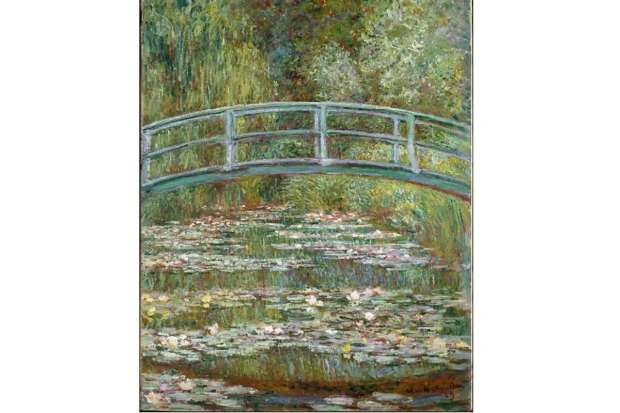
Bridge over a Pond of Water Lilies – Monet
the park we visited is known for it’s gardens. I here to photograph the flowers, which are at their fall peak.

We arrive a bit late, as it’s a fair drive from home, and I’m not an early riser. These artists are all morning people, but I suppose it’s cooler then for painting in the summer. Today is overcast with a cold north wind, so we are all bundled up in sweaters and jackets. It’s a large park, basically deserted at mid-week, and the painters have already scattered along the paths and picked their solitary spots.
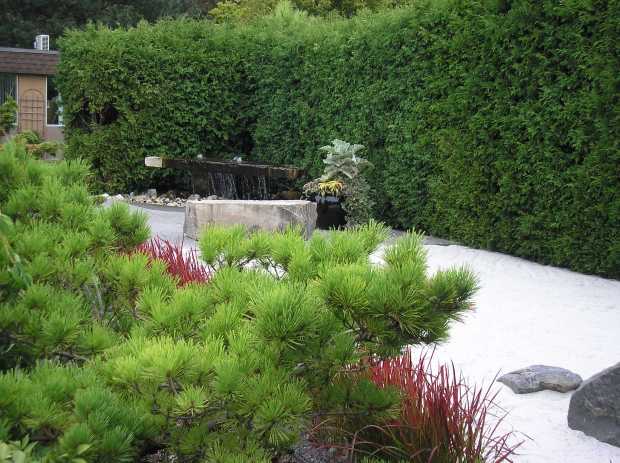
There’s a separate Zen garden with a tranquil waterfall but no one is painting there. Maybe it is too Zen?

I wander around the flower beds admiring the fall colors,

and stop to visit with several of the artists, marveling at their talent.


Most of the artists have been painting for years, but some, like my two friends, are relative beginners,
 still learning the tools of the trade.


Watercolor and oil are best for painting outdoors, as acrylic dries too quickly in the hot sun.
At noon they break for lunch, (brownies anyone?) in a spot sheltered from the wind,

and afterwards, show and tell. They pass each painting around the circle and I’m totally intimidated by then.

And also grateful for that thermos of hot coffee.
One of the artists points out a white squirrel which frequents the park, so I pursue a picture, although I only have the zoom lens on my cell phone, so it’s not the best pixel-wise.

White squirrels may be albino (with red eyes), caused by a mutation of a pigmentation gene, or they may be a very rare variant of eastern gray squirrels. He was a strange sight – and definitely an antidote to all that color.
After lunch, I’m in desperate need of a nap. All that fresh air is so tiring – makes you sleep like a baby – maybe I will dream in technicolor?

PS. Although it was an enjoyable day, I think I’ll stick with my writing gig for now.






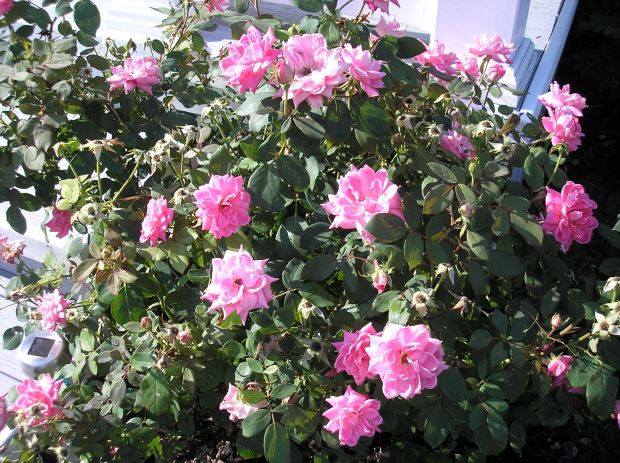
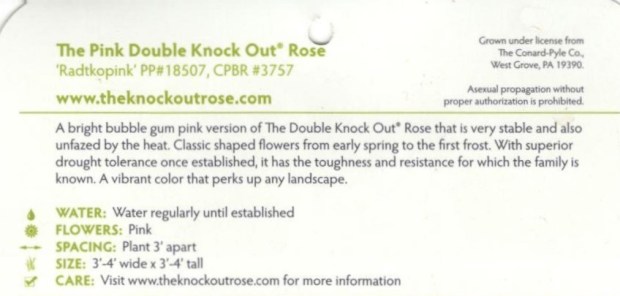
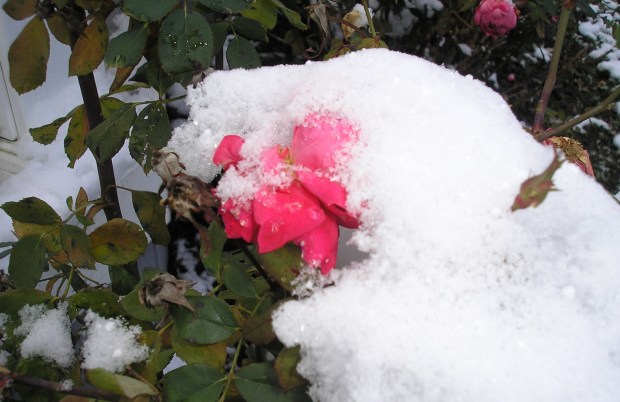
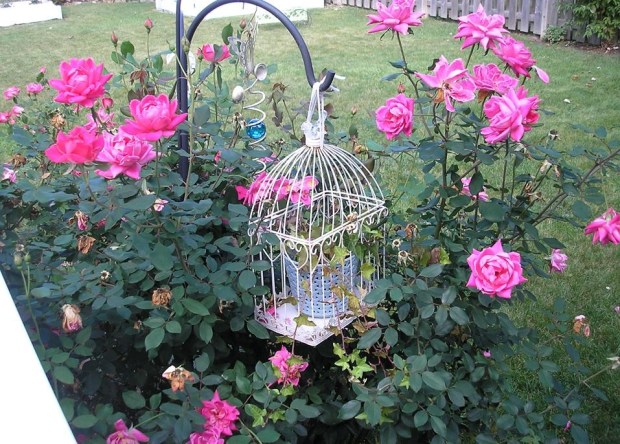
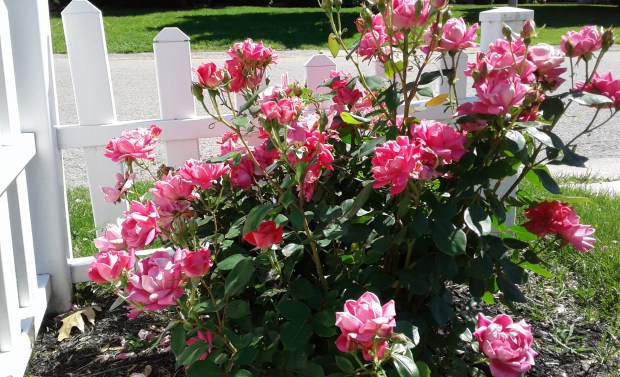
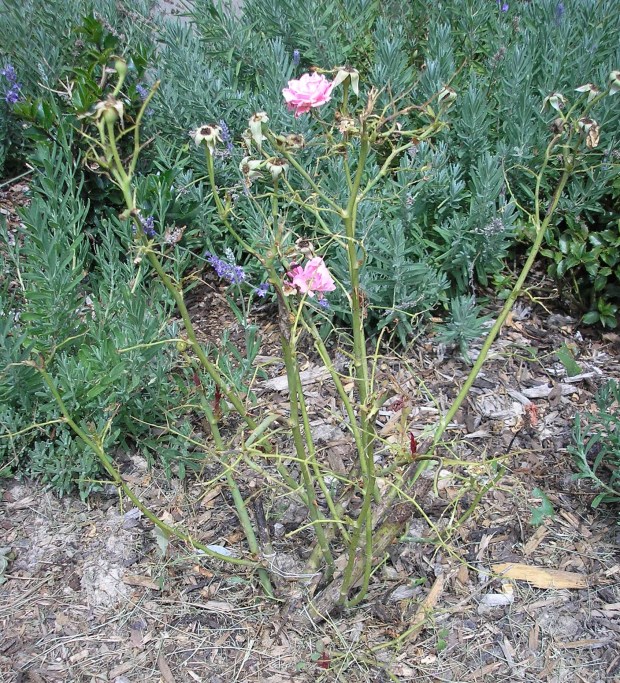
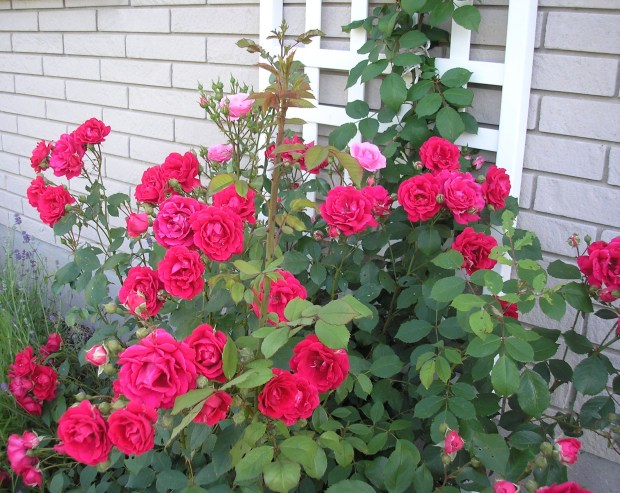
 If you want a low maintenance, easy to grow rose then Knock-Out Roses are the rose of choice. I have 24 of these rose bushes and it was one of the best garden investments I’ve ever made.
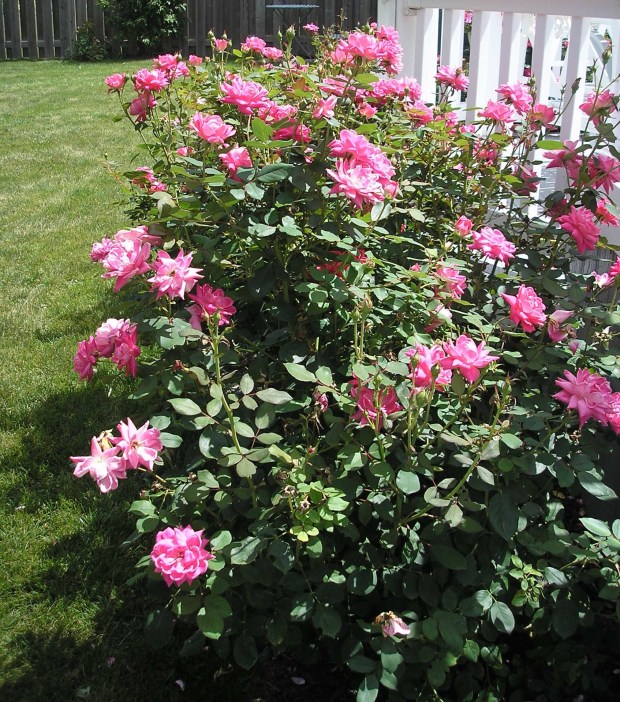










 I love the play of the shadows on the lawn.

 and this one.

 The dahlia has flourished, with many buds again, but the begonias got too water-logged.


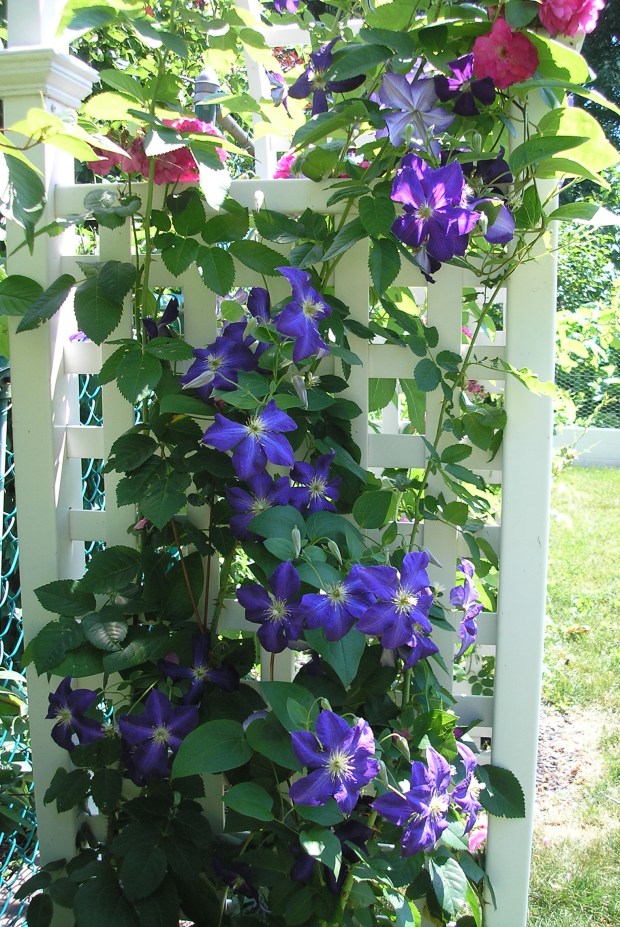
 The second year for this fuchsia clematis. My new one, planted last fall, is not out yet but as it is a Jackmanii, it may be later.

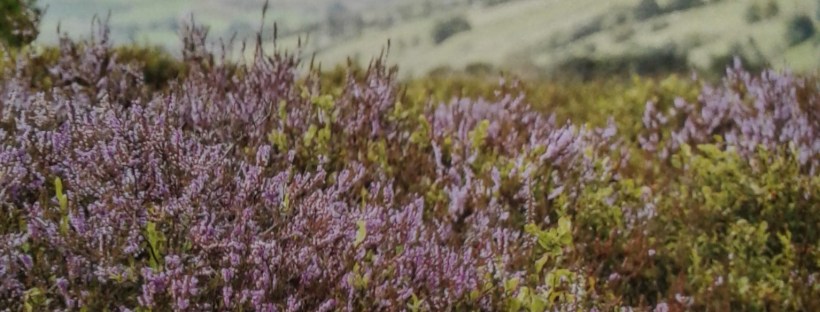
 And one can never have enough lavender.


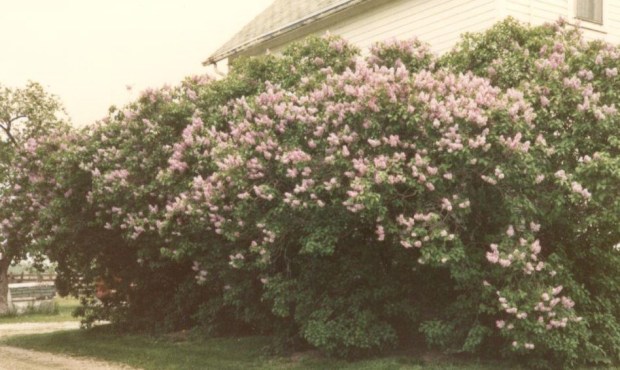

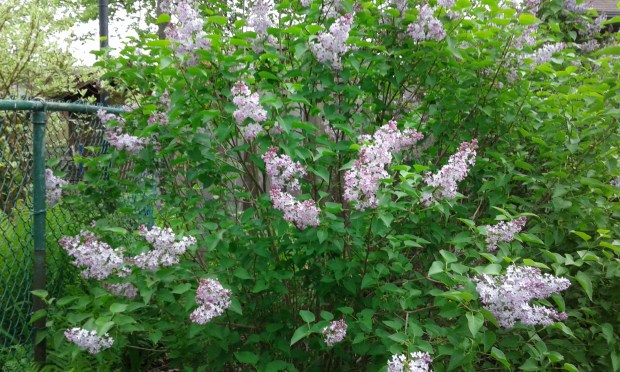


 I would sometimes take a book or magazine there and sit and read, sheltered from the wind, stopping once in awhile just to breathe in the scent. Here’s the view, looking out.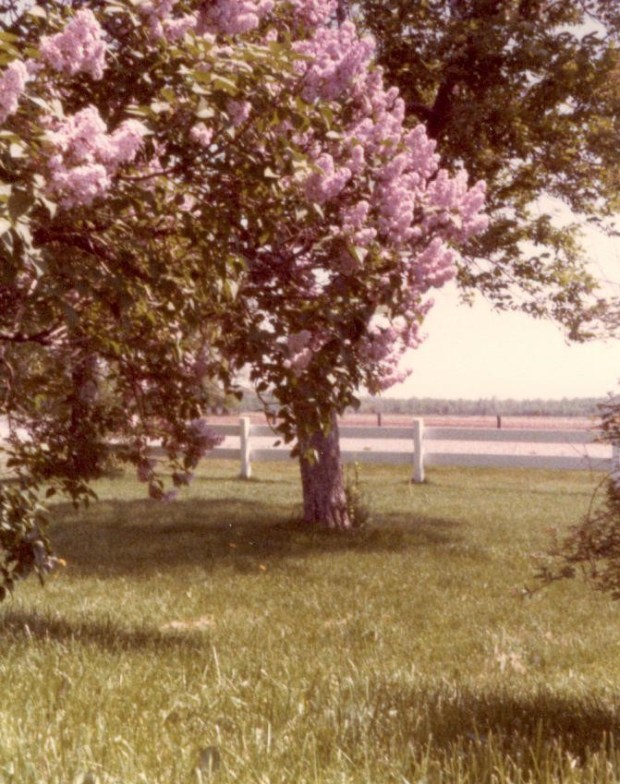








 And here is a picture of him in September at his funeral.















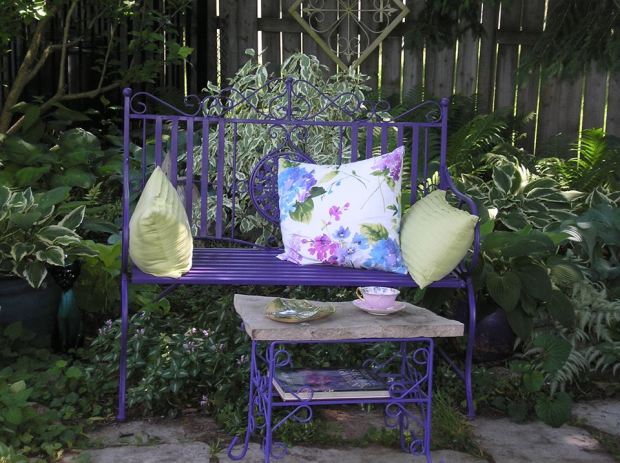 While purple and green are not colors that I would ever have thought of for a garden bench, the combination was eye-catching, and I believe the homeowner was ahead of the trend, or maybe I was two years behind as usual. It wasn’t something I thought would work in my predominately pink garden, but I did steal their idea for the birdcage with the ivy flowing from it.
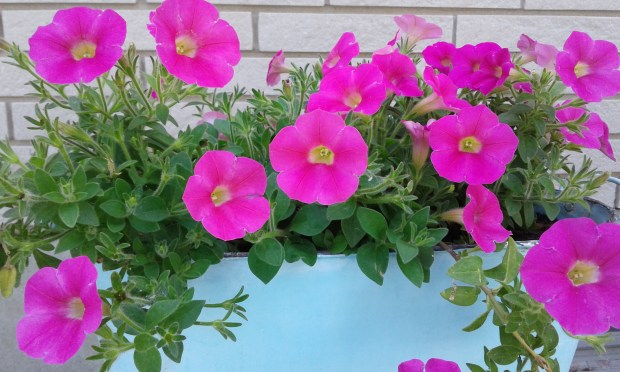
  (Check Michael’s end of summer sale for birdcage bargains). My ivy did not fare as well being exposed to too much sun, so this year I tried wave petunias which also did not do well either in the small space. Maybe next year a fake ivy plant from the thrift store? Would anyone notice?



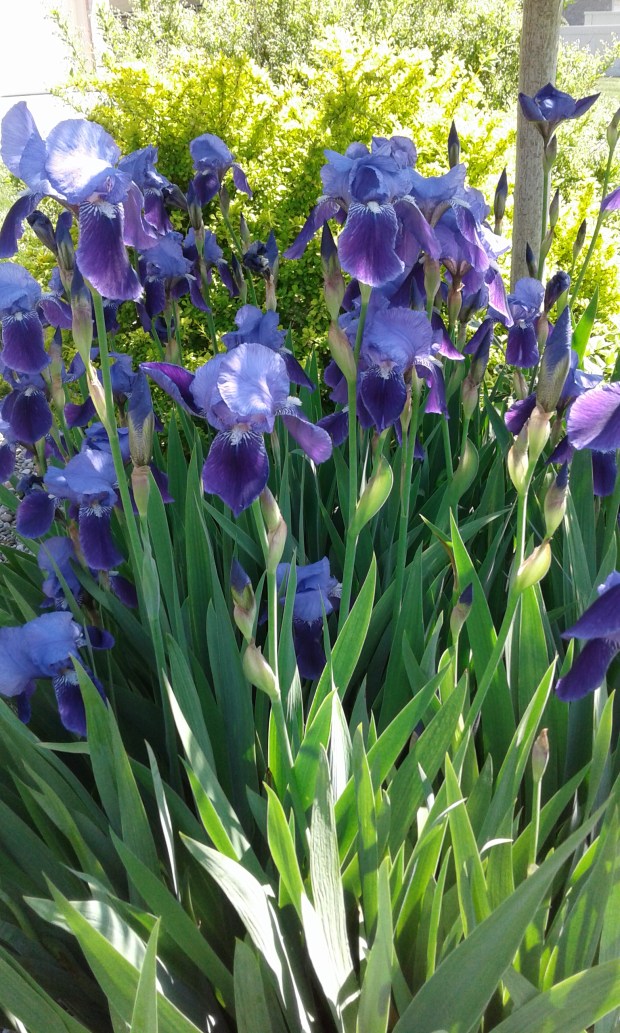
 It can be a mixture of both dark and lighter shades as in this Purple Iris belonging to a neighbor. I bought two clumps of this at the horticultural plant sale in May anticipating next spring.
  Or it can be a pale lavender shade as in this Russian Sage,
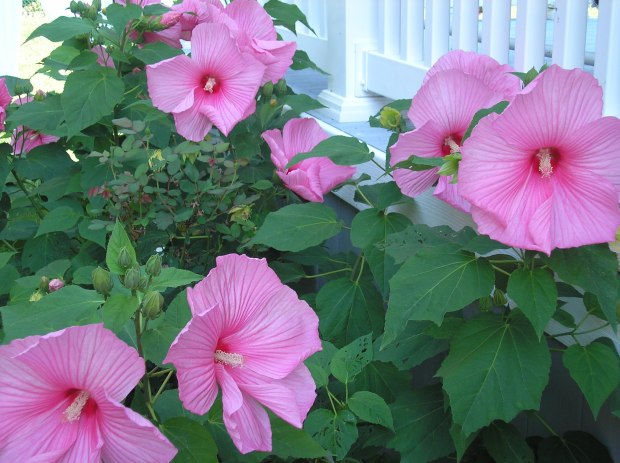
  and Rose of Sharon.
 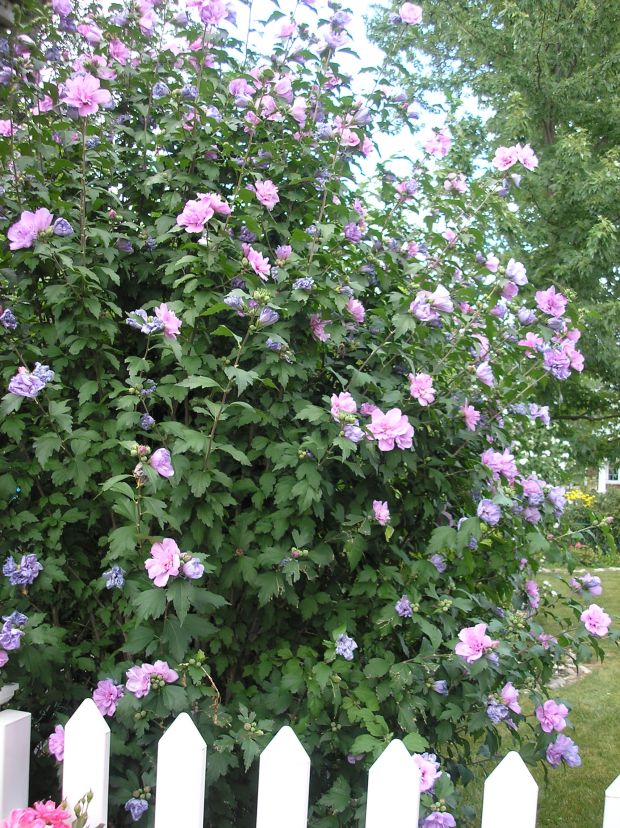 The Russian sage has been in for five years now and is thriving at over three feet tall. It is drought resistant. The Rose of Sharon, eight years old and covered with blooms every year, was another wise choice.


 Then there were the mistakes. Not every shade of purple is attractive. These foxglove seedlings from the farmer’s market came up a fuchsia color I did not care for at all as I was expecting a rosy pink.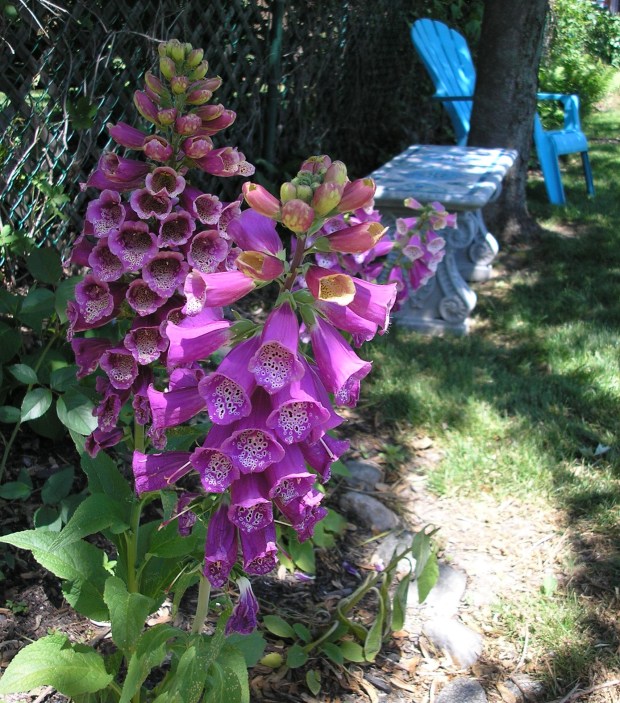
 lovely in it’s own way but clashing with the bubblegum pink of the rose bush beside it. It’s unfortunate these two fuchsia friends could not be together but one is in the side yard and one at the back. Some days I swear I will never buy anything again unless it is in flower and able to speak the truth.
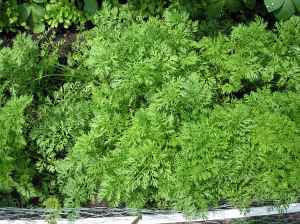
  I suspect the rabbits who lounge in my backyard in the evenings have been munching them for desert. (They were upset because they couldn’t get at all those glorious carrots in
  I was pleasantly surprised to see how much purple I actually have in my garden, but as every gardener knows there is always room for more and that neglected corner was telling me to buy a purple clematis to go with the lime green cart, and to think it all started with a garden tour…..
 thehomeplaceweb