Agatha Christie – Some Thoughts on Writing


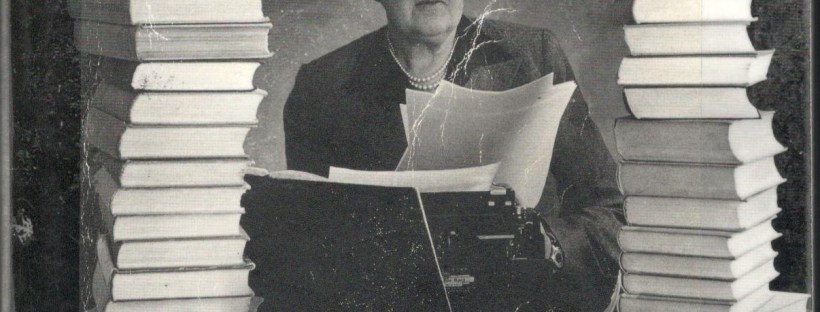
As I mentioned in Part One, Agatha Christie did not include much about her writing in her autobiography.  There are references sprinkled here and there, and some observations, but no real advice.  It’s as if she regarded the writing to be a minor aspect of her life, necessary but not of that much importance, which is peculiar for such an established and prolific author. I suspect she did not think the details of her craft would be of much interest to her reading audience, as writers were not as common back then, not like now when social media has made everyone a writer.

I can’t imagine coming up with the plot and characters for 66 plus books. I read somewhere that she would put all the characters together at the end and then decide who did it, and then go back and insert the clues, but I can’t substantiate this. While there is little in her autobiography about her technique or what inspired the books, she does tell us how she got started.

Her older sister had written and published a few short stories, and it was an early conversation with her which proved crucial to her own writing career.  Her sister, in an informal bet, dared her to write a detective novel, a popular genre at the time.  She was discouraging, “I don’t think you could do it,” said Madge, who had thought about it herself, but “they were very difficult to do.”  “I should like to try,” was Agatha’s reply.  ‘Well, I bet you couldn’t,” said Madge.  There the matter rested….but the “words had been said….from that moment I was fired by the idea that I would write a detective story…..I didn’t start to write it then, or plan it out but the seed had been sown……the idea had been planted.  Some day I would write a detective story.“    

An earlier attempt at a novel set in Cairo, had been rejected and then critiqued by a neighbour who was a popular novelist, who realizing how shy she was, was kind in his criticism, offering encouragement and some advice about plotting.  

She wrote her first book, The Mysterious Affair at Styles, while her husband Archie was off at war.  The idea was conceived at work in the dispensary, where she was surrounded by professional poisons.  Soon she had a sketchy picture of some of the characters, including her detective, Hercule Poirot, whom she imagined as a meticulous, tidy little man, Belgian like the Belgian refugees in the area, but she wished she had made him younger, considering they were to be together for so many years.  (In later years she found him “insufferable” according to her diary.)  

“In leisure moments, bits of my detective story rattled around in my head.  I had the beginning all settled, and the end arranged, but there were difficult gaps in between.  It made me absent-minded at home.”  Her mother encouraged her, her mother had the usual complete faith that her daughters could do anything.   She wrote it out longhand, and then typed it.  “Up to a point I enjoyed it.  But I got very tired, and I also got cross.  Writing has that effect, I find.”   She had difficulties with the middle, “the complications got the better of me, instead of me being the master of them.”  It was then that her mother made the suggestion that she go away on holiday and write undisturbed.  She booked into a large dreary hotel in the country, walked on the moors and wrote.  She spoke to no one – it would have taken her mind off what she was doing.

She sent it out several times with no success, and had almost forgotten about it as Archie had come home from the war. They were busy looking for a place to live, as flats were in short supply in post-war London, so she was surprised when it was accepted for publication.  They requested a few minor changes, and it was finally published in 1920.   

Like many young authors, she got trapped into a lousy contract promising them her next five books. (After fulfilling her end of the bargain, she changed publishers with no explanation given, although they were willing to bargain by then.)  

“Having given up hope for some years of having anything published, except the occasional short story or poem, I would have signed anything……I would not receive any royalties until after the first 2000 copies had been sold…..none of it meant much to me – the whole point was the book would be published.  I didn’t even notice there was a clause binding me to offer him my next five novels……I signed with enthusiasm…..In spite of the clause about the next five novels, this was to me a single and isolated experiment.  I had been dared to write a detective story, I had written a detective story.  It had been accepted and was going to appear in print.  There, as far as I was concerned, the matter ended.  Certainly at that moment, I did not envision writing any more books.”  

Her child Rosaland was born.   She was worried about keeping Ashfield, her family home as her mother still lived there.  Her husband suggested she write another book.  

She started making money and had an unexpected request from the Income Tax people about her literary earnings.  She had not thought of herself as an “established author” and had not kept track of the royalties, so she got herself a literary agent – a young man named Edmund Cork – and a friendship which lasted for 40 years.   

 “The nice thing about writing in those years was that I directedly related it to money.  If I decided to write a story, I knew it would net me L45, deducting income tax.  This stimulated my output enormously.  How different from the last ten or twenty years of my life.  I never know what I owe. I never know what money I have…..or shall have next year.” 

In 1927 she went to the Canary Islands to get away from the publicity of her disappearance and pending divorce, and managed to write the best part of a new book,  but admitted she had no joy in writing it. “I had worked out the plot, a conventional plot….I knew where I was going, but I could not see the scene in my mind’s eye, and the people would not come alive.  I was driven desperately on by the desire, indeed the necessity, to write another book and make some money.  That was the moment when I changed from an amateur to a professional.  I assumed the burden of a profession, which is to write even when you don’t want to, don’t much like what you are writing, and aren’t writing particularly well.  I have always hated The Mystery of the Blue Train, but I got it written, and sent it off to the publishers  It sold just as well as my last book – though I cannot say I have ever been proud of it.” 

By the time she remarried in 1930 she had written ten books.  

Surprisingly, she never had a room of her own to write in.  “I suppose I was enjoying myself so much in ordinary living that writing was a task which I performed in spells and bursts.  I never had a definite place which was my room or where I retired specially to write.  All I  needed was a steady table and a typewriter.   I had begun now to write straight on to the typewriter, although I still used to do the beginning chapters and occasionally others in long-hand and then type them out.”  Many friends had said to her, “I never know when you write your books, because I’ve never seen you writing, or even seen you go away to write.” 

She never felt any desperation as to whether she could think of one more book to write.  “There is always of course, that terrible 3 weeks or a month which you have to get through when you are trying to get started on a book……when you think you can’t do it.”   She admitted to talking to herself, while working out bits of dialogue.    

Later she branched out into writing plays – she was good with dialogue – and it was a new adventure, along with her annual Christie for Christmas.  She discusses how Three Blind Mice became The Mousetrap and her feeling of happiness when the audience enjoyed it so much, and its long run on the stage, and, the dread she felt about having to make a speech for a party at the Savoy on it’s tenth anniversary.  She hated public speaking, crowds, large parties, and fuss.  I don’t think there were as many author interviews back then and it was not as necessary to promote your book the way it is now when there is so much competition. 

She doesn’t state how long it took her to write a book, or how many drafts or revisions she went through, but mentions that she once wrote a book in 3 days flat – Absent in the Spring, under her pseudonym, Mary Westmacott.  It was a fiction novel she had always wanted to write, about a woman whose image of herself was completely mistaken, an idea that had been clear in her mind for some time, and the one book which satisfied her completely.  She wrote the first chapter, and then the last because she knew so clearly how it was going to end, then wrote straight through, calling in sick to work, so frightened was she of interrupting the flow, then she slept for 24 hrs.    

Of her detective books, the two that satisfied her best are Crooked House and Ordeal by Innocence. “No book was exactly as I wanted it to be, and I was never quite satisfied with it.”

Regarding any piece of creative work she wrote, “There always has to be a lapse of time after the accomplishment of a piece of work before you can in any way evaluate it.   You start into it, inflamed by an idea, full of hope, full indeed of confidence (about the only times in my life when I have been full of confidence).  If you are properly modest, you will never write at all, so there had to be one delicious moment when you have thought of something, know just how you are going to write it, rush for a pencil, and start in an exercise book buoyed up with exaltation.  You then get into difficulties, don’t see your way out, and finally manage to accomplish more or less what you first meant to accomplish, though losing confidence all the time. Having finished it, you know that it is absolutely rotten.  A couple of months later you wonder whether it may not be all right after all.”   (I find this is true, it’s difficult to evaluate your own work.)

To sum up, after reading her autobiography, I know more about her life, but I don’t feel that I really know her any better as a person or as a writer, although I enjoyed reading and can relate to many of her observations on writing.  I found her to be a complex person, contradictory in some ways, but that might just be because she was a product of her time and the times had changed.

It seems as if the writing was just a sideline to her marvelous and enjoyable life. She wrote mostly for herself – that you could make money from it and that other people liked it was a bonus.  Of course, in her later years, when she was expected to produce a book every year it could be drudgery and work – but by then she had assumed the mantel of a professional writer and she had her plays as a diversion.  Like any other job, writing has its good days and its bad days.  So perhaps there is some advice here, for those of us slogging away putting words on a page, after all.

PS. I watched the new Kenneth Branagh version of Death on the Nile recently. It was nicely filmed but just okay, casting and plot-wise. The usual quota of dark- haired men and very thin women. I guessed the ending about 20 minutes in, and there were way too many dead bodies for me.

The Maid – The Literary Salon

     One of the pleasures of staying in a hotel room is someone else cleans up, but do we ever really think about that person?  We may see them moving their trolleys up and down the hallway, and hopefully we leave them a tip, but it’s a job a lot of people take for granted.  It’s hard work, plus, you’d have to like cleaning.   

     Thankfully, Molly, the protagonist in the new bestseller, The Maid, loves her job and takes great pride and enjoyment in returning the rooms at the Regency Hotel to “a state of perfection” as their training program emphasizes. When she happens to clean away some murder evidence which along with her unusual behavior makes her a prime suspect, that provides an interesting premise for a murder mystery.    

Reading is better than spring cleaning…

Here’s the Publisher’s Blurb:

Molly Gray is not like everyone else. She struggles with social skills and misreads the intentions of others. Her gran used to interpret the world for her, codifying it into simple rules that Molly could live by.

Since Gran died a few months ago, twenty-five-year-old Molly has been navigating life’s complexities all by herself. No matter—she throws herself with gusto into her work as a hotel maid. Her unique character, along with her obsessive love of cleaning and proper etiquette, make her an ideal fit for the job. She delights in donning her crisp uniform each morning, stocking her cart with miniature soaps and bottles, and returning guest rooms at the Regency Grand Hotel to a state of perfection.

But Molly’s orderly life is upended the day she enters the suite of the infamous and wealthy Charles Black, only to find it in a state of disarray and Mr. Black himself dead in his bed. Before she knows what’s happening, Molly’s unusual demeanor has the police targeting her as their lead suspect. She quickly finds herself caught in a web of deception, one she has no idea how to untangle. Fortunately for Molly, friends she never knew she had unite with her in a search for clues to what really happened to Mr. Black—but will they be able to find the real killer before it’s too late?

A Clue-like, locked-room mystery and a heartwarming journey of the spirit, The Maid explores what it means to be the same as everyone else and yet entirely different—and reveals that all mysteries can be solved through connection to the human heart.

About the Author: 

Nita Prose is a longtime editor, serving many bestselling authors and their books. She lives in Toronto, Canada, in a house that is only moderately clean.

 As an longtime editor, Nita Prose obviously had publishing connections, but this book is so good and so unique I’m sure it would have been found a home anyway.  I suspect the hotel in the book is based on The Royal York in Toronto, where I have stayed on occasion when work was footing the bill, (it’s handy to Union train station, but when I have to pay, I stay at the pleasant but cheaper Marriott) or it could be any one of those grand old dames with an impressive lobby which pride themselves on style and service.   

Discussion:    I loved everything about this book – the protagonist, the plot-line, the descriptions, the dialogue – it’s just a charming story.  I was already casting it in my head, when I read on Amazon that it is in development as a major motion picture produced by and starring Florence Pugh. I don’t know enough about this English actress to say whether she would suit the role or not, but it’s the kind of quirky movie the British do best.  Hollywood would probably Hollywoodize it, with sexy uniforms and lots of bed-hopping.

One thing to note, this murder mystery has nothing to do with the Netflix series of the same name, which is a totally different story. I haven’t watched it, but believe it deals with the struggles of a single mother working a minimum wage job. I don’t know what the pay is for hotel maids but personal maid services here charge $35/hr with $25 going to the maid, and even home care agencies charge $25 for light housekeeping, but the bigger hotel chains may be closer to minimum wage $15 as they are often staffed by people whose English is a second language. This is addressed in the book, as one of the employees does not have the proper immigration papers and Molly herself has difficulty making her big city rent. (These rates may even have gone up given the low unemployment rate and difficulty in attracting employees.)

Molly is such a memorable character that you can’t help but root for her.  Alone in the world after her grandmother’s death, she is unable to understand or read social cues, and takes everything at face value. The book is written in first person, which I often find annoying, but which works here as we are seeing the world from the point of view of someone whose thinking and behavior would be considered outside of normal. Although the author is very careful not to label her, she is probably somewhere on the spectrum, possibly Asperger’s Syndrome with a good dose of OCD thrown in.  She seems literally clueless when it comes to interpreting other people’s words and actions which leads her into trouble.  (I wonder if people who fall prey to obvious financial scams might be struggling with the same perceptive difficulties.)      

The dialogue is clever, (hence the movie), and the descriptions creative – her nest egg which was stolen is her “Faberge”, her restaurant date was “the Tour of Italy”( which made me want to eat at an Olive Garden, if only we had one here).

The plot was fast-paced, although but I had a small problem with the ending, but understand why it had to happen that way.  Overall, the book was a brilliant debut and also a gentle reminder that there are many “invisible” people in society, whose perceptions of the world may be somewhat different than our own.  

PS.  I use a maid service for my mother’s house, and also occasionally for myself for bigger jobs like windows, as I simply don’t have the energy to keep up two houses.  What I like about them is they send two, occasionally three, people so they are in and out in a couple of hours, so you’re not in their way all afternoon. They do an excellent job, but cleaning houses all day is hard work, so many of them don’t last long, although the head cleaner is always the same. She told me she loves to clean, as did the Molly Maid franchise owner I used before. I’m grateful that some people do…now if I could only find someone who loves ironing. Vacuuming is my second hated task, but give me something to organize and I’m happy.  While I used to enjoy the feeling of satisfaction after cleaning my house from top to bottom, now that I’m older I prefer that someone else return my house to “a state of perfection.”  If only it would stay that way.     

PS. Cleanliness in a hospital is a priority, so I would like to add a note of thanks to the hospital cleaners who have to deal with the COVID-units. I remember the floors in my rural hospital being so clean and shiny you could eat off them.

Do you enjoy cleaning? Any hated household tasks?

The Betrayal of Anne Frank – A Cold Case Investigation

     Imagine being stuck inside, in a small space, for two years, where going out meant risking your life.  No, it’s not the pandemic – it’s WW2, and the people in hiding are Jewish. 

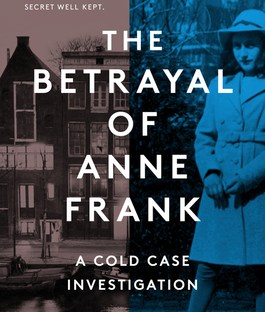
   Like many teenage girls of my generation, I read The Diary of Anne Frank, written by a fifteen-year-old Jewish girl in Amsterdam, when I was in grade school.   So when I saw The Betrayal of Anne Frank – a Cold Case Investigation by Rosemary Sullivan – on the new releases list, I knew I had to read it, and having read it, I knew I needed to blog about it.  The book is a captivating read, and a cautionary one.  It’s a timely topic, as with so much political turmoil in the world today, and so much divisiveness and hatred, it seems like history is repeating itself.          

Goodreads Publishers Blurb:

Using new technology, recently discovered documents and sophisticated investigative techniques, an international team—led by an obsessed former FBI agent—has finally solved the mystery that has haunted generations since World War II: Who betrayed Anne Frank and her family? And why?

Over thirty million people have read The Diary of a Young Girl, the journal teen-aged Anne Frank kept while living in an attic with her family in Amsterdam during World War II, until the Nazis arrested them and sent Anne to her death in a concentration camp. But despite the many works—journalism, books, plays and novels—devoted to Anne’s story, none has ever conclusively explained how the Franks and four other people managed to live in hiding undetected for over two years—and who or what finally brought the Nazis to their door.

With painstaking care, former FBI agent Vincent Pankoke and a team of indefatigable investigators pored over tens of thousands of pages of documents—some never-before-seen—and interviewed scores of descendants of people involved, both Nazi sympathizers and resisters, familiar with the Franks. Utilizing methods developed by the FBI, the Cold Case Team painstakingly pieced together the months leading to the  Franks’ arrest—and came to a shocking conclusion. 

The Betrayal of Anne Frank is their riveting story. Rosemary Sullivan introduces us to the investigators, explains the behavior of both the captives and their captors and profiles a group of suspects. All the while, she vividly brings to life wartime Amsterdam: a place where no matter how wealthy, educated, or careful you were, you never knew whom you could trust.

The Author: Rosemary Sullivan is the author of fifteen books, many of which are biographies, and the recipient of many international awards. She is a professor emeritus at the University of Toronto and has lectured worldwide.

Discussion:

     I found this book to be a fascinating but disturbing read. Cold cases are always interesting, but a famous cold case which is part of history, even more so, and trying to solve one seventy-five years later when all of the suspects are dead, almost impossible.

     Part One, the first hundred or so pages, deals with the background story.  For those unfamiliar, Anne Frank and her parents and older sister, along with another Jewish couple and their teenage son, and a local dentist – eight people in total – were hidden for two years in the upper annex of her father’s spice business, with the assistance of four of Otto Frank’s employees who brought them food and supplies.  The annex was at the back of the building facing a courtyard with a tree, Anne’s only glimpse of the outdoors for two years.  Based on an anonymous tip, the address was raided a few weeks before the liberation of Amsterdam, by a German Gestapo agent and three Dutch policemen.  They were all sent to concentration camps, and only her father Otto Frank survived, and later went on to publish Anne’s diary.    

     Part one introduces us to Anne’s world, and the complex politics of Amsterdam at the time, including the collaborators and the resistance movement.  It’s a fascinating look at just how quickly a normal life can deteriorate into one of treachery and survival.  It describes the political environment and the raid in detail, and the background and history of the people involved, including the policemen.         

        Part Two deals with the investigation of who had betrayed them.  The investigative team of thirty people, led by the retired FBI detective, narrowed thirty possibilities down to twelve scenarios, and then a further four, until they reached their final theory, based on a random note found in the archives, (no spoilers here) and note it is a theory, as there is no absolute proof which they made clear.

     Like any cold case, they looked at three factors – Knowledge, Motive and Opportunity.  Knowledge could come from rumors, observations, or resistance people being tortured. Motive could have been for money (there was a bounty of $7.50 guilders or $47 US for each Jew turned in), hatred or self-preservation, trying to stay on the good side of evil.  (Which begs the ethical question, could you turn someone else in to save yourself or your own family?)  Opportunity was having knowledge and access to the Germans or SD police.     

     Some suspects could be eliminated as they weren’t in the area at the time.  The team systemically went over lists of known collaborators and addresses from extensive war archives, reconstructing a  detailed map of the area.  They also designed a computer program to handle the masses of data.  There was so many archives to wade through that solving the case took several years.     

     Vince Pankoke, the lead detective said “there was no aha moment to end the investigation – the emergence of the betrayer was a slow coming together of evidence and motive, a jigsaw piece that suddenly undeniably fit.  He remarked that there was a weight of great sadness after the case was solved which has stayed with him since.” 

Additional Points of Interest:

     Originally born in Germany, Otto Frank had served in WW1 but had fled Germany in 1933 and set up a business in Amsterdam, a city known for its tolerance.  Yet the Netherlands transported more Jews to their deaths in concentration camps than any other country in Western Europe.  Of the 140,000 Jews living there, 107,00 were deported and only 5500 returned. There were an estimated 25,000 in hiding, one third of whom would eventually be betrayed.  

    We have the greed of the Gestapo agent to thank for the survival of Anne’s diary.  During the raid, Anne picked up her father’s briefcase which contained the diary to take with them.  The German police officer threw her diary with it’s checkered cover on the floor and filled the briefcase with the valuables and money that Otto and the others had managed to hold onto.  Had she taken it with her to the camp, it would have been destroyed.  After the raid, the two female employees rescued it and tucked it away for Anne’s return.  

      It was interesting to note how some of the interviewee’s memories (and their descendants), changed over the years.  Sometimes how people remembered things, did not jive with the documented reality, particularly after Anne’s fame grew.    

      In a particularly poignant section, Otto Frank describes Anne drinking in the natural world that had been denied her for so long, on the last train to Auschwitz.  It was summertime and she reveled in the fresh air and sunshine.   

     In one of the last pages of her diary, Anne writes, “It’s a wonder I haven’t abandoned all my ideals, they seem so absurd and impossible.  Yet I keep clinging to them, because I still believe, in spite of everything, that people are truly good at heart.” 

     It’s something to remember, that feeling of hope, especially at a time when the world seems to be tilting towards intolerance, that things can always be made right again.

     One final thought, you don’t have to like someone to help them.  My grandmother grew up in a southern rural area of Holland, and I remember her saying that her family had helped refugees during WW1.  (The Netherlands remained neutral during WW1 and attracted a flood of refugees.) They were from Turkey, and I also remember her saying that they were not nice people, but they helped them anyway.   My grandmother would have been 16 and it is debatable what would constitute not being nice at that age – being made to give up her bed, possibly being leered at, or the fact that they were gypsies, I believe was the word used.  Her parents were gone by WW2, although she had many brothers and sisters back home, but I never asked her, to my great regret, for any stories of those years.

PS.   You can visit the Anne Frank House and Museum in Amsterdam, (see online website for a one hour history and virtual tour of the annex) but anyone I know who has gone there has not been able to see it because of the long lineups. The Annex was accessed via a secret bookcase, (link to a 2 minute tour) and was fairly small to have housed eight people.  Here’s a youtube link to the only known video of Anne Frank on a balcony watching a wedding party. 

PS. One of my readers has mentioned that there has since been dissension about the research and conclusion of the book, to the extent that the Dutch and German publishers have suspended publication until they do a further review. Considering their end theory was a shocking revelation, and that Otto Frank (and his secretary) knew who had betrayed them for years and kept silent, and that the Switzerland foundation he set up in her name refused to cooperate in the research, it is not entirely unexpected for the book to be controversial. Readers wishing further information may google for more details.

The Literary Salon – Mary Higgins Clark R.I.P.

I did not include Mary Higgins Clark’s latest in my Books and Brownies round-up of the winter’s best reads, as while I enjoyed it, I detected a slight difference in style with this one.   I noted that she had dedicated it to the memory of her late husband (2018) and thanked her son who was with her every sentence of the way, which along with the six months delay (she usually publishes around Mother’s Day), I wrote off as being due to the inevitable life crises which sooner or later affect us all.   So I was surprised to see from an in-memoriam display at my local library that she had passed away on Jan 31 at the age of 92 of natural causes.   As she has blessed us with decades of good reading, this month’s literary salon will pay tribute to the original Queen of Suspense.  

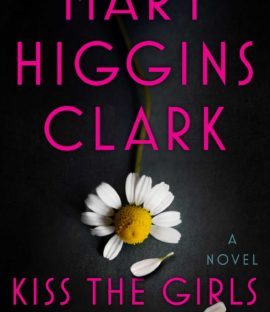
Kiss the Girls and Make Them CryKiss the Girls and Make Them Cry by Mary Higgins Clark

My rating: 4 of 5 stars

Her Highness delivers as usual, her latest and unfortunately her last.   R.I.P.

About the Author:     Mary Higgins Clark was born in 1927, of Irish descent.  Her family owned an Irish pub and was fairly prosperous but fell on hard times at the end of the Depression after her father died.   She worked as a secretary, copy editor and airline stewardess before marrying and having five children.   A gifted storyteller right from the start, she took writing classes at NYU, and started selling short stories to supplement the family income, and later turned to mysteries after being widowed in 1964 at a young age.    First published at 43, she had her first bestseller in 1975 with Where Are The Children,which she sold for the low price of $3000.   Six months later when the paperback rights went for $100,000, she quit her day job at an advertising agency and devoted herself to writing full time.   She sold her second book for $1.5 million and was at one time the highest paid female author in the country.   Her net worth is estimated at 140 million and over 100 million of her books are in print in the US alone, plus many international translations.   She has written 56 books, 38 of them suspense novels, four collections of short stories, a memoir (Kitchen Memoir), five books with her daughter Carol and six with Alafair Burke – the Under Suspicion series.   All I might add, with the same publishing company Simon and Schuster, and the same editor Michael Korda – here’s a link from S&S and for more on her story see Wikipedia link.   

Why I Read Her Books:    While the market today is saturated with psychological thrillers, for a long time Mary Higgins Clark was the designated Queen of Suspense, and the only suspense novelist I read.   (I was never a fan of Agatha Christie).    She was popular, and while considered fluffy formula writing by some, her books were immensely readable and you were always guaranteed of a happy outcome.   Her main protagonist was usually an independent young woman no older than 35, and while there was often the suggestion of a romance, it was not the main course.   While suspenseful, there were no gory forensic reports or ambiguous or surprise endings – nor were her books so creepy that you went around double-checking the locks at night.   She was dependable – her books could be counted on for a good light read.   

I remember when Maeve Binchy died in 2012, and she was only 70.   When you are used to reading a favorite author every year, it can be upsetting to realize there will be No More Books!    Although Maeve’s husband continued to publish a few short stories which hadn’t seen the light of day and a biography, it just wasn’t the same as having a new novel to crack open.   I wonder if that will be the case with Mary Higgins Clark, (although having seen the final episode of last weeks PBS Sanditon mini-series, an adaptation of Jane Austen’s last unfinished manuscript, sometimes it’s better if things are left undone).   While I’ve read a few of her early short stories, including one about her experience as a Pan-Am stewardess dealing with a stowaway on board, I’ve never read any of her earlier books including Where Are The Children or A Stranger is Watching, so these will have to do next summer when I need a M.H.Clark fix at the beach.             

What does it take to produce an annual bestseller like that?    Maybe it came easy to her, (Danielle Steele once said she could knock off a manuscript in a weekend), in which case she was lucky, but I suspect it took a fair degree of dedication and determination and a lot of hard work and  perseverance.   As she aged into her 80’s, it amazed me that she was still churning them out – her books stayed up to date, with cell phones/gadgets and modern settings and plots.   Her last book concerned the #metoo movement, and another, a murder at the famous MET gala costume ball.   She had a passion for writing and a zest for living until the very end.    Maybe that’s what everyone needs when they get older – a reason to keep on going.    I hope she is up there in the big library-in-the-sky (which is how I like to think of the afterlife for book lovers), resting in peace and reading her heart out….and maybe sending some gentle plot suggestions to a few of us earthlings looking for guidance.              


The Literary Salon – Beach Books Summer 2019

Beach umbrella

What makes a great beach book – any book with summer in the title.   Here’s my summer reading list (four read, two to go), and although only two of my selections qualify with respect to the title, they are all beach-worthy in one way or another.   

First place, as always, goes to Elin Hilderbrand’s annual summer release, Summer of 69.  

Summer of 69

Publisher’s Blurb:  Follow New York Times bestselling author Elin Hilderbrand back in time and join a Nantucket family as they experience the drama, intrigue, and upheaval of a 1960s summer.   Welcome to the most tumultuous summer of the twentieth century. It’s 1969, and for the Levin family, the times they are a-changing. Every year the children have looked forward to spending the summer at their grandmother’s historic home in downtown Nantucket. But like so much else in America, nothing is the same: Blair, the oldest sister, is marooned in Boston, pregnant with twins and unable to travel. Middle sister Kirby, caught up in the thrilling vortex of civil rights protests and determined to be independent, takes a summer job on Martha’s Vineyard. Only-son Tiger is an infantry soldier, recently deployed to Vietnam. Thirteen-year-old Jessie suddenly feels like an only child, marooned in the house with her out-of-touch grandmother and her worried mother, each of them hiding a troubling secret. As the summer heats up, Ted Kennedy sinks a car in Chappaquiddick, man flies to the moon, and Jessie and her family experience their own dramatic upheavals along with the rest of the country.   In her first “historical novel,” rich with the details of an era that shaped both a country and an island thirty miles out to sea, Elin Hilderbrand once again proves her title as queen of the summer novel.

Why I liked it:    Her usual fare, but anyone who lived through the summer of 1969 (sorry millennials), will find this book especially appealing.   I was the same age as Jesse the youngest of the siblings, so I could really relate to the story line, the fashions and the music.    I especially liked how she incorporated songs of the era as chapter titles. 

“For What It’s Worth” I think we had better songs back then.   I’d like to “Get Back” to that year on “A Magic Carpet Ride” as “Those Were the Days” my friend.   I was a “Young Girl” in ’69, a year when “Everybody’s Talking” about “Fly Me To The Moon”, that distant orb in the sky which was “A Whiter Shade of Pale”.    It was the “Time of the Season” for love and as we were “Born to be Wild” we were full of “Midnight Confessions”.   We didn’t need “Help” from “Mother’s Little Helper” or “White Rabbits” or have the “Summertime Blues” as it was a time of peace and hope.   For all it’s protests it was also a time of optimistic change, as politically “Everyday People” who had “Heard It Through The Grapevine” (as opposed to CNN or Fox), did not have “Suspicious Minds” and could look at issues “From Both Sides Now”.    Perhaps, “Someday We’ll Be Together” again, hopefully “More Today than Yesterday.”     Whew – I got them all in!   (How many do you remember?)

Instead of flying to the moon, let’s fly to Paris – One Summer in Paris – by Sarah Morgan

One Summer in Paris

Publishers Blurb:  To celebrate their twenty-fifth wedding anniversary, Grace has planned the surprise of a lifetime for her husband—a romantic getaway to Paris. But she never expected he’d have a surprise of his own: he wants a divorce. Reeling from the shock but refusing to be broken, a devastated Grace makes the bold decision to go to Paris alone.  Audrey, a young woman from London, has left behind a heartache of her own when she arrives in Paris. A job in a bookshop is her ticket to freedom, but with no money and no knowledge of the French language, suddenly a summer spent wandering the cobbled streets alone seems much more likely…until she meets Grace, and everything changes.   Grace can’t believe how daring Audrey is. Audrey can’t believe how cautious newly single Grace is.  Living in neighboring apartments above the bookshop, this unlikely pair offer each other just what they’ve both been missing. They came to Paris to find themselves, but finding this unbreakable friendship might be the best thing that’s ever happened to them…

Why I liked it:   I’m not a big fan of romance fiction, but was attracted by the title and the book jacket.    I’ve never been to Paris, the story line sounded promising and it had a bookstore in it.   Basically this book was pure fluff, albeit readable fluff.   I don’t think I’ll be reading anything more by this author, as she is traditionally a romance writer and it was a bit too predictable for me.   Plus there was actually very little about Paris or the bookstore in it, which just goes to show how we can get sucked in by marketing.     (I swear if I ever write my murder mystery I’m going to call it Murder at the Paris Bookshop even though it’s set in another country – guaranteed sales – but perhaps that title has already been taken?)    

Did I mention I’m a sucker for any title with a bookstore in it, so No. 3 is The Bookstore on the Corner – by Jenny Colgan.   

The Bookshop on the Corner

Publishers Blurb:   Nina Redmond is a literary matchmaker. Pairing a reader with that perfect book is her passion… and also her job. Or at least it was. Until yesterday, she was a librarian in the hectic city. But now the job she loved is no more.  Determined to make a new life for herself, Nina moves to a sleepy village many miles away. There she buys a van and transforms it into a bookmobile—a mobile bookshop that she drives from neighborhood to neighborhood, changing one life after another with the power of storytelling From helping her grumpy landlord deliver a lamb, to sharing picnics with a charming train conductor who serenades her with poetry, Nina discovers there’s plenty of adventure, magic, and soul in a place that’s beginning to feel like home… a place where she just might be able to write her own happy ending.

Why I liked it:    I haven’t read it yet, but with a bookstore, how could it fail?  (I’m reserving judgement, see above).   (Edited to add:  Two chapters in and I’m loving this book – the main character, the humorous style of writing, the Scottish locale, it’s simply charming, and there are actual books in it!)  (Note after finishing:  I’m quite disappointed – two thirds of the way through this book turned into a Hallmark movie.   It was all down hill after the scene with Mr. Darcy wearing a kilt and carrying an injured lamb…..well those were actually two separate scenes but you get the drift….really I m much too old for this romance stuff.  Where is Jane Austen when you need her!)   

It’s summer concert season.   Let’s go back in time again, this time to the 70’s.  Based loosely on the rock group Fleetwood Mac, Daisy Jones and the Six – by Taylor Jenkins Reid was a selection of Reese Witherspoon’s book club.    I can already see the movie being made….now who will play the lead singers?

Daisy Jones and The Six

Publisher’s Blurb:  Everyone knows Daisy Jones & The Six, but nobody knows the reason behind their split at the absolute height of their popularity . . . until now.
Daisy is a girl coming of age in L.A. in the late sixties, sneaking into clubs on the Sunset Strip, sleeping with rock stars, and dreaming of singing at the Whisky a Go Go. The sex and drugs are thrilling, but it’s the rock and roll she loves most. By the time she’s twenty, her voice is getting noticed, and she has the kind of heedless beauty that makes people do crazy things.  Also getting noticed is The Six, a band led by the brooding Billy Dunne. On the eve of their first tour, his girlfriend Camila finds out she’s pregnant, and with the pressure of impending fatherhood and fame, Billy goes a little wild on the road.   Daisy and Billy cross paths when a producer realizes that the key to supercharged success is to put the two together. What happens next will become the stuff of legend.   The making of that legend is chronicled in this riveting and unforgettable novel, written as an oral history of one of the biggest bands of the seventies. Taylor Jenkins Reid is a talented writer who takes her work to a new level with Daisy Jones & The Six, brilliantly capturing a place and time in an utterly distinctive voice.

Why I liked it:  Despite it’s great reviews I wasn’t sure I was going to like this book.   It wasn’t a subject matter that interested me, as I attended a Catholic high school and my recollection of the 70’s was not exactly sex, drugs and rock and roll.    But I ended up loving it – and it’s definitely one of the most memorable books I’ve read this year.  Basically it’s a love story, but not your typical one.   I even liked the unique interview format a la Rolling Stone, which surprisingly readable.  The book is pure fiction but the characters seemed so real that several younger reviewers on Goodreads believed it was a memoir about a real band.   Someone really needs to set those lyrics at the end to music.

Enough of the retro, here’s a psychological thriller to keep you in suspense during those nights when it’s too hot to sleep – The Silent Patient by Alex Michaelides

The Silent Patient

Publishers Blurb:  Alicia Berenson’s life is seemingly perfect. A famous painter married to an in-demand fashion photographer, she lives in a grand house with big windows overlooking a park in one of London’s most desirable areas. One evening her husband Gabriel returns home late from a fashion shoot, and Alicia shoots him five times in the face, and then never speaks another word.   Alicia’s refusal to talk, or give any kind of explanation, turns a domestic tragedy into something far grander, a mystery that captures the public imagination and casts Alicia into notoriety. The price of her art skyrockets, and she, the silent patient, is hidden away from the tabloids and spotlight at the Grove, a secure forensic unit in North London.   Theo Faber is a criminal psychotherapist who has waited a long time for the opportunity to work with Alicia. His determination to get her to talk and unravel the mystery of why she shot her husband takes him down a twisting path into his own motivations—a search for the truth that threatens to consume him….

Why I liked it:   I don’t usually like first person narratives, especially by male protagonists,  but this was very well done and overall an excellent book for a first time novelist.    Never even saw the ending coming – I am in awe of the brilliance.  

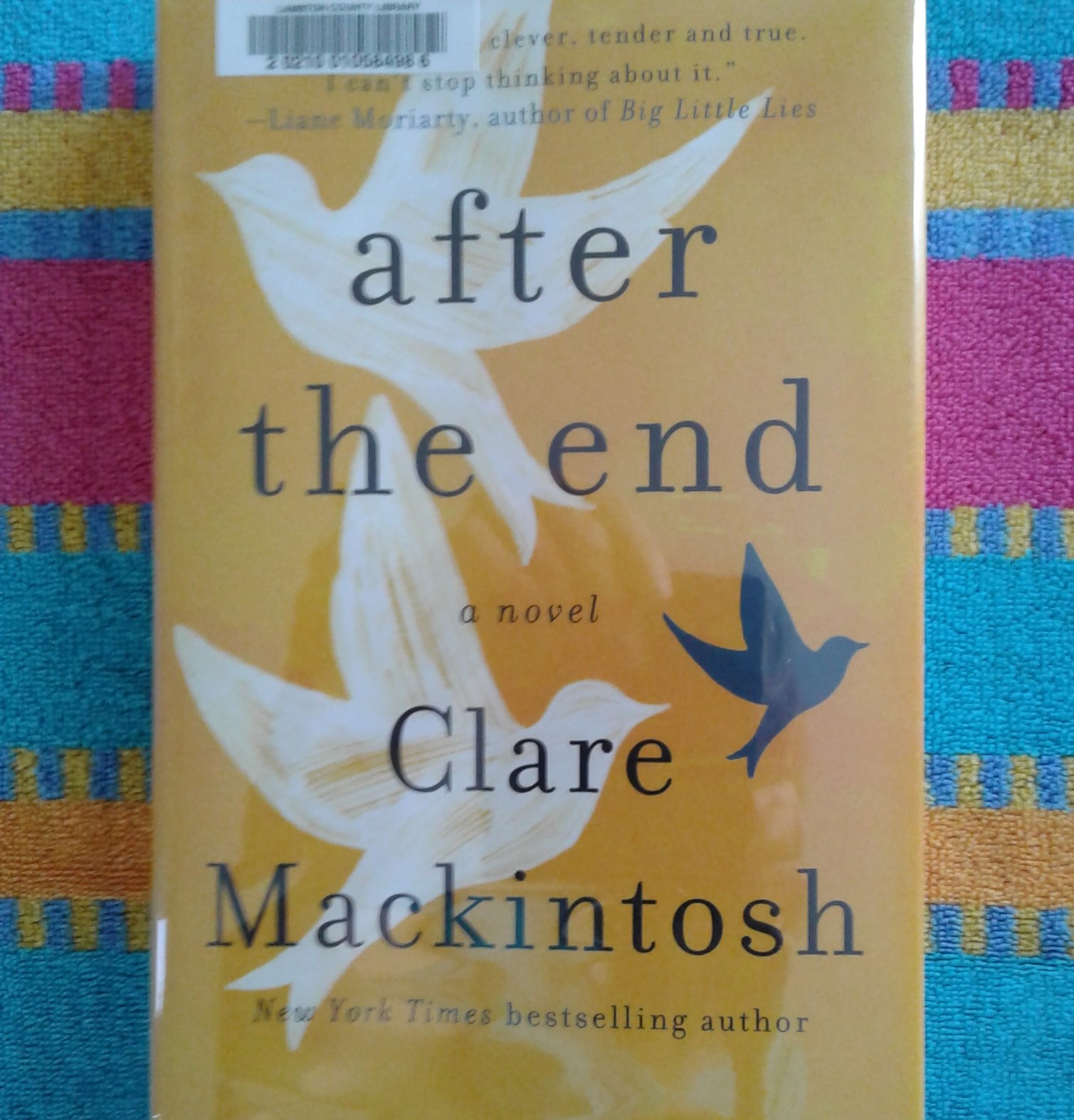
And lastly, because even the best of summers have to come to an end and real life resumes, a family drama – After the End – by Clare MacIntosh.

After The End

Publisher’s Blurb:  Max and Pip are the strongest couple you know. They’re best friends, lovers—unshakable. But then their son gets sick and the doctors put the question of his survival into their hands. For the first time, Max and Pip can’t agree. They each want a different future for their son.   What if they could have both?  A gripping and propulsive exploration of love, marriage, parenthood, and the road not taken, After the End brings one unforgettable family from unimaginable loss to a surprising, satisfying, and redemptive ending and the life they are fated to find.

Why I liked it:   I haven’t read this one yet either.   I’m saving it for August, but it sounds like a departure from her usual crime suspense novels (I Let You Go, I See You).    We shall see….

There – a little something for everyone under the sun – Happy Reading!    

PS.   What are you reading this summer?

Beach pail

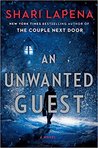
The Literary Salon – An Unwanted Guest

An Unwanted Guest

This is the perfect book to curl up with by the fire, when the first big January snowstorm descends, perhaps with some mulled wine in hand to calm your nerves, for it is so well done you may feel like you have checked into the country inn yourself.     

The publishers  blurb:  When the storm hits, no one is getting away….

A remote lodge in upstate New York is the perfect getaway. . . until the bodies start piling up.  It’s winter in the Catskills and the weather outside is frightful. But Mitchell’s Inn is so delightful! The cozy lodge nestled deep in the woods is perfect for a relaxing–maybe even romantic–weekend away. The Inn boasts spacious old rooms with huge wood-burning fireplaces, a well-stocked wine cellar, and opportunities for cross-country skiing, snowshoeing, or just curling up with a book and someone you love. So when the weather takes a turn for the worse, and a blizzard cuts off the electricity–and all contact with the outside world–the guests settle in for the long haul. The power’s down but they’ve got candles, blankets, and wood–a genuine rustic experience! Soon, though, a body turns up–surely an accident. When a second body appears, they start to panic. Then they find a third body. Within the snowed-in paradise, something–or someone–is picking off the guests one by one. They can’t leave, and with no cell service, there’s no prospect of getting the police in until the weather loosens its icy grip. The weekend getaway has turned deadly. For some couples, it’s their first time away. For others, it will be their last. And there’s nothing they can do about it but huddle down and hope they can survive the storm.

A bit about the Author:

SHARI LAPENA  is the internationally bestselling author of The Couple Next Door and A Stranger in the House. She was a lawyer and an English teacher before turning her hand to fiction.
She lives in Toronto.


My Goodreads review:

An Unwanted GuestAn Unwanted Guest by Shari Lapena

My rating: 5 of 5 stars

Best to save this book for a dark and stormy night in January when a sudden snowstorm has descended and you are safe by the fire with a hot toddy. Absolutely loved it, so creepy and suspenseful I went around and checked all the locks before bed. It’s a simple premise, probably done before, a group of strangers snowed in at a country inn with no outside communication, and one by one they get picked off – by an unwanted guest. Vivid descriptions of the inn and the weather, a twist turning plot, and solid characterizations all make for a great read. A well developed story, from a psychological point of view – how well does anyone really know anyone else……psychopaths dwell among us.

Some thoughts:

It’s a deceptively simple premise for a murder mystery, take a group of people, in this case eleven, nine guests and two staff, and confine them to a space, a la Murder on the Orient Express, so you know the murderer must be among them.    Although this book generally received good reviews there was some criticism that it was too similar to Agatha Christie’s, And Then There Were None, which I have not read, having only ever read her Orient Express book.   But as a famous author recently proclaimed in one of his podcasts, all possible ideas have been done before anyway, what makes a book different is the authors unique spin on it.    At 290 pages it is a slim book, with the author giving us just enough information about the guests in the first few chapters to enable us to differentiate between them…..and then slowly revealing more background. 

‘The large diamond glittered when she picked up her champagne glass, her eyes sparkled when she looked at her fiance.  Everything about her was shiny and bright.  She has a bright shiny life, Lauren thinks.  Then she directs her attention to the man to whom she is engaged.  What does she think of him?  She thinks he is someone who collects bright, shiny things.’

By the end of the book five of them are dead and I still had no idea who did it until the last couple of pages, although I was a bit let down as there was no dramatic climax, just a slow unraveling, and one clue which I found rather cliche.    Perhaps all the clues have been done before too.     

I always like to check out the authors background, and an English major with a law degree is a lethal combination –  grammar and details.   I hope she sells the movie rights because I’m already casting it in my head.    Her first novel was published in 2007, and her second, Happiness Economics, was shortlisted for the Stephen Leacock Medal of Humor in 2011.    Just how does one switch from writing humor to murder, but I suspect there is more money in murder mysteries.   This is her third mystery and best so far.   Her two previous books had simple plot ideas as well.    In the Couple Next Door, a couple is invited to dinner at the townhouse next door, but when the babysitter cancels at the last minute, they decide to go anyway and rig up the baby monitor and one of them goes home hourly to check, except when the evening is over, the baby is gone.   In A Stranger in the House, a newly married couple find they don’t know much about each other’s background at all.    As a Canadian writer she has a Canadian agent, and while not as well known as Claire MacIntosh or Ruth Ware, I think she is well on her way, and certainly an inspiration for those of us still struggling to find a plot.   How hard can it be to write such a simple thing…..it turns out very hard indeed.   

(See introduction to The Literary Salon link). 

Song of the Day:

https://www.youtube.com/watch?v=FJdfSXlB_8I


A Gothic Read for Halloween

Here’s a spooky book to read while handing out the Halloween candy….and a link to last years blog on decorations, Come In For A Spell

(I had not intended on doing a Halloween post other than this short book recomend, but the opportunity arose for A Visit with the Paranormal – so stay tuned for Fright Night at the Museum early next week). 

The Death of Mrs. Westaway


The Death of Mrs. Westaway by Ruth Ware

My rating: 4 of 5 stars

I had  enjoyed British Crime Writer, Ruth Ware’s earlier books (In a Dark Dark Wood and The Woman in Cabin 10) but found this one very slow going at the start, to the point where I thought I might abandon it altogether, but I am glad I stuck with it because the ending was brilliant. The stage must be set, but I don’t know if we needed seventy or so pages to establish the protagonist as poor, cold and alone, and then the next seventy pages to establish the Gothic mansion as decrepit, cold, creepy and full of magpies…and well Gothic. I noticed she used the same descriptions over and over……her breath huffing in the frosty air……the cold draft at the window…..shivering in the rain etc……it made me long for a cuppa hot tea. But once the story got going, it took flight just like those menacing magpies…..and I couldn’t put it down. Even though I had guessed part of the ending half-way through, there was still a surprise twist.  Jolly well done.

Add the soundtrack from some classic Hitchcock….