
It’s winter – prime reading season, so time for a round up of some of the best books I’ve read over the past few months. These are best savored with a cup of tea and a brownie…or two…..the kind with lots of icing.

As I’m trying to practice an economy of words these days, I have condensed the summaries. Click on the link for the full publishers blurb. The list is in descending order of greatness.
 The Family Upstairs by Lisa Jewell
My rating: 4 of 5 stars
A page-turning jewel of a book, her best yet.
Libby Jones receives a letter from a lawyer on her 25th birthday, telling her the identity of her birth parents and also that she is the sole inheritor of an abandoned mansion in one of London’s fashionable neighborhoods. Young and struggling, everything in her life is about to change. But others have been waiting for this day too. Twenty-five years ago, police were called to the house with reports of a baby crying. When they arrived, they found a healthy ten-month-old happily cooing in her crib. Downstairs in the kitchen lay three dead bodies, all dressed in black, next to a hastily scrawled note, and the four other children reported to live there were gone.
Think your family is dysfunctional? After reading a Lisa Jewell novel they might seem quite normal by comparison. I find many of her books disturbing in a creepy psychological way – but this is the most bizarre yet. There’s definitely an art to weaving a story like that, and she’s mastered it in her latest.

Someone We Know by Shari Lapena
My rating: 4 of 5 stars
“This is a very difficult letter to write. I hope you will not hate us too much. . . My son broke into your home recently while you were out.” In a quiet, leafy suburb in upstate New York, a teenager has been sneaking into houses–and into the owners’ computers as well–learning their secrets, and maybe sharing some of them, too. Who is he, and what might he have uncovered? After two anonymous letters are received, whispers start to circulate, and suspicion mounts. And when a woman down the street is found murdered, the tension reaches the breaking point. Who killed her? Who knows more than they’re telling? And how far will all these very nice people go to protect their own secrets?
While this is obviously one of those you can’t trust anybody tales, Shari Lapena takes a simple premise, a snooping teenage hacker, and gives it enough twists and turns to make it an entertaining ride. Having read all of her previous bestsellers (An Unwanted Guest, A Stranger in the House, and The Couple Next Door, I expected this to be good, and it was. She used to be a Toronto lawyer – I hope she never returns to practicing law.
 If You Knew Her by Emily Elgar
My rating: 4 of 5 stars
Emily Edgar is a new author and I hope this is the first of many.
The perfect life, or the perfect lie? Cassie had it all – the fairytale wedding, the stunning home, the perfect husband. But when she arrives on the intensive care ward in a coma it soon becomes clear that she has a secret. Alice, the chief nurse on the ward begins to feel a connection with Cassie and can’t help but wonder if things are not quite as they seem. Frank, another patient, can hear and see everything around him but cannot communicate. He understands that Cassie’s life is in danger and only he holds the truth, which no one can know and he cannot tell.
A first time author, Emily Elgar has another one coming out in 2020, Grace is Gone. She wrote this book after taking a novel-writing course at the Faber Academy UK in 2014. I enjoyed the medical background, although I did guess the ending. Still, A for effort and for getting published in 37 countries. A very auspicious beginning – I enjoyed it so much I ordered her new one.

My rating: 4 of 5 stars
Meg and her daughter Grace are the most beloved family in Ashford, so when Meg is found brutally murdered and her daughter Grace missing, the town is rocked by the tragedy. Who would kidnap a sick teenager? Who would murder a mother who sacrificed everything? As the community come to terms with what’s happened, an unlikely pair start searching for answers: Jon, the most hated journalist in Ashford and Cara, the young woman who found Meg’s body. But once they start digging into the past, they will soon realize there’s no going back.
Her second book is even better, much more layered and complex. In the jacket photo she looks about twelve, but is married and just had a baby so she must be older. I hope she finds a good babysitter and continues to write.
I’m wondering why all these psychological thrillers only have three or four words in the title? I guess they’re trying to sum up the book in the fewest words possible.
 The Shape of Family by Shilpi Somaya Gowda
My rating: 4 of 5 stars
From the international bestselling author of Secret Daughter and The Golden Son comes a poignant, unforgettable novel about an intercultural couple facing a family crisis. Jaya, the cultured daughter of an Indian diplomat and Keith, an ambitious banker from middle-class Philadelphia, meet in a London pub in 1988 and make a life together in suburban California. Their strong marriage is built on shared beliefs and love for their two children: headstrong teenager Karina and young son Prem, the light of their home. But love and prosperity cannot protect them from sudden, unspeakable tragedy, and the family’s foundation cracks as each member struggles to seek a way forward. Jaya finds solace in spirituality. Keith wagers on his high-powered career. Karina focuses relentlessly on her future and independence. And Prem watches helplessly as his once close-knit family drifts apart.
A family drama about an intercultural couple, and while it might sound predictable, it’s not. It’s also immensely readable.

My rating: 4 of 5 stars
In the small north Florida town of Seabrook, a young lawyer named Keith Russo was shot dead at his desk as he worked late one night. The killer left no clues behind. There were no witnesses, no real suspects, no one with a motive. The police soon settled on Quincy Miller, a young black man who was once a client of Russo’s. Quincy was framed, convicted, and sent to prison for life. For twenty-two years he languished in prison with no lawyer, no advocate on the outside. Then he wrote a letter to Guardian Ministries, a small innocence group founded by a lawyer/minister named Cullen Post. Guardian handles only a few innocence cases at a time, and Post is its only investigator. He travels the South fighting wrongful convictions and taking cases no one else will touch. With Quincy Miller, though, he gets far more than he bargained for.
One of his better legal thrillers, but his books often make me wonder about the US justice system, especially in small sleepy southern towns.

Talking to Strangers: What We Should Know about the People We Don’t Know by Malcolm Gladwell
My rating: 4 of 5 stars
How did Fidel Castro fool the CIA for a generation? Why did Neville Chamberlain think he could trust Adolf Hitler? Why are campus sexual assaults on the rise? Do television sitcoms teach us something about the way we relate to each other that isn’t true? Gladwell also revisits the deceptions of Bernie Madoff, the trial of Amanda Knox, and the suicide of Sylvia Plath. While tackling all these questions, Malcolm Gladwell (The Tippling Point, Outliers), discusses the tools and strategies we use to make sense of people we don’t know. And because we don’t know how to talk to strangers, we are inviting conflict and misunderstanding in ways that have a profound effect on our lives and our world.
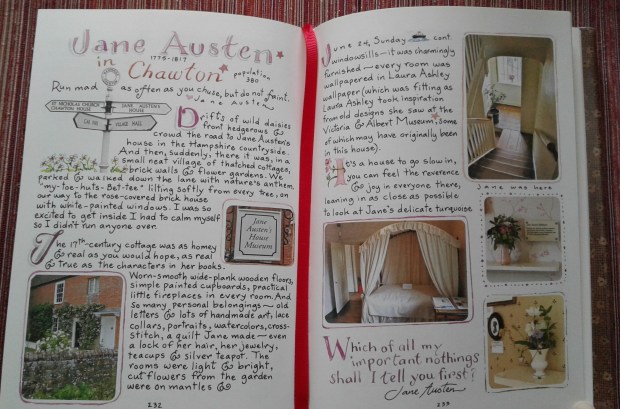
This book was such a mish-mash of seemingly unrelated chapters, including the bizarre one on Sylvia Plath, that I was left wondering – what was the point of it all. Unlike his previous books (Outliers, The Tipping Point), it didn’t seem to have a cohesive theme. I’m not sure what the type of gas stove sold in Britain in the 1960’s has to to with talking to strangers, but maybe anything related to Sylvia Plath sells. Why not a chapter about Jane Austen’s romances, or a Bookshop in Paris? (All references guaranteed to sell a book no matter what). While it could have used more editing, it was an interesting read anyway, and helped to pass the time (6 hours) in the ER dept with a sick family member. Sometimes that’s the best thing about a good non-fiction book – you can read a chapter here or there, no need to stay up late to see what happens next.
I hope you have enjoyed my winter selections, but you’re on your own for the brownies! Have you read any good books lately? (1500 words – most of them not mine)

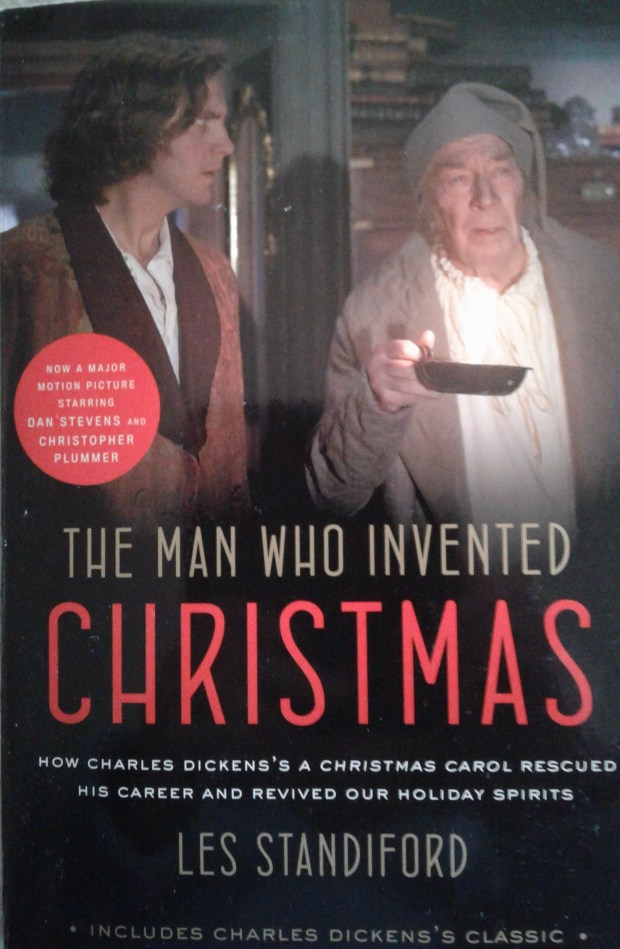


 The Publishers Blurb:





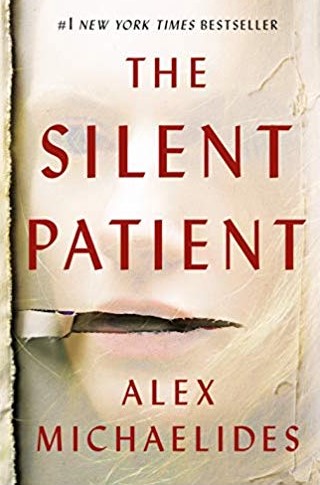
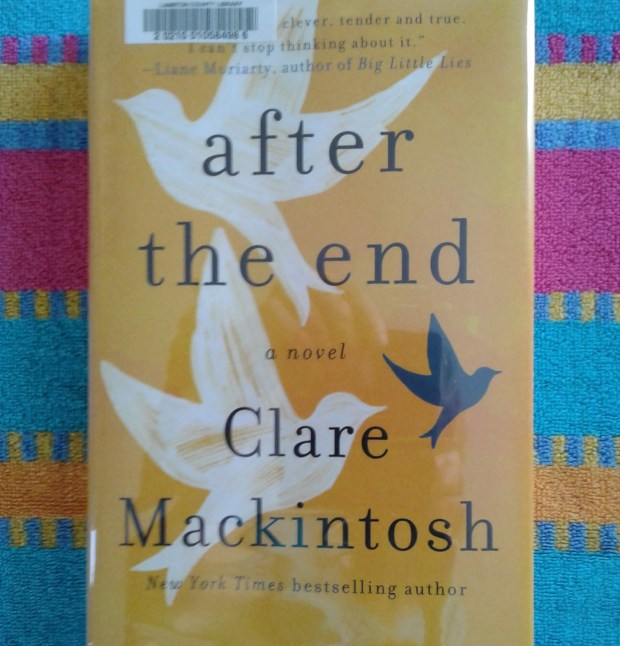

 This month’s literary review is about one woman’s humorous but perfectly disastrous journey through the world of self-help books.




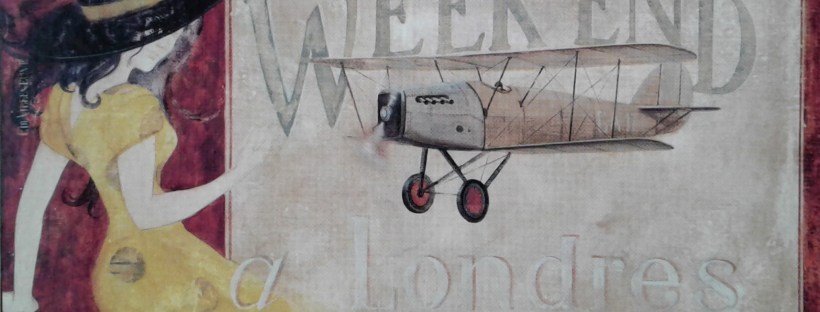
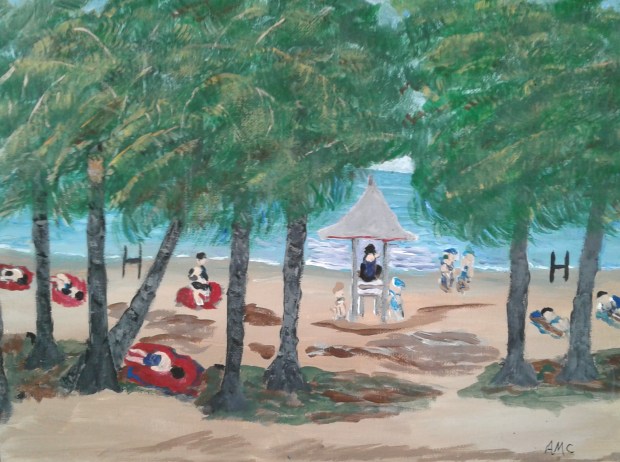 This is the time of year I used to be winging my way south to escape winter for a week. Travel-wise people routinely book flights months in advance to get the best prices for the prime travel season over the February/March break, but years ago travel was still an unknown venture for the vast majority of people. Only 15% of North Americans had even been on a plane in the 1970’s. It took the hippie generation of young baby boomers, staying in hostels and Euro-railing their way across Europe on $10 a day, to jump start the travel industry so that flying became a commonplace experience. In the Pan-Am years of the 50’s and 60’s with the first charter trips to the Caribbean and Mexico (Acapulco anyone), travel was only for the fortunate few and the very rich. The jet-setting life of airline stewardesses was advertised in books like Coffee, Tea or Me……a line that would surely be considered sexist now. My SIL was an airline stewardess in the mid-80’s and said it wasn’t really all that glamorous….more like being a hard-working waitress in the air and trying to sleep in stuffy hotel rooms.
  Today the majority of people hop on a plane at least once a year and think nothing of it. It’s hard to remember when flying was a new and exciting experience, whether someplace tropical or abroad. (The whole concept of Abroad used to be considered exotic, bringing to mind an era of elegance, with ocean liners like the Queen Elizabeth and sleeping cars on the Orient Express). Now flying is just routine, often fraught with headaches, and certainly not part of the fun of going away. Unmanned check-ins and luggage kiosks, long pre-boarding wait times, luggage fees, cramped seats, no meals or drinks and a general lack of amenities have taken the fun from the friendly skies. And consider yourself lucky if no one is ejected from your flight for rude comments or behavior, as many online videos can attest. A friend of mine was so traumatized by a bad airline experience that when her husband found a great price on a mid-winter trip she turned it down because she didn’t want to have to deal with the airport. (I am imagining a future where we might be instantaneously whisked away to our destination in our own magic bubbles like the Jetsons).
  I was 24yrs old when I took my first plane trip, a two-week vacation to Hawaii, a popular destination in the 80’s but expensive even back then. I flew on on a Wardair Boeing 747 Jumbo Jet, a 9½ hour flight straight from Toronto to Oahu – an experience I will remember forever. Wardair was a Canadian airline company started by Max Ward in 1946 as a bush pilot operation carrying cargo from the Yukon and Northwest Territories to Edmonton, which eventually expanded into a luxury domestic and international travel fleet of aircraft. Mr. Ward believed that PART OF THE FUN OF TRAVEL SHOULD BE GETTING THERE. Wardair’s motto was luxury “Steak and Champagne” flights at reasonable prices. Here’s a


 thehomeplaceweb