The Literary Salon – Help Me

Help Me BookThis month’s literary review is about one woman’s humorous but perfectly disastrous journey through the world of self-help books.   

The Publisher’s Blurb: 

Marianne Power was a self-help junkie. For years she lined her bookshelves with dog-eared copies of definitive guide after definitive guide on how to live your best life. Yet one day she woke up to find that the life she dreamed of and the life she was living were not miles but continents apart. So she set out to make a change. Or, actually, to make every change.

Marianne decided to finally find out if her elusive perfect life—the one without debt, anxiety, hangovers or Netflix marathons, the one where she healthily bounced around town with perfect teeth to meet the cashmere-sweater-wearing man of her dreams—lay in the pages of those books. So for a year she vowed to test a book a month, following its advice to the letter, taking the surest road she knew to a perfect Marianne.

As her year-long plan turned into a demented roller coaster where everything she knew was turned upside down, she found herself confronted with a different question: Self-help can change your life, but is it for the better?

About the Author:

Marianne Power is a successful British journalist and blogger.  She lives in London, England.    She was a freelance writer at the time the book was written.

My Goodreads Review:

Help Me: One Woman’s Quest to Find Out if Self-Help Really Can Change Your LifeHelp Me: One Woman’s Quest to Find Out if Self-Help Really Can Change Your Life by Marianne Power

My rating: 5 of 5 stars

Marianne Power’s year long journey sampling the shelves of the self-help section is an enormously entertaining look at the self-help genre.    We’ve all read self-help books, except maybe those with perfect lives and non-dysfunctional families.    But are they…well…helpful?    We tend to read them and then toss them aside, so how intriguing to read about someone who spent a year road testing them.   I absolutely loved this book – it was brilliantly written, hilariously funny and when she spirals out of control into the depths of despair, painfully honest.   Not many people would be so revealing about their less than perfect lives and perceived flaws.  Fortunately, Marianne had her mother, so full of wisdom and sensible advice, to help her through her year of applied psychology.   I can just hear her mother sighing, “Oh Marianne, you’re fine, just the way you are.”   And she is.   PS.  I hope now that she has become a successful author, she makes enough money to pay off all her debts and buy a house.    

Discussion: 

I noticed this book on the Just New Releases shelf at my local bookstore, because pursuing the self-help section is something I’m long past.   When you’re older, you realize that your life doesn’t need fixing…. you’re happy to be still living, reasonably healthy and mostly content.   If I do pick up a self-help book it’s more likely to be one about living with gratitude or something practical like how to get organized – Marie Kondo I may be revisiting you before I empty out those kitchen cupboards! 

The book was so engaging, I just could not put it down.    I enjoyed her witty style of writing.   The chapter on angels was LOL funny, but then I grew up Catholic so I could relate.    

‘My guardian angel was a daily companion who got me through exams and my ever-present fear that a burglar would break in while I slept.  Every night I’d pray to her, turn off the lights, and then when I’d be practicing playing dead, (I figured murderers wouldn’t kill me if I was already dead in my bed), I’d imagine her flying over me, her golden wings flittering, like Tinkerbell.   She was pretty.  As all angels should be.’       

While I was aware of some of the titles and authors she explored, I had only ever read Feel the Fear and Do It Anyway (which surely must be from the 80’s), and The Secret, (during my Gospel according to Oprah phase).   I knew of The Seven Habits of Highly Effective People, and that Tony Robbins was a popular life coach but the chapter on his workshop was just too weird and cult-like.    Of all the books she mentioned, the one that seemed to resonate the most with her was The Power of Now by Eckhart Tolle.    She had tried to read it once but her therapist recommended it might speak to her now, as sometimes it’s a case of the right book at the right time.   I might check that one out as I tend to be a worrier and have trouble staying in the present.   (Edited to add – sorry to say but I abandoned Mr. Tolle at the halfway point,  although I did find him helpful those nights I had insomnia mulling over all  those kitchen reno decisions – it was so boring that after a few pages I was out like a light). 

She did see a therapist, and that brings up another issue about self-help books – many people turn to them because they can’t afford a therapist or a life coach and there’s only so many times your friends and family can listen to you moaning about the same old problems.   Not everyone has a wise sage of a mother dispensing sound advice, so to obtain nuggets of wisdom and fresh points of view from the pages of a book cannot be dismissed.  Discussions about how to live a good and happy life have been with us since the days of the Greek philosophers.    But is too much introspection a bad thing?   The last chapter sums things up nicely.  

Some Quotes:

“The unexamined life is not worth living.”  (Socrates)

“All this thinking about yourself is not good for you.”  (Marianne’s Mum – Chapter 11)

 Is there a particular self-help book which you have found helpful?

A Victorian Tea

Every May 24th weekend one of our local museums hosts their annual Victorian Tea, complete with freshly baked scones, white tablecloths and fine china.   

 The May 24th holiday weekend in Canada is called the Victoria Day weekend, because May 24 was Queen Victoria’s birthday.   Older people may remember the schoolyard rhyme children chanted years ago – “the twenty-fourth of May / Is the Queen’s birthday; / If they don’t give us a holiday / We’ll all run away!”    Now many people don’t even know who Queen Victoria was, unless you watch the PBS TV show Victoria, but she was Britain’s longest reining monarch, although Queen Elizabeth surpassed her in 2015.   She became Queen at age 18 and reined over the British Empire for 63 years, from 1937 until her death in 1901, a period known as the Victorian era.   She married her cousin Albert, had nine children and survived 20 different governments and 11 prime ministers.   After her death, her birthday was made a federal holiday, which was eventually was moved to the Monday preceding May 24 because of the weekend.   Queen Victoria most likely would have approved as weekends were an invention of the Victoria era.   This May 24th marks the 200th anniversary of her birth in 1819. 

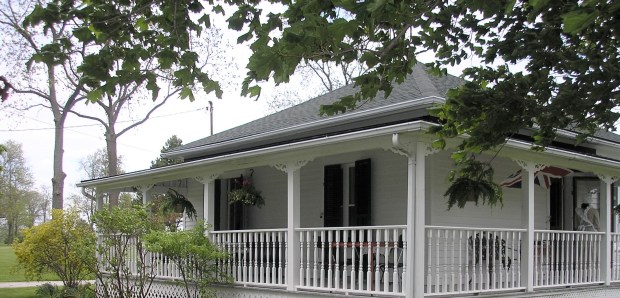
Victorian Tea CottageNote: the Union Jack (Canada did not get it’s own Maple Leaf flag until 1965) and the old fashioned lilac bush (see Lilac Time)

The Victorian cottage is one of many buildings on the museum site, whose mandate is to display our past customs and heritage.   Many have been moved to the site, including a one room schoolhouse, a small church and a log cabin from the days of the early settlers, but the cottage was part of the original grounds.   It is a small one floor dwelling, built in 1893,  which was used by a Detroit woman as a summer home until her death, when it was donated to the museum.    She was known as the cookie lady, for her kindness in treating the neighborhood children to sugar cookies on the veranda when they were passing by. 

Victoria Tea Cottage

 It consists of a good sized dining room, living room and  kitchen and two very small bedrooms.   

Victorian Tea

Victorian Tea Cottage

The inside still looks as it did during the time she lived there, floral wallpaper, quilts and all.  

China cabinet Victorian Tea

The problem with the Victoria Day weekend is that the weather is usually guaranteed to be cold, rainy and miserable, which does not deter the campers, as it is considered the unofficial start to summer.   It seldom fails, whereas the following weekend, the US Memorial Day is often quite nice.  Still, not one to let a bit of rain (or even forty days of it like this spring), get in the way of a good tea spread, I decided to attend.   The last time I was there,  it was miraculously a warm and sunny day, with a pleasant breeze coming off the river, and we were able to take our tea outside on the veranda, as opposed to inside huddled beside the stove.     It was such a fine day we lingered over a second cup.  

Victorian Tea cottage

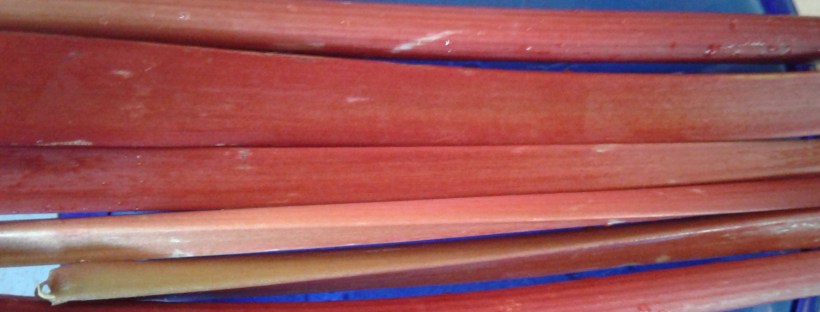
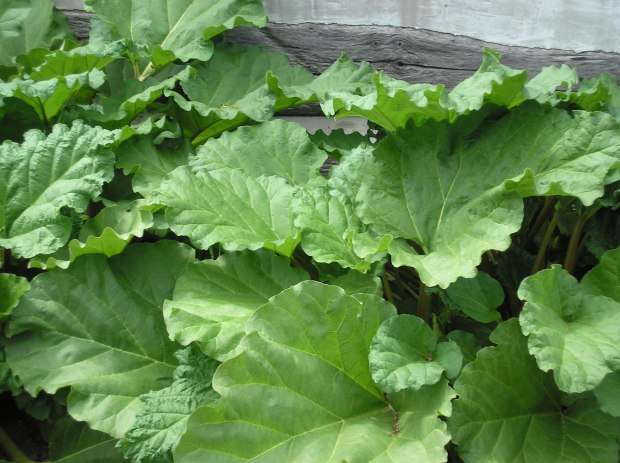
Although the day started out warm and sunny, the forecast was rain by 3pm, (I’m quite serious about the forty days of rain), so we set out early and decided to tour the buildings first (my friend had never been there), as we could always sit inside later if it started to pour.   On our walk about, I noticed a big patch of rhubarb growing beside the log cabin and took some pictures which I could have used in last week’s Rhubarb Lunar Cake blog.  (It’s never too late to edit!)  

Rhubarb

There’s something so civilized about a tea party and the clink of china tea cups, shades of Downton Abbey.    Each small table was laid with white tablecloths, cream and sugar sets, crystal butter dishes, jars of strawberry jam and a colorful mixture of china cups and plates. 

Victorian Teat

 The servers, young and old, were dressed in the costume of servants of the day, complete with frilly caps and white aprons.   The wind was so strong, their aprons were billowing in the breeze and the tablecloths were threatening to blow away, so we decided to sit inside. 

Victorian Tea

The only occupant of the veranda was a bird nesting high up in the rafters, most likely anticipating left over crumbs.   

Bird nesting

 Even inside, with the veranda doors open, it was so windy that our vase of flowers blew over soaking the tablecloth, which they removed and replaced with one even more exquisitely embroidered.   Our server, a charming young girl of about ten, inquired as to our choice of tea and scones – raisin, rhubarb, orange or apple cinnamon.   

Victorian Tea China

 Such a difficult decision, but my choice is always the rhubarb – it was divine, light and fluffy, and I am still trying to get the recipe, a carefully guarded secret.    Unfortunately I forgot to take a picture of it before it was consumed!   Victorian Tea Cottage

They make up to 400 scones for the day, using the cottage’s own wood-fired stove.  (Note the mirror at the top – I guess that was to check your appearance after slaving over a hot stove all day?)    The cost of the tea was $7.50 with donations to the museum fund, ordinary admission being $5, a bargain for the price.    

Exactly at 3 pm as predicted, the skies opened up and rained on our lovely tea party.   Oh well, there’s always next year…I’m sure I’ll be back.  

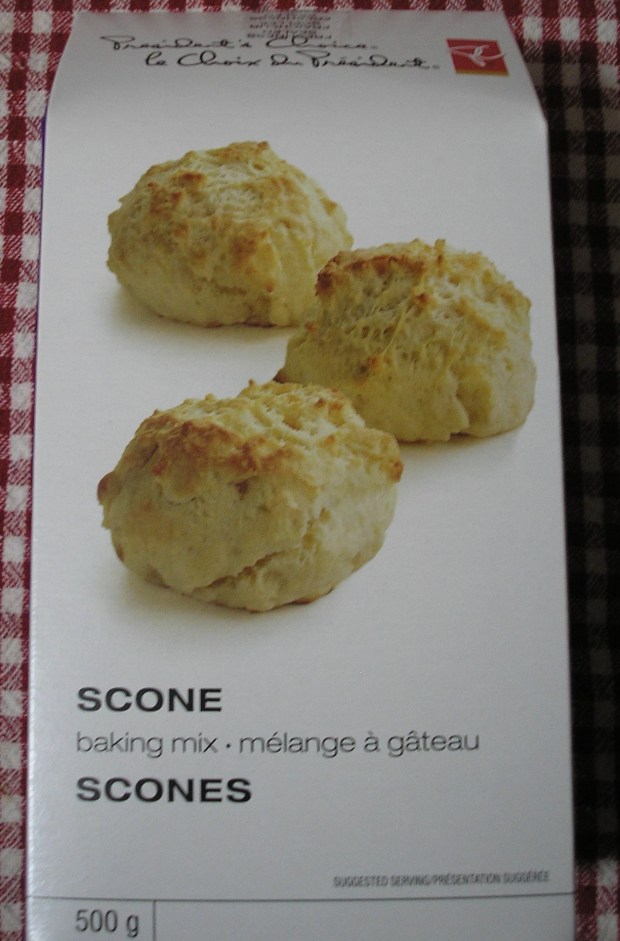
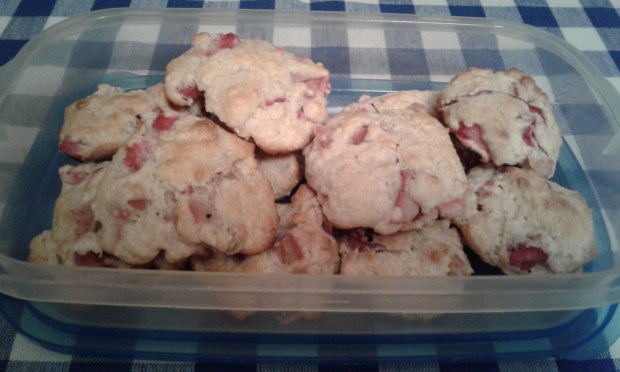
Postscript:   Easy rhubarb scones, only for truly lazy cooks or those whose kitchens are about to be torn apart.   Mix this, Rhubarbwith this, Rhubarb scones

bake as directed,  Rhubarb sconesand you get this.  Rhubarb scones

Enjoy with a nice cup of tea in a china cup!


Rhubarb Lunar Coffee Cake

Rhubarb

“Mission Control to Earthlings:  Volunteers needed to test Lunar Cake recipe.  Only rhubarb lovers need apply.”       

Rhubarb is one of those foods you either love or hate.   I never liked rhubarb until a few years ago, but then my entire culinary experience consisted of a very tart rhubarb pie my mother would make for my dad once a year.   We had a big rhubarb patch on the farm, and no matter how much sugar she used in the pie, it was so sour no one else would eat it.   The rhubarb patch was rectangular in size and was beside a row of red currant bushes, with one black currant and one gooseberry bush at each end.   Behind it, the odd spike of asparagus would appear in the early spring, these all being old-fashioned farm staples from a century ago.  Today they would be considered heirloom varieties.   Once established, those old rhubarb patches would live forever.   I would sometimes volunteer to pick the red currants, as my dad would get his very own red current pie too.   In retrospect those pies must have been something his mother had made, nostalgic reminders of childhood.   We just thought they were sour.

Rhubarb patch (6)

Because the patch was so large and prolific and had been there for many years, people from town would stop by and ask if they could buy some.   If you are a rhubarb-lover you always know where a good patch is.   We would see the same people year after year, so one day we kids had the ingenious idea that we would have a roadside stand and sell bundles of rhubarb for 25 cents –  a country version of a lemonade stand. 

The rhubarb stand lasted all of one Sunday afternoon.  There was little traffic on our dusty country road and we soon grew bored laying on a blanket under the big tree out front.    On the rare occasion someone did stop, we would run to the house to get our parents, because we had been drilled in school not to talk to strangers, even those innocent souls out for a Sunday drive.   (Makes sense right, well in the mind of a child).   I think we grossed 75 cents.  

rhubarb and dogs (5)

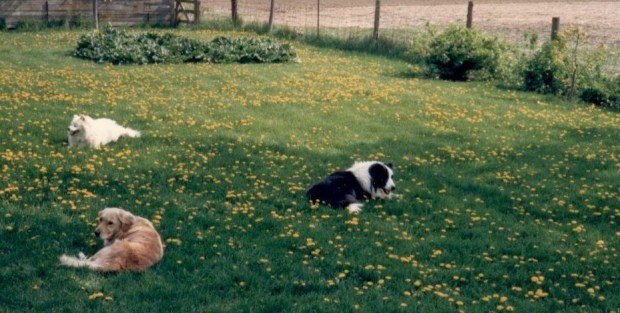
Luckily we had our guard dogs to protect us and the rhubarb patch!

Now as an adult, count me in as a rhubarb fan too.   I especially love strawberry-rhubarb jam, rhubarb scones, and most recently a rhubarb coffee cake, which I’ve made the past few years from a recipe a dietitian friend gave me.    This Canadian recipe is called Lunar Rhubarb Cake and was developed by an editor of Canadian Living magazine back in the 1980’s.   It was so good, it went viral before viral even existed, with everyone saying they got it from their mother, aunt, neighbor.   (A recipe which promotes sharing like that, is one small step for food-kindness).    According to the food column in the Ottawa Citizen, the name lunar comes from the appearance of the top of the cake, similar to the crater-like surface of the moon.   

Rhubarb

CAKE INGREDIENTS:

1/2 cup butter (softened)

1 1/2 cup white sugar

1 egg

1 tsp vanilla

2 cups flour    

1 Tsp. baking soda

1/2 tsp salt

1 cup sour cream (you can use 2% if you wish)

2 cups chopped rhubarb (you can increase by 1/2 cup more if you wish)

1 tbsp. floor  

LUNAR TOPPING:

1/4 cup butter (melted)

1 cup firmly packed brown sugar

2 tsp. cinnamon  (I omitted this, as in my opinion cinnamon goes with apple pie, not rhubarb)

DIRECTIONS:   

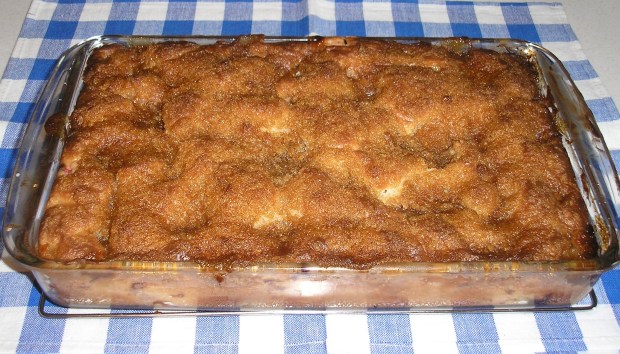
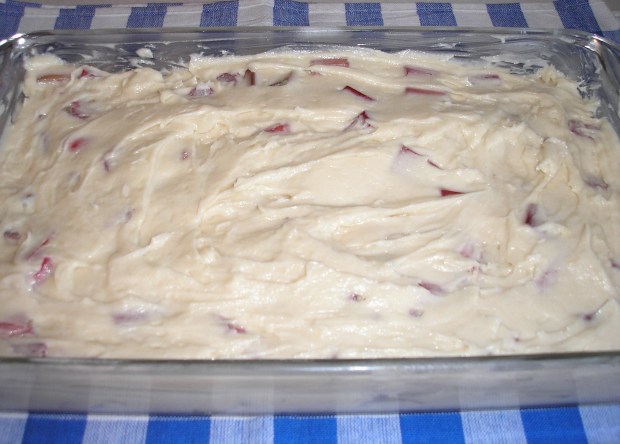
Chop the rhubarb and toss with 1 tbsp flour.   Cream the butter and sugar.  Beat in the egg and vanilla.   Mix 2 cups flour, soda and salt together.  (I buy the premixed flour with the baking soda and salt already in it which is more expensive but saves measuring).   Alternatively add the flour mixture and sour cream to the creamed mixture.   Add the rhubarb to the batter.    Pour into a buttered 9 X 13 inch cake pan.    Mix the topping ingredients and spread evenly over the top of the cake.   Bake at 350 for about 45 minutes, until the top is pitted and crusty and a skewer comes out clean.    (It was 15 minutes longer for me, as my oven always cooks slow).    Recipe serves twelve hungry astronauts.

Some versions of this recipe call for buttermilk or sour milk instead of sour cream.   The batter will be quite thick with the sour cream.  Rhubarb

The cake keeps well in the fridge and was incredibly moist even after a week.  It transports well too, should you wish to take it to a party in another galaxy.  I think it would work well with blueberries when the season arrives, because as we all know rhubarb season is way too short!     

Maybe if my mother’s old-fashioned rhubarb pie had a crumble topping we might have eaten it too, as the sweetness balances out the tartness of the rhubarb, similar to the popular combination of strawberries and rhubarb.  Although I’m not a huge fan of strawberry-rhubarb pie, mostly because of the pastry, I have made a compote by stewing equal parts of rhubarb and strawberries on the stove and adding sugar to taste.    It’s nice mixed with vanilla yogurt or ice cream or just eaten plain. 

Strawberry-rhubarb compote

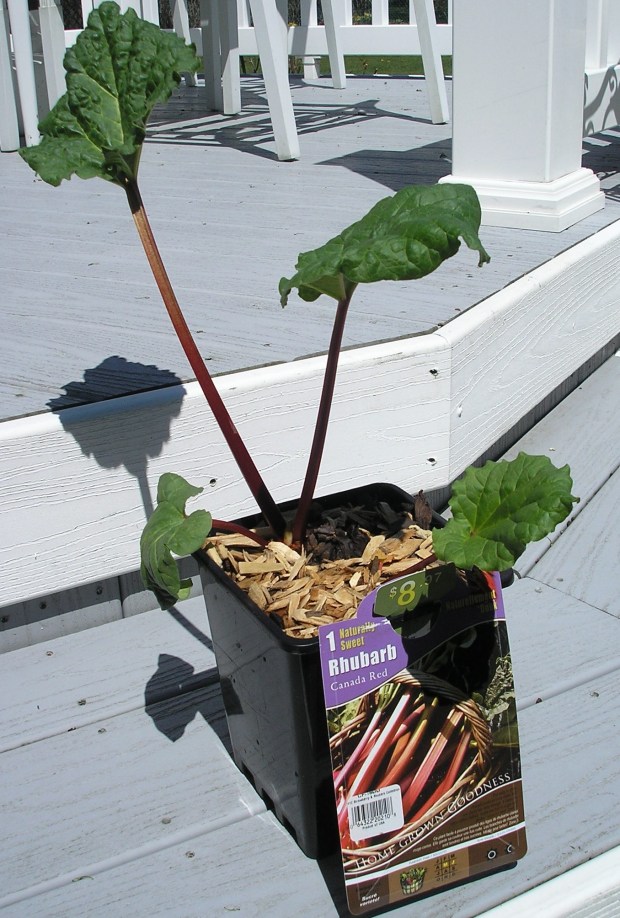
I’ve been envisioning my own rhubarb patch in the backyard, so I bought home this last week, although it’s been too cold to plant it.   Rhubarb plant

Although eaten as a fruit, rhubarb is actually a vegetable.   While the stalks may be edible, the leaves are toxic to humans and animals due to a high concentration of the poison, oxalic acid.   It is a perennial which likes cooler climates.   Plant in full sun, spacing 3 or 4 feet apart in a row.    Patience is required as you can’t harvest the first few years until established.   Newer varieties last about 15 years.   You can also divide existing rhubarb plants (root balls) in early spring, so I might be on the hunt for an old patch down a country lane….

Flash forward to 2025 – mission accomplished….hopefully? 

Rhubarb   


Lilac Time

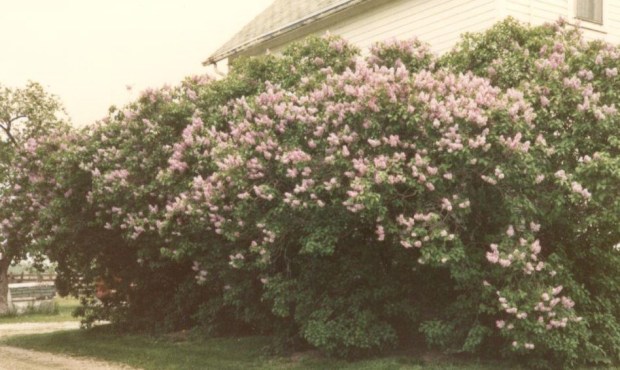
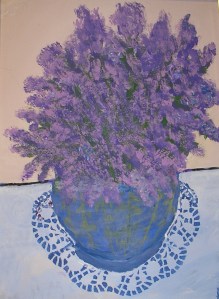
Our old white farmhouse was surrounded by lilac bushes, which were often out in time for Mother’s Day, an occasion we always celebrated on the farm with a big family meal which my mother prepared.   Looking back, it seems strange we made her cook on Mother’s Day, but then my grandmother always came over, so she probably considered it her daughterly duty, and was happy having all her kids home, even if it did mean we ended up doing two hours of dishes by hand in the days before the dishwasher.   Out would come the lace tablecloth and the good china, and the long farm table, dating from 1870, would be extended to its maximum length, with later another set up in the kitchen for the ever-growing collection of grandchildren.   Of course, this was in the days before going out for brunch became popular, which we tried occasionally but which was often a disappointment, restaurants always being so busy that day, and the kids not being able to play outside, where the lawn and orchard would be sunny with dandelions.    

Those old farm lilacs were common in the countryside, with almost every farmhouse (which back then only came in two types, white clapboard or yellow brick), sporting a bush or two.   But ours were special, as they surrounded the house on three sides.   If it was a nice day with a south breeze and the windows open, the smell was heavenly.    The fragrance would waft in through the kitchen and living room windows, and also the upstairs bedrooms, as the bushes were quite tall.      

lilacs 1 (3)

We also picked some to bring inside and put in vases, something I still do to this day.   Even when I was older, I would always take a bouquet or two home, wrapped up in tinfoil, to put on the kitchen counter.  

lilacs

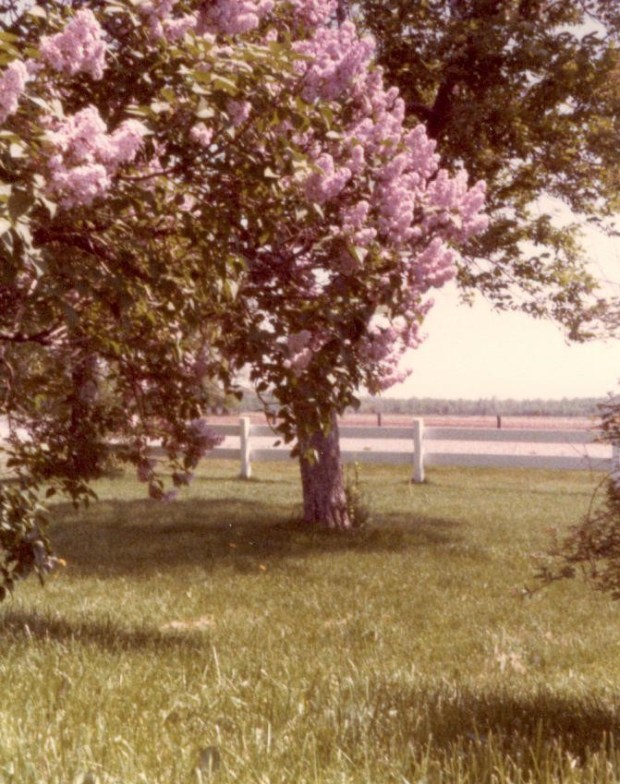
After my father passed away and my mother moved into town, my sister brought her two lilac bushes as a house warming present.   They lasted about fifteen years and then had to be cut down.   I planted two lilac bushes in the corner of my yard ten years ago, and they are now starting to look spindly.  One bush smells like what I remember, the other does not.    Of course, they are late this year, like everything else, so these are pictures from last year.

Lilacs

There are over 2000 varieties of lilacs, according to the International Lilac Society, in a wide range of colors, sizes and blooms.    Common lilacs generally prefer cold winters, well drained soil and full sun.   They are low maintenance and require little watering, once established – my kind of plant! 

lilacs

My neighbor has the darker purple kind, which does not smell nearly as nice, but then maybe I’m just being nostalgic.

lilacs

All lilacs are lovely, (except those four foot Korean Dwarfs, my Miss Kim never bloomed once), but it is the old-fashioned kind I love the most.   While the nursery sold me the variety known as “common lilac” they certainly don’t seem as hardy as those old farm lilacs, which must have been heirloom stock, as they were still going strong at eighty years plus.   (Some varieties only last 10 to 15 years.)   The “common lilac” has the largest and longest blooms and the most fragrant flowers and can grow up to twenty feet.   Ours would be pruned back once in awhile when they got too tall, (only prune immediately after the spring bloom), but they were always leafy and full, and the branches made excellent spears for roasting hot dogs and marshmallows over a backyard bonfire.  

Lilacs

I was told my grandmother planted them sometime in the 1920’s when she was newly married, after the house was raised, a basement put under it and a veranda added.   She also planted a row of white spirea bushes beside them, so it formed a little alcove.  lilacs 2 revised I would sometimes take a book or magazine there and sit and read, sheltered from the wind, stopping once in awhile just to breathe in the scent.   Here’s the view, looking out. 

lilacs on the farm 1 (2)

Someone needs to cut the grass!

After my mother moved, the house and the lilacs were bulldozed down to make room for  more acreage – a sad fate after so many years of providing beauty.   I wish I had thought to take a cutting or two, but I was busy with life and not much interested in gardening then.       

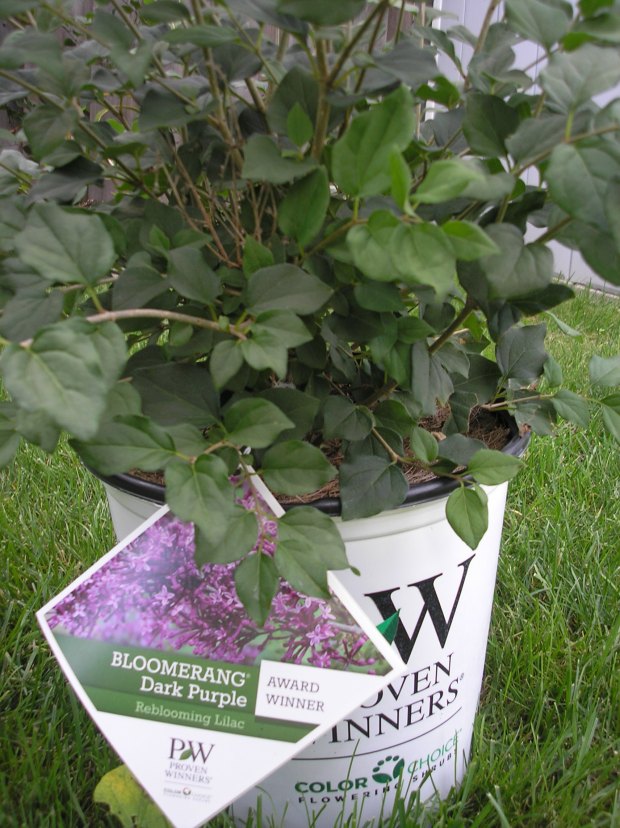
Last fall, I bought two Bloomerang Lilacs on sale, a variety new to me, but then I’m always behind on the latest gardening trends.   (Here’s a link to more info.)   They are similar to the popular Bloom Again Hydrangeas, and will rebloom in the summer and fall after a short rest.  They will only grow to 5 feet, making them more like a shrub than a tree.   Mine seem to have survived the winter nicely and even have buds on them.   I like the idea of having lilacs for three seasons, as a week or two in May seems much too short.   

Lilac Bloomerang

This would make a nice Mother’s Day gift!

If you’re ever in northern Michigan in early June, check out the famous Mackinac Island Lilac Festival (link added to bucket list).   No cars are allowed on the island, but you can cross on the ferry and stay at the Grand Hotel (where Somewhere in Time was filmed) and tour via bike or horse drawn carriage – now that really is going back in time.   Visiting this lilac paradise is a nice way to welcome summer after a cold and snowy winter.  Here are a few pictures from Victoria Magazine, May 2000 issue. 

Victoria Lilacs 1 (2)

Victoria Lilacs 4 (2)

Happy Mother’s Day!

Lilacs - AMc

Farm Lilacs


Blockheads and Daffodils

Which is more depressing, forty days of rain or using the new WordPress Block/Gutenberg editor?

Even the daffodils are depressed

Unlike Enchanted April (link to last blog), this past April has been anything but enchanting.   Day after day of rain and gloomy skies – on Tuesday we even had a bit of sleet, and some places received several inches of snow.   These cold wet late springs are beginning to be the norm here, and it seems you need to book a vacation to an Italian castle if you want to enjoy nice weather and blooming flowers in April anymore.    Despite the debate over climate change, it does make you stop and think – are we ruining the earth?    It’s enough to make you depressed, like poor old Charlie Brown of the Peanuts cartoon fame – remember how Lucy was always calling him a blockhead.

Which brinks me to my second topic, the new WordPress block editor or Gutenberg Editor, as it is named after Johannes Gutenberg, who invented a printing press with movable type more than 500 years ago.    If you are not familiar with it yet, each paragraph, photo, video etc, is contained in it’s own separate block, and there is an option to try out this new Editor on the right hand menu in Draft. Since we are all (sooner or later), to be made mandatory Blockheads by WordPress, you may now have another reason to be depressed other than the weather, unless of course you’re the kind of person who enjoys coding and fiddling with layouts.   If you’re just here for the joy of blogging, then it seems like the new editor has taken all the fun out of it.    I’m not sure how they managed to take something so simple (writing and inserting pretty pictures) and make it so complicated.    Of course, I may change my mind once I get used to it, but it seems to be taking twice as long to do anything, if you can even figure it out in the first place.    On my first try I could not even paste in the draft I had written in Office Word.   I had heard that it would automatically convert it to blocks so I wouldn’t have to copy and paste each paragraph individually.   Was I not in the right block? I finally gave up and tried to exit back to the Classic Editor but could not find the button.    I googled and read the tutorial and tried to contact a Happiness Engineer to no avail, and after wasting an hour finally located it at the bottom of some sub-menu.   Intuitive it is not.   Perhaps hiding the button was deliberate, thereby forcing me to stay here until I figured it out, but the hour grew late and I was starting to panic. It was like being in one of those reality “escape room” games where you have to figure out the clues or you’d be stuck there forever.     

When I first joined WordPress almost two years ago, there were 32 million followers on here, now there are 52 million.     I’m not sure what is behind their reason for the change to the block format (could it be the new European copyright laws coming?), but I would bet the majority of those on here are either amateur bloggers or smaller business sites, who don’t want, have the time or even care about how they can endlessly change and create new layouts by moving blocks around.    It’s a puzzle to me, but then I am only a very small tadpole in a great big pond.    I checked a recent survey though, 1800 of 2700 users who had tried it were not happy, so I don’t think I’m alone.    It would be nice if WordPress would leave us the option to continue with the current Classic editor, if that is a possibility?  (Asking nicely here, but not really expecting a positive response, as they didn’t listen about the dark blue likes and links which don’t contrast well to black ink.)     

Ah well, the second attempt was better, but I watched a youtube tutorial first to get the basics. I’m sure there are many more icons and features I will need to know at some point, like just exactly how did I do the links? The captions were fun though. I’ll try it out to see if it will solve the problem of my very thin font with the Sela theme…(it did not, although I was allowed to make it larger). I’ll even try a background color, maybe yellow….pretty fancy eh? (Except it’s not really yellow, it’s called luminous vivid amber.) But good grief Charlie Brown, it’s just not worth all the grief. I think I would prefer to remain Glutenberg-free! Now where is that exit button again?

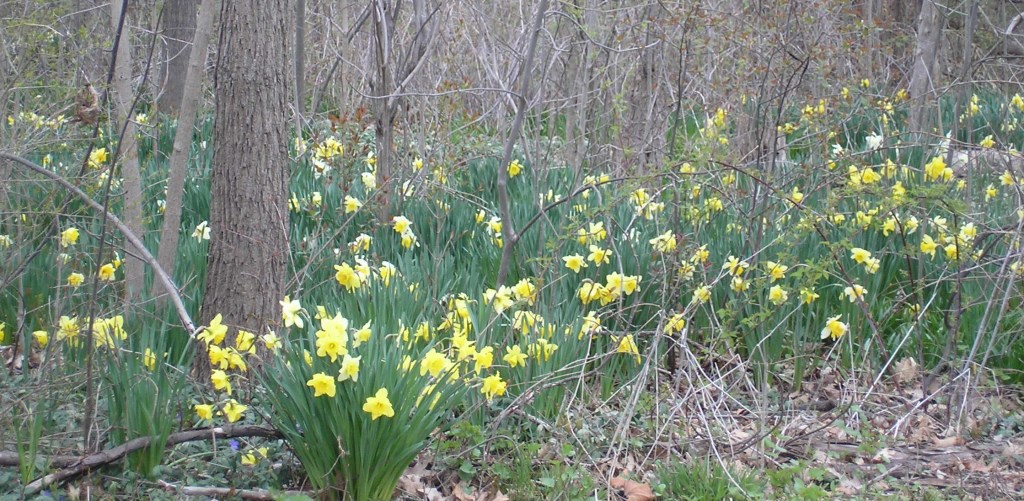
To cheer up I went for a walk in the woods.   Here’s a link to last years blog, Among the Daffodils, because daffodils always remind me of sunshine, and we need some right now.  

see how late the spring is, not a bud on the trees.
now this is yellow!
woodland fairyland

PS.  Have you tried the new Gutenberg/Block Editor yet? 

The Literary Salon – Enchanted April

Last April I posted about a delightful book, Enchanted April by Elizabeth Von Arnin, and since it is April again, I thought this would be a good selection for this month’s Literary Review.    Although this book was written almost a hundred years ago, it’s a favorite of mine for it’s theme of beauty and hope, and how a lovely environment can renew one’s life and perspective.  Here’s a link to the blog……Enchanted April.    I hope your April has been enchanting too! 

The Enchanted AprilThe Enchanted April by Elizabeth von Arnim

My rating: 4 of 5 stars

I absolutely loved this book, but I had watched the movie first. A timeless tale with a lovely story line and such vivid descriptions of flowers, gardens and beautiful countryside that you almost felt like you were there.

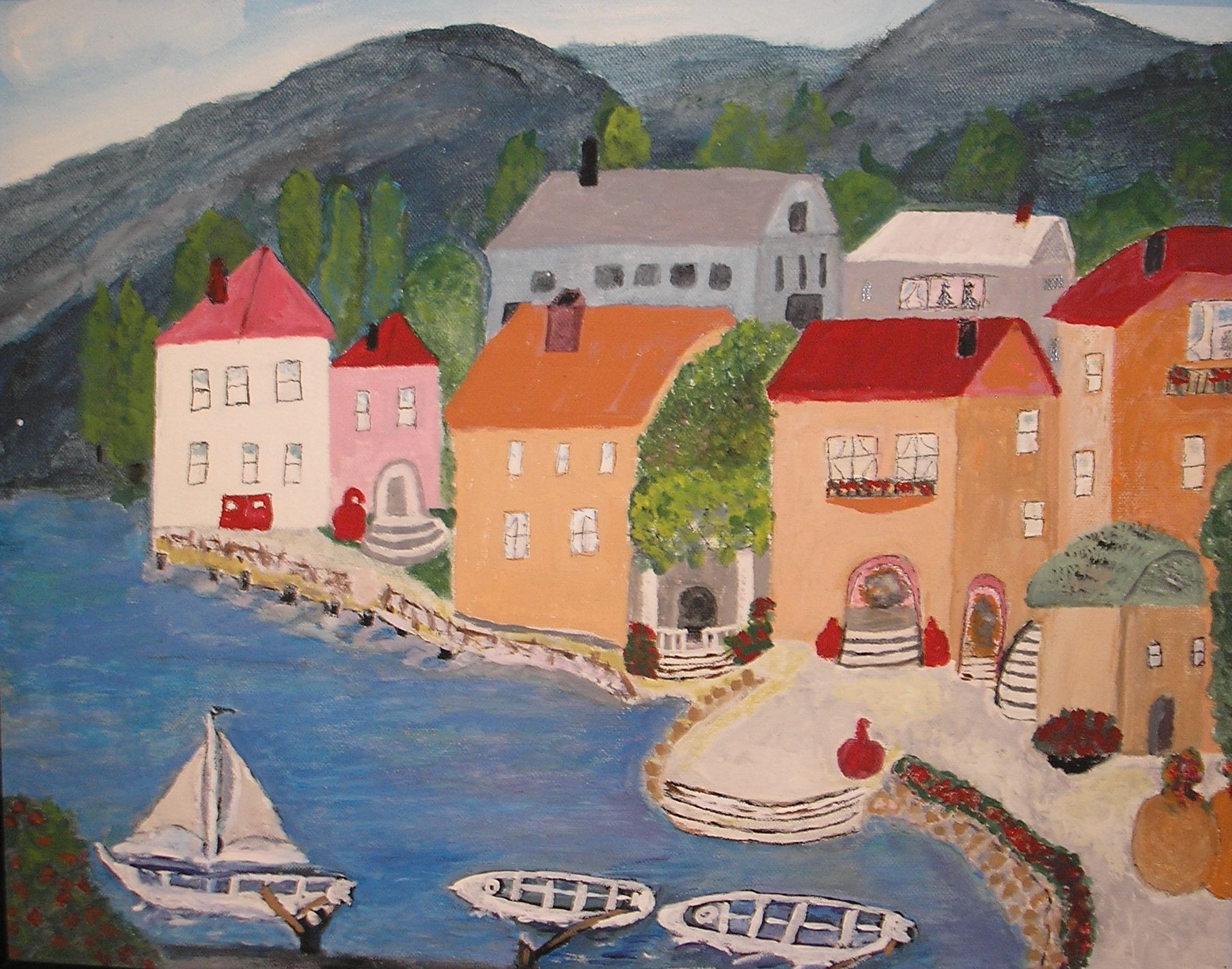
Italian Villa - AMc - 2015

Italian Villa – 2015

Dutch Inheritance

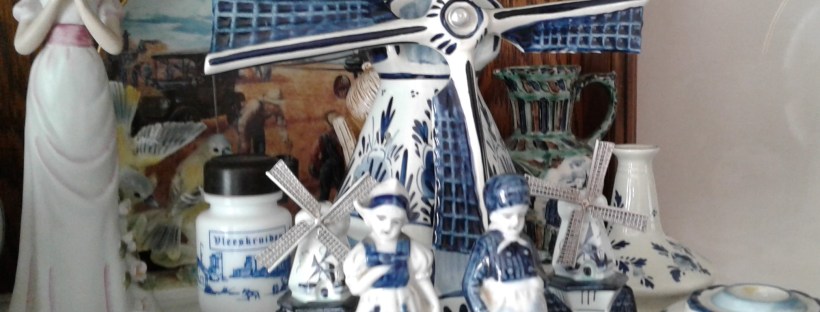
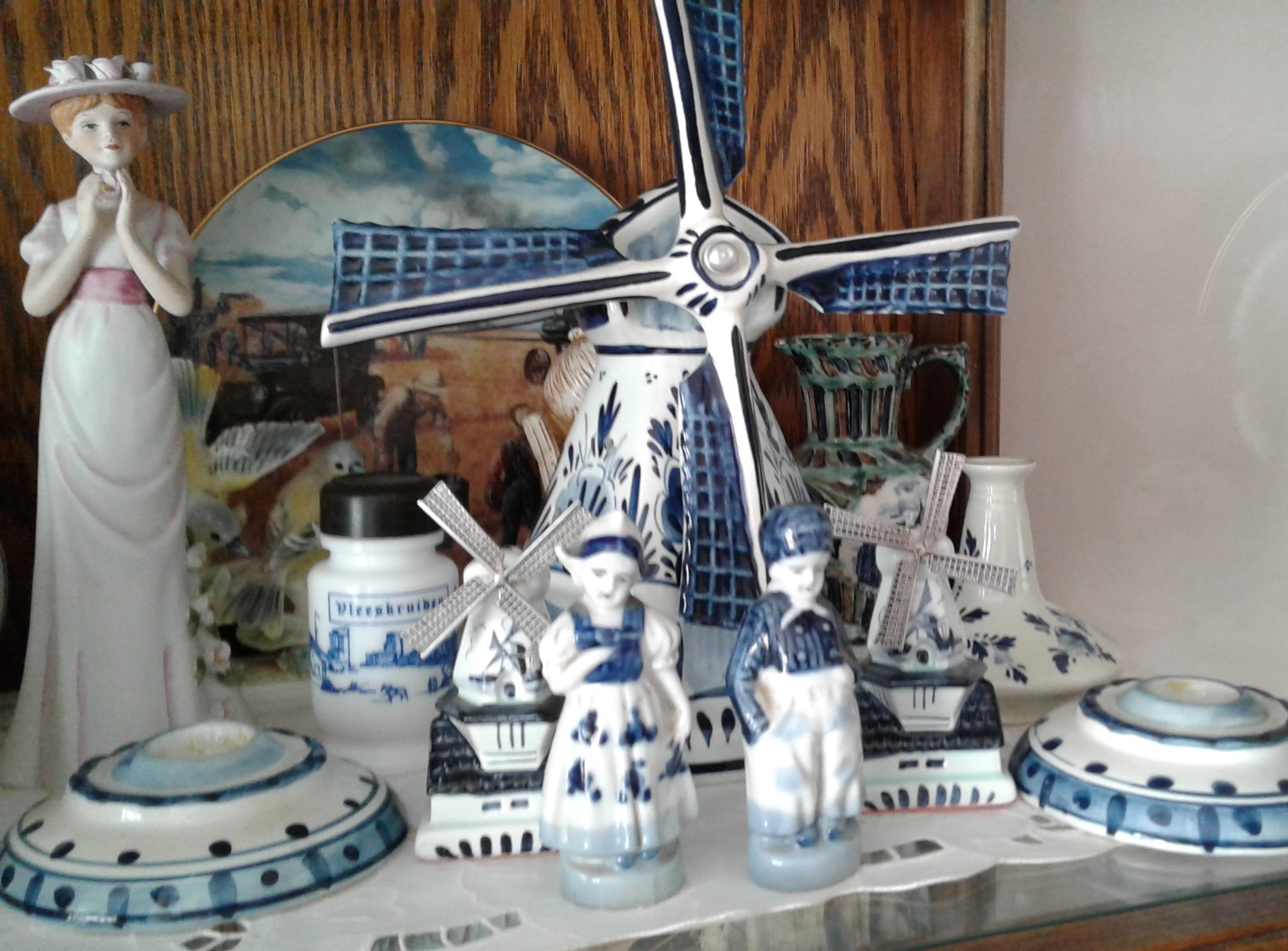
Dutch china       It’s a sad fact of modern life that when you receive an inheritance letter in the mail, you automatically assume it’s a scam and throw it away – especially if it’s from someone who promises that if you will only oblige and send your bank account information the money will soon be on it’s way.    But as it turns out not all inheritance letters are scams.

Tulips

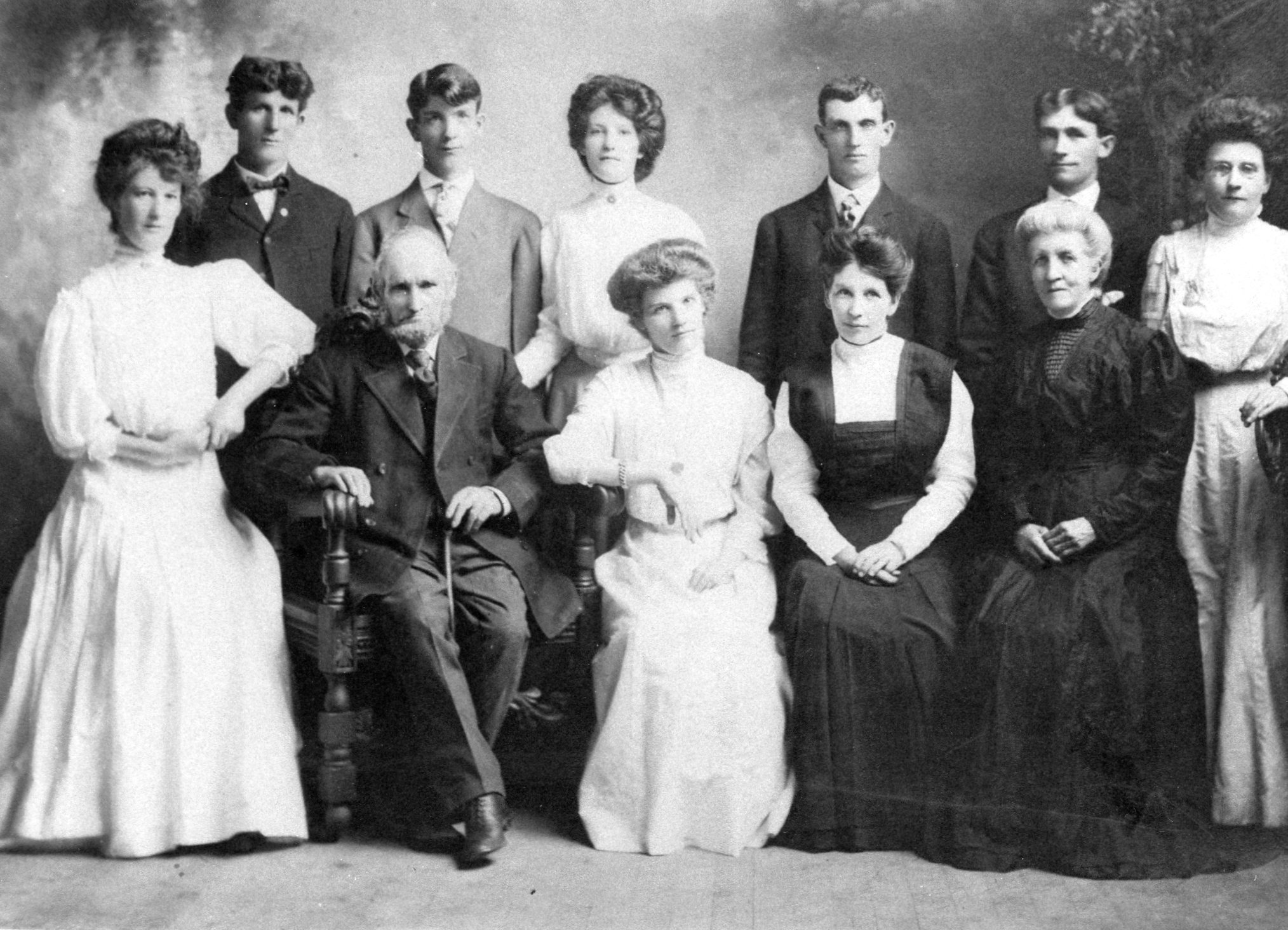
          It’s almost tulip season again, which always reminds me of my grandmother.   I have blogged about my Irish Roots (see also A Visit to an Irish Graveyard), but not about my Dutch ancestors.   My maternal grandparents were from Holland but I never knew any relatives from that side of the family because they immigrated to Canada in 1922.   My grandmother was from a family of seven siblings and my grandfather ten, and being from the same village she was friends with some of my grandfather’s sisters.   In this picture, which was taken in front of the family home just before she immigrated, my grandmother is in the back row, second from the right. Gramma's family (2) My grandparents were married the week before Christmas and left on a boat to New York, arriving in Ellis Island on New Year’s Day 1922.    According to the Ellis Island archives, they traveled with two other couples, one of which was my grandfather’s sister and her husband.   Two of his other sisters and their spouses were already here in Canada, a country where things were supposed to be more prosperous, especially after WW1.    My grandmother had grown up on a small farm and my grandfather worked on the boats on the canals, but there wasn’t much farm land available or work to be had, after he put in his mandatory four years of service in the army reserves.   In order to come to Canada, you had to pass a medical and be sponsored by a Canadian farmer for a year, so they decided to settle in a small Ontario town where there was already a small contingent of Dutch people.   

      I used to tease my grandmother that the ocean liner came over on was her honeymoon cruise, as she was just newly married.   She was 24, the baby of the family and a homebody, and I suspect had she known she would never see any of her family again, she never would have left.    Her parents did not want them to go – but ah, the things we do for love.   She boarded the boat with a large wicker trunk containing all her worldly possessions, her trousseau, blankets and household items, and wearing her mother’s brooch.   I suspect her mother knew they would not be coming back.   She was the only one of their party not seasick on the way over, but if you pretended you were and stayed below deck then you got an orange, which was a luxury at the time.  She remembered having a nice turkey dinner on Christmas Day.   When they got through Ellis Island, they were immediately whisked away to a waiting train enroute to Canada.   They got off the train in Niagara Falls, stepping into a foot of snow, with no boots, as they were not used to that much snow back home. 

       Times were not as prosperous as promised.   They worked in the sugar beet fields to meet the sponsorship requirements.   They had to learn how to speak and write English.   My grandmother’s English was good by the time we were kids but she always had a trace of an accent, and certain words were mispronounced, Kalander for calendar and sleep-out for sleep in, and if she was discussing something with my mother that she didn’t want little ears to hear, she spoke in Dutch.   My grandfather was a quiet man, a real Checker fiend who would never let a poor kid win!   After they had been here a few years, they thought about trying their luck in the US (Chicago), and had a family passport picture taken, (my mother is the baby), but changed their plans when the Depression hit in the 1930’s.  
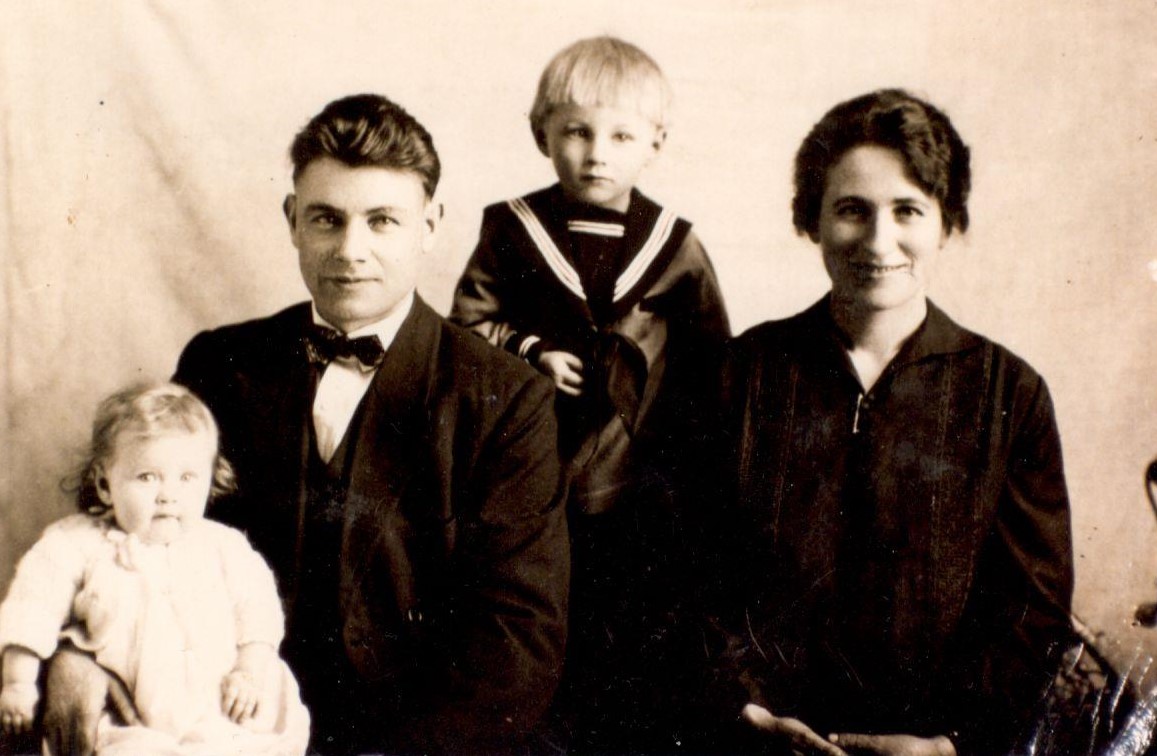
Gramma passport picture (2)

Those were hard years, but my mother said they always had enough food to eat, unlike some families.   An uncle was a butcher and used to supply them with meat.   It was shameful to go on the dole, considered a last resort.  Only if you were sick or starving would you apply for food stamps, otherwise you made do or did without.   It was WW2 which brought them into relative prosperity, as all four of them, including my 16 year old mother and her brother, worked in the war plants, which enabled them to save enough for a down payment on a farm two hours away, (and right across the road from my father, so effectively she married the boy next door).  

It was nice having my grandma right across the road, as we visited frequently, and she would feed us Gouda cheese, homemade root beer and those Dutch ginger windmill cookies which are still available today, plus it meant we didn’t have to travel far at Christmas and holidays.    She was a kind woman, but strong in her opinions and philosophy, could debate any topic, and she raised my mother to be a strong woman.   We were raised to be strong and independent too.   There were no helpless damsels in distress or pampered princess types in my family.    She loved to knit and crochet and tried to teach me once, but I was hopeless.   Her afghans came  in bright colors and I still have a brown/orange/green one she made for me when I was away at school.   She always painted her kitchen farm table an aqua green, where we sat talking many an afternoon, with the white curtains fluttering in the summer breeze and a cat curled up on top of the freezer.   She favored lime green aprons, (it was the sixties), and often wore one even when not cooking, but my mother was by far the better cook.    Emigrating so young she had no one to show her and Canadian food was different from back home.   She had a set of those shallow European soup bowls in her (blue and white) china cabinet long before they were all the rage here.   In her later years, she was starting to lose her vision and hearing, but her mind was still sharp, and she knew everything that was going on in the world and still had an interest in life.    She always told me I was the best of the bunch, because I would go and visit her after she moved into town and bring her cans of lobster, (she had grown up on seafood).   I wish I had visited more often.   You don’t realize what an influence a grandparent has on you until after they are gone.   The last time l was there, she grabbed my hand when I left, her hands were so warm – a few weeks later she was dead from a sudden stroke.  

      I suspect my grandmother always regretted coming to Canada.  She missed her family.   In her old age, she said she was a woman without a country.   When the stairs got to be too much for her she moved into a one floor house in town and hung a photo of her childhood home on the living room wall where she could see it every day.    In this picture are her mother, brother, sister and young niece.
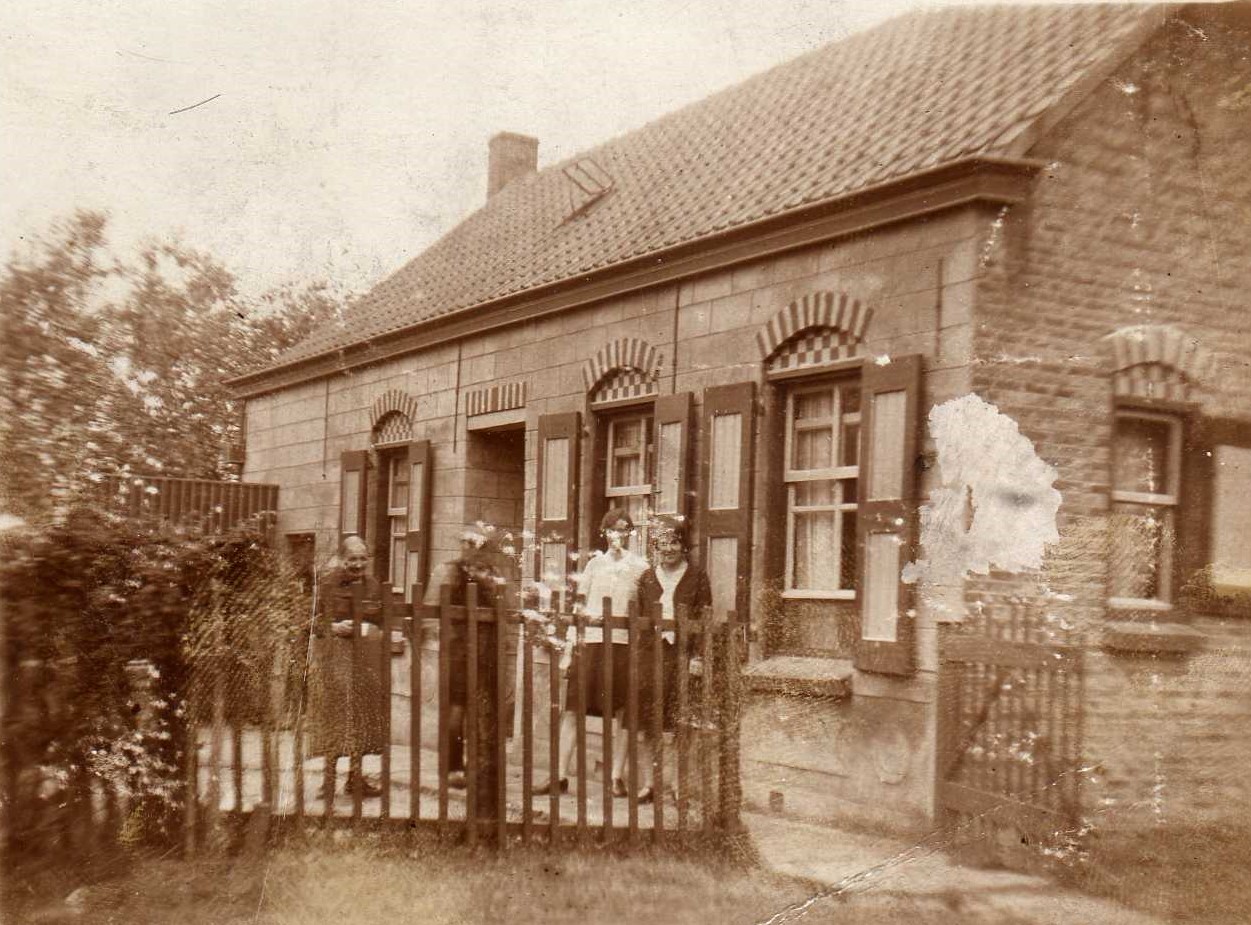
Dutch home

Even if they could have afforded it, my grandpa would probably never have gone home for a visit, as he suspected she wouldn’t have come back, but after the Depression, came the war, and then her parents were dead.   My mother remembers getting the black edged envelopes containing the death notices in the mail and my grandmother dissolving into tears.  Death notice envelope 3 (2)          After my grandfather died, my sister tried to talk her into taking us to Holland on a trip but she said she was too old (she was only in her early 70’s) but I don’t think she wanted to go by then, fifty years had gone by, it had been too long.   But she continued to send airmail letters back and forth to her brothers and sisters over the years.   They sent her a bouquet of tulips for her 80th birthday.   Her siblings all lived well into their 90’s, the last one dying at 95, still riding his bike around town.   They had moved into town by then too, as their farm had been swallowed up by development.   My grandmother herself lived to be 96 in her own home – she was the last of her family and many condolence letters arrived from nieces and nephews in Holland after she died.
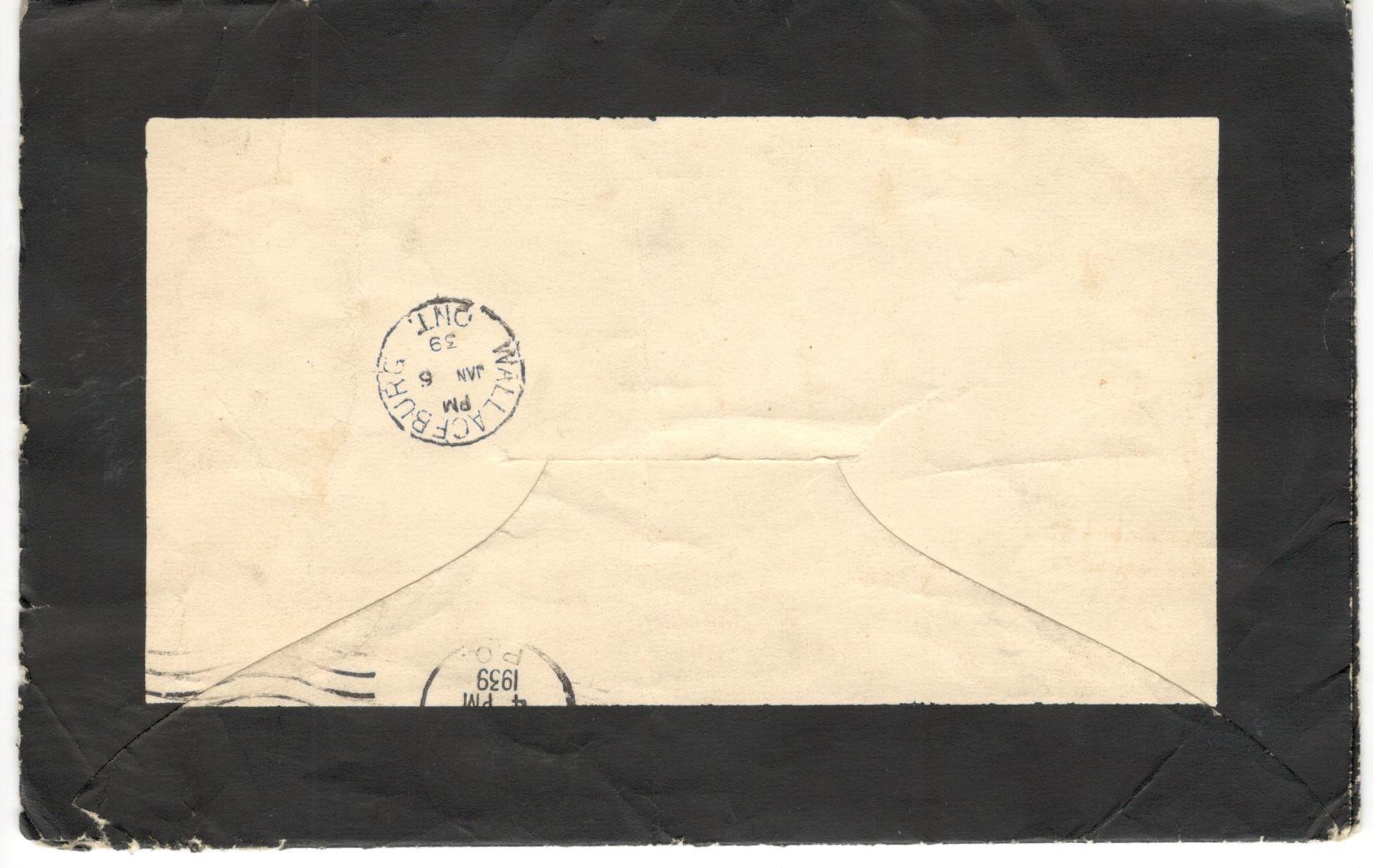
       Flash forward to five years ago when my mother received an inheritance letter in the mail.   A cousin had died and she was entitled to 1/17th of her estate, if she would just sign off for the debts of the estate and return said form as soon as possible.   The English was poor, the grammar worse.  Obviously a scam, who would sign for debts for someone they didn’t even know.   Although my mother was aware of this cousin (the young girl in the picture above), we thought it quite strange, and I assumed scammers, ever a resourceful lot, must have been cruising Ancestry.com for single elderly people  and their distant out of country relatives.   I googled the law firm on Facebook – a group of women lawyers, all wearing navy suits and white shirts, and a few testimonials, all in Dutch – this was in the days before google translate was a feature.   I put the letter aside.   A few months went by.   I mentioned it to my brother when he was home, and he decided to email them – no response.    Six months went by and another letter arrived, this one an official looking form.    By then I was beginning to think it might possibly be true.   But why didn’t they just pick up the phone, they had my mother’s address, exactly as it was wrongly printed in the phone book.   I decided to take the official looking form to the library.    One of the new librarians was Dutch and I had commented on her accent one day as it reminded me of my grandmothers.   She informed me it was a tax form from the Dutch government.  She had emigrated many years before but had an overseas phone plan as she still had relatives back home, so she very kindly offered to call the law firm for me and speak to them in Dutch.   It was legitimate – not a scam at all, and there were no debts – the estate taxes had all been paid off.   My mother had only to send her bank account information, and a copy of her passport.   In the meantime, I received an email from the relative in charge of the estate, assuring me it was not a scam, and they were all waiting for her to sign off.    He sent a copy of the obituary which I later asked the librarian to translate.  By then I had gone through my grandmother’s papers and found a condolence letter from a nephew, and called him, as he spoke English.   We emailed a bit, I asked for some stories about the deceased cousin, and he said he would email later, but he never did.   I wish I knew more about her life, I know she took care of the old folks but nothing else about her.   She must have died without a will as the estate was split among all those cousins.  By then my mother was thinking maybe she would just decline her share and let someone who had looked after her have it, but she wasn’t allowed to decline as then it would go to her children and get even more complicated.    Several weeks went by while the euro continued to drop.   The exchange rate is usually fairly stable at 1.5 but it was down to 1.3.    I emailed the law firm when to expect the money so I could keep an eye on the bank account we had opened, and they said there were now 36 people who had to sign off.  I quite  liked the idea that I have 36 relatives I have never met, surely there must be a family genealogist among them.   Eventually, about a year after the first letter, my mom received about $7,000 worth of euros, which she later used for a new air conditioner/furnace.   I wish she had spent it on something extravagant, like a trip to Holland, but my mother is practical, and at 93, her travelling days are over too.  

Luckily, if you are an immigrant now,  you have much better ways to communicate than my grandmother did – email, Skype, Facebook, getting on a cheap economy flight for a visit.    Be grateful for ways to stay in touch.   Remember when you chose a man or a job or a country, you are choosing a lifestyle.  Choose wisely.   If you want to travel, go when you are young – don’t wait until it’s too late.   Eat plenty of Gouda cheese – it’s good for your bones.  When you grow old, make a will.   Stay interested in life.   Be strong but be kind.  Plant or buy some tulips and enjoy! 

PS.    Do you have a relative who especially influenced your life?     

Dutch Inheritance - AMc

 (Next week in Come From Away, I will be tackling the timely topic of immigration from a genealogical point of view…if I’m brave enough.)   


Signs of Spring

Spring is late again this year.  Having survived a particularly brutal winter, which started early and never let up, we’re all tired of the snow and the cold, and anxious for the first signs of spring.   So, here’s my take on the Six on Saturday Garden post….   

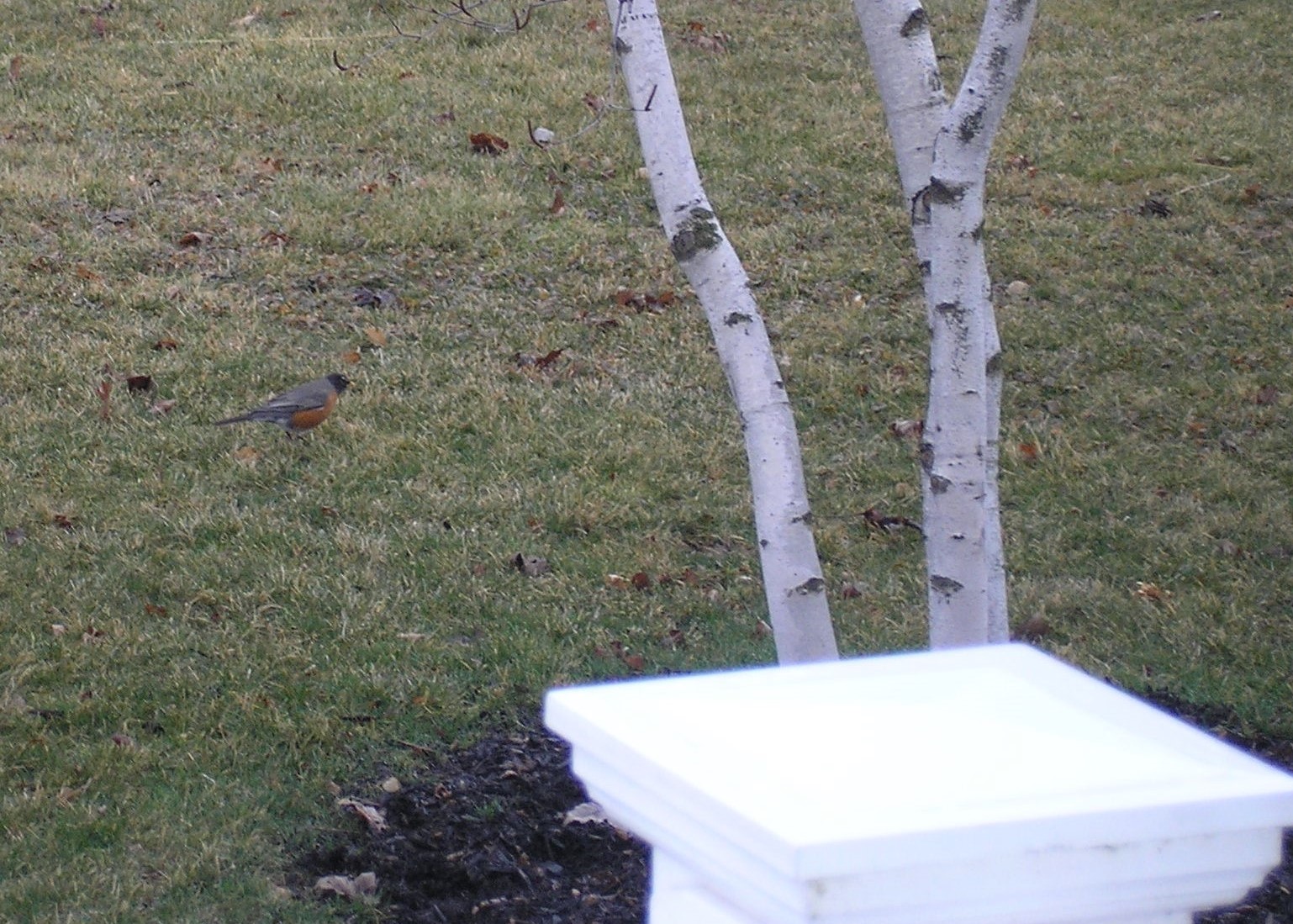
March 20 – The first official day of spring – saw my first robin, who was uncooperative for a photo-shoot, hopping away every time I got near.  Unfortunately the zoom lens on my camera is broken so this is as close as I got.  Robin

March 22 –  The tulip and daffodil tips are peeking through on the south side of the house and some of the rose bush stems are starting to turn green.

daffodil tips

March 23 – Went out for a walk for the first time in weeks, the wind was cold but the sun was bright, and the neighbor’s snowdrops were out in full force.  

snowdrops

March 25 – The Angry Bird  – I opened the front door to check the temperature this morning and saw the morning doves have returned.   One was sitting on the front step, looking quite perturbed now that it has to find a new place to nest.   They are life long lovers and creatures of habit, but as they didn’t build a nest last year I thought it was safe to install new light fixtures.    I’m feeling guilty but my new lights are so much nicer than the old.  

Morning Doves

Mr. And Mrs. Lovebird

light fixture

March 26 –  So nice to see a blue sky again, especially against a budding maple tree.Blue sky and maple buds

March 27 –  saw my first crocus while returning a book to the library.   Their flower beds are always gorgeous because they have professional gardeners maintain them.  

crocus

March 28 – first spring-like day, 15 C, and first milkshake from the Dairy Queen –  chocolate of course.   Drove home with the windows down.  Dairy Queen Milkshake

March 29 – The ice is gone from the river and the sunlight is sparkling on the water again.    river view

March 30 – our first all day spring rain flooded the back forty, but brought a tinge of green to the grass.  spring rain

March 31 – brought a return to winter and a couple of inches of snow – the robin was not amused.    The snow hung around for a more few days – is this some kind of April Fools joke? Robin

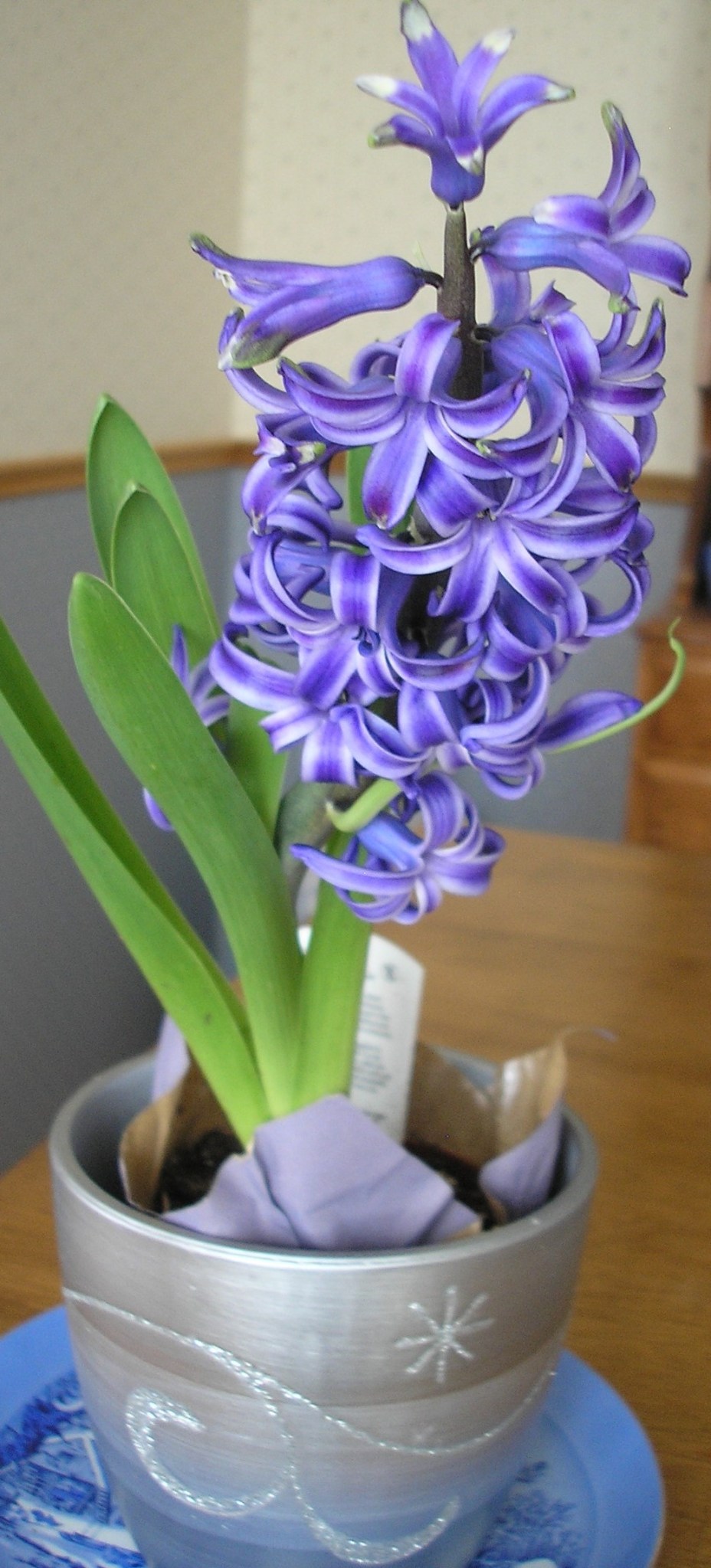
A pot of hyacinths can provide a small dose of beauty, hyacinth

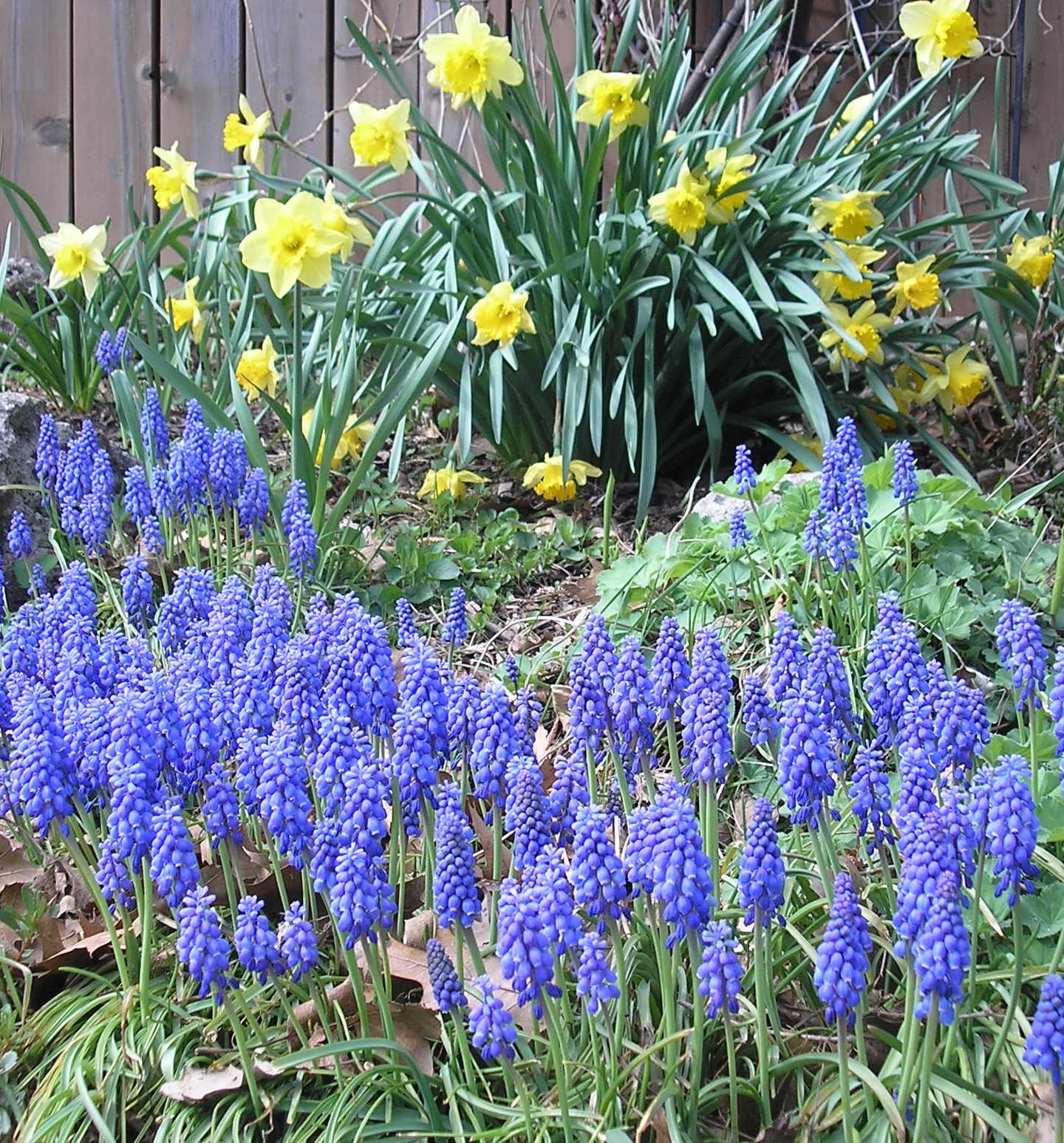
while we wait for this.        

Daffodils and hyacinths

What wonderful sights await us in a few more weeks.   Happy Spring!   

The Literary Salon – Travel Books

If you’re not fortunate enough to get away for a vacation this year, what better activity than to curl up with a travel book and listen to the March winds howl, (like a lion the same way they came in).    Last year I wandered into the travel section at bookoutlet.com and never left.   There are so many wonderful travel books available, it’s difficult to narrow it down to just a few, but here are some of my personal favorites.    (Warning: travel memoirs can be equal parts enjoyable and annoying.   There can be a fine line between reading about someone’s wonderful experiences in a sunnier place, especially when you are still in the dull dreary dregs of winter, and resenting the hell out them.    But remember there can be comfort in staying home too…see The Golden Age of Travel post).      

The Pioneer

Enchanted April by Elizabeth Von Arnim, was published in 1923, and could be called the first travel memoir of it’s kind.   Set in Italy, I profiled it in a blog last year – see link   How could a book with a captivating opening sentence like this, not be good.    

“To those who appreciate wisteria and sunshine.  Small medieval Italian castle on the shores of the Mediterranean to be let furnished for the month of April. Necessary servants remain.  Z, Box 1000, The Times.”

The King and Queen  

A Year in Provence (1989) by Peter Mayle was the first travel memoir I read, and I found it LOL funny.   He went on to write a whole series of memoirs  (read) and a few novels (not read), about Provence.   He made Provence so famous that at one time he moved to Long Island to get away from all the publicity.   He died last year, shortly after his last Provence book was published, My Twenty-Five Years in Provence – Reflections on Then and Now, (read) which is a summary of his life there.   

If Peter Mayle is the King, then Frances Mayes, of Under the Tuscan Sun fame, is the Queen, and she made Tuscany a very popular place to visit.   It’s been 25 years since her bestselling book, and she has written wrote four or five more travel books, (read) and has a new one coming out this year See You in the Piazza – New Places to Discover in Italy.  (on order)  She also wrote a novel, Women in Sunlight, last year, which I found so unreadable that I can not recommend it.   I’m still not sure how a novel about four women who travel to Italy can miss, but it did.   Travel memoirs are definitely her forte.   

My Personal Favorite

Susan Branch is my personal favorite of all the travel writers.    For those who think of her as just The Heart of the Home cookbook author, did you know that after she lost her publishing contract with Little and Brown in 2009, she started self-publishing and now has a trilogy of marvelous illustrated journals, with a fourth on the way next year about England, Ireland and Wales.   Her first, Martha’s Vineyard, Isle of Dreams, is about her move from CA to Martha’s Vineyard in the 80’s after a divorce, which I enjoyed as that is a part of the world I would love to visit.  (Her second is about growing up in the 60’s and 70’s and is not really a travel book, but more a memoir of her youth).  

A Fine Romance:  Falling in Love with the English CountrysideA Fine Romance: Falling in Love with the English Countryside by Susan Branch

My rating: 5 of 5 stars


Her third, A Fine Romance, is about her trip to England and is full of photos and watercolor illustrations, of such sites as Beatrix Potter’s farm in the Lake District and the Jane Austen House in Chawton. 

Susan Branch book

Susan Branch book

I find her monthly newsletters inspiring, and you can check out her books and order them from her website.    I wish she would venture into France and Italy.   

A Paris Year - Janice MacLeod

A Paris Year – Janice MacLeod

All About Paris

One of my favorite books about Paris, is Janice McLeod’s, A Paris Year, which I profiled last year in a blog titled, April in Paris – Part Two  A watercolor artist, her journal is illustrated with her own artwork, and is a quirky and whimsical look at her day to day life in Paris.  

A Paris Year - Janice MacLeod

A Paris Year – Janice MacLeod

Italy Revisited

Marlena de Blasi has written three memoirs about Italy – A Thousand Days in Venice, A Thousand Days in Tuscany and The Lady in the Palazzo – At Home in Umbria, which was my favorite of the three.    Her books are well-written and  often poetic, but sometimes irritating with respect to her ex-pat mentality and whining about their failure to fit into a foreign culture.   So if you want to read about someone who makes an impulsive decision to buy a run down palazzo and then complains about how long it takes to renovate it, then this book is for you.    So much of appreciating a travel memoir is based on finding the essayist appealing, still it’s an interesting if illogical journey.  

My Current Read

Elizabeth Bard wrote Lunch in Paris – A Love Story with Recipes, about her  move to Paris and subsequent marriage to a Parisian, which was good, even if I wasn’t much interested in the cooking part, (there are recipes at the end of each chapter).    But I am really liking her second book, Picnic in Provence – a Memoir with Recipes, about their move to a small village in Provence, with their young son.   The writing is honest and real and so well done, that it’s easy to overlook the fact that she has a wee bit of a privileged princess attitude.  

Le Road Trip book

My Latest Discovery

My latest discovery is Vivian Swift, another watercolor artist, found while browsing the bookoutlet website.  (I feel like I’m regressing to my childhood with all these picture books!)    Le Road Trip – A Traveler’s Journal of Love and France is a self-illustrated memoir of her fun and whimsical jaunt through France on her honeymoon.

Le Road Trip Book

 Her latest book (2015) entitled, When Wanderers Cease to Roam – A Traveler’s Journal of Staying Put  details the pleasures of finding a place to call home (Long Island Sound) after 23 years of wandering – because sometimes there’s nothing nicer than staying home and reading about travel!    

As you can see, my tastes run to England, France and Italy.   But there’s a whole wide world out there.  What is your favorite travel book?


A Visit to An Irish Graveyard

Ireland church
       
         When I traveled to Ireland in the early 80’s, in the days of cheap Euro-rail passes, I went by myself, which looking back was a brave thing to do and certainly out of character for me, a reserved introvert (and I might add the one and only time I traveled by myself).   None of my family or friends were interested in Ireland, but it was one of two places I wanted to see when I graduated, the other being New York city.  Ireland was not then the popular tourist destination it is today.    I remember it as a dismal country, full of small dreary towns, but I had Irish ancestors and even at a young age I was the family historian.   It was the stories that interested me.   In addition to researching the family history, I had booked a week at an English-riding academy, as a promise to my younger horse-crazy self.  This was in the days when Glamour magazine (my fashion bible) had the travel section, which profiled said establishment and promised a glorious week in the Irish countryside (I remember the exact wording) with lovely walks by the sea.   I must have envisioned riding to the hounds or galloping along the cliffs like  Poldark, something which appealed to the poetic me.  After spending a few days at the Dublin Library going through old microfilms of land records (computers and the internet had not then been invented), I located a section of Leitrim County where there seemed to be a large concentration of Patricks and Marys and Johns with my last name, spelled with an a and not the more common o.   My dad said it was always with an a, but you have to be careful with genealogy records as variations in spelling can sometimes be the recorder’s honest mistake.    
       My great great grandparents Patrick and Mary had immigrated to Canada  in 1846 at the start of the potato famine and their 14 year old son John came a year later through New York.   For more on their story check out last years St. Patrick’s Day blog – Irish Roots.   

Patrick and Mary

Patrick and Mary – (tintype)

Their son John below, sitting in the chair, aged 80 yr in 1912. 

Family Portrait

John and Ellen Family Portrait – 1912

Patrick was proud of his Leitrim County heritage and had it inscribed on his  tombstone when he died in 1880, where it is barely legible today.    
Gravestone
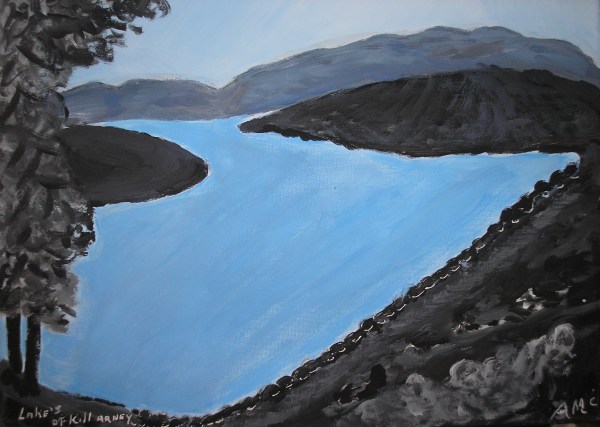
After sight-seeing in Dublin, I took the train around Ireland, staying in B&B’s and doing some side tours, the usual ones, The Lakes of Killarney,

The Lakes of Killarney - AMc - 2018

The Lakes of Killarney

the Ring of Kerry, the Dingle Peninsula (the only sunny day), and the Cliffs of Moher.   Readers of my long-winded posts might find it hard to believe but I bailed out of kissing the Blarney stone. Blarney castle (4)

 The medical me was horrified at the unhygienic aspect, especially considering my general lack of immunity to foreign germs, plus the thought of reclining backwards over the parapets at that height was not exactly appealing.  (see picture under Wikipedia link) 

          It was September and the weather was gloomy – it rained every day.  If it wasn’t raining, it was overcast.  (I forgot to put film in the camera, thus missing a whole role of dull gray skies).   Central heating was mostly non-existent.    I was cold all the time, and wore both of the Irish sweaters I had bought in Dublin the first week.  Cliffs of Moher (2)

It poured on the Cliffs of Moher and I got thoroughly soaked, then the bus broke down and we sat for hours waiting for a mechanic to arrive.   It was a scary drive back to Cork in the dark with no headlights.   Fortunately, my very kind B&B owner met me at the station, as she wondered why I hadn’t returned at 6 pm as planned.    She turned on the bedwarmer/electric blanket and after I had a hot bath, brought me tea and cookies, while I sat in bed writing in my journal about my dreadful day.  I guess you could say Ireland is where I first started to write, as I kept a travel journal  and wrote in it at night if there was nothing else to do.   Although it was easy to meet people in the B&B’s, I wasn’t much of a party person and there are only so many pub/Celtic music nights you can handle over a three week period.   Reading back over my journal entries, they’re not half bad.      

       The glorious week at the equestrian centre turned out to be one lesson in a drafty old riding ring, listening to a rude female instructor yell at a group of tweens, horses and myself, in that order.   I wasn’t sitting up straight enough, and even though I have a small degree of scoliosis, she showed no mercy.  Towards the end of the lesson, when the horse sat down on me, I got off and walked back to the B&B just down the road.   So much for that expensive pair of riding boots I had bought in Dublin.    The next morning I woke up with a terrible cold, but luckily I had a nice B&B to convalesce in.  The proprietress kept insisting there were some lovely walks to the sea (perhaps it was she who had supplied the Glamour advertisement), but I barely left the room, sleeping and reading, and being entertained by their talkative twelve-year old daughter (a carbon copy of Anne of Green Gables complete with red pigtails), who kept me amused with her drawings and music collection.   I would surface for supper with the only other guest, an older lady from Dublin in search of a holiday and some company.   She talked non-stop.   I listened, nodded, and after a spell by the turf fire, went back to bed.      
       When I was sufficiently recovered, I took the train to Carrick-on-Shannon.    Leitrim County (see Wikepedia) is located in central Ireland near the northern border.   It’s definitely off the beaten tourist path, but I wasn’t brave enough to rent a car as there were white crosses on the roads marking the spots where tourists had died from forgetting to drive on the left side of the road.  I  found the local parish and the priest said there was a church in Fenagh and they might have records.  He said he didn’t have any records, that I’d come at the wrong time of year and that the area was ‘polluted’ with people with my surname.  I didn’t have time to reply that it was spelled with an a, before he slammed the door in my face.   (Sigh….they must get tired of tourists).
      While I had been blessed so far with nice B&B’s, the one I booked into  must have been the worst in all of Ireland.    It was undergoing renovations, there was doggy do-do on the stairs, no hot water or heat, and the not very kind landlady told me I had to have breakfast by 8 or I wouldn’t be getting any at all.    She did however make arrangements for a driver to take me out to the parish church.   There was only one Catholic church in the outlying area  and only one cab driver in the town.    The next morning when the driver (your typical small Irishman), showed up he was dressed in a tweed suit and tie and not a day under 85.   He looked frail, but the B&B lady had assured me he was in good health, just a bit senile, and unlike most Irish people not much for conversation.   The only word I remember him saying was ‘aye’.    

       It was a very foggy morning as we drove out into the countryside and all I could see were hawthorn trees and piles and piles of rocks, swirled in an eerie mist.    It was the most desolate place I’d ever seen, and I kept thinking no wonder they left.    The west parts of Ireland around Connemara by the sea are rocky but picturesque – but this was just plain bleak.    When we got to the church, it looked like a new modern church, right there in the middle of nowhere.

     An old priest answered the door.   His eyes were red and rheumy and he looked hungover, but he opened the church so I could take some pictures.  He told me the church had been built in 1840, (so perhaps my ancestors had worshiped there), but the records only went back to 1855 because of ‘the fire’.  There were a few Patricks and one John listed in his old book but the dates weren’t right.  The church had been renovated in 1970 and there were about 700 people in the parish.  We certainly hadn’t passed any houses so the parish must have taken up a large area of the countryside.   (We hadn’t passed any cars either, so perhaps I could have driven on the right side of the road).  

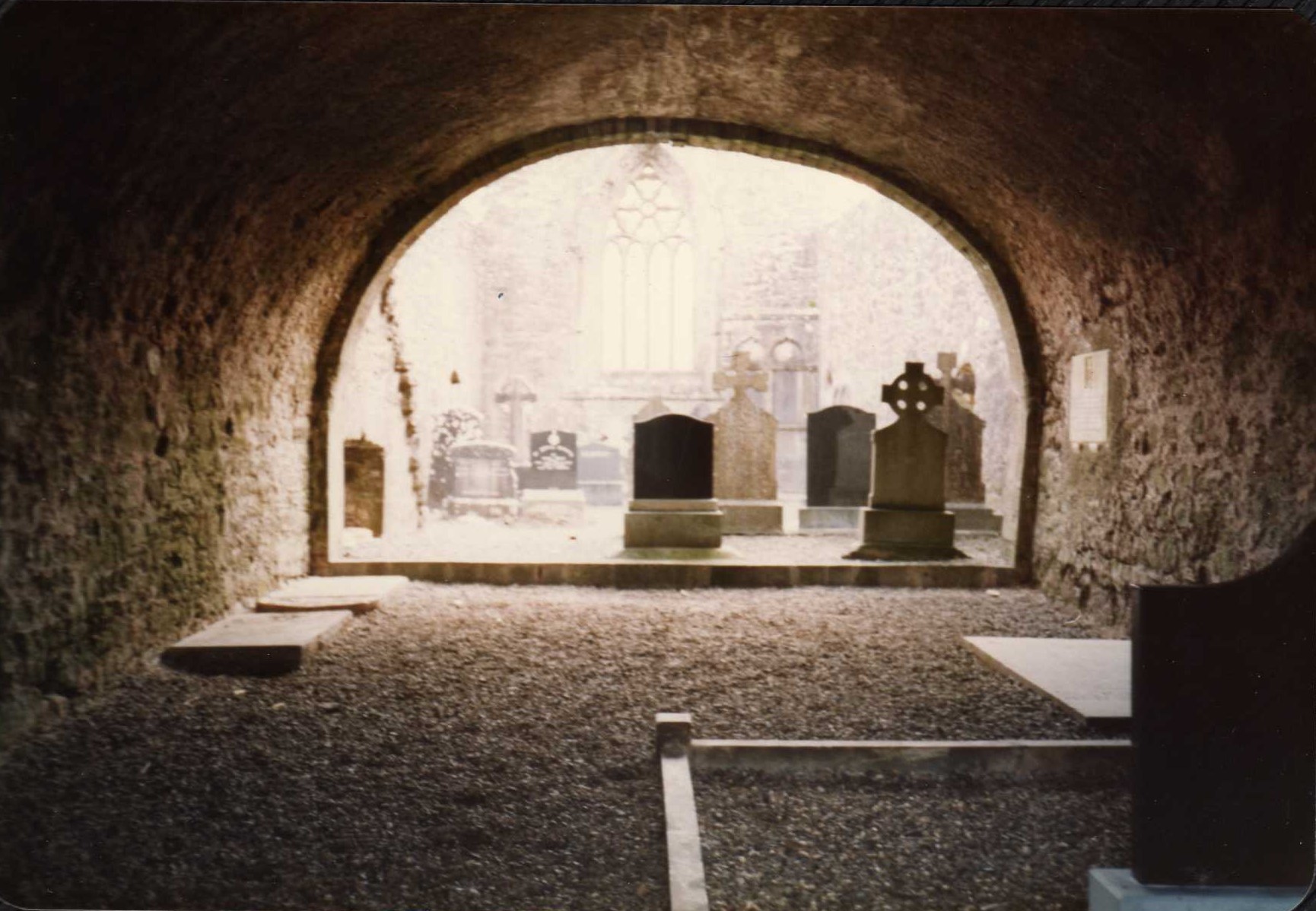
       When I went back to the car the driver had fallen asleep, so I woke him up and we drove down to the church cemetery which was about a mile down the road, just outside a small village which consisted of a pub, a store, a few houses and a school.    The church graveyard was at the site of an old monastery (Fenagh Abbey) which originated around 500 AD and held the ruins of two churches which dated from the 15th century.   

Ireland church

     There were some newer tombstones, most with the o spelling, a few Patricks and Johns, and lots of crumbled old stones which were impossible to read.   I wandered around for awhile taking pictures – it was a strange  experience being in the place where your ancestors might have stood and could be buried.     The atmosphere was certainly mystical. 

Ireland church

      Patrick and Mary’s parents, being too old to travel, had stayed behind, and I assume John must have stayed with them when all the others left.   Maybe they died in the famine and so he had no choice but to leave a year or two later.  They  probably wouldn’t have had a proper burial place as in 1847, the worse year of the famine, corpses littered the roads and fields and there was no one left to bury them, nor any coffins to be had.  Tombstones were only for the rich. 

Ireland church

I recently read a book by John Kelly, The Graves are Walking, which details the horror of that era of Ireland’s history.

The Graves Are Walking: The Great Famine and the Saga of the Irish People

The Graves Are Walking: The Great Famine and the Saga of the Irish People by John KellyMy rating: 4 of 5 stars  A scholarly well researched history of the Irish Potato Famine, this book is an important but disturbing read, especially for those of Irish descent.


Having read it, I’m having difficulty with the decision of John being left behind, but then they left in Sept 1846 when the potato crop had failed but before the worst of the famine hit, and if it was John’s decision to stay behind and go to school, then perhaps 14 then wasn’t the child it seems today.  Someone must have paid for his passage and put him on a ship to New York, the poor survival rate on the coffin ships to Canada being well known by then.   (NB: there is also a Famine Museum in Roscommon Ireland, a tribute to the national disaster). 

      When I went back to the car the driver had dozed off again and I didn’t have the heart to wake him up so I wandered around some more, snapping pictures.  Finally I had to rouse him as I had to catch the train to Dublin.  The fog had burned off by then, so I could see more of the countryside on the way back, poor rocky land, the odd house, a few cows and sheep here and there.   It was September which would have been harvest season if they had been able to grow anything, even potatoes.    We passed a small lake, perhaps they fished?  

Ireland church
        The Irish tourism site says that Leitrim County, at 32,000, is one of the most sparsely populated counties in Ireland.   It was certainly a godforsaken place.   At the time of the famine it had a large population of over 150,000, many of whom emigrated.   When we arrived  back at the B&B I gave the driver 15 pounds instead of the 10 he requested.   I was just glad he got me back in one piece – that we hadn’t driven into a bog someplace where I might have been preserved for centuries like the famous bog man in the Dublin museum.  

         Certainly, it was a surreal experience to visit the land of your long lost ancestors.  Now that we have Ancestry.com and numerous online resources, and personal genealogists who will do all the searching for you, I might go back some day, with a more specific plan in mind.   For it has certainly occurred to me, that possibly I wasn’t even in the right place.  A few years ago, a distant relative in California contacted me.   He had tried to do further research and came up empty-handed.   There are so few records, that I may have to remain content with my “lost in the mists of time” experience.   

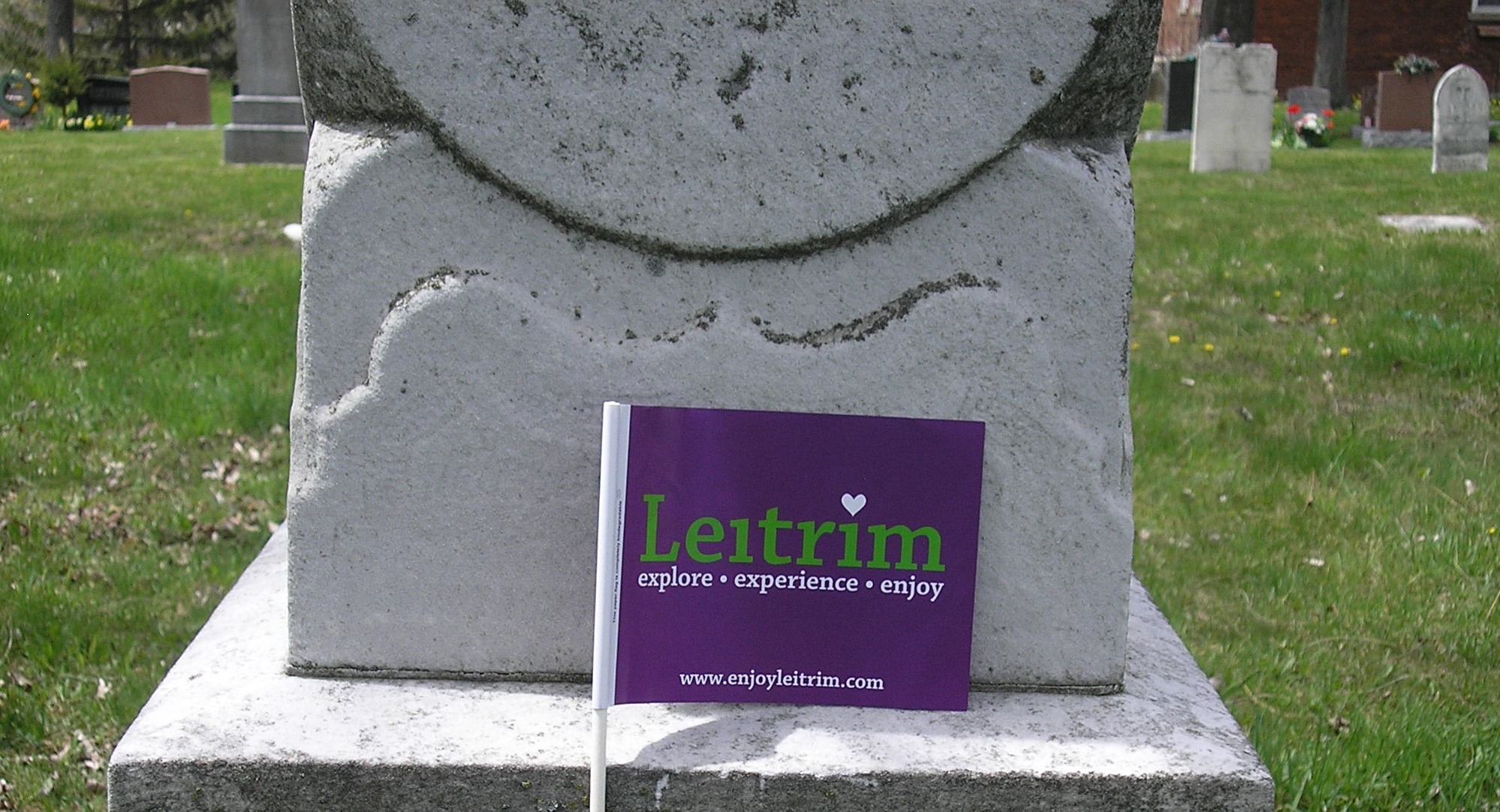
      A friend brought me back some souvenirs from her Irish trip last year, a Leitrim County flag and a miniature bottle of whiskey, which my leprechaun is enjoying here. 

        In the thirty five years since I was there, Ireland has prospered, every small town now a picture of tidy charm.   Her photographs were gorgeous, but then cameras have improved too.   Sensibly, she went in May and had two weeks of solid sunshine and balmy weather.   The clerk in the tourist shop inquired why would you want a souvenir from that place –  nobody lives in Leitrim County.   Well my ancestors once did.   I placed the flag on Patrick and Mary’s tombstone in our church cemetery, as I thought they might enjoy the fact that a great great granddaughter was thinking of them and their old homeplace.    I hope their Irish eyes were smiling down on me. 

Gravestone

A few weeks later, the flag was gone, blown away by the wind, or removed by the priest or grass-cutter, someone with no respect for the past.   

Happy St. Patrick’s Day!
Postscript:    When I got back to Dublin, I booked a hotel on Grafton Street which had central heating, plenty of hot water and lots of shopping nearby, then switched to a B&B the night before my flight.   My suitcase was so full of souvenirs that I had to leave the riding boots behind in the B&B.  I simply could not cram them in, so I left them there beside the bed.    I hope someone else found them useful – but I have regretted that decision to this day, as there are many times when I’m mucking around in the garden in the spring when they would have come in handy!  

Irish Cottage - AMc

Irish Cottage