Dutch Inheritance

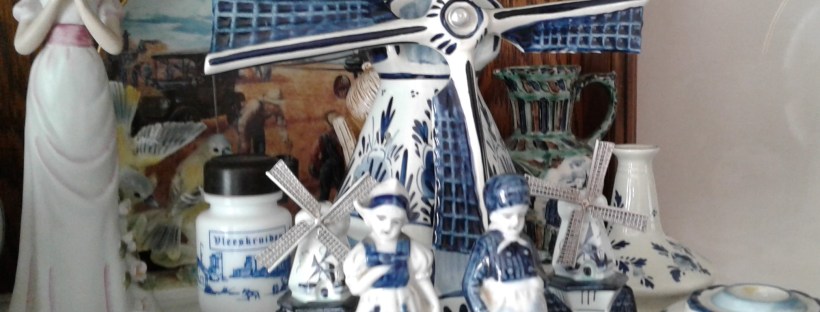
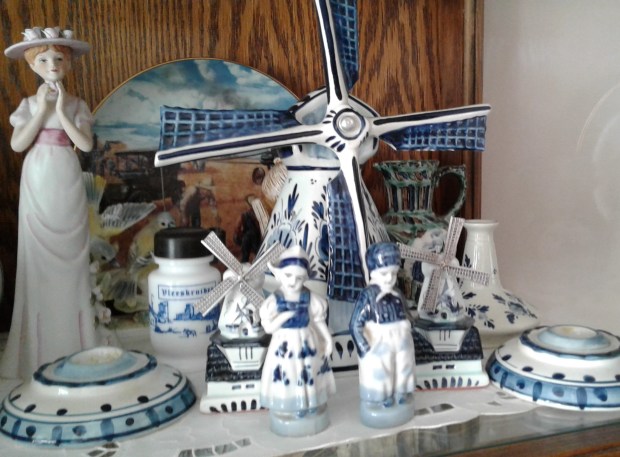
Dutch china       It’s a sad fact of modern life that when you receive an inheritance letter in the mail, you automatically assume it’s a scam and throw it away – especially if it’s from someone who promises that if you will only oblige and send your bank account information the money will soon be on it’s way.    But as it turns out not all inheritance letters are scams.

Tulips

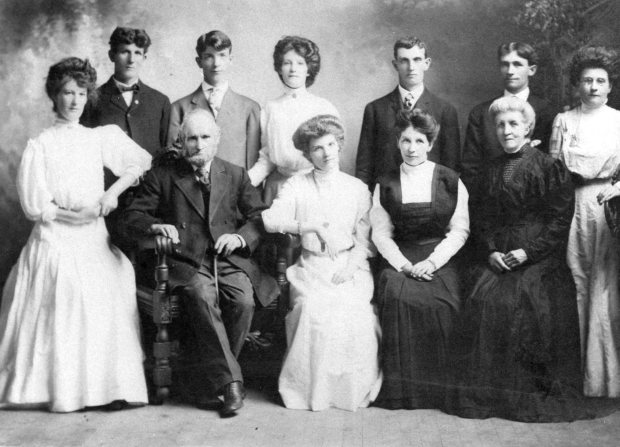
          It’s almost tulip season again, which always reminds me of my grandmother.   I have blogged about my Irish Roots (see also A Visit to an Irish Graveyard), but not about my Dutch ancestors.   My maternal grandparents were from Holland but I never knew any relatives from that side of the family because they immigrated to Canada in 1922.   My grandmother was from a family of seven siblings and my grandfather ten, and being from the same village she was friends with some of my grandfather’s sisters.   In this picture, which was taken in front of the family home just before she immigrated, my grandmother is in the back row, second from the right. Gramma's family (2) My grandparents were married the week before Christmas and left on a boat to New York, arriving in Ellis Island on New Year’s Day 1922.    According to the Ellis Island archives, they traveled with two other couples, one of which was my grandfather’s sister and her husband.   Two of his other sisters and their spouses were already here in Canada, a country where things were supposed to be more prosperous, especially after WW1.    My grandmother had grown up on a small farm and my grandfather worked on the boats on the canals, but there wasn’t much farm land available or work to be had, after he put in his mandatory four years of service in the army reserves.   In order to come to Canada, you had to pass a medical and be sponsored by a Canadian farmer for a year, so they decided to settle in a small Ontario town where there was already a small contingent of Dutch people.   

      I used to tease my grandmother that the ocean liner came over on was her honeymoon cruise, as she was just newly married.   She was 24, the baby of the family and a homebody, and I suspect had she known she would never see any of her family again, she never would have left.    Her parents did not want them to go – but ah, the things we do for love.   She boarded the boat with a large wicker trunk containing all her worldly possessions, her trousseau, blankets and household items, and wearing her mother’s brooch.   I suspect her mother knew they would not be coming back.   She was the only one of their party not seasick on the way over, but if you pretended you were and stayed below deck then you got an orange, which was a luxury at the time.  She remembered having a nice turkey dinner on Christmas Day.   When they got through Ellis Island, they were immediately whisked away to a waiting train enroute to Canada.   They got off the train in Niagara Falls, stepping into a foot of snow, with no boots, as they were not used to that much snow back home. 

       Times were not as prosperous as promised.   They worked in the sugar beet fields to meet the sponsorship requirements.   They had to learn how to speak and write English.   My grandmother’s English was good by the time we were kids but she always had a trace of an accent, and certain words were mispronounced, Kalander for calendar and sleep-out for sleep in, and if she was discussing something with my mother that she didn’t want little ears to hear, she spoke in Dutch.   My grandfather was a quiet man, a real Checker fiend who would never let a poor kid win!   After they had been here a few years, they thought about trying their luck in the US (Chicago), and had a family passport picture taken, (my mother is the baby), but changed their plans when the Depression hit in the 1930’s.  

Gramma passport picture (2)

Those were hard years, but my mother said they always had enough food to eat, unlike some families.   An uncle was a butcher and used to supply them with meat.   It was shameful to go on the dole, considered a last resort.  Only if you were sick or starving would you apply for food stamps, otherwise you made do or did without.   It was WW2 which brought them into relative prosperity, as all four of them, including my 16 year old mother and her brother, worked in the war plants, which enabled them to save enough for a down payment on a farm two hours away, (and right across the road from my father, so effectively she married the boy next door).  

It was nice having my grandma right across the road, as we visited frequently, and she would feed us Gouda cheese, homemade root beer and those Dutch ginger windmill cookies which are still available today, plus it meant we didn’t have to travel far at Christmas and holidays.    She was a kind woman, but strong in her opinions and philosophy, could debate any topic, and she raised my mother to be a strong woman.   We were raised to be strong and independent too.   There were no helpless damsels in distress or pampered princess types in my family.    She loved to knit and crochet and tried to teach me once, but I was hopeless.   Her afghans came  in bright colors and I still have a brown/orange/green one she made for me when I was away at school.   She always painted her kitchen farm table an aqua green, where we sat talking many an afternoon, with the white curtains fluttering in the summer breeze and a cat curled up on top of the freezer.   She favored lime green aprons, (it was the sixties), and often wore one even when not cooking, but my mother was by far the better cook.    Emigrating so young she had no one to show her and Canadian food was different from back home.   She had a set of those shallow European soup bowls in her (blue and white) china cabinet long before they were all the rage here.   In her later years, she was starting to lose her vision and hearing, but her mind was still sharp, and she knew everything that was going on in the world and still had an interest in life.    She always told me I was the best of the bunch, because I would go and visit her after she moved into town and bring her cans of lobster, (she had grown up on seafood).   I wish I had visited more often.   You don’t realize what an influence a grandparent has on you until after they are gone.   The last time l was there, she grabbed my hand when I left, her hands were so warm – a few weeks later she was dead from a sudden stroke.  

      I suspect my grandmother always regretted coming to Canada.  She missed her family.   In her old age, she said she was a woman without a country.   When the stairs got to be too much for her she moved into a one floor house in town and hung a photo of her childhood home on the living room wall where she could see it every day.    In this picture are her mother, brother, sister and young niece.

Dutch home

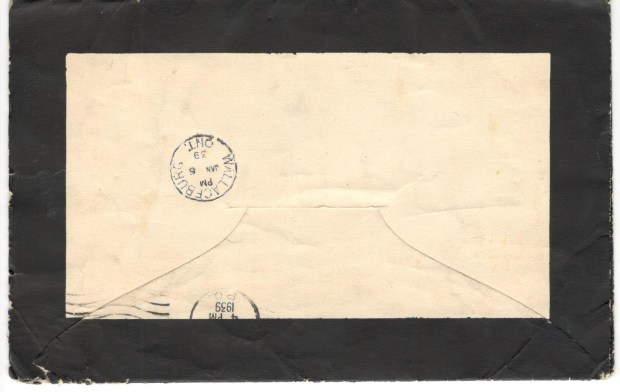
Even if they could have afforded it, my grandpa would probably never have gone home for a visit, as he suspected she wouldn’t have come back, but after the Depression, came the war, and then her parents were dead.   My mother remembers getting the black edged envelopes containing the death notices in the mail and my grandmother dissolving into tears.  Death notice envelope 3 (2)          After my grandfather died, my sister tried to talk her into taking us to Holland on a trip but she said she was too old (she was only in her early 70’s) but I don’t think she wanted to go by then, fifty years had gone by, it had been too long.   But she continued to send airmail letters back and forth to her brothers and sisters over the years.   They sent her a bouquet of tulips for her 80th birthday.   Her siblings all lived well into their 90’s, the last one dying at 95, still riding his bike around town.   They had moved into town by then too, as their farm had been swallowed up by development.   My grandmother herself lived to be 96 in her own home – she was the last of her family and many condolence letters arrived from nieces and nephews in Holland after she died.
       Flash forward to five years ago when my mother received an inheritance letter in the mail.   A cousin had died and she was entitled to 1/17th of her estate, if she would just sign off for the debts of the estate and return said form as soon as possible.   The English was poor, the grammar worse.  Obviously a scam, who would sign for debts for someone they didn’t even know.   Although my mother was aware of this cousin (the young girl in the picture above), we thought it quite strange, and I assumed scammers, ever a resourceful lot, must have been cruising Ancestry.com for single elderly people  and their distant out of country relatives.   I googled the law firm on Facebook – a group of women lawyers, all wearing navy suits and white shirts, and a few testimonials, all in Dutch – this was in the days before google translate was a feature.   I put the letter aside.   A few months went by.   I mentioned it to my brother when he was home, and he decided to email them – no response.    Six months went by and another letter arrived, this one an official looking form.    By then I was beginning to think it might possibly be true.   But why didn’t they just pick up the phone, they had my mother’s address, exactly as it was wrongly printed in the phone book.   I decided to take the official looking form to the library.    One of the new librarians was Dutch and I had commented on her accent one day as it reminded me of my grandmothers.   She informed me it was a tax form from the Dutch government.  She had emigrated many years before but had an overseas phone plan as she still had relatives back home, so she very kindly offered to call the law firm for me and speak to them in Dutch.   It was legitimate – not a scam at all, and there were no debts – the estate taxes had all been paid off.   My mother had only to send her bank account information, and a copy of her passport.   In the meantime, I received an email from the relative in charge of the estate, assuring me it was not a scam, and they were all waiting for her to sign off.    He sent a copy of the obituary which I later asked the librarian to translate.  By then I had gone through my grandmother’s papers and found a condolence letter from a nephew, and called him, as he spoke English.   We emailed a bit, I asked for some stories about the deceased cousin, and he said he would email later, but he never did.   I wish I knew more about her life, I know she took care of the old folks but nothing else about her.   She must have died without a will as the estate was split among all those cousins.  By then my mother was thinking maybe she would just decline her share and let someone who had looked after her have it, but she wasn’t allowed to decline as then it would go to her children and get even more complicated.    Several weeks went by while the euro continued to drop.   The exchange rate is usually fairly stable at 1.5 but it was down to 1.3.    I emailed the law firm when to expect the money so I could keep an eye on the bank account we had opened, and they said there were now 36 people who had to sign off.  I quite  liked the idea that I have 36 relatives I have never met, surely there must be a family genealogist among them.   Eventually, about a year after the first letter, my mom received about $7,000 worth of euros, which she later used for a new air conditioner/furnace.   I wish she had spent it on something extravagant, like a trip to Holland, but my mother is practical, and at 93, her travelling days are over too.  

Luckily, if you are an immigrant now,  you have much better ways to communicate than my grandmother did – email, Skype, Facebook, getting on a cheap economy flight for a visit.    Be grateful for ways to stay in touch.   Remember when you chose a man or a job or a country, you are choosing a lifestyle.  Choose wisely.   If you want to travel, go when you are young – don’t wait until it’s too late.   Eat plenty of Gouda cheese – it’s good for your bones.  When you grow old, make a will.   Stay interested in life.   Be strong but be kind.  Plant or buy some tulips and enjoy! 

PS.    Do you have a relative who especially influenced your life?     

Dutch Inheritance - AMc

 (Next week in Come From Away, I will be tackling the timely topic of immigration from a genealogical point of view…if I’m brave enough.)   


Signs of Spring

Spring is late again this year.  Having survived a particularly brutal winter, which started early and never let up, we’re all tired of the snow and the cold, and anxious for the first signs of spring.   So, here’s my take on the Six on Saturday Garden post….   

March 20 – The first official day of spring – saw my first robin, who was uncooperative for a photo-shoot, hopping away every time I got near.  Unfortunately the zoom lens on my camera is broken so this is as close as I got.  Robin

March 22 –  The tulip and daffodil tips are peeking through on the south side of the house and some of the rose bush stems are starting to turn green.

daffodil tips

March 23 – Went out for a walk for the first time in weeks, the wind was cold but the sun was bright, and the neighbor’s snowdrops were out in full force.  

snowdrops

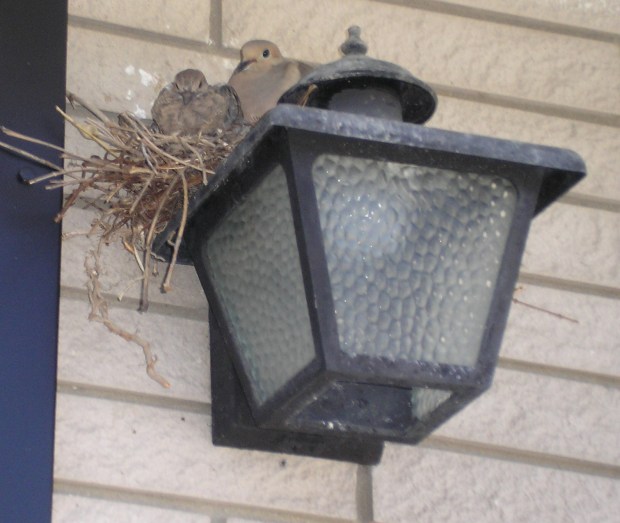
March 25 – The Angry Bird  – I opened the front door to check the temperature this morning and saw the morning doves have returned.   One was sitting on the front step, looking quite perturbed now that it has to find a new place to nest.   They are life long lovers and creatures of habit, but as they didn’t build a nest last year I thought it was safe to install new light fixtures.    I’m feeling guilty but my new lights are so much nicer than the old.  

Morning Doves

Mr. And Mrs. Lovebird

light fixture

March 26 –  So nice to see a blue sky again, especially against a budding maple tree.Blue sky and maple buds

March 27 –  saw my first crocus while returning a book to the library.   Their flower beds are always gorgeous because they have professional gardeners maintain them.  

crocus

March 28 – first spring-like day, 15 C, and first milkshake from the Dairy Queen –  chocolate of course.   Drove home with the windows down.  Dairy Queen Milkshake

March 29 – The ice is gone from the river and the sunlight is sparkling on the water again.    river view

March 30 – our first all day spring rain flooded the back forty, but brought a tinge of green to the grass.  spring rain

March 31 – brought a return to winter and a couple of inches of snow – the robin was not amused.    The snow hung around for a more few days – is this some kind of April Fools joke? Robin

A pot of hyacinths can provide a small dose of beauty, hyacinth

while we wait for this.        

Daffodils and hyacinths

What wonderful sights await us in a few more weeks.   Happy Spring!   

The Literary Salon – Travel Books

If you’re not fortunate enough to get away for a vacation this year, what better activity than to curl up with a travel book and listen to the March winds howl, (like a lion the same way they came in).    Last year I wandered into the travel section at bookoutlet.com and never left.   There are so many wonderful travel books available, it’s difficult to narrow it down to just a few, but here are some of my personal favorites.    (Warning: travel memoirs can be equal parts enjoyable and annoying.   There can be a fine line between reading about someone’s wonderful experiences in a sunnier place, especially when you are still in the dull dreary dregs of winter, and resenting the hell out them.    But remember there can be comfort in staying home too…see The Golden Age of Travel post).      

The Pioneer

Enchanted April by Elizabeth Von Arnim, was published in 1923, and could be called the first travel memoir of it’s kind.   Set in Italy, I profiled it in a blog last year – see link   How could a book with a captivating opening sentence like this, not be good.    

“To those who appreciate wisteria and sunshine.  Small medieval Italian castle on the shores of the Mediterranean to be let furnished for the month of April. Necessary servants remain.  Z, Box 1000, The Times.”

The King and Queen  

A Year in Provence (1989) by Peter Mayle was the first travel memoir I read, and I found it LOL funny.   He went on to write a whole series of memoirs  (read) and a few novels (not read), about Provence.   He made Provence so famous that at one time he moved to Long Island to get away from all the publicity.   He died last year, shortly after his last Provence book was published, My Twenty-Five Years in Provence – Reflections on Then and Now, (read) which is a summary of his life there.   

If Peter Mayle is the King, then Frances Mayes, of Under the Tuscan Sun fame, is the Queen, and she made Tuscany a very popular place to visit.   It’s been 25 years since her bestselling book, and she has written wrote four or five more travel books, (read) and has a new one coming out this year See You in the Piazza – New Places to Discover in Italy.  (on order)  She also wrote a novel, Women in Sunlight, last year, which I found so unreadable that I can not recommend it.   I’m still not sure how a novel about four women who travel to Italy can miss, but it did.   Travel memoirs are definitely her forte.   

My Personal Favorite

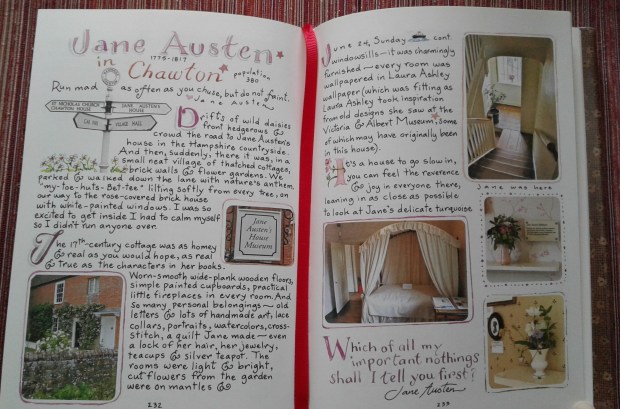
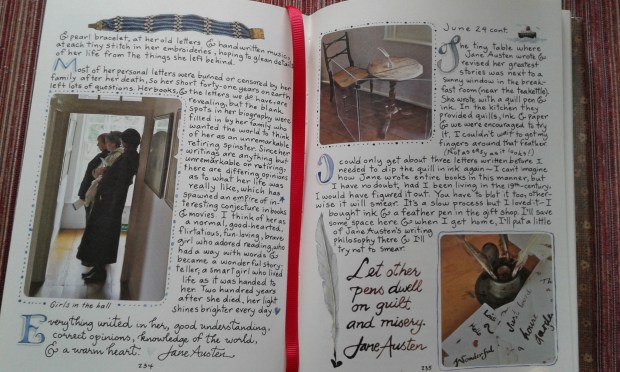
Susan Branch is my personal favorite of all the travel writers.    For those who think of her as just The Heart of the Home cookbook author, did you know that after she lost her publishing contract with Little and Brown in 2009, she started self-publishing and now has a trilogy of marvelous illustrated journals, with a fourth on the way next year about England, Ireland and Wales.   Her first, Martha’s Vineyard, Isle of Dreams, is about her move from CA to Martha’s Vineyard in the 80’s after a divorce, which I enjoyed as that is a part of the world I would love to visit.  (Her second is about growing up in the 60’s and 70’s and is not really a travel book, but more a memoir of her youth).  

A Fine Romance:  Falling in Love with the English CountrysideA Fine Romance: Falling in Love with the English Countryside by Susan Branch

My rating: 5 of 5 stars


Her third, A Fine Romance, is about her trip to England and is full of photos and watercolor illustrations, of such sites as Beatrix Potter’s farm in the Lake District and the Jane Austen House in Chawton. 

Susan Branch book

Susan Branch book

I find her monthly newsletters inspiring, and you can check out her books and order them from her website.    I wish she would venture into France and Italy.   

A Paris Year - Janice MacLeod

A Paris Year – Janice MacLeod

All About Paris

One of my favorite books about Paris, is Janice McLeod’s, A Paris Year, which I profiled last year in a blog titled, April in Paris – Part Two  A watercolor artist, her journal is illustrated with her own artwork, and is a quirky and whimsical look at her day to day life in Paris.  

A Paris Year - Janice MacLeod

A Paris Year – Janice MacLeod

Italy Revisited

Marlena de Blasi has written three memoirs about Italy – A Thousand Days in Venice, A Thousand Days in Tuscany and The Lady in the Palazzo – At Home in Umbria, which was my favorite of the three.    Her books are well-written and  often poetic, but sometimes irritating with respect to her ex-pat mentality and whining about their failure to fit into a foreign culture.   So if you want to read about someone who makes an impulsive decision to buy a run down palazzo and then complains about how long it takes to renovate it, then this book is for you.    So much of appreciating a travel memoir is based on finding the essayist appealing, still it’s an interesting if illogical journey.  

My Current Read

Elizabeth Bard wrote Lunch in Paris – A Love Story with Recipes, about her  move to Paris and subsequent marriage to a Parisian, which was good, even if I wasn’t much interested in the cooking part, (there are recipes at the end of each chapter).    But I am really liking her second book, Picnic in Provence – a Memoir with Recipes, about their move to a small village in Provence, with their young son.   The writing is honest and real and so well done, that it’s easy to overlook the fact that she has a wee bit of a privileged princess attitude.  

Le Road Trip book

My Latest Discovery

My latest discovery is Vivian Swift, another watercolor artist, found while browsing the bookoutlet website.  (I feel like I’m regressing to my childhood with all these picture books!)    Le Road Trip – A Traveler’s Journal of Love and France is a self-illustrated memoir of her fun and whimsical jaunt through France on her honeymoon.

Le Road Trip Book

 Her latest book (2015) entitled, When Wanderers Cease to Roam – A Traveler’s Journal of Staying Put  details the pleasures of finding a place to call home (Long Island Sound) after 23 years of wandering – because sometimes there’s nothing nicer than staying home and reading about travel!    

As you can see, my tastes run to England, France and Italy.   But there’s a whole wide world out there.  What is your favorite travel book?


A Visit to An Irish Graveyard

Ireland church
       
         When I traveled to Ireland in the early 80’s, in the days of cheap Euro-rail passes, I went by myself, which looking back was a brave thing to do and certainly out of character for me, a reserved introvert (and I might add the one and only time I traveled by myself).   None of my family or friends were interested in Ireland, but it was one of two places I wanted to see when I graduated, the other being New York city.  Ireland was not then the popular tourist destination it is today.    I remember it as a dismal country, full of small dreary towns, but I had Irish ancestors and even at a young age I was the family historian.   It was the stories that interested me.   In addition to researching the family history, I had booked a week at an English-riding academy, as a promise to my younger horse-crazy self.  This was in the days when Glamour magazine (my fashion bible) had the travel section, which profiled said establishment and promised a glorious week in the Irish countryside (I remember the exact wording) with lovely walks by the sea.   I must have envisioned riding to the hounds or galloping along the cliffs like  Poldark, something which appealed to the poetic me.  After spending a few days at the Dublin Library going through old microfilms of land records (computers and the internet had not then been invented), I located a section of Leitrim County where there seemed to be a large concentration of Patricks and Marys and Johns with my last name, spelled with an a and not the more common o.   My dad said it was always with an a, but you have to be careful with genealogy records as variations in spelling can sometimes be the recorder’s honest mistake.    
       My great great grandparents Patrick and Mary had immigrated to Canada  in 1846 at the start of the potato famine and their 14 year old son John came a year later through New York.   For more on their story check out last years St. Patrick’s Day blog – Irish Roots.   
Patrick and Mary

Patrick and Mary – (tintype)

Their son John below, sitting in the chair, aged 80 yr in 1912. 

Family Portrait

John and Ellen Family Portrait – 1912

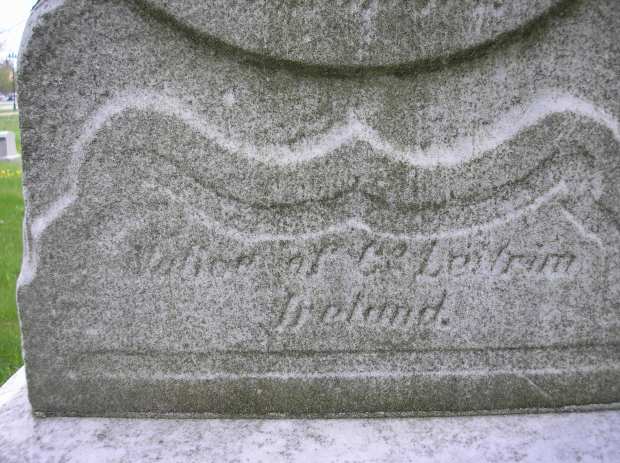
Patrick was proud of his Leitrim County heritage and had it inscribed on his  tombstone when he died in 1880, where it is barely legible today.    
Gravestone
After sight-seeing in Dublin, I took the train around Ireland, staying in B&B’s and doing some side tours, the usual ones, The Lakes of Killarney,
The Lakes of Killarney - AMc - 2018

The Lakes of Killarney

the Ring of Kerry, the Dingle Peninsula (the only sunny day), and the Cliffs of Moher.   Readers of my long-winded posts might find it hard to believe but I bailed out of kissing the Blarney stone. Blarney castle (4)

 The medical me was horrified at the unhygienic aspect, especially considering my general lack of immunity to foreign germs, plus the thought of reclining backwards over the parapets at that height was not exactly appealing.  (see picture under Wikipedia link) 

          It was September and the weather was gloomy – it rained every day.  If it wasn’t raining, it was overcast.  (I forgot to put film in the camera, thus missing a whole role of dull gray skies).   Central heating was mostly non-existent.    I was cold all the time, and wore both of the Irish sweaters I had bought in Dublin the first week.  Cliffs of Moher (2)

It poured on the Cliffs of Moher and I got thoroughly soaked, then the bus broke down and we sat for hours waiting for a mechanic to arrive.   It was a scary drive back to Cork in the dark with no headlights.   Fortunately, my very kind B&B owner met me at the station, as she wondered why I hadn’t returned at 6 pm as planned.    She turned on the bedwarmer/electric blanket and after I had a hot bath, brought me tea and cookies, while I sat in bed writing in my journal about my dreadful day.  I guess you could say Ireland is where I first started to write, as I kept a travel journal  and wrote in it at night if there was nothing else to do.   Although it was easy to meet people in the B&B’s, I wasn’t much of a party person and there are only so many pub/Celtic music nights you can handle over a three week period.   Reading back over my journal entries, they’re not half bad.      

       The glorious week at the equestrian centre turned out to be one lesson in a drafty old riding ring, listening to a rude female instructor yell at a group of tweens, horses and myself, in that order.   I wasn’t sitting up straight enough, and even though I have a small degree of scoliosis, she showed no mercy.  Towards the end of the lesson, when the horse sat down on me, I got off and walked back to the B&B just down the road.   So much for that expensive pair of riding boots I had bought in Dublin.    The next morning I woke up with a terrible cold, but luckily I had a nice B&B to convalesce in.  The proprietress kept insisting there were some lovely walks to the sea (perhaps it was she who had supplied the Glamour advertisement), but I barely left the room, sleeping and reading, and being entertained by their talkative twelve-year old daughter (a carbon copy of Anne of Green Gables complete with red pigtails), who kept me amused with her drawings and music collection.   I would surface for supper with the only other guest, an older lady from Dublin in search of a holiday and some company.   She talked non-stop.   I listened, nodded, and after a spell by the turf fire, went back to bed.      
       When I was sufficiently recovered, I took the train to Carrick-on-Shannon.    Leitrim County (see Wikepedia) is located in central Ireland near the northern border.   It’s definitely off the beaten tourist path, but I wasn’t brave enough to rent a car as there were white crosses on the roads marking the spots where tourists had died from forgetting to drive on the left side of the road.  I  found the local parish and the priest said there was a church in Fenagh and they might have records.  He said he didn’t have any records, that I’d come at the wrong time of year and that the area was ‘polluted’ with people with my surname.  I didn’t have time to reply that it was spelled with an a, before he slammed the door in my face.   (Sigh….they must get tired of tourists).
      While I had been blessed so far with nice B&B’s, the one I booked into  must have been the worst in all of Ireland.    It was undergoing renovations, there was doggy do-do on the stairs, no hot water or heat, and the not very kind landlady told me I had to have breakfast by 8 or I wouldn’t be getting any at all.    She did however make arrangements for a driver to take me out to the parish church.   There was only one Catholic church in the outlying area  and only one cab driver in the town.    The next morning when the driver (your typical small Irishman), showed up he was dressed in a tweed suit and tie and not a day under 85.   He looked frail, but the B&B lady had assured me he was in good health, just a bit senile, and unlike most Irish people not much for conversation.   The only word I remember him saying was ‘aye’.    

       It was a very foggy morning as we drove out into the countryside and all I could see were hawthorn trees and piles and piles of rocks, swirled in an eerie mist.    It was the most desolate place I’d ever seen, and I kept thinking no wonder they left.    The west parts of Ireland around Connemara by the sea are rocky but picturesque – but this was just plain bleak.    When we got to the church, it looked like a new modern church, right there in the middle of nowhere.

     An old priest answered the door.   His eyes were red and rheumy and he looked hungover, but he opened the church so I could take some pictures.  He told me the church had been built in 1840, (so perhaps my ancestors had worshiped there), but the records only went back to 1855 because of ‘the fire’.  There were a few Patricks and one John listed in his old book but the dates weren’t right.  The church had been renovated in 1970 and there were about 700 people in the parish.  We certainly hadn’t passed any houses so the parish must have taken up a large area of the countryside.   (We hadn’t passed any cars either, so perhaps I could have driven on the right side of the road).  

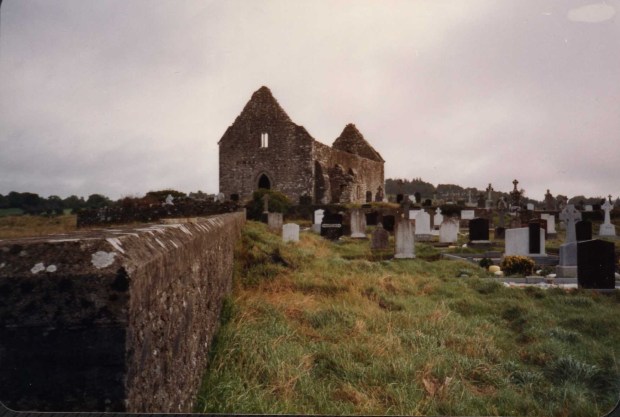
       When I went back to the car the driver had fallen asleep, so I woke him up and we drove down to the church cemetery which was about a mile down the road, just outside a small village which consisted of a pub, a store, a few houses and a school.    The church graveyard was at the site of an old monastery (Fenagh Abbey) which originated around 500 AD and held the ruins of two churches which dated from the 15th century.   

Ireland church

     There were some newer tombstones, most with the o spelling, a few Patricks and Johns, and lots of crumbled old stones which were impossible to read.   I wandered around for awhile taking pictures – it was a strange  experience being in the place where your ancestors might have stood and could be buried.     The atmosphere was certainly mystical. 

Ireland church

      Patrick and Mary’s parents, being too old to travel, had stayed behind, and I assume John must have stayed with them when all the others left.   Maybe they died in the famine and so he had no choice but to leave a year or two later.  They  probably wouldn’t have had a proper burial place as in 1847, the worse year of the famine, corpses littered the roads and fields and there was no one left to bury them, nor any coffins to be had.  Tombstones were only for the rich. 

Ireland church

I recently read a book by John Kelly, The Graves are Walking, which details the horror of that era of Ireland’s history.

The Graves Are Walking: The Great Famine and the Saga of the Irish People

The Graves Are Walking: The Great Famine and the Saga of the Irish People by John KellyMy rating: 4 of 5 stars  A scholarly well researched history of the Irish Potato Famine, this book is an important but disturbing read, especially for those of Irish descent.


Having read it, I’m having difficulty with the decision of John being left behind, but then they left in Sept 1846 when the potato crop had failed but before the worst of the famine hit, and if it was John’s decision to stay behind and go to school, then perhaps 14 then wasn’t the child it seems today.  Someone must have paid for his passage and put him on a ship to New York, the poor survival rate on the coffin ships to Canada being well known by then.   (NB: there is also a Famine Museum in Roscommon Ireland, a tribute to the national disaster). 

      When I went back to the car the driver had dozed off again and I didn’t have the heart to wake him up so I wandered around some more, snapping pictures.  Finally I had to rouse him as I had to catch the train to Dublin.  The fog had burned off by then, so I could see more of the countryside on the way back, poor rocky land, the odd house, a few cows and sheep here and there.   It was September which would have been harvest season if they had been able to grow anything, even potatoes.    We passed a small lake, perhaps they fished?  

Ireland church
        The Irish tourism site says that Leitrim County, at 32,000, is one of the most sparsely populated counties in Ireland.   It was certainly a godforsaken place.   At the time of the famine it had a large population of over 150,000, many of whom emigrated.   When we arrived  back at the B&B I gave the driver 15 pounds instead of the 10 he requested.   I was just glad he got me back in one piece – that we hadn’t driven into a bog someplace where I might have been preserved for centuries like the famous bog man in the Dublin museum.  

         Certainly, it was a surreal experience to visit the land of your long lost ancestors.  Now that we have Ancestry.com and numerous online resources, and personal genealogists who will do all the searching for you, I might go back some day, with a more specific plan in mind.   For it has certainly occurred to me, that possibly I wasn’t even in the right place.  A few years ago, a distant relative in California contacted me.   He had tried to do further research and came up empty-handed.   There are so few records, that I may have to remain content with my “lost in the mists of time” experience.   

      A friend brought me back some souvenirs from her Irish trip last year, a Leitrim County flag and a miniature bottle of whiskey, which my leprechaun is enjoying here. 

        In the thirty five years since I was there, Ireland has prospered, every small town now a picture of tidy charm.   Her photographs were gorgeous, but then cameras have improved too.   Sensibly, she went in May and had two weeks of solid sunshine and balmy weather.   The clerk in the tourist shop inquired why would you want a souvenir from that place –  nobody lives in Leitrim County.   Well my ancestors once did.   I placed the flag on Patrick and Mary’s tombstone in our church cemetery, as I thought they might enjoy the fact that a great great granddaughter was thinking of them and their old homeplace.    I hope their Irish eyes were smiling down on me. 

Gravestone

A few weeks later, the flag was gone, blown away by the wind, or removed by the priest or grass-cutter, someone with no respect for the past.   

Happy St. Patrick’s Day!
Postscript:    When I got back to Dublin, I booked a hotel on Grafton Street which had central heating, plenty of hot water and lots of shopping nearby, then switched to a B&B the night before my flight.   My suitcase was so full of souvenirs that I had to leave the riding boots behind in the B&B.  I simply could not cram them in, so I left them there beside the bed.    I hope someone else found them useful – but I have regretted that decision to this day, as there are many times when I’m mucking around in the garden in the spring when they would have come in handy!  
Irish Cottage - AMc

Irish Cottage

Spring Cleaning – The Marie Kondo Way

Years ago, everyone did spring cleaning.   They washed windows, shook carpets outside and cleaned every room from top to bottom until the house sparkled.   I remember Martha Stewart writing about the annual rituals her mother would undertake and like everything Martha Stewart, it was complicated, time-consuming and probably unnecessary.   It’s not like a bit of dust will kill you, unless you have really bad allergies and have to keep the dust mites at a minimum.    The theory now is that living in a spotless germ-free house is not  good for building children’s immune systems.   It seems a little dirt is good for you, a germ-laden pet, preferably a dog, even better.    So, while I put all the winter plaid stuff away and bring out lighter brighter decor, when spring arrives I don’t want to be stuck indoors when there is such delightful weather to be enjoyed outside…..spring is not here yet, but coming soon.   

Tulips - AMc

I tend to tackle any major cleaning projects in January when it’s cold and snowy, but I do like my house to be tidy and the clutter under control.   The new Netflix show by Marie Kondo, the diminutive author of The Life-Changing Magic of Tidying Up fame, has been getting a lot of attention lately. 

If you’re a fan of the show, you might enjoy my post from last January – Decluttering 101 – Out With The Old, where I profile her book and my efforts to apply it. 

One caveat, at the time I wrote the blog, I did not understand the role of Japanese spirituality in her method.   While this belief that inanimate objects have feelings and need to be thanked, may seem bizarre to us western folk, reading a recent op-ed piece on the subject helped put parts of the book into context.   Which just goes to show, how judgments can be skewed by ignorance, as the book was initially intended for Japanese readers who would of course be familiar with those ideas.  As for all those people who made fun of her methods (and I read some truly cruel reviews on Goodreads last year), well she’s now sold 11 million copies, has a new hit show, and is probably laughing all the way to the bank.   

Link to January  2018 Blog:  Decluttering 101 – Out With the Old

My mother is painting spring…..

Spring Flowers - AMc

Spring Flowers

The Golden Age of Travel

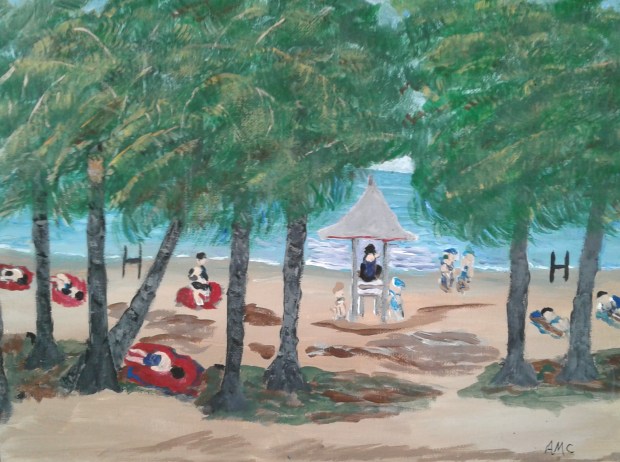
Tropical Vacation - AMc         This is the time of year I used to be winging my way south to escape  winter for a week.    Travel-wise people routinely book flights months in advance to get the best prices for the prime travel season over the February/March break, but years ago travel was still an unknown venture for the vast majority of people.   Only 15% of North Americans had even been on a plane in the 1970’s.   It took the hippie generation of young baby boomers, staying in hostels and Euro-railing their way across Europe on $10 a day, to jump start the travel industry so that flying became a commonplace  experience.  In the Pan-Am years of the 50’s and 60’s with the first charter  trips to the Caribbean and Mexico (Acapulco anyone), travel was only for the fortunate few and the very rich.   The jet-setting life of airline stewardesses was advertised in books like Coffee, Tea or Me……a line that would surely be considered sexist now.    My SIL was an airline stewardess in the mid-80’s and said it wasn’t really all that glamorous….more like being a hard-working waitress in the air and trying to sleep in stuffy hotel rooms. 

When I took my first trip in 1975, March break to Florida with four high school friends, we went on a bus.    While a two day drive, the bus at $380, was considerably cheaper than flying, and that included the hotel room.   I still have the set of baby-blue Samsonite luggage my parents bought me, not just for the trip but also for going away to university (currently in the basement  as I never throw anything even remotely vintage out).  luggageToday the majority of people hop on a plane at least once a year and think nothing of it.   It’s hard to remember when flying was a new and exciting experience, whether someplace tropical or abroad.   (The whole concept of Abroad used to be considered exotic, bringing to mind an era of elegance, with ocean liners like the Queen Elizabeth and sleeping cars on the Orient Express).   Now flying is just routine, often fraught with headaches, and certainly not part of the fun of going away.   Unmanned check-ins and luggage kiosks, long pre-boarding wait times, luggage fees, cramped seats, no meals or drinks and a general lack of amenities have taken the fun from the friendly skies.    And consider yourself lucky if no one is ejected from your flight for rude comments or behavior, as many online videos can attest.    A friend of mine was so traumatized by a bad airline experience that when her husband found a great price on a mid-winter trip she turned it down because she didn’t want to have to deal with the airport.   (I am imagining a future where we might be instantaneously whisked away to our destination in our own magic bubbles like the Jetsons).    

airplane            I was 24yrs old when I took my first plane trip, a two-week vacation to Hawaii, a popular destination in the 80’s but expensive even back then.    I flew on on a Wardair Boeing 747 Jumbo Jet, a 9½ hour flight straight from Toronto to Oahu – an experience I will remember forever.   Wardair was a Canadian airline company started by Max Ward in 1946 as a bush pilot operation carrying cargo from the Yukon and Northwest Territories to Edmonton, which eventually expanded into a luxury domestic and international travel fleet of aircraft.   Mr. Ward believed that PART OF THE FUN OF TRAVEL SHOULD BE GETTING THERE.    Wardair’s  motto was luxury “Steak and Champagne” flights at reasonable prices.   Here’s a Wikipedia link for more on the Wardair history.

        During our long non-stop flight all 500 plus seats were treated to first class service.    My sister had warned me about the initial rush of takeoff, (which I found a bit scary), but the jet was so big once we were up on the air it felt like nothing at all.    The stewardesses (all female in those days) had passed out trays of candies in preparation for any ear popping.   About an hour into the flight we were treated to a champagne breakfast on real china, then they passed out hot towels.  The seats were spacious.   All drinks were free.   An in-flight movie followed, nothing I remember.   One of the stewardesses, a classmate of mine from high school, sat down with me on her break and regaled me with stories of her four day lay overs in Hawaii.     What impressed me most was the spiral staircase to the upper deck where there was a bar where you could mix and mingle, or just stretch your legs.     Imagine a bar in the sky – very James Bond.airplane   

Later we were served a wonderful filet mignon dinner on the special Wardair Royal Doulton china with snowy white draped tablecloths and napkins, your choice of wine, then coffee and a fancy dessert.    We read and rested, then more hot towels to wipe your face and hands before we arrived – at 3pm with the time change.   I remember descending into balmy weather where we were greeted with the traditional lei necklace welcoming us to Hawaii.   Yes, this flying was a wonderful thing – I was spoiled for life.    

Fast forward a few years, and after a few cramped experiences with Air Canada (famous for frozen green peas and rubber chicken), and other airlines, I was less than impressed .  Flash forward to the 80’s and another set of luggage (wheels had been invented), with a vintage-style carry so chic it once got me upgraded to First Class and salmon.   

As a carry on it was pretty useless, but so Audrey Hepburnish, with all those little spaces for cosmetics and toiletries.    In regular class you still got fed, (I remember a particularly stale sandwich on a flight out west), but all the frills were gone.   A few more years, and Wardair was gone too…..bankrupt.   Mr. Ward had expanded too quickly and people were now being swayed by discount airlines, cheap flights and frequent flyer miles.    

I haven’t been on a plane in years, for a variety of reasons – work, family, medical.   If there is one airborne germ circulating on the plane it will have no difficulty finding my seat.   My last trip was spent in a Mexican five star all inclusive resort with a sore throat and sinus cold so miserable I barely left the room, except to gaze upon the bougainvillea on the balcony.   The food was tasteless, and deficient in chicken noodle soup.   (At least in Hawaii the dreaded sore throat did not arrive until the second last day although it took three days for my ears to unplug from the flight home).    I do hope to travel again someday, but not in a run down but let’s cram everything into one week and arrive home sick and exhausted kind of way, but at a more leisurely pace.   When you are young, cheap and basic will do, when you are older, you require a bit more luxury and space.   High rise hotel rooms where you can’t open a window make me feel claustrophobic, so perhaps an Airbnb or renting a villa for a month would be more appealing.   In the meantime, while everyone is talking about their trips down south, I am thinking of this quote from a delightful book by Vivian Swift, who finally put down roots in a small Long Island town after twenty years of roaming the world  When Wanderers Cease to Roam – A Traveler’s Journal of Staying Put. 

Quote:     ‘Travel is not what it used to be.  And that’s a good reason to Stay  Put.’          

In the meantime I am living vicariously through travel books – let someone else deal with the crowded airports and the lost luggage. 

(See the upcoming Literary Salon – Travel Books– in March).     

What was your worst airplane/travel experience?         


Tea and Sticky Toffee Pudding

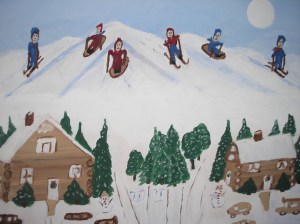
Sticky Toffee PuddingSnow, then ice pellets, then freezing rain, then back to snow again – this has been our weather pattern for the past six weeks.   Today is definitely another stay at home day, and for those weary of winter what better thing to do than to bake.  Your kitchen will smell lovely and your family is sure to be appreciative.  The third Monday in February is Family Day in Canada, as the government felt we needed a long holiday weekend to ward off the winter blues.   The idea is to spend the day outdoors with your family enjoying some winter activities, which inspired my mother to paint this picture.

Snow Day - AMc - 2015

Winter Fun

The weather cooperated last night with an unexpected six inch snowfall which made everything clean and white for tobogganing, skiing or skating.    It’s pretty, but I would much prefer to see some greenery in my backyard and if there are any snowdrops beneath the neighbour’s tree they must be smothered by now.   

There’s finally some warmth to the sun and the air has that mild feeling that tells you winter is winding down, but it’s still cold enough to make a nice warm dessert appealing.    I stole this recipe for sticky toffee pudding from a local coffee shop which specializes in homemade deserts –  well they graciously emailed it to me after I told them theirs was the best ever.  Surprisingly, it wasn’t a big seller for them, but sticky toffee pudding is not that well known in Canada, although becoming more popular.   Often thought of as a classic British dessert, it’s origins are actually Canadian, as (Wikipedia) legend has it that two Canadian WW2 officers gave the recipe to a British restaurant owner who put it in a cookbook.   So I guess you could say it’s circled back across the pond.   It’s really more of a cake, but as pudding is an interchangeable term for dessert in Britain, it’s best served with tea (and you can pretend you’re at Downton Abbey).  

Sticky Toffee Pudding

Sticky toffee pudding

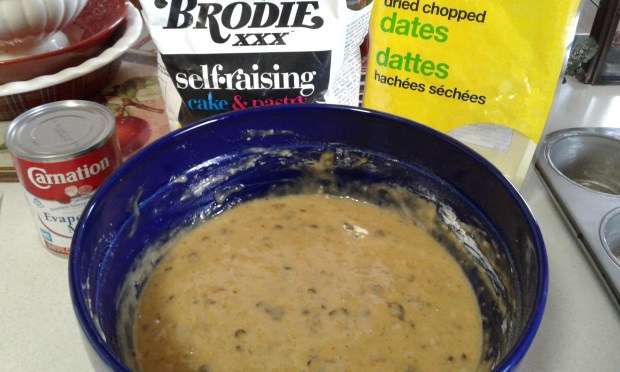
I used a big muffin pan instead of an eight inch square dish, as it makes perfect portions, and that’s how the coffee shop served it.   Sticky Toffee Pudding

But I scooped the rest of the leftover batter into a small red loaf pan from Christmas because it looked more festive.  Sticky Toffee PuddingWatch the baking time closely, as I took them out a bit before thirty minutes and they were still well done, (and my oven normally cooks slow). 

The caramel sauce is sweet but not too sweet.   I find those cans of 2% evaporated milk (NOT sweetened condensed), always have a peculiar smell and taste, but you don’t notice it when it’s boiled together with the sugar and butter.   Some recipes say you can use cream if you wish, and I may try that sometime but I didn’t have any and the grocery store was closed because of the holiday.   Of course cream will up the saturated fat content.   Our (President’s Choice) grocery store sold an excellent microwavable freezer brand of this desert, and I was horrified to see they clocked in at 550 calories and over 60% of the days saturated fat quota.  We have extensive food labeling here, which probably discouraged people from buying them as the product was discontinued.   (Note the calories can be cancelled out by volunteering to shovel the driveway).   While many restaurant versions of this desert (and I’ve sampled a few), have a moister darker cake, sometimes with spices, this one is lighter in color and more like a muffin texture.    Store the sauce in the refrigerator if not using right away and reheat.    If you like lots of warm sauce (and who doesn’t as it makes the cake), there was enough evaporated milk in the 300ml can to double the batch.  It’s a rich decadent desert, so you might even want to split one with someone, and of course don’t forget the tea! 

Sticky toffee pudding

Song of the Day:   Tea for Two – Ella Fitzgerald

Teapot


The Literary Salon: The Perfect Couple

Beach Book

We all know them – the perfect couple.  Or are they?   The Perfect Couple is the perfect book for Valentine’s Day, because who doesn’t like to read about relationships, perfect and otherwise.    At the very least, you can escape winter for a few hours  – just keep an eye out for any dead bodies washing up on shore!

The Publisher’s Blurb:

It’s Nantucket wedding season, also known as summer – the sight of a bride racing down Main Street is as common as the sun setting at Madaket Beach. The Otis-Winbury wedding promises to be an event to remember: the groom’s wealthy parents have spared no expense to host a lavish ceremony at their oceanfront estate.

But it’s going to be memorable for all the wrong reasons after tragedy strikes: a body is discovered in Nantucket Harbor just hours before the ceremony-and everyone in the wedding party is suddenly a suspect. As Chief of Police Ed Kapenash interviews the bride, the groom, the groom’s famous mystery-novelist mother, and even a member of his own family, he discovers that every wedding is a minefield-and no couple is perfect. Featuring beloved characters from The Castaways, Beautiful Day, and A Summer Affair, The Perfect Couple proves once again that Elin Hilderbrand is the queen of the summer beach read.

A bit about the Author:

Elin Hilderbrand is a graduate of The Johns Hopkins University and the Iowa Writers Workshop. She has lived on Nantucket for 25 years and is the mother of three teenagers.   The Perfect Couple is her twenty-first novel.

My Goodreads Review:

My Goodreads Review:The Perfect CoupleThe Perfect Couple by Elin Hilderbrand

My rating: 5 of 5 stars

The Perfect Beach Read. Her best book yet, the usual island fare with the added twist of a murder mystery. After a dead body is found floating in the water the morning of a fancy wedding all the guests and family members are suspects. Intricately plotted, the characters and descriptions are so real you will feel like you just spent a week on Nantucket. If you take this book to the beach you will not look up once it is so engrossing…..I could hardly put it down. I hope she does more murder mysteries…..looking forward to her new winter series.

Discussion:

The first book in my Literary Salon series – An Unwanted Guest – was a study in plot development, just how does one plot a murder mystery?   One of the reasons I chose this second book was for it’s characterizations.  If you have written 21 novels, how do you keep coming up with new characters?  Or are they just cookie-cutter people – change the job, name, appearance?   Her characters are usually flawed beings who make bad choices.  They drink a lot….like fish since we’re going with the water theme.   Sometimes they are so annoying and make such stupid decisions that you feel like abandoning them altogether.   You want the reader to like your characters or at least sympathize with them, not think they are fools.  (Note to self –  make my characters smarter and sober…..no vino for them).    

Elin Hilderbrand is the Queen of Beach Fluff, a genre that is often romance but usually just something lighthearted enough to take to the beach.    She comes out with a big fat beach novel every July, and often a short novella before Christmas.    While I have always enjoyed her books, I had grown a bit weary of the format.   The same old bed-hopping, drinking, even worse drinking while driving, piss-poor parents (her words) whose uncontrollable teenagers are doing the same thing – tale grows stale after awhile, and I admit the books wouldn’t be half as appealing if they weren’t set on the island of Nantucket.   (In much the same way I had tired of Joanna Trollope but her last novel, An Unsuitable Match, about a late in life marriage, was actually quite good – but that’s a whole other topic).    These books are fast food fiction, you already know what you are going to get.   There’s usually plenty of family dynamics and complicated romances all destined to work out (or not) in the end, because hey – it’s beach fluff.   But in this her latest book, you have all of the above, plus she has added a murder mystery and the book seems to have taken on a more serious tone.   She is older now and survived breast cancer in 2014.    I enjoyed the mystery aspect of it, and hope she does more in that vein.    I am currently reading the first of her new winter series, Winter in Paradise – see link, in which a wife loses her husband of 25 years in a helicopter crash in the US Virgin Islands, and finds out he had a whole other life on the island.   (not good – back to trashy again….five drinks on a boat cruise before 10am????)   In the jacket blurb the author says she vacations on St. John’s for five weeks every spring, so she can get big chunks of her writing done in privacy.  (maybe that’s my problem – I need to rent a Caribbean villa with turquoise views).   She does seem to like writing about islands, and the island lifestyle.   She’s certainly been a very successful author financially, and if the format works keep at it, but I can’t help but wish she would tone it down a bit.   But then I probably fall into this category, wherein, Tag the father in law, (who was having an affair with the maid of honor), describes the average reader of his wife’s books.         

‘Her fan base is nearly down to no one but the devoted cat ladies.  Tag is thinking about the devoted cat lady – tucked away in her Cotswold cottage fixing a cup of tea and preparing to spend a rainy afternoon in an armchair with a tabby spread across her lap as she cracks open the latest exotically located Greer Garson mystery.’

In his view, this is a dull life, but it sounds appealing to me and I don’t even own a cat.   But then I am older and her books are pretty much the only romance genre I read.   Although she is a good storyteller, I sometimes find her books are just too trashy.   I would love to see what she does with a theme and characters a little less shallow….and a little less preoccupied with booze and infidelity.   That may seem like an odd thing to criticize as we read escapist fiction to escape, but she is such a good writer that I wish she would tackle some more important stuff, like Jodi Picoult does.   Despite that, The Perfect Couple does have something to say about relationships, both old (how many long term couples stay together for financial reasons despite the affairs) and new, plus a riveting story-line.    If you grew up in the eighties with the Not-Married- Before-Thirty-Terrorist Theory of Love and rom.coms like When Harry Met Sally (doomed IMO, totally incompatible all that arguing) and Sleepless in Seattle (flying all the way across the country to meet someone whose voice you liked on the radio?) then love at first sight may seem perfectly plausible – but do the couple at the end of the book stand a chance?  What do they know about each other?  Yes, there are red flags, but isn’t it all unpredictable anyway – fate is fickle.    Success in love and marriage happens for some people and not others, but hopefully you don’t drown in the process.

Quote of the Day:    “Remember that sometimes not getting what you want, is a wonderful stroke of luck.”   (Dali Lama)  

Song of the Day:  Makin’ Whoopee – because the lyrics are fun


Downton Abbey Revisited

Downton Abbey

‘Village for sale in Yorkshire – property includes a great house with 43 low rent cottages,’ said the ad on the internet.   For only 28 million pounds you could have your very own Downton Abbey, complete with a butler saying, “Welcome to Downton” or whatever you wished to call your estate.  Downtown Abbey

I was late to the British Television drama Downton Abbey, having binge-watched five seasons over the winter of 2015, when it’s ending was already rumoured.   Forty some episodes later, I was addicted, and could see why it was watched by over 100 million people in 200 countries and considered the best drama series ever.   I had heard people talking about the show and had even tried watching a bit here and there but there were so many characters and relationships to keep straight.   The librarian suggested the only solution was to go back to the beginning, so I did.   It helped make a long snowy winter pass pleasantly, as I spend it in balmy Britain in the early part of the twentieth century.   Recently our local Public Television station has been airing the re-runs, which inspired me to revisit the world of Downton and make some observations, focusing on the fun, food, and fashions.

As a history lover, I found the era of the show fascinating, as it was a time of much change and innovation in the world, which is one of the reasons that producer Julian Fellowes chose it for his period drama.    He starts his saga in 1912 with the fateful sinking of the Titanic (and the death of the Downton heir apparent), and subsequently covers WW1 and the 1920’s, all the while working many of the decades most famous innovations into the script – cars, electricity, telephones, early airplane travel, listening to the king’s speech on the wireless/radio plus household appliances like refrigerators, toasters, mixers, sewing machines, typewriters, curling tongs and hair dryers as well as covering changes in women’s fashions, hairstyles and roles.   Looking back, Downton is a strange world in many ways, one many of us may find hard to relate to, especially if you are not British and your only exposure to the aristocracy is a picture of the Queen on your Canadian money.   The show is interesting because it depicts the rigid class structure of the time, the wide gulf  between the social classes and the upstairs downstairs aspect of running a great house, as well as the developing increase in the middle class and the importance of education.  Of course, we would all like to have lived such a life of leisure, and never have to worry about cleaning the house, making supper or childcare – there were nannies for that.   It was an envious lifestyle in many ways, even if they did tend to spend very little time with their children – an hour after tea time, but as the Countess Dowager exclaimed, it was an hour every day!

The Food

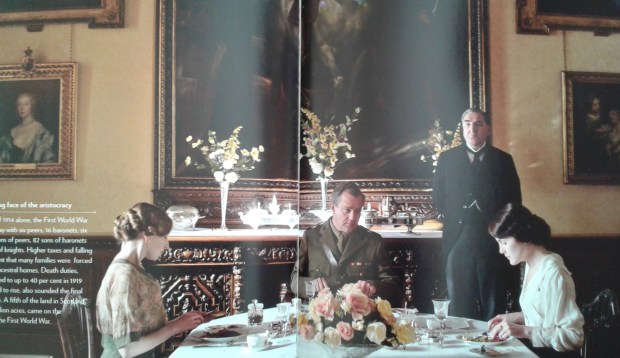
While some things would have been lovely, such as having a breakfast tray brought to you in bed, (only for married women, spinsters like Edith were expected to show up at the table) and having an elegant five course meal prepared for you every night, other things like being a slave to the 7 pm gong (dinner at eight seems way too late), and eating in the formal dining room in your best clothes in the presence of the butler and footmen, would have seemed very rigid on a regular basis.   (No sneaking leftover pizza in the kitchen of that household.)   Could you eat when someone was standing there like a statue, pretending not to watch you  or listen to the conversation whilst being ready should you require any attention.  It might be a tad uncomfortable, but maybe preferable to trying to flag down a waitress to bring you a coffee refill.    There was always conversation over dinner, and after they “went through” to the living room, more conversation.   So different from today when so many people dine with their cell phones instead of their companions.  

Downton Abbey

One would think they were a family of anorexic alcoholics from the dining room scenes.   While they served themselves from the platters proffered by the footmen, there never seemed to be much food on their plates, (especially the deserts, and I watched!) which might explain why they were so thin.    They tended to savour small exquisite portions – certainly no supersized meals there. 

Strawberry Trifle

Strawberry English Trifle

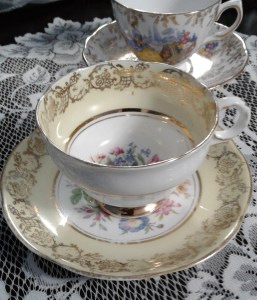
And the wine, so many different ones for each courses, but as Carson said, they usually only take a sip.   What a waste of good wine, why not just open one bottle for the meal, and be done with it.    The china and crystal were lovely however – why don’t we use the good china anymore.   It’s so much more elegant – as long as you don’t have to wash the dishes, and why did they never ever show anyone washing all those dishes night after night?Teacups

And the tea – so many cups poured, so few sips taken…but such pretty teacups.  But no scones or treats?   It’s a long way until supper  – ah yes, the crumbs and calories.  Teacups are elegant, but they hold 4 oz at most, and when I want a cup of tea, I want a bracing hot mugful.   Recently I saw a lovely silver tea service at a thrift shop, but it would need polishing and I already own too many teapots I seldom use – no one entertains like that anymore, which is why it was in the thrift shop.     

Downton Abbey The Fashions

Oh, the clothes – that long elegant silhouette, nothing too clingy, or skin tight like today’s fashions with everything emphasized and/or overexposed.    I especially liked the flapper style when they entered the 1920’s, and all the jewelry and hair ornaments….and the hats, so many stylish hats, week after week.    Even their nightgowns and robes were feminine and elegant.Hat

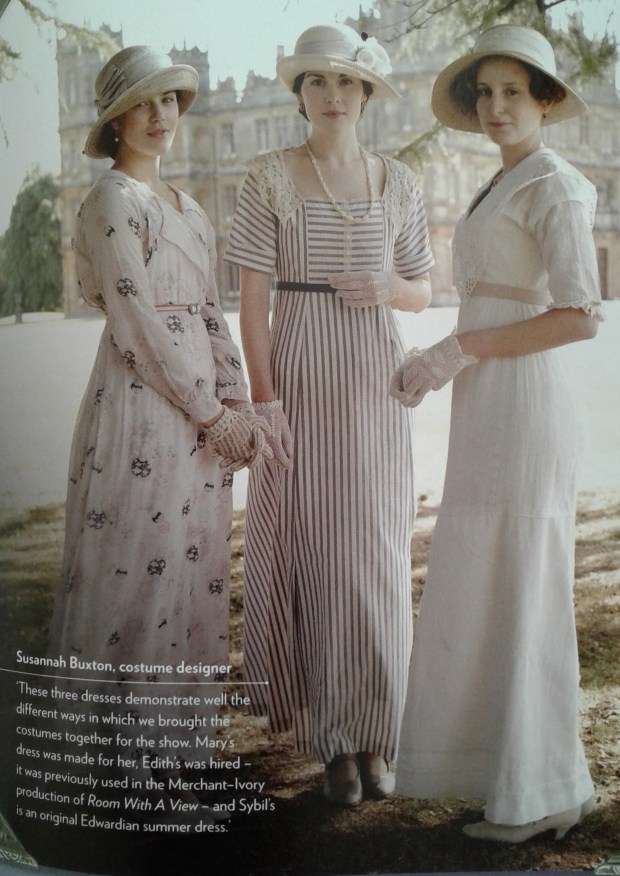
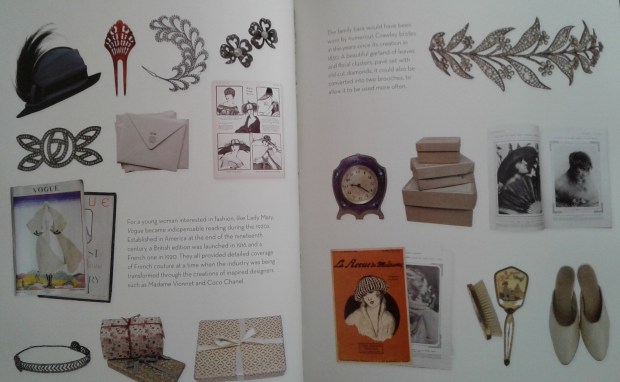
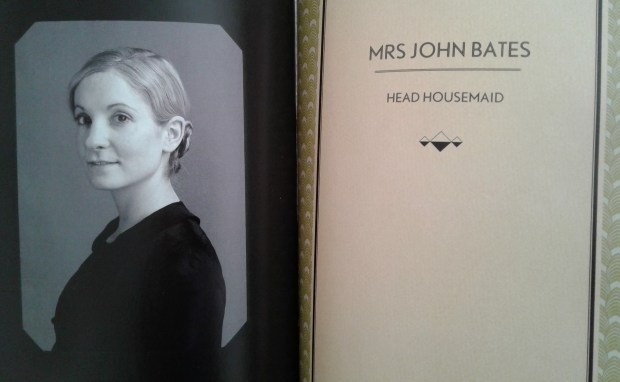
 For a fashionista it was worth tuning in just for the clothes.  The show must have been a wardrobe persons dream job.   The colours and fabrics were exquisite too.   But did they really need a lady’s maid to help remove their jewelry and undress themselves before bed, like a bunch of toddlers?   I found this 1912 book The Chronicles of Downton Abbey, by Jessica Fellowes (Julian Fellowes niece) most interesting in explaining the jobs of the various household servants. Downton Abbey

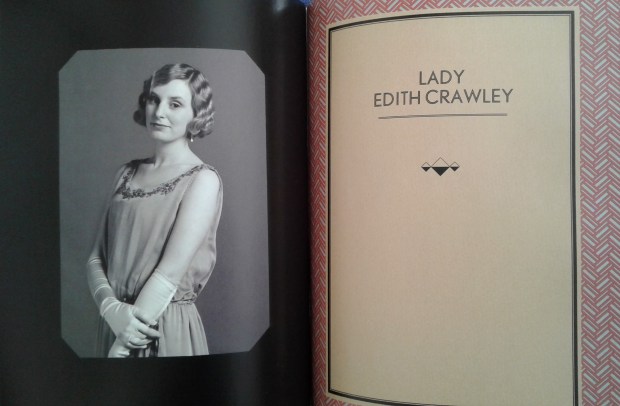
There were chapters on each of the characters, as well as general historical information about the running of such an estate and depictions of common household items.   Downtown Abbey Part of the lady’s maid’s job was to maintain, mend and care for the clothing.   Sign me up – I hate doing laundry and despise that half hour of ironing every week.   Imagine having someone to pack and unpack for you when traveling – it would be pure bliss.   Downton Abbey
While women’s clothing can be delicate and in need of more care, the valet’s role was even more puzzling and seemed to consist of nothing more than brushing the dandruff off the shoulders of the men’s evening jackets and polishing their shoes.  But again, there was the packing and maintenance and plenty of rules for black tie,  white tie and tweeds.   In one of the early episodes, Lady Mary inadvertently insults one of the staff by commenting that he was only a footman, but a staff position in such a great house was a steady and respected job, guaranteed employment and a step-up for many in the village.

Jessica Fellows has published a number of these lavish hardcover coffee-table type books, including this earlier one, The World of Downton Abbey, 2011, with lots of behind the scenes photos.  Downton Abbey      Highclere Castle, where the filming takes place, is a real working estate, and the present day countess, Lady Fiona Carnarvon has published At Home at Highclere:  Entertaining at the Real Downton Abbey, which chronicles the food, menus and entertainment of four historic weekend house parties held at the estate from 1866 to 1936.   There seems to be no shortage of books about Downton as recently I ran across this book, Downton Abbey and Philosophy, edited by Adam Barkman and Robert Arp, with contributions by 22 writers, about such diverse topics as the War Years, Master and Servant and Lady Edith and the Trials of the Modern Woman, as well philosophical ventures into morality, manners and socialism. Downton Abbey

The Fun

What did they do for fun?  They seemed to read a lot of books – at least they are always opening and closing them, and wouldn’t it be splendid to have that red carpeted library, although many of the books look like dusty tombs.    The dinners and parties and dances look splendid, especially the waltzes and the jazz tunes on the phonograph.   The fox hunting and horse race scenes were gorgeously filmed as was the grouse hunting in the heather filled moors and the visit to the Scottish castle.   A life of privilege would certainly have its pluses, but would it be enough?   (see the philosophy book – finding the meaning of life in Downton Abbey).    I suppose you wouldn’t question it if that was all you knew, but I am reminded of Sybil’s remark after the war was over, when they had grown accustomed to having a purpose in life (in her case nursing).   Instead of going to dress fittings and endless teas and charity events she said she wanted to be tired at the end of the day, tired from doing useful work.  Well Darling Sybil, I’m sorry they killed you off in Season Three, but work is tiring, very tiring – try it for twenty years or so and let’s check back or let’s change places.   I think I could adapt to being a lady of leisure –  are there any British castles where they will let you sample the life of a lord and lady for a month?     Highclere Castle does host some daytime events and there are cottages you can rent overnight, which brings me back to that ad?    Anyone have an extra 28 million pounds they can spare?    Or if not, then anyone care for tea?   We can always pretend…..

The Cast

I know some people who stopped watching after Season 3 as they could not handle the deaths of two of the main characters, but apparently those two actors had specified they only wanted 3-year contracts.    Maybe they were afraid of being typecast, but having watched Dan Stevens as Charles Dickens in The Man Who Invented Christmas, well seriously – Mathew was all I could see.  The story-line of Downton Abbey really draws you in, it is multilayered with many characters.   The scenes are short for the most part, and the pace quick.   Having such an excellent cast of strong actors helps, they really inhabit their roles.    My least favourite characters were Mr. Bates (bad temper, shady past and way too old for Anna), Cora with her breathy baby-like voice and snobby ways, Shirley McClain as her American mother (horribly typecast), as was Miss Bunting (rude and much too short).   I’m glad they ended the show on a high note after six seasons, as I really couldn’t take Bates facing jail time yet again…..and Mary’s multiple suitors were no replacement for Mathew.   Although she did eventually chose one, none of them could ever measure up.Downtown Abbey

In some cases, (the pigs anyone?) they seemed to have run out of story-lines.  But I was very glad poor Edith was happy at last, and ranked higher socially than Lady Mary, (but then I was a middle child too).      Downton Abbey Epilogue:     There are rumors of a Downton Abbey movie swirling, with a tentative release date of Sept 2019, but I wish they had left them frozen in time at New Years 1926.    It ended perfectly, with all the story lines wrapped up nicely, so why run the risk of spoiling it – but then I may be convinced otherwise.   I’ll be watching…..I wonder if the movie theatres will be serving tea and scones?

The official movie trailer: 


The Skating Rink

             One of the best things to enjoy about winter is skating.   In fact, years ago you wouldn’t have been considered Canadian if you didn’t like skating, my generation having been raised on hockey and a daily dose of outdoor exercise.   If you were a true Canadian, you never missed watching Hockey Night in Canada on Saturday nights.   I admit I haven’t skated in years and thought to take it up again in retirement, but my last Bone Density test was not good, so I fear my skating days are over.   Watching the neighbors kids  through my kitchen window is the closest I have come to the sport lately, and although I might have been moaning about having to do the dishes by hand at least I had a pleasant scene to gaze upon, especially after school when the spotlights were glowing, and the flurries flying.    Still, I was wondering, what if I built my own skating rink?   I have such a big square rectangle of a back yard, that it seems a shame to waste it.    

Skating rink

       Now that the neighbors have moved, I seldom see any children playing outside in the winter or in the summer either.   When I first moved to this subdivision there were always games of street hockey after school, now everyone is inside on their video games.   I grew up skating on the farm.    There was a low spot behind the barn which made for an excellent skating rink when it was flooded.   Here is a picture my mother painted of it, complete with the family dogs.   My brothers and cousins would sometimes go to the pond at the back of the farm to play hockey, but it was a long way to walk, there and back, in the cold.  Hockey on the Pond - AMc

Although skating was one of my favorite winter activities, I was not thrilled about having to wear black skates.   They were hand-me-downs from my brother, but my mother probably figured it didn’t matter as who would see us, way out in the country,skating (me)

But even at age six I knew that black skates were for boys – girls wore white skates, for figure skating.    By the time the arena was built in town and free skating hours were held on Sundays, I had a pair of white skates as I simply refused to go otherwise.    The best thing about skating in the arena was the music blaring from the loudspeakers, but it was the sixties and we had the Beatles and other groovy tunes.    While cleaning out the basement a few years ago I found the diary I got for Christmas the year I was eleven.   We had a skating rink at school that January, courtesy of some long forgotten but dedicated teacher, and practically every day the entry is the same – “went skating at lunch hour”.   Re-reading the diary, I seem to have been obsessed with skating, but maybe I had nothing else to write about – our lives were simpler and more uneventful back then.   By the time the February thaw came I had given up on both the skating and the writing and the rest of the diary is just a series of blank pages.

The winters were colder too and longer, at least it seems so in retrospect.   I remember my cousin and I once skating over the fields when we were teenagers – there was such a hard crust of freezing rain and ice on top of the snow that the whole farm was our skating rink that weekend.      

My dad remembers a few years where the winter was so cold and the ice build up so thick that it was possible to skate on the river.   That would be  dangerous now, and probably was then too.   My mother lost a childhood friend, a teenage boy who fell through the ice.   She was to go with him and another friend that day, but she didn’t have any skates.   My dad saved up $5 in the Depression to buy his first pair of skates.      

Skating must be in my genes, as my maternal grandmother hailed from Holland, where she remembered skating on the canals in the winter.    Dutch Inheritance - AMcWhile every small town in Canada has an indoor skating arena, there are very seldom any outdoor rinks anymore, and by outdoor rinks I mean big community rinks, not just a small square of ice in someone’s backyard.    Occasionally someone’s attempt to build a backyard rink gets shut down because of zoning bylaws or neighbors complaining about the noise, but kudos to the brave dads who attempt it, as they are the ones standing out at midnight in the freezing cold flooding the thing every night.   

Being outside in the fresh air was always part of the fun, layering up with double socks and mittens and thick scarfs around our necks and faces…..and then coming in hours later with red cheeks and frozen fingers to warm up over hot chocolate.    Some winters are just not suitable, it’s too mild or rainy, or just not cold enough – you must have a consistent spell of below freezing weather….the old six weeks of winter thing.   We did not even get our first major snowstorm this year until January 19, so this has not been the best year for making ice, but we are now in for a prolonged spell of below freezing windchill weather, so why don’t we have more outdoor rinks?   I see parcels of empty land here and there around town and think now that would make an ideal skating rink.   It seems to me that it wouldn’t be that expensive to build a temporary ice rink, and think of the fun the kids could have.   We have splashpads now that cost $150,000 instead of swimming pools.   You can skate in an arena where ice time is rare and always scheduled, but there’s nowhere to play a pick-up game of shimmy.    Many larger cities have skating centres, like Nathan Phillips Square in downtown Toronto.   You can skate on the Rideau Canal in Ottawa, but the weather is much colder in our nation’s capital.   If I’m ever in New York in the wintertime I would risk falling and breaking a hip just to be able to skate at the Rockefeller Centre – but first I would make sure I have travel insurance!       

skating rink

Having a backyard rink would be fun for the adults too.    I’ve often thought a skating party would be nice idea for a New Years Eve party, for all ages – the music – the outdoor lights – a bonfire – hot drinks – good food.    Chili and potato soup, or lobster Newburg and champagne if you want something fancier.    I used to talk sports with one of my work colleagues, who was a real hockey fiend.    Every year I would joke, “Bob, do you think this is the year I will have a skating rink?“ and he would reply, “If you build it, we will come.”     

I still have my skates – they are in the basement somewhere.   Am I brave enough to take a spin?  I wish I had a rink outside my back door….  

Song of the Day:   Joni Mitchell – I Wish I Had a River

Beverage of the Day:  Hot Chocolate made with imported Valrhona French cocoa….at $20 a box it’s expensive but worth it and not at all bitter as dark chocolate can sometimes be. 

hot chocolate

Gourmet Hot Chocolate