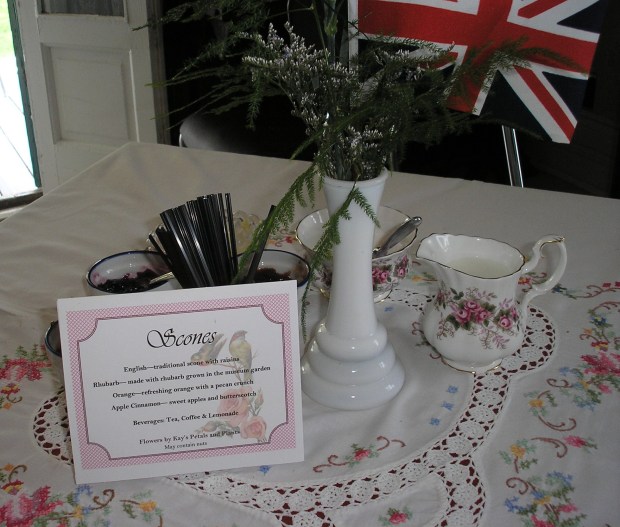
 Last month I blogged about a Victorian tea party I attended on the grounds of a local museum. If you are a history lover, please join me for part two of the tour, a visit to yesteryear.

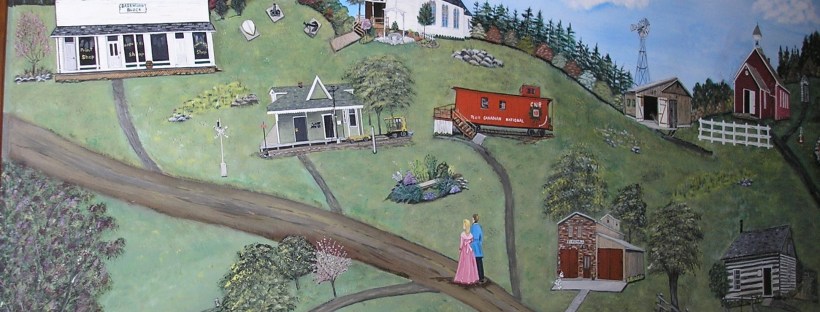
While the Victorian cottage is one of the original buildings on the museum site, there are many others. Most have been moved to the site, including a one room schoolhouse, a small church and a log cabin from the days of the early settlers, as well as a local lighthouse.
The 1919 church with the original pipe organ in the corner.


The one room schoolhouse.
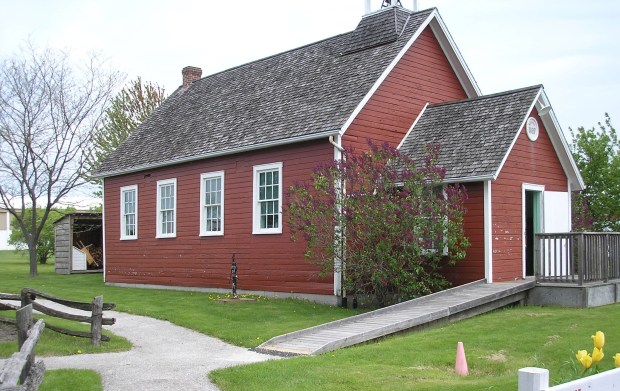
At the risk of sounding like someone from Little House on the Prairie, I seldom admit I once attended a one room schoolhouse. It was located less than half a mile down the road from our farm, within walking distance even for a first grader, and was the same school my dad and all his ancestors had attended. In 1963 the government closed all the remaining rural schools, and our parents drove us into town to the Catholic school until the bus system was started a few years later.
What do I remember from my year and a half there? Not much, as I was only six. The big wood burning stove, so hot you could cook hot dogs wrapped in tin foil on top for lunch, 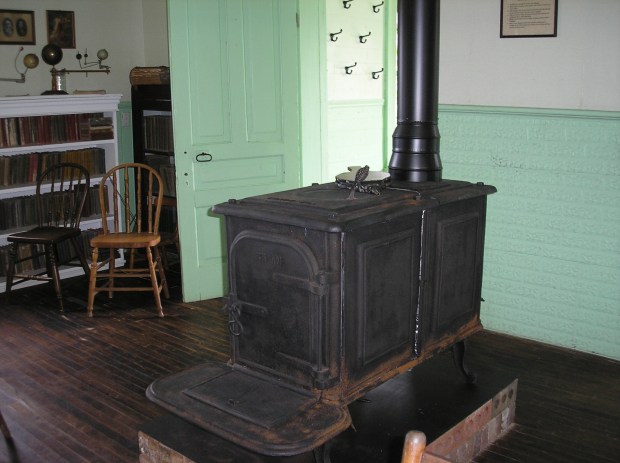
games of baseball for all ages at recess, getting the strap once (just a little tap on our hands) for talking in class and being made to stand in the corner with my cousin – much more humiliating.  The teacher was always yelling and in a bad mood – can you imagine trying to teach 40 kids of all ages. It may sound archaic, but I suppose it would be similar to home schooling now, with different age appropriate lessons. As there were only three of us in grade one, myself, my cousin and an unkempt boy whose family no one knew, we did not get much attention, but I must have absorbed something from listening to her teach the older grades, as when we were given tests at the new school I passed with 92%. (They thought we were country hicks who would have to be held back a year). My new grade two teacher was pleasantly surprised and told my parents I was smart, a moment I remember to this day. I always had a friendly rivalry with the boy sitting in front of me over who would get top honors, sometimes it was him, sometimes me, and as I went on to graduate from the University of Toronto, it didn’t to me any harm, although I admit some kids who needed extra attention were not as lucky.
Compare this slate with the tablets of today. I vaguely remember the sound of the school bell being rung.

At the one room schoolhouse the grade ones were let out half an hour early, and my cousin, who lived next door, and I would dawdle along, catching tadpoles in the ditches, playing in the snowbanks and making up fairy stories, the road being lined with beautiful trees, (channeling Anne of Green Gables here), and arrive home the same time as my siblings. It seems I remember more than I had thought.
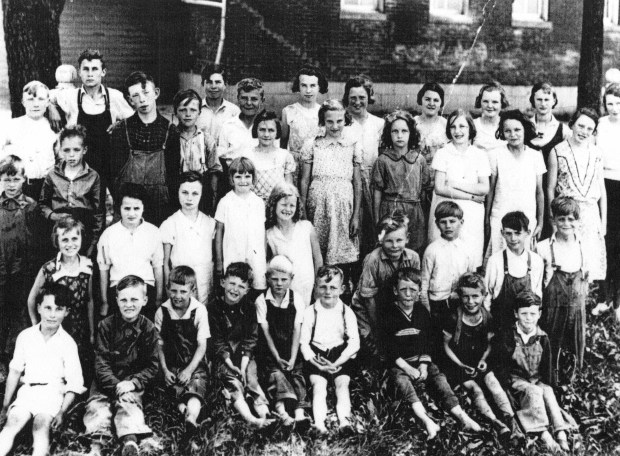
Here is a picture of the class of 1934, with the school in the background appearing larger than I remember.
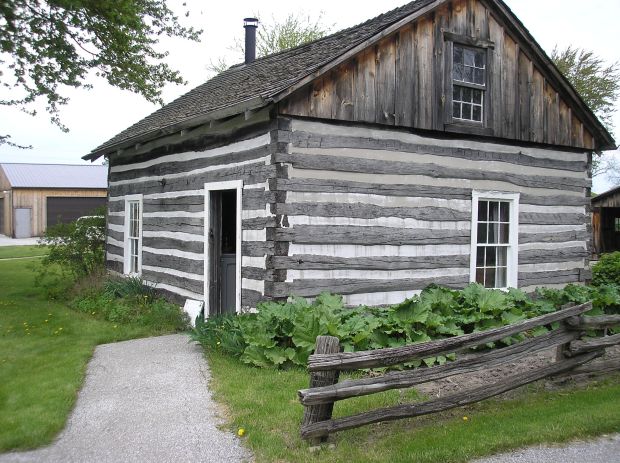
This is a log cabin from 1874, not a replica but an actual cabin moved to the site to preserve a part of history.

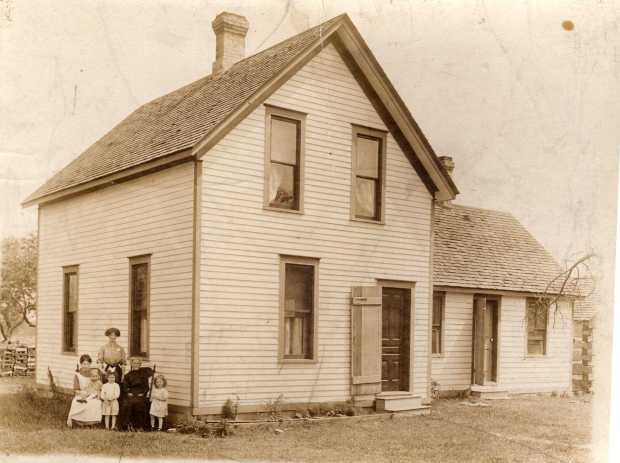
My great-grandparents John and Ellen were married in 1870 and I try to imagine my Irish ancestors living in such a small drafty house during their early years on the farm. The old white farmhouse I grew up in had two parts, the initial smaller dwelling and a larger addition with bedrooms upstairs to accommodate their growing family of nine children.
This picture of an old stove certainly puts my complaints about the ongoing delays in my kitchen reno into perspective. What my ancestors would have given for such modern conveniences as a stove you could turn on with the touch of a button.

Not too keen on the sleeping arrangements, a loft accessed by very steep stairs. I remember my dad saying some of his uncles slept upstairs in the granary when it was new, which probably looked like this. I imagine it was freezing in the winter, hence the quilts.

Open concept floor plans were popular back then too! We have an antique farm table dating from 1870, longer than this one.

While most farms had large vegetable gardens, including rhubarb, and were mainly self-sufficient,
there were times you simply had to go into town for a few provisions at the general store,

and perhaps a new hat.

The model train room, which boasts three large train sets, is always a hit with the guys.

As well as the individual buildings, there is a large agricultural building full of old farm implements such as this cutter/sleigh. We had one just like it and my dad sometimes took it for a spin behind the Clydesdales.

There is also a large exhibition hall, with a marine room and different display rooms and lots of historical archives. It does seem strange that my Barbie/Skipper carry case has now achieved vintage status.
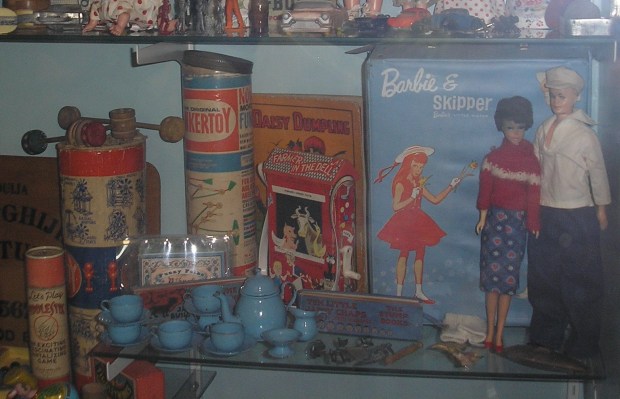
I remember playing with this doll house too.

Several volunteers were setting up the loom for a display of weaving the day of our visit, a time consuming process. There was no fast fashion back then.

And of course, I always enjoy looking at old medical exhibits, such as this infirmary,

and pharmacy.
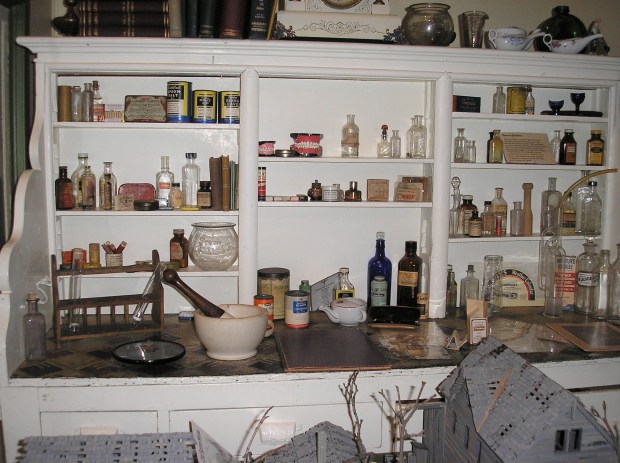
The tools of my trade
Perhaps somewhere among those antique bottles is a clue for my (long neglected) murder mystery? Agatha Christie used the knowledge acquired during her days as an apothecary apprentice when writing her books.
When I think back to the changes in my profession over the past one hundred years – the invention of penicillin and antibiotics, vaccines, insulin – these are discoveries which saved lives. In my student days pharmacy labels were prepared on typewriters, not as ancient as this one as ours were electric with correcto-tape.

The last forty years of my career has seen the implementation of computers (a massive improvement for record keeping, drug information and drug interactions), clot-busters for preventing damage in heart attack and stroke, palliative care measures for end of life, improved chemotherapy, drugs for depression and mental illness, biologicals for autoimmune diseases, and more new drugs on the market than you can possibly keep up with. When I think of the future – targeted chemotherapy, gene therapy, cures for diseases never thought possible – it is amazing the amount of change that can happen over the course of a century.
One Christmas my father was given one of those autobiography books to document your life for the grandchildren. One of the questions was what are the most important changes you have seen in your life as compared to that of your grandparents.
“When my grandparents settled here the land was all bush. Roads were Indian trails. People lived far apart. They had to build houses, barns, roads, clear land. Walking and horses were the main modes of travel. Machinery was crude or non-existent. Since then tractors and combines have been invented. Hydro, paved roads, cars, radios, toasters, tvs, micowaves, computers. Household goods and furnishings have changed such as washers and dryers, refrigerators and stoves, air conditioning in summer and furnaces in winter instead of a wood stove. My mother churned butter and we had an ice box and a root cellar for vegetables, an outhouse, no running water in the house and having to heat water on the stove for a bath. Materials are softer now than the scratchy clothes I wore as a child. You have toys now that we never dreamed of. The biggest changes are education and modern schools, and medicines and childhood diseases.”
My father was a child of the Depression, and one of changes he recalled was hydro. The farm didn’t get hydro until after WW2, 1947, and all of a sudden you had lights in the barn and weren’t milking cows by lantern light, and you could stay up late with hydro in the house. Worth thinking about the next time I grumble because the power is out a few hours due to a storm. As to the future, he commented on computers and the internet which was just starting up. In the twenty years since he died we now have – Google, Youtube, Facebook, Wikipedia, Skype, Instagram, Twitter, Siri, Spotify, Netflix, IPods, IPads, GPS, digital cameras and clouds which are not rain clouds, although we have plenty of those too! We are now testing cars that drive themselves, robots and artificial intelligence. It feels like something out of the Jetsons – that old 60’s cartoon about a futuristic world which was very predictive. Does anyone else remember the theme music?
What will the future hold? Maybe someday my old 1986 DOS computer, currently residing in the basement, with it’s orange blinking screen and large floppy disks, will be on display at the museum, resting behind the electronics exhibit, along with a Sony Walkman and a ghetto-blaster.
As a history lover, I feel it is important to preserve our heritage, and I hope you have enjoyed this peek into the past.
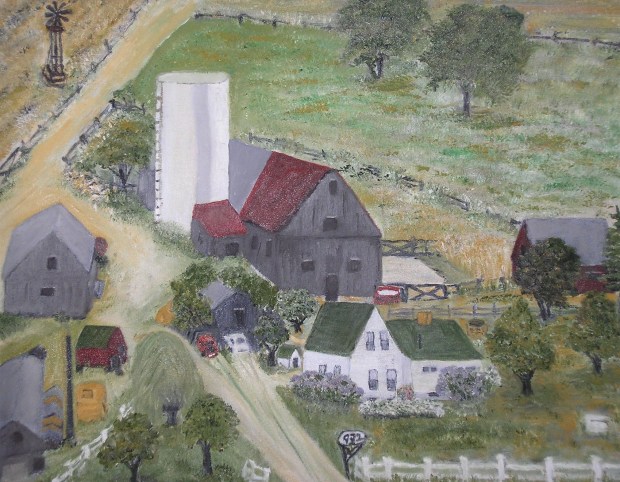
Postscript: My mother painted the log cabin (two versions), but she placed it in winter time, as my ancestors arrived here in late October, not expecting snow. Is the lighthouse a beacon to the new world? You can tell I’ve been hanging around the art world too much…


Postscript: This is my 100th post. I never would have imagined that!
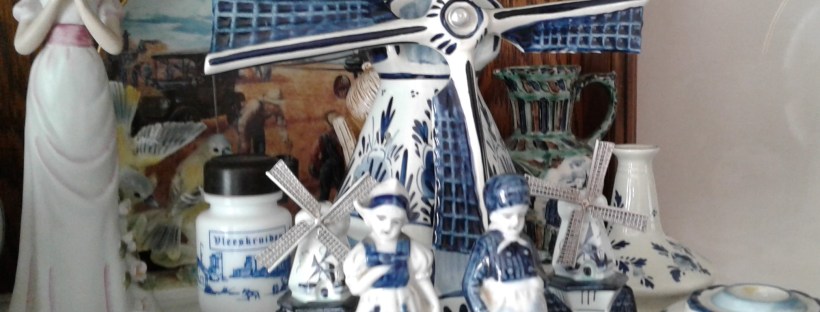
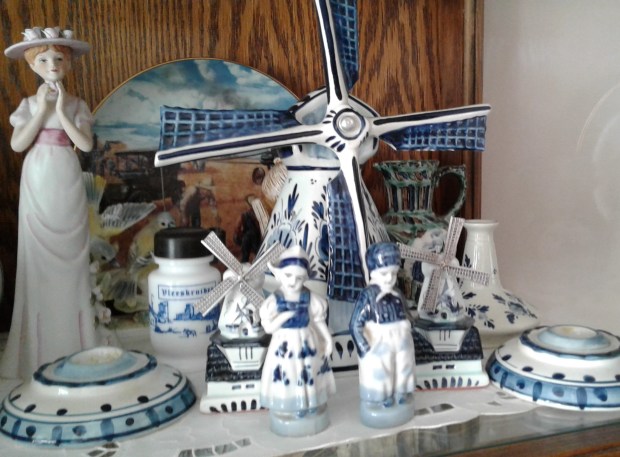 It’s a sad fact of modern life that when you receive an inheritance letter in the mail, you automatically assume it’s a scam and throw it away – especially if it’s from someone who promises that if you will only oblige and send your bank account information the money will soon be on it’s way. But as it turns out not all inheritance letters are scams.
 My grandparents were married the week before Christmas and left on a boat to New York, arriving in Ellis Island on New Year’s Day 1922. According to the Ellis Island archives, they traveled with two other couples, one of which was my grandfather’s sister and her husband. Two of his other sisters and their spouses were already here in Canada, a country where things were supposed to be more prosperous, especially after WW1. My grandmother had grown up on a small farm and my grandfather worked on the boats on the canals, but there wasn’t much farm land available or work to be had, after he put in his mandatory four years of service in the army reserves. In order to come to Canada, you had to pass a medical and be sponsored by a Canadian farmer for a year, so they decided to settle in a small Ontario town where there was already a small contingent of Dutch people.

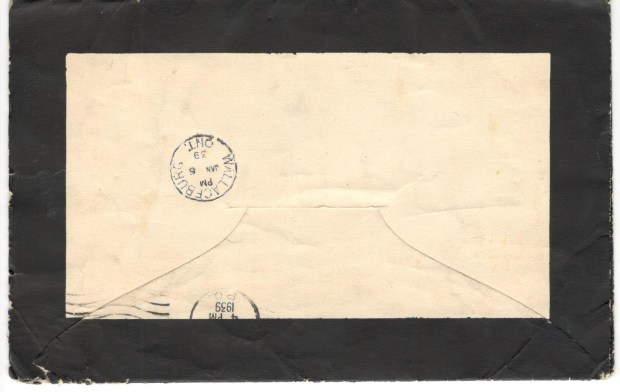 After my grandfather died, my sister tried to talk her into taking us to Holland on a trip but she said she was too old (she was only in her early 70’s) but I don’t think she wanted to go by then, fifty years had gone by, it had been too long. But she continued to send airmail letters back and forth to her brothers and sisters over the years. They sent her a bouquet of tulips for her 80th birthday. Her siblings all lived well into their 90’s, the last one dying at 95, still riding his bike around town. They had moved into town by then too, as their farm had been swallowed up by development. My grandmother herself lived to be 96 in her own home – she was the last of her family and many condolence letters arrived from nieces and nephews in Holland after she died.
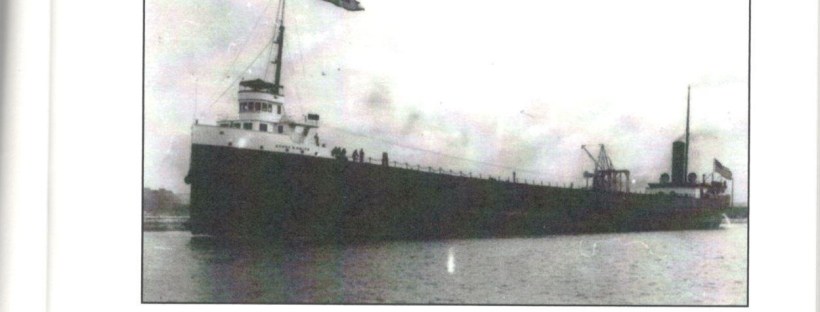
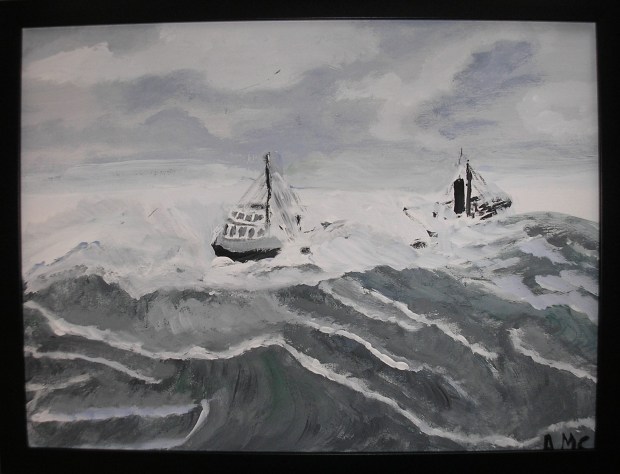
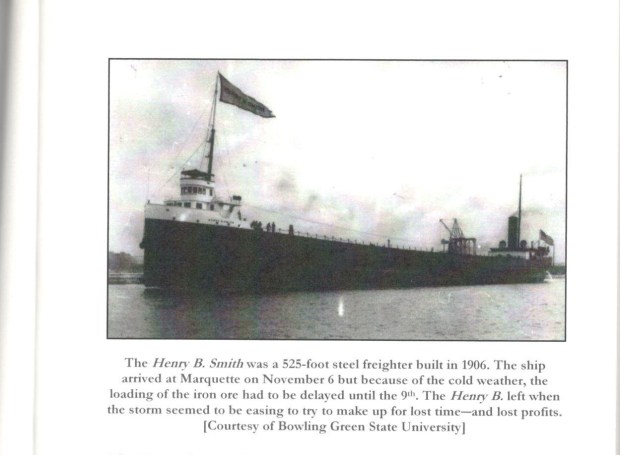


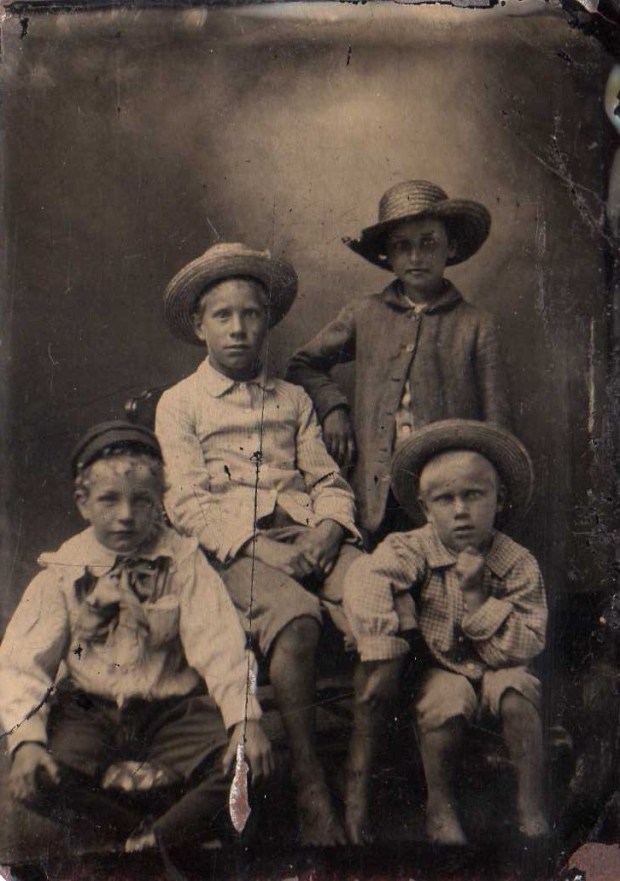
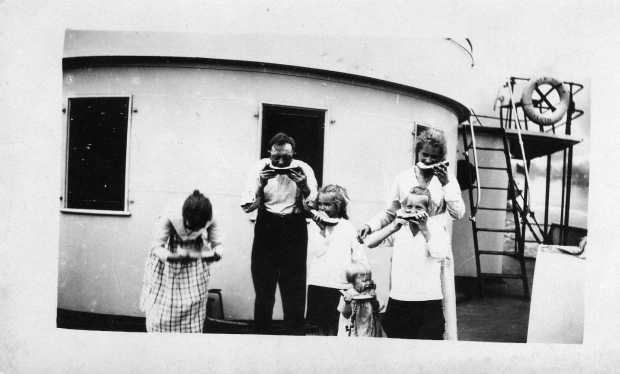
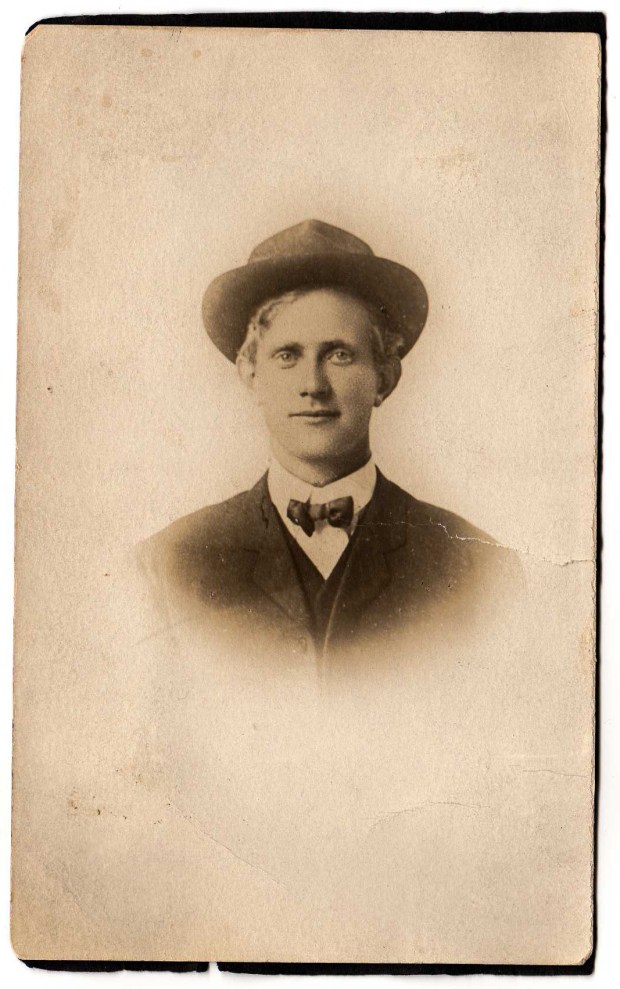 Later on, his brother Bernard captained his own small boat, and made trips up and down the river to Detroit. Perhaps he no longer wanted to be at the mercy of someone else’s orders like his brother had been. Here’s a picture of some of his family eating watermelon on board his boat. From the middy blouses and big hair bows, it is probably dated around 1920?


 And another writeup……










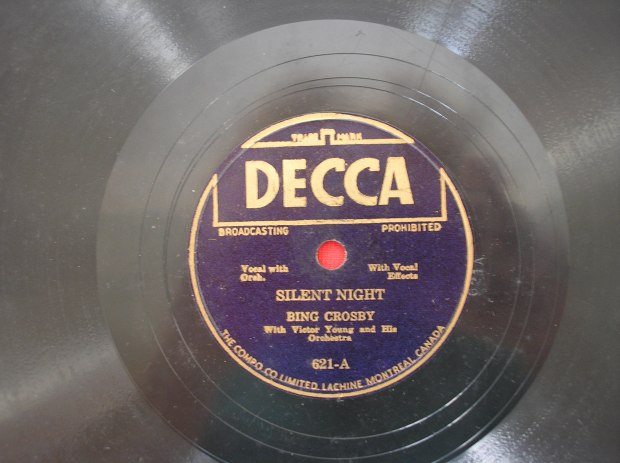 The children’s 45’s included Frosty the Snow Man, with God Rest Ye Merry Gentleman and Joy to the World on the flip side, and Santa Clause is Coming to Town with Silent Night. (Note to self – check Ebay to see if any of these are worth anything…just out of curiosity, you can’t sell childhood memories).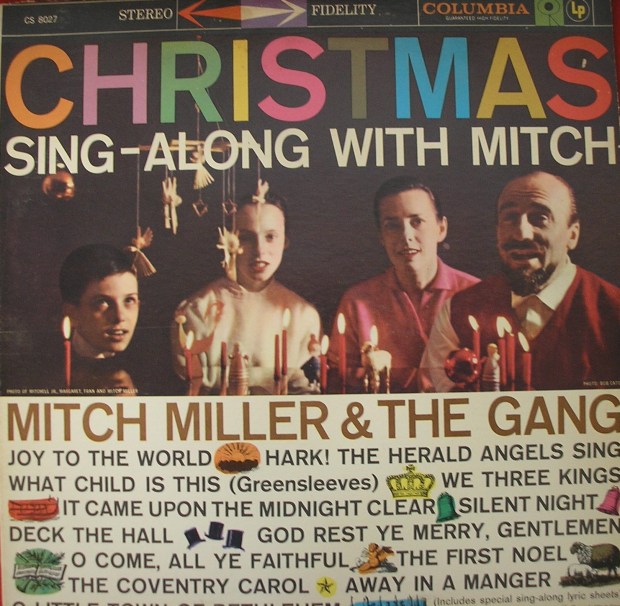
 (although I now dislike the highly overplayed Most Wonderful Time of The Year), as was Burl Ives, Have a Holly Jolly Christmas. My mother used to sing that in the kitchen, and it really was her favorite time of year. We didn’t have a lot of money growing up but my parents always made sure we had a good Christmas. Other memorable songs off that album were, Please Send Some Snow For Johnny, and Silver and Gold. Other great albums were the Carpenters – Karen Carpenter had the clear pure voice of an angel, (There’s No Place Like Home For The Holidays, Merry Christmas Darling, What are you doing New Years Eve), Boney M (Mary’s Boy Child, I’ll be Home for Christmas, When Darkness is Falling) and the whole soundtrack of the movie White Christmas, (Snow, The Best Things Happen While Your Dancing, Count your Blessings, and the army songs). My Dad had a deep baritone like Bing Crosby, and used to sing the odd line in the barn while feeding the cattle, so I have a hard time listening to White Christmas. Any Christmas song that makes you think of happier times can be a sad song when you are feeling nostalgic for Christmases past and loved ones who are gone. Then there are others, the songs that are just plain sad, like Grown Up Christmas list, I Heard the Bells on Christmas Day, I’ll Be Home for Christmas if only in my Dreams, Blue Christmas, The Christmas song (NatKingCole), Silver Bells etc. I love the Rosemary Clooney verision of Have Yourself a Merry Little Christmas, but that line, “through the years we all will be together, if the fates allow” always makes me feel sad.
  This is a picture of my uncle in the old cutter sleigh from the farm. When we were kids the sleigh was stuck up in the rafters of the implement shed where it’s black leather seat made a fine nesting place for mice. In the early nineteen hundred’s my ancestors used to go to church in this very same sleigh when the roads were bad, because despite the snow and the cold, no one ever missed church!











 and last month when I was at a craft sale, amongst all the crocheted and quilted offerings, there were a couple of tables selling homemade jellies and jams, including crab apple, which is made from the pressed juice, so I would not even attempt it…..besides which I am all jammed out for this year – this jam session is over.


 thehomeplaceweb