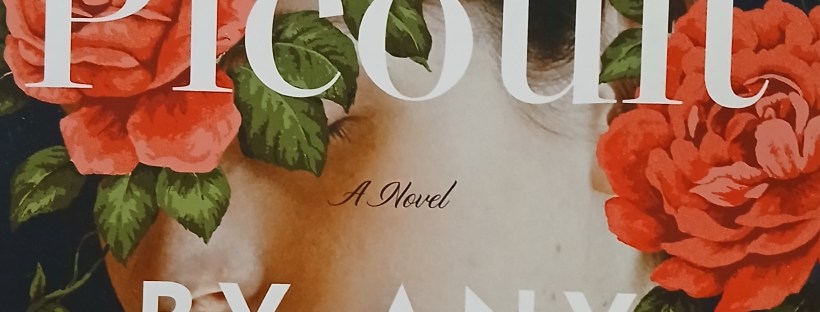
Jodi Picoult’s latest bestseller, By Any Other Name, is a historical novel which deals with a controversial literary topic – were some of Shakespeare’s plays actually written by a woman? While the idea was intriguing I wasn’t sure if a 500 page book about the Elizabethan era would interest me, but I found it fascinating and very convincing.

Publisher’s Summary: Two women, centuries apart—one of whom is the real author of Shakespeare’s plays—are forced to hide behind another name to make their voice heard.
Synopsis
In 1581, Emilia Bassano—like most young women of her day—is allowed no voice of her own. But as the Lord Chamberlain’s mistress, she has access to all theater in England, and finds a way to bring her work to the stage secretly. And yet, creating some of the world’s greatest dramatic masterpieces comes at great cost: by paying a man for the use of his name, she will write her own out of history.
In the present, playwright Melina Green has just written a new work inspired by the life of her Elizabethan ancestor Emilia Bassano. Although the challenges are different four hundred years later, the playing field is still not level for women in theater. Would Melina—like Emilia—be willing to forfeit her credit as author, just for a chance to see her work performed?
Told in intertwining narratives, this sweeping tale of ambition, courage, and desire asks what price each woman is willing to pay to see their work live on—even if it means they will be forgotten.
THE THEORY BEHIND THE BOOK:
The inspiration for the novel came from an article Jodi Picoult read in Atlantic magazine – Was Shakespeare a Woman – by Elizabeth Winkler. – an article which many distinguished scholars (mostly male tenured university professors) seemed to find deeply upsetting to the point that it was widely condemned. But it was enough to pique her interest into doing more research about Emilio Bassano, who was a real-life person living at court in Shakespeare’s time, and who in her later years published the first book of poetry by a woman in England. Documentation about women’s lives in general was scarce in that era, but the author was able about to reconstruct her fictional life from a single documented source – an extensive medical record written by a physician whom she had consulted for female ailments.
Would a full time actor and producer, who was not formally educated, have had the time and the skill to write so many flawless plays – 37 in total? Jodi Picoult says She. Does. Not. Buy. It. and outlines her reasons in the Author’s Note (ten pages at the back of the book), which summarizes what we know of Shakespeare’s life, and is well worth reading on its own.
Apparently Shakespeare had a reputation for being a bit of a jerk, not just towards his pregnant wife, Anne Hathaway, but for petty things like evading taxes, restraining orders, and being fined for hoarding grain during a famine and price gouging, according to records. There are pay stubs for his acting. There are references to other famous playwrights and poets of the time – their names appear in theatre ledgers, or they were publicly praised at the time of their death, or buried in Poets Corner at Westminster Abbey. They left behind books and manuscripts in their wills. But there is no record at all in his life that Shakespeare was an author. He left not a single shred of literary evidence upon his death, not a single manuscript, revision or book was found among his belongings, although he left an extensive will dividing up his household goods. He played no musical instruments, never spent time at Court or in the military and had no knowledge of the law. Could someone who never traveled outside of England, had no musical background, and left his daughters uneducated, have written plays that had such strong female characters, (Lady MacBeth, Juliet, Portia, Beatrice, Cleopatra etc), were set in foreign countries such as Denmark, or Italy, and contain numerous references to music. It does seem strange, given that most writers write from what they know, or if not specifically, then indirect references will often make their way into their work.
Picoult’s theory, among that of other scholars, is that many of the plays were written by a writer’s room, organized by The Earl of Oxford (nobles were not allowed to write or publish either), and that Shakespeare was an allonym used by them all. The plays we credit to a single person, were penned by multiple writers. (Sort of like a group of writers working on a weekly sitcom, which is what plays were at the time, being the chief source of entertainment). There were no copyrights, so plays were often revised and adapted multiple times and collaboration was common among playwrights – except for Shakespeare. She believes Mary Sidney Herbert (a noble woman), and Emilia Bassano were among these writers. In other words, Shakespeare was paid for the use of his name. His early documented plays seem uninspired compared to the richness of the later masterpieces. The First Folio of his work was compiled and published in 1623 a few years after his death, by two of Shakespeare’s fellow actors, but Picoult speculates in her novel that playwrights of the time might have tried to correct this misconception that he was the sole author. Because by then it probably irked them that he had become famous.
Emilia Bassano was from a Jewish family (think Shylock – Merchant of Venice) of court musicians, (if music be the food of love, play on, Twelfth Night), highly educated by a countess, which was unusual for a girl at the time, and as a mistress to the much older Lord Chamberlain, a man who oversaw all theatre productions in England, had access to court literary circles. She was also Italian, (there are numerous plays set in Italy) and the man she was a ward to as a child, travelled as a diplomat to the court of Denmark, (Hamlet) where he met two noblemen, Rosencrantz and Guildenstern. There are just too many coincidences and things that Shakespeare would not have had knowledge of. Picoult credits about 10 or 12 of the plays to Emilia, the ones with strong females, Italian settings and musical references – A Midsummer Night’s Dream, The Merchant of Venice, Romeo and Juliet, The Taming of the Shrew etc.
WHAT I LIKED ABOUT THE BOOK:
I loved how the author wove famous words from the plays into the dialogue. If you want to see how the events of Emilia’s life, might have inspired the writing of the plays, there are 20 pages of Shakespearean references and their corresponding page numbers at the back of the book. It was fun to see how many I could catch. I did okay considering I was not an English major, other than 3 years of Shakespeare in high school – Merchant of Venice (grade 9), Romeo and Juliet (grade 10 – the year the first movie came out with the cute Romeo), MacBeth (grade 11, where I played a witch with my cousin, and another girl). In fact, my entire acting career consists of being one of the three witches in MacBeth (Double, double, toil and trouble, fire burn and cauldron bubble…). We were to recite or enact a scene from Shakespeare and there was safety in numbers. Back then it was difficult to find black nail polish, but the witch costume was easy, courtesy of Halloween. The cauldron was a big pot covered with black crepe paper. I wonder if kids today even take Shakespeare in high school anymore? Many of the references in the book were common ones, but I will never hear, “Shall I compare thee to a summer’s day,” again without thinking of her preparing her ten month old daughter Odyllia (Ophelia) for burial. I had always thought it to be a romantic sonnet.
Speaking of romantic love, the one thing I did not care for in the book were the love scenes between Emilia and her true love, The Earl of Southampton. In the authors interview Picoult says Emilia lived such a miserable life, that she decided to give her some joy, so she created this fictional love affair with a real-life earl, based on one obscure reference to their meeting in a courtroom. There’s nothing wrong with a bit of romance, but how many times can two people crash together, on a bed of pine needles, in a public park no less, with her skirts billowing around them, before it just becomes laughable. She says it’s her steamiest book yet, and I’ve noticed this in her last few books, that she is trying to write romance (she says in the authors interview that Romantasy sells), but it is not her forte. There were too many such scenes, and the book is already long at 500 pages, as she was trying to show the whole scope of Emilia’s life. Admittingly it must be difficult to write love scenes, but I found it cheapened the writing and distracted from the story – a bit of allusion would have been better. I suspect that is the problem with editing a famous author – who is going to tell them when it doesn’t work. The book will sell regardless – this is her 29th novel. I don’t read romance novels, but the trend now seems to be to make novels span as many genres as possible, historical novel/romance/mystery in order to widen the readership appeal. The most interesting thing about this fictional love story was the addendum to the author’s notes. After the book was finished, she was in London on business, and paid a visit to the curators at the Victoria and Albert Museum to see the only known miniature portrait of Emilia Bassano, painted around 1590, and beside it was a portrait of the Earl of Southampton plus a hidden clue that the romance might actually have existed in real life. She was thrilled and wrote that it was like the fates were conspiring to make their story love told four hundred years later.
I read some historical fiction, but had never read anything about this particular time period, 1581-1620 so I found the history part interesting. The plague was raging in London at the time, (Shakespeare’s son Hamnet died of the plague) and childhood mortality rates were high. Marriages were often abusive, as women were considered property and had no voice or money of their own. She said she was so immersed in her research that she had to write the two stories separately and then alternate the chapters later, a different technique for her, as it was just too difficult to switch back and forth between the eras.
I enjoyed the modern-day story, about Melina Green, a young female playwright trying to get a play accepted, when most theatre producers are male, which mirrors Jodi Picoult’s own struggles. Picoult branched into musical theatre in 2020 and her daughter has had a play produced, so she’s writing from her own experiences with the theatre world. She discusses this in a one-hour long interview which I watched on Wordsmith and Wonders, a series of virtual author talks on public library websites. Hers was their 100th interview, and I found it fascinating as well, especially with respect to women in the publishing industry and the topic of AI. (She mentions ongoing litigation over the use of author’s books without their authorization or compensation, in order to build AI databases.) I found the whole interview interesting, so if you don’t want to read the book, search for the interview. You may have to be signed onto your local library website to view it though, so I won’t share the link here. There was also access to previous interviews, and I bookmarked some of my favourite authors for future viewing, as well as general topics. As a frequent library patron, I don’t know why this site isn’t advertised more.
All’s well that ends well, so to end with, the book had the BEST ending ever, really well done. She did a brilliant job connecting the two stories, 400 years apart. I love a book with a satisfying ending. I would rate the book 4 stars (would have been 5 except for the steamy scenes) and although it is historical fiction, she certainly spins a compelling tale that makes you think differently about Shakespeare.
PS. Elizabeth Winkler has expanded her Atlantic article into a new book, Was Shakespeare A Woman and Other Heresies, which Picoult highly recommends, and which also deals with the thornier issue of historical truth. Jodi Picoult says she is used to getting hate mail, as her topics are usually controversial, but I can sympathize with her frustration with academics who vilify her but refuse to read her book. I can understand tenured professors getting upset, their whole livelihood is dependent on the myth of the one-man wonder, but surprisingly I have had similar unwelcome responses from a few people I have mentioned the novel to. One, whom I consider a die hard feminist, remarked that she liked her Shakespeare to be a man, thank you very much, and the other simply wouldn’t even entertain the theory, just flat out said no, that is not possible. Why do people get so upset at the thought of anyone tampering with their Shakespeare, let alone that some of the plays could have been written by a woman? Because it requires us to re-evaluate everything we have been taught. I find as we grow older, it’s best to try and keep an open mind.

‘Let husbands know, their wives have sense like them.’ Emilia, Othello

July 3 – Edited to Add – I have since read Elizabeth Winkler’s non-fiction book, and found it absolutely fascinating. If you are interested in the alternative theories of who was Shakespeare, I highly recommend it. Interestingly, she only devotes a few pages to Emilia Bassano, most likely because little is known about her. She reviews the other possibilities, Frances Bacon, Christopher Marlowe, Mary Sidney, etc. in great depth, but the one who stood out the most to me was Edward de Vere, the Earl of Oxford, as being the main playwright as well as the organizing force behind the group. Everything about him just seems to fit. This is a very detailed analysis coming from a well-respected journalist. She interviewed (or tried to) many Shakespearean scholars, on all sides, but was frequently stonewalled by those who refused to allow any shred of doubt to enter their world. I suspect we’ll never really know the truth, unless some secret stash of documents is uncovered, (highly unlikely after 400 years) but I would like to think that if some doubt existed as to the authorship of say Jane Austen’s manuscripts for example, that literary scholars would keep an open mind and want to get at the truth, instead of bury it. Note the sub-title – How Doubting the Bard Became the Biggest Taboo in Literature. It might be a case of many scholars are secretly in doubt but are afraid to come out and say so, as to do so would be career suicide. That seems to be the curse of our time. But what’s the big deal? The world was thought to be flat for centuries…… (5 stars)
 thehomeplaceweb
What a wonderfully comprehensive review! I am a member of our local Shakespeare Society – we read a different play every month and honour Shakespeare’s birthday every year with a public lecture. It is fascinating delving into the different plays, many of which are not popular in terms of staging. Having enjoyed Jodi’s novels in the past, I will be on the lookout for this one.
LikeLiked by 1 person
That is so interesting Anne. I would be interested in your opinion after you’ve read it. I went into it neutral, never having been much of a Shakespeare fan. I wonder if you can tell the difference between his plays, between the earliest and later ones? I’m wondering if the people in your group who are obviously Shakespeare fans would be open to the possibility or maybe not? I was really surprised that people were so divided on the issue, from the response of the few people I mentioned it to!
LikeLike
We enjoy discussing the latest theories about the plays – whoever wrote them, they are enduring 🙂
LikeLiked by 1 person
This is an interesting post. Jodi Picoult has the courage to write about the controversial and she writes it so well. (maybe except for the steamy parts! 🙂 )
LikeLiked by 1 person
Thanks Kate. She is a fearless writer, and I absolutely loved the ending!
LikeLiked by 1 person
Sounds fascinating! And she is one of my favorites.
LikeLike
Thanks Dorothy. If you read it let me know your opinion.
LikeLiked by 1 person
I will!
LikeLike
I listened to this as an audiobook, and I found it to be very interesting! She lays out a compelling argument, and I could get on board with it. I do understand how people would like to cling to the storied version of Shakespeare though. It’s hard to let go.
LikeLiked by 2 people
Thanks Arlene! The book was so long, an audiobook must have taken weeks. Good to hear from you!
LikeLike
I had not thought to read this, so appreciated your review. I’d probably go the audio route like the other blogger.
LikeLiked by 1 person
That was a very intensive review Joni – you did a great job!
I read very little Shakespeare, only “Julius Caesar” and that was in high school, not even in college and I was a literature minor in college (I’m ashamed to say that sometimes as I’ve read so few of the great classics).
I was fascinated to read about Shakespeare and some of his odd habits and also the fact that he was found to have no evidence of having written any of these famous plays, so that does make me stop and say hmm … so there may be some credence to this fact that he did not in fact write the plays attributed to him.
I get that people want to believe that this great playwright had to be a man, never a woman, but you have to hand it to the “real author” if this is true … sure, no byline, not a famous author, but her plays in the limelight nonetheless.
I had to smile at your description of dressing the part of a witch, but at least you had three years of Shakespeare in some form, whereas I had none, except in high school and “Ceasar” and I remember that because our old biddy school teacher gave us an extra credit assignment to memorize the first ten lines of the “Friends, Romans, Countrymen” speech given by Mark Antony at Caesar’s funeral. Ms. Hornyak was such a difficult grader and so to boost my grade, I memorized it, practiced it in front of my parents many times and on the day I had to recite it, it was to be done in front of the entire class and I froze and could not remember a word. I asked if I could recite it privately in her office and she said “no” and waved me away from her desk and I thus forfeited the extra credit, but I am proud to say I remember the whole stupid speech, verbatim, to this day. 🙂
LikeLiked by 1 person
Thanks Linda! It was too long, but I found the subject so interesting. I knew nothing about Shakespeare himself prior to this book, other than he refused to marry his pregnant wife for a couple of years? I was trying to think of the play we did in grade 12 but maybe it was Julius Ceesar, because I remember the speech. I hated giving speeches in high school- pure torture, so I can understand your mind going blank.
LikeLiked by 1 person
Well your school had a better curriculum than our high school, but then again, my first two years of high school, the millage didn’t pass and we had only four hours of school per day, no college prep classes, no band, sports, or extracurricular activities like drama class or clubs. We got it all back our senior year. But our schooling was pared down, that’s for sure. I didn’t even know that about Shakespeare and his pregnant wife. I thought he was so revered all these years. I was very shy in those days and became less shy after high school when I began working at the diner and had to interact with people more. I was never involved in any school activities in our senior year either. I think it is funny that all these years later, 53 years later, I remember it verbatim, but go downstairs for something and can’t remember what until I come back upstairs again. 🙂
LikeLiked by 1 person
The older I get, the more things we have known are true are suddenly thrown open to question. I guess we’re all conspiracy theorists now? 🙂
I am not much into the historical fiction genre, but this sounds interesting. I have very little background in Shakespeare, so it is with some trepidation that I see a book of his (or their?) selected plays on the shelf of classics I am working through.
LikeLiked by 1 person
I think part of the problem is as Picoult says, no one was looked for any evidence otherwise, even though there were rumors, as women were not educated, let alone allowed to write, publish or even act (the female parts in his plays were acted by male actors).
I have one of those on my basement bookshelves – the Complete Works of William Shakespeare (and others?), which I bought at a book sale and which has never been opened, and I have no plans to. I did not like Shakespeare in high school but it was required reading. I admire you trying to read the classics, but it’s not for me….there are too many good modern day books to read that I can’t keep up with!
LikeLiked by 1 person
A great review, Joni. I have to admit that I have never read any Shakespear. Not even in school. Your review almost makes me want to read the book but since I like to read when I go to bed a 500-page book is just too big to hold while I’m lying down.
LikeLiked by 1 person
I agree – it should have been condensed and lighter!
LikeLiked by 1 person
This is a fascinating and thoughtful review, Joni. I was an English major who was taught that Shakespeare was one of the three main sources for English literature: Greek mythology and the Bible were the other two. I admit I’m having difficulty conjuring a “Shakespeare never existed” view. If you Google “Who wrote Shakespeare’s plays?,” you get evidence for the prevailing scholarly belief in what’s called The Stratfordian View, including “contemporary references to him as the author of the plays,” and that source leads to The Shakespeare Authorship Page.
I’m not invested in any of this, though I won’t dismiss all the scholars over centuries as readily as Picoult has done. On the other hand, the idea that a man got credit for a woman’s work–or even many women’s works–is not new, and in science has certainly proved true on occasion. I read a very interesting book titled “The Other Einstein” whose author posits that Einstein’s first wife (whom he treated terribly) was actually responsible for his groundbreaking theory, though he wouldn’t even put her name on the paper.
Anyway, you’ve done a terrific job with this provocative topic and the book that covered it.
LikeLiked by 1 person
Thanks Annie! I wondered what an English major would think! I don’t think Picoult was saying that he never wrote any of the plays, just that he had some help with some of them, sometimes a lot of help. She doesn’t dismiss all the scholars, but I think she is frustrated that they won’t even entertain the idea, or look at any evidence against his being the sole author. A whole cottage industry exists around Shakespeare, so I guess many people feel threatened. And you’re right about the science too. I do agree that the plays are one of the pillars of the English language. So few people were educated at the time, esp. women who would even think to look for any evidence otherwise? I went into the book knowing absolutely nothing about Shakespeare himself, but I do find she presents a compelling argument, in an entertaining manner. Also, in her notes she does systemically eliminate all of the favourite author suspects as being the sole playwright, and states she thinks the majority of the players were a group effort, maybe many different writers depending on the year.
LikeLike
I never got into Shakespeare but your review makes me want to read this one. What a wonderful review Joni!
LikeLiked by 1 person
Thanks Diane. Think of it as Shakespeare lite with a woman’s perspective!
LikeLike