Bloomsbury Girls – The Literary Salon

Historical fiction seems to be a popular genre these days, especially books set in Europe or Britain during WW2. Starting with The Nightingale by Kristen Hannah, there have been so many of this type released over the past few years it’s hard to keep track of them all, let alone read them. Another popular choice involves anything with a bookstore in it’s title. While I tend to be a sucker for these kinds of books, they sometimes don’t live up to the hype, but combine the two, and you get the absolutely delightful read, Bloomsbury Girls by Natalie Jenner.

Publishers Blurb:

The internationally bestselling author of The Jane Austen Society returns with a compelling and heartwarming story of post-war London, a century-old bookstore, and three women determined to find their way in a fast-changing world.

Bloomsbury Books is an old-fashioned new and rare book store that has persisted and resisted change for a hundred years, run by men and guided by the general manager’s unbreakable fifty-one rules. But in 1950, the world is changing, especially the world of books and publishing, and at Bloomsbury Books, the girls in the shop have plans:

Vivien Lowry: Single since her aristocratic fiance was killed in action during World War II, the brilliant and stylish Vivien has a long list of grievances – most of them well justified and the biggest of which is Alec McDonough, the Head of Fiction.

Grace Perkins: Married with two sons, she’s been working to support the family following her husband’s breakdown in the aftermath of the war. Torn between duty to her family and dreams of her own.

Evie Stone: In the first class of female students from Cambridge permitted to earn a degree, Evie was denied an academic position in favor of her less accomplished male rival. Now she’s working at Bloomsbury Books while she plans to remake her own future.

As they interact with various literary figures of the time – Daphne Du Maurier, Ellen Doubleday, Sonia Blair (widow of George Orwell), Samuel Beckett, Peggy Guggenheim, and others – these three women with their complex web of relationships, goals and dreams are all working to plot out a future that is richer and more rewarding than anything society will allow.

About the Author: Natalie Jenner was a new find of mine, after reading The Jane Austen Society, which I blogged about in 2020 (see link) – a post WW2 story about how a group of diverse villagers came together to save Jane Austen’s Chawton cottage. It was a good read for a first book, if a bit uneven, but this newest one is just brilliantly done. She must feel a great sense of satisfaction having two bestsellers, after five failed publishing attempts earlier in her life. (link) A life long lover of books, she owned an independent bookstore in Oakville, Ontario for awhile, so she knows her subject matter. She graduated from U of T with degrees in English literature and Law and worked as a corporate lawyer in Toronto, which probably came in handy for reading all those book contracts. (Translation rights sold to 20 countries.)

Discussion: This book was described by one Goodreads reviewer as Mad Men meets You’ve Got Mail. I never watched the TV show Mad Men – although I loved the fashions, I couldn’t get past the sexist attitudes, (not to mention the cigarette smoking), and abandoned it after the first few episodes. This is a 50’s book, but told from a feminist point of view.

I loved the clever way the author used the manager’s rules for employees at the head of each chapter, and then had the characters proceed to break each and every one. The characters are well drawn and not cliche, as so many of these books can be. Properly cast, it would make a good movie or tv series of the kind PBS/Masterpiece is famous for. I also liked the way she wove the real life authors and historical figures of that era into the plot. Plus it had a suspenseful but heartwarming ending. I always enjoy a bit of karma in my books.

I liked the way the author has carried forward several of the characters from her first book, including Evie Stone, the maid in the Great House at Chawton who helped to catalogue the library and then went on to study at Cambridge. Although connected, each book can be read as a stand alone. In an interview the author discusses her upcoming third book, due in 2024, where she transports one of the Bloomsbury girls to 1950’s Italy – shades of Audrey Hepburn in Roman Holiday – bring it on!

This is a book about strong women and a great read for book and bookstore lovers.

PS. While we may admire the elegant fashions of the 50’s who would want to go back to the chauvinistic rules and inequality of those years? I was lucky to grow up in the first wave of the women’s movement, with the invincible feeling that I could do anything if I worked hard enough. I think sometimes people forget what we fought for. Rise up, women of the world, rise up!
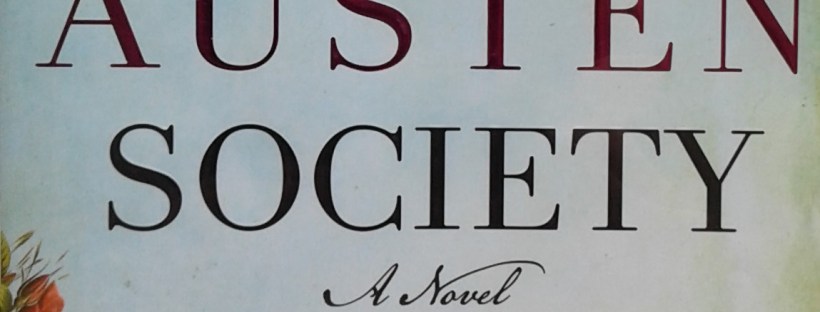
The Jane Austen Society

This month’s literary salon pick, The Jane Austen Society, by Natalie Jenner, is a novel set in post-WW2 England about a group of villagers determined to maintain the legacy of Jane Austen by opening a museum at Chawton House, the cottage where Jane spent the last eight years of her life and the most productive period of her writing career.  

Who would have predicted that Jane Austen would still be so popular 200 years later, with her face on the ten pound note, dozens of biographies in print, and entire museums devoted to her fame, not to mention the whole tourist trade to places she visited, lived, or described in her novels.  

It’s a further testament to her continuing popularity that An Interview with Jane Austen remains my most read post, at 150 some views, from every country in the world, with several more added weekly.  Yes, some frivolous little piece I dashed off for Valentine’s Day two years ago is more popular than any post I’ve slaved over for days.  But to give credit to Jane, other than the interviewers questions, most of the words are hers, famous quotes from a book I received for Christmas that year, The Wit and Wisdom of Jane Austen.   The post itself was inspired by a question – which dead person you would most like to interview?  I can’t imagine my small blog of 300 readers is high up on any google search list, so I can only surmise that it must have been shared by a Janeite on one of the many Jane Austen websites.

     I would not describe myself as a Janeite, having only ever read Pride and Prejudice and Emma, and watched the movie versions, the dashing Mr. Darcy/Colin Firth, and the petulant Gwyneth Paltrow who forever spoiled Emma for me, and the classic Sense and Sensibility with Kate Winslet, Emma Thompson and Hugh Grant.   Other than Pride and Prejudice I find her life more interesting than her books.  

        JA was born in 1775 and lived most of her young life with her large family of siblings at the rectory in Steventon, where her father was a clergyman.   Upon his retirement, they sold everything (including a thousand books, for hers was a well-read family) and Jane moved to Bath with her parents and sister Cassandra.   Bath was a very social place and it’s widely assumed this change in residence was partially intended to find marriage partners for the daughters, but that was not to be, for despite rumors of several failed romances Jane never married.   After the death of their father and the rental of diminished living quarters, her wealthy brother Edward, who had been adopted by a childless couple in need of an inheritor, eventually offered his widowed mother and sisters the use of the steward’s cottage on his large estate and so they moved to Chawton House in 1809.

The cottage was a large L-shaped building, quite near the street and a busy crossroads, so the thundering of coaches passing by offered little privacy,

but there was a large private garden at the back and they were grateful to finally have a permanent residence of their own.   

Although she had written earlier drafts of her novels, this was the scene of the final revisions and the long hoped for dreams of publication, starting first with Sense and Sensibility (1811), Pride and Prejudice (1813), Mansfield Park (1814) and Emma (1816). Northanger Abbey and Persuasion were published posthumously with the seventh and last, Sanditon, left unfinished.  (Although never published, PBS filmed a horrible adaptation of Sanditon last January which was universally condemned. Jane would certainly never have approved of the unhappy ending.)

Jane Austen’s writing desk

She wrote at this small desk, still a fixture of the museum today, placed by the window for maximum lighting as she wore spectacles, and was known to cover up her manuscript if there was an unexpected visitor at the door. From her niece’s recollections we have an image of Jane sitting by the fireplace and laughing, as a sudden thought occurred to her and she leapt up to write it down. Much of her early writing originated as a means to amuse herself, and her family, as there are only so many samplers you can embroider before you die of boredom.    

   After her untimely death in 1817 at the age of 41 (of Addison’s Disease), her mother and sister lived on in the cottage, with Cassandra dying in 1845. Although Jane lived long enough to enjoy some initial publishing success and literary fame, it was after the publication of a biography by her nephew in 1850, that her literary reputation was revived, and it has remained steady to this day.   

      Today Chawton House is the site of the Jane Austen Museum. (link to a virtual tour of the house). As well as original clothing and furnishings of the period, several of her letters are on display, as well as some jewelry (two topaz crosses) given to the sisters by their naval brother. The nearby great house houses a JA library with first editions of all of her books. Jane memorabilia is in such high demand that one of her handwritten letters was recently auctioned off for $200,000, a four page missile to Cassandra, dealing with fashion trends and family news. It saddens me to think of a future with no such memorabilia, only emails and texts which we blithely delete. I’ve never been to England but Chawton House would be high on my list of historical sites to visit. Although thousands of tourists frequent Bath every year in search of Jane, I’d prefer to see where she wrote, not where she went bathroom dancing.

Now back to our book club selection. 

Here’s the publishers blurb: “Just after the Second World War, in the small English village of Chawton, an unusual but like-minded group of people band together to attempt something remarkable. One hundred and fifty years ago, Chawton was the final home of Jane Austen, one of England’s finest novelists. Now it’s home to a few distant relatives and their diminishing estate. With the last bit of Austen’s legacy threatened, a group of disparate individuals come together to preserve both Jane Austen’s home and her legacy. These people―a laborer, a young widow, the local doctor, and a movie star, among others―could not be more different and yet they are united in their love for the works and words of Austen. As each of them endures their own quiet struggle with loss and trauma, some from the recent war, others from more distant tragedies, they rally together to create the Jane Austen Society.”

About the author:   “Natalie Jenner was born in England and emigrated to Canada as a young child. She obtained her B.A. and her LL.B. from the University of Toronto, where she was the 1990 Gold Medalist in English Literature at St. Michael’s College, and was Called to the Bar of Ontario in 1995. In addition to a brief career as a corporate lawyer, Natalie has worked as a recruiter, career coach, and consultant to leading law firms in Canada for over two decades. Most recently Natalie founded the independent bookstore Archetype Books in Oakville, Ontario, where she lives with her family and two rescue dogs. A lifelong devotee of all things Jane Austen, “The Jane Austen Society” is her first published novel.” (Goodreads profile)

Quite a distinguished resume, but what’s so interesting about Natalie Jenner is that in her 30’s she wrote five unpublished books – Five. Unpublished. Books.   There’s a lot of tenacity there.   After her husband developed a serious illness, she turned to re-reading her favorite novels for solace, including the JA novels.  Later, when he had recovered, she was contemplating writing a novel set in a great house similar to Downton Abbey but decided to change it to a fictional novel about how the JA museum came to be.  For research she took a bucket list trip to a Jane Austen Festival in Bath, (yes there are many of these conventions) as well as the village of Chawton, in order to immerse herself in the world of all things Jane.  

Discussion:

This was an enjoyable read, even if you aren’t particularly a JA fan, in much the same genre as The Guernsey Literary and Potato Peel Society and the Chilbury Ladies Choir.   I’m sure the movie rights have already been sold.   In true Jane Austen style, the author manages to pair off most of the characters, some more successfully than others and some in a politically correct way, although I had difficulty getting a sense of the two characters who were mirrored after Emma and Mr. Knightley.   A minor point, but there’s one graphic scene (me too/movie starlet on the casting couch) which seemed out of place. This was noted in a a Goodreads review, and it’s like when someone points out a flaw, you can’t un-see it.   The reviewer said she quit reading after that, saying that such a jarring scene had no place in a Jane Austen-like book.  I wouldn’t abandon the book over that but subtle allusion might have been more appropriate, or perhaps some gentle editorial guidance.  

This book debuted on the bestseller list, as any book with JA in the title is bound to attract attention due to the sheer number of her fans worldwide.    (I wonder if I changed my website to The Jane Austen Homeplace, if I might attract a few more followers?)

Jane Austen must have had a strong belief in herself, and a premonition that her works would live on, as she left the bulk of her estate (400 pounds, the proceedings from her books), to her sister Cassandra, with the unusual request that 90 pounds, a considerable sum back then, be set aside for a burial at the prestigious Winchester Cathedral, instead of the local churchyard where her family could visit.  Her brothers made no mention of her literary life on the tombstone, perhaps deeming her novels too inconsequential to note, but thousands of tourists flock to her grave-site every year to pay homage to her literary greatness.      

The extraordinary endowments of her mind!