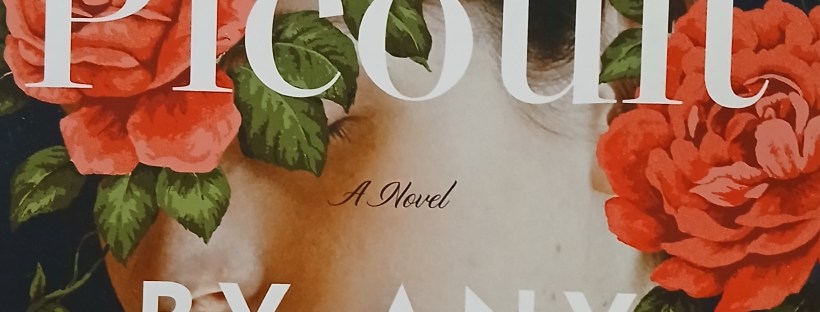
By Any Other Name – Jodi Picoult – Book Review

Jodi Picoult’s latest bestseller, By Any Other Name, is a historical novel which deals with a controversial literary topic – were some of Shakespeare’s plays actually written by a woman? While the idea was intriguing I wasn’t sure if a 500 page book about the Elizabethan era would interest me, but I found it fascinating and very convincing.

Publisher’s Summary: Two women, centuries apart—one of whom is the real author of Shakespeare’s plays—are forced to hide behind another name to make their voice heard.

Synopsis

In 1581, Emilia Bassano—like most young women of her day—is allowed no voice of her own. But as the Lord Chamberlain’s mistress, she has access to all theater in England, and finds a way to bring her work to the stage secretly. And yet, creating some of the world’s greatest dramatic masterpieces comes at great cost: by paying a man for the use of his name, she will write her own out of history.

In the present, playwright Melina Green has just written a new work inspired by the life of her Elizabethan ancestor Emilia Bassano. Although the challenges are different four hundred years later, the playing field is still not level for women in theater. Would Melina—like Emilia—be willing to forfeit her credit as author, just for a chance to see her work performed?

Told in intertwining narratives, this sweeping tale of ambition, courage, and desire asks what price each woman is willing to pay to see their work live on—even if it means they will be forgotten.

THE THEORY BEHIND THE BOOK:

The inspiration for the novel came from an article Jodi Picoult read in Atlantic magazine – Was Shakespeare a Woman – by Elizabeth Winkler.  – an article which many distinguished scholars (mostly male tenured university professors) seemed to find deeply upsetting to the point that it was widely condemned.  But it was enough to pique her interest into doing more research about Emilio Bassano, who was a real-life person living at court in Shakespeare’s time, and who in her later years published the first book of poetry by a woman in England.  Documentation about women’s lives in general was scarce in that era, but the author was able about to reconstruct her fictional life from a single documented source – an extensive medical record written by a physician whom she had consulted for female ailments.

Would a full time actor and producer, who was not formally educated, have had the time and the skill to write so many flawless plays – 37 in total?  Jodi Picoult says She. Does. Not. Buy. It. and outlines her reasons in the Author’s Note (ten pages at the back of the book), which summarizes what we know of Shakespeare’s life, and is well worth reading on its own.

Apparently Shakespeare had a reputation for being a bit of a jerk, not just towards his pregnant wife, Anne Hathaway, but for petty things like evading taxes, restraining orders, and being fined for hoarding grain during a famine and price gouging, according to records. There are pay stubs for his acting.  There are references to other famous playwrights and poets of the time – their names appear in theatre ledgers, or they were publicly praised at the time of their death, or buried in Poets Corner at Westminster Abbey.  They left behind books and manuscripts in their wills.  But there is no record at all in his life that Shakespeare was an author.  He left not a single shred of literary evidence upon his death, not a single manuscript, revision or book was found among his belongings, although he left an extensive will dividing up his household goods.  He played no musical instruments, never spent time at Court or in the military and had no knowledge of the law.  Could someone who never traveled outside of England, had no musical background, and left his daughters uneducated, have written plays that had such strong female characters, (Lady MacBeth, Juliet, Portia, Beatrice, Cleopatra etc), were set in foreign countries such as Denmark, or Italy, and contain numerous references to music.   It does seem strange, given that most writers write from what they know, or if not specifically, then indirect references will often make their way into their work.  

Picoult’s theory, among that of other scholars, is that many of the plays were written by a writer’s room, organized by The Earl of Oxford (nobles were not allowed to write or publish either), and that Shakespeare was an allonym used by them all.  The plays we credit to a single person, were penned by multiple writers. (Sort of like a group of writers working on a weekly sitcom, which is what plays were at the time, being the chief source of entertainment).  There were no copyrights, so plays were often revised and adapted multiple times and collaboration was common among playwrights – except for Shakespeare. She believes Mary Sidney Herbert (a noble woman), and Emilia Bassano were among these writers.  In other words, Shakespeare was paid for the use of his name.  His early documented plays seem uninspired compared to the richness of the later masterpieces.  The First Folio of his work was compiled and published in 1623 a few years after his death, by two of Shakespeare’s fellow actors, but Picoult speculates in her novel that playwrights of the time might have tried to correct this misconception that he was the sole author.  Because by then it probably irked them that he had become famous.

Emilia Bassano was from a Jewish family (think Shylock – Merchant of Venice) of court musicians, (if music be the food of love, play on, Twelfth Night), highly educated by a countess, which was unusual for a girl at the time, and as a mistress to the much older Lord Chamberlain, a man who oversaw all theatre productions in England, had access to court literary circles.  She was also Italian, (there are numerous plays set in Italy) and the man she was a ward to as a child, travelled as a diplomat to the court of Denmark, (Hamlet) where he met two noblemen, Rosencrantz and Guildenstern.  There are just too many coincidences and things that Shakespeare would not have had knowledge of.  Picoult credits about 10 or 12  of the plays to Emilia, the ones with strong females, Italian settings and musical references – A Midsummer Night’s Dream, The Merchant of Venice, Romeo and Juliet, The Taming of the Shrew etc. 

WHAT I LIKED ABOUT THE BOOK:

I loved how the author wove famous words from the plays into the dialogue.  If you want to see how the events of Emilia’s life, might have inspired the writing of the plays, there are 20 pages of Shakespearean references and their corresponding page numbers at the back of the book.  It was fun to see how many I could catch.  I did okay considering I was not an English major, other than 3 years of Shakespeare in high school – Merchant of Venice (grade 9), Romeo and Juliet (grade 10 – the year the first movie came out with the cute Romeo), MacBeth (grade 11, where I played a witch with my cousin, and another girl).  In fact, my entire acting career consists of being one of the three witches in MacBeth (Double, double, toil and trouble, fire burn and cauldron bubble…).  We were to recite or enact a scene from Shakespeare and there was safety in numbers.  Back then it was difficult to find black nail polish, but the witch costume was easy, courtesy of Halloween.  The cauldron was a big pot covered with black crepe paper.  I wonder if kids today even take Shakespeare in high school anymore?  Many of the references in the book were common ones, but I will never hear, “Shall I compare thee to a summer’s day,” again without thinking of her preparing her ten month old daughter Odyllia (Ophelia) for burial.  I had always thought it to be a romantic sonnet.

Speaking of romantic love, the one thing I did not care for in the book were the love scenes between Emilia and her true love, The Earl of Southampton.  In the authors interview Picoult says Emilia lived such a miserable life, that she decided to give her some joy, so she created this fictional love affair with a real-life earl, based on one obscure reference to their meeting in a courtroom.  There’s nothing wrong with a bit of romance, but how many times can two people crash together, on a bed of pine needles, in a public park no less, with her skirts billowing around them, before it just becomes laughable.  She says it’s her steamiest book yet, and I’ve noticed this in her last few books, that she is trying to write romance (she says in the authors interview that Romantasy sells), but it is not her forte.  There were too many such scenes, and the book is already long at 500 pages, as she was trying to show the whole scope of Emilia’s life. Admittingly it must be difficult to write love scenes, but I found it cheapened the writing and distracted from the story – a bit of allusion would have been better. I suspect that is the problem with editing a famous author – who is going to tell them when it doesn’t work. The book will sell regardless – this is her 29th novel. I don’t read romance novels, but the trend now seems to be to make novels span as many genres as possible, historical novel/romance/mystery in order to widen the readership appeal.  The most interesting thing about this fictional love story was the addendum to the author’s notes.  After the book was finished, she was in London on business, and paid a visit to the curators at the Victoria and Albert Museum to see the only known miniature portrait of Emilia Bassano, painted around 1590, and beside it was a portrait of the Earl of Southampton plus a hidden clue that the romance might actually have existed in real life. She was thrilled and wrote that it was like the fates were conspiring to make their story love told four hundred years later. 

I read some historical fiction, but had never read anything about this particular time period, 1581-1620 so I found the history part interesting. The plague was raging in London at the time, (Shakespeare’s son Hamnet died of the plague) and childhood mortality rates were high. Marriages were often abusive, as women were considered property and had no voice or money of their own.  She said she was so immersed in her research that she had to write the two stories separately and then alternate the chapters later, a different  technique for her, as it was just too difficult to switch back and forth between the eras.

I enjoyed the modern-day story, about Melina Green, a young female playwright trying to get a play accepted, when most theatre producers are male, which mirrors Jodi Picoult’s own struggles. Picoult branched into musical theatre in 2020 and her daughter has had a play produced, so she’s writing from her own experiences with the theatre world.  She discusses this in a one-hour long interview which I watched on Wordsmith and Wonders, a series of virtual author talks on public library websites.  Hers was their 100th interview, and I found it fascinating as well, especially with respect to women in the publishing industry and the topic of AI. (She mentions ongoing litigation over the use of author’s books without their authorization or compensation, in order to build AI databases.)  I found the whole interview interesting, so if you don’t want to read the book, search for the interview.  You may have to be signed onto your local library website to view it though, so I won’t share the link here. There was also access to previous interviews, and I bookmarked some of my favourite authors for future viewing, as well as general topics. As a frequent library patron, I don’t know why this site isn’t advertised more.

All’s well that ends well, so to end with, the book had the BEST ending ever, really well done.  She did a brilliant job connecting the two stories, 400 years apart.  I love a book with a satisfying ending.  I would rate the book 4 stars (would have been 5 except for the steamy scenes) and although it is historical fiction, she certainly spins a compelling tale that makes you think differently about Shakespeare.

PS.   Elizabeth Winkler has expanded her Atlantic article into a new book, Was Shakespeare A Woman and Other Heresies, which Picoult highly recommends, and which also deals with the thornier issue of historical truth. Jodi Picoult says she is used to getting hate mail, as her topics are usually controversial, but I can sympathize with her frustration with academics who vilify her but refuse to read her book.  I can understand tenured professors getting upset, their whole livelihood is dependent on the myth of the one-man wonder, but surprisingly I have had similar unwelcome responses from a few people I have mentioned the novel to. One, whom I consider a die hard feminist, remarked that she liked her Shakespeare to be a man, thank you very much, and the other simply wouldn’t even entertain the theory, just flat out said no, that is not possible. Why do people get so upset at the thought of anyone tampering with their Shakespeare, let alone that some of the plays could have been written by a woman? Because it requires us to re-evaluate everything we have been taught.  I find as we grow older, it’s best to try and keep an open mind.  

portrait of Emilia Bassano

‘Let husbands know, their wives have sense like them.’ Emilia, Othello

July 3 – Edited to Add – I have since read Elizabeth Winkler’s non-fiction book, and found it absolutely fascinating. If you are interested in the alternative theories of who was Shakespeare, I highly recommend it. Interestingly, she only devotes a few pages to Emilia Bassano, most likely because little is known about her. She reviews the other possibilities, Frances Bacon, Christopher Marlowe, Mary Sidney, etc. in great depth, but the one who stood out the most to me was Edward de Vere, the Earl of Oxford, as being the main playwright as well as the organizing force behind the group. Everything about him just seems to fit. This is a very detailed analysis coming from a well-respected journalist. She interviewed (or tried to) many Shakespearean scholars, on all sides, but was frequently stonewalled by those who refused to allow any shred of doubt to enter their world. I suspect we’ll never really know the truth, unless some secret stash of documents is uncovered, (highly unlikely after 400 years) but I would like to think that if some doubt existed as to the authorship of say Jane Austen’s manuscripts for example, that literary scholars would keep an open mind and want to get at the truth, instead of bury it. Note the sub-title – How Doubting the Bard Became the Biggest Taboo in Literature. It might be a case of many scholars are secretly in doubt but are afraid to come out and say so, as to do so would be career suicide. That seems to be the curse of our time. But what’s the big deal? The world was thought to be flat for centuries…… (5 stars)

Bundle Up With A Bestseller

March has been cold and snowy, with no sign of spring in sight. All the better to stay inside when the blustery winds blow and bundle up with a bestseller, especially by one of your favorite authors.

What actually is a bestseller? For years I naively thought a bestseller was a book so good that everyone wanted to read it, and the bestseller list was a compilation of such books, although constantly changing as new ones were published and sales dropped off. But my friend who used to own an independent bookstore and dealt with publishers and reps all the time, tells me it’s strictly a numbers game – bestseller status is based on the number of books ordered period, regardless of whether the book is good or bad, or later remaindered due to poor sales. So if you are a popular author, even if you write a substandard, mediocre book, everyone will order it anyway based on your stellar reputation and profitable track record, although I suppose if you put out enough clunkers your fall from literary grace might be quite rapid.

So lets take a look at six of the best-sellers I’ve read this winter, since I last did a book review in October. These are some of my favorite authors, although not necessarily my favorite books by them. Four are established authors at the top of their game, one is a relative newbie….and then there’s Harry. I’ve noticed that books, like movies, seem to be getting longer. Most of these top 400 pages, thus requiring a substantial time commitment, so read on to see if you’re interested. I’ve also included a peek into the creative inspiration behind some of the books.

Publishers Blurb: For most of the last hundred years, Biloxi was known for its beaches, resorts, and seafood industry. But it had a darker side. It was also notorious for corruption and vice, everything from gambling, prostitution, bootleg liquor, and drugs to contract killings. The vice was controlled by a small cabal of mobsters, many of them rumored to be members of the Dixie Mafia.

Keith Rudy and Hugh Malco grew up in Biloxi in the sixties and were childhood friends, as well as Little League all-stars. But as teenagers, their lives took them in different directions. Keith’s father became a legendary prosecutor, determined to “clean up the Coast.” Hugh’s father became the “Boss” of Biloxi’s criminal underground. Keith went to law school and followed in his father’s footsteps. Hugh preferred the nightlife and worked in his father’s clubs. The two families were headed for a showdown, one that would happen in a courtroom.

My Opinion: This sounded good, even if I didn’t know where Biloxi was (Mississippi), and generally I enjoy John Grisham’s legal thrillers, but at 400 pages, with the first 200 pages just setting the scene of corruption and vice, I seriously thought about abandoning it halfway through. Where were the editors? There’s more about the crime world than anyone would ever care to read. Then when something finally does happen midway, it’s way too sad…..and it gets sadder…..with a poignant although predictable ending. (3 stars out of 5)

A friend of mine, who was a grade two teacher, said she always thinks of her students as that age, full of love and promise, and when she hears of a criminal trajectory to someone’s life, it’s hard to reconcile the bright inquisitive kid she knew with the adult person they ended up being. So many kids are just products of their environment, with little hope of a different life.

John Grisham has written 28 consecutive number-one fiction bestsellers, and his books have sold 300 million copies worldwide. He is one of only three authors to have surpassed 2 million copies on a first printing. (Wikipedia)

Introduction to the Book: Elin Hilderbrand started her writing career writing short stories.  In 1990, her senior year at John Hopkins, she had a story called “Misdirection” accepted by Seventeen magazine, which was published in January 1993, for which she was paid the princely sum of 800 dollars.   This early boost gave her the belief in herself that she could be a published author.  She continued to attend creative writing workshops in NY, at Bread Loaf in Vermont and finally as a graduate of the prestigious University of Iowa creative writing program.  She found some success and accumulated at least half a dozen encouraging rejection letters from The New Yorker.  She was miserable in Iowa, (she describes the program as very competitive, nearly cutthroat), and missed her family and friends back east and the ocean.   The university therapist suggested she start writing about it – so she started her first novel, The Beach Club – set in Nantucket. 

     Included in this collection are three novellas, short stories and extra chapters that are related but not part of her summer novels.  (some were axed by the editors at the time)  Three works here have never been published, and the rest only in exclusive editions or in electronic form.  

My Opinion: I have a love/hate relationship with Elin Hilderbrand’s books. I swear never to read another one and then every July I end up reading her annual beach book. So it pains me to admit I enjoyed these short stories more than I expected to, and more than some of her books.

There is an introduction to each story first and a pairing to a previous book – she admits the stories will make more sense if you’ve read the original novels. (Is this a clever marketing tool or what?)

But I also have to admit that for some of her earlier pairings, I couldn’t even remember what the book was about let alone the characters in it.  Her books are all so similar that the characters often seem interchangeable.   For example – The Surfing Lesson (read with Beautiful Day) is a prequel which deals with some of the history between her main character Margot and her husband, two characters I had no absolutely no recall of let alone the storyline.  The Tailgate (read with the Matchmaker) Prequel – has a younger Dabney, a student at Harvard attending the Yale-Harvard football game with her boyfriend.   Barbie’s Wedding – read with the Rumor – is a sequel involving two of the minor characters in the book getting married.   The Country Club – was a prequel to The Identicals set in 1960’s explaining the background of two of the characters who came from different backgrounds.  The author mentions that she rented an apartment in the Beacon Hill neighborhood of Boston for six weeks to edit the first draft of that novel, (for maximum concentration, it’s important to be away from home), and was walking and reading about the neighbourhood, and thought she must set a story here someday.   Frank Sinatra Drive was a “previously unpublished extra chapter” or alternative ending to The Perfect Couple, which I remember reading but can’t remember the original ending, although I think that was the book with the drowning/murder mystery the night before the wedding weekend and the bride and the best man eloped at the end?  But the short story was told from the best man’s POV.  She says her inspiration for the story and the name was a vacation in Palm Springs. 

The last three were longer novellas.   I could recall these more recent books more easily – The Sixth Wedding – read with 28 Summers –  if you have not read this downer of a book the main character dies at the end and this novella sequel deals with what happens to her friends and family after her death. She’s written a couple of books like that, one where she killed off the main character in the first chapter. But it’s nice to know life goes on down here on earth for your characters.  

The Summer of 79 and Summer of 89 – are novella sequels to her popular novel, Summer of 69.  Here she titles the chapters with songs of the decade again.  As an 80’s chick you could tell she was having fun with the music, clothes, and popular culture references. 

Also fun was a short story called The Workshop – dealing with her week at a summer creative writing workshop in Vermont – the strange characters, the brutal criticism, her constant desire to pack up and go home.  Regarding this story, she writes, “This extra chapter has never been published.  People often ask what I do when my editor suggests changes or revisions I don’t agree with.  The answer is I make them anyway.  One edict I have sworn by is my editor is always right.  In the first draft of The Golden Girl my main character Vivian attends the U of Iowa Writers Workshop just like I did.  I wrote what I though was a vivid (and very funny) chapter where I finally got to describe my experience – the good, the bad and the ugly.  I thought the chapter was brilliant.  My editor found it distracting and suggested I cut it.  I rewrote the chapter into a prequel, changed it to Breadloaf in Vermont and summer of 1995 but the brutal juicy details workshop details remain.”

My editor is always right??? I think I’d be too much of a control freak for that….

Overall, this was a good read.  You could tell she enjoyed writing it and it gave me a different perspective on the author’s background and creative process.  Also I remember Seventeen Magazine publishing short stories. After all what is a novel but a short story with 400 pages!  (4 out of 5 stars)

Elin Hilerbrand has written 34 books. I remember reading her first novel The Beach Club and being impressed with it, probably because I always wanted to visit Nantucket, and then I forgot about her for a decade or two until the librarian recommended one of her books.

Publisher’s Blurb:    Olivia McAfee, along with her six year old son, fleas a picture perfect but abusive marriage to a charming heart surgeon with a darker side, and returns to her hometown to take over her deceased father’s beekeeping farm.  The book opens with a phone call – her now teenaged son, has been charged with the death of his girlfriend, Lily, the new girl in town.  Adamant that he is innocent, she hires her brother as his defense attorney, while also acknowledging that she has seen flashes of his father’s temper in her son and eventually she realizes he’s hidden more than he’s shared with her.  Billed as a suspense novel, and an unforgettable love story, and a powerful exploration of the secrets we keep and the risks we take to become ourselves.        

 My Opinion:   This is a return to Jodi Picoult’s regular format – a timely topic and a legal/court case – but’s it’s the first time she’s written a book with someone else.  There is a photo of them both on the back which I glanced at but I couldn’t figure out why she would be co-writing, as the prose just seemed like her usual style.  She admitted in the acknowledgements that she had been wanting to do a book about this for some time but felt she lacked the expertise to do it justice. (If she had realized that about AI and Egyptian hieroglyphics/archaeology that would have spared us The Book of Two Ways.)

I found the first half of this book a bit draggy, good but not overly so, but when the court case starts and a witness drops a bombshell of a revelation, then it made sense.  The chapters are told in alternating POV’s, the mother of the accused teenager, and the girl victim.  The victim’s chapters are told in reverse order, with the first being her home sick for the day and opening the door to her murderer, (there are four or five possible suspects) and the last chapter being her move to the new town.  It’s an effective and necessary, (to establish the murder as opposed to an accident) although at times confusing method.  The mothers POV is more straightforward.   I found the last half of the book absolutely mesmerizing, and stayed up way too late several nights to finish it – it’s long at 430 pages. 

This novel is bookclub material as there would be lots to discuss.  I can’t say more for fear of spoilers, but it was a riveting read, somewhat disturbing but in a thought-provoking way.  Let’s just say it would not be to everyone’s taste, but it was certainly educational. (It reminded me of her novel Small Great Things, about the black OB nurse and the white supremacists) (4 stars out of 5)

The author’s notes at the back were interesting to read, especially about how the book came to be.   Jennifer Finney Boylan woke from a strange dream in which she was writing a novel with Jodi Picoult – there were three characters in the dream.   She went on Twitter and tweeted about it  and moments later got a private message from Jodi Picoult, who she had never met, although they had read and admired each other’s work, asking what the book was about. After she gave her a short premise, Jodi wrote in caps, “OMG I LOVE THIS LET’S DO IT.”  As Jodi was just starting work on her novel, The Book of Two Ways, it was several years before they could begin work.  Jodi also wrote that pandemic novel, Wish You Were Here, as well so she must be a fast writer.  They finally started sketching out the plot in the spring of 2020 just as the pandemic hit.  Jennifer Finley spent several weeks on the floor with the two stories – Olivia’s and Lily’s, taping them into a storyboard.  They agreed that Jodi would write Olivia’s and Jennifer would write Lily’s, but they decided they would each write one chapter from the other’s protagonist POV, but by the time they had edited and re-edited she said she was unable to remember who had written what, although she admits to imitating each other’s style, and it does flow seamlessly.  It’s masterfully plotted and written, but as Jodi acknowledged, bound to inspire some hate mail.   Note: the apiary/bee facts fits in nicely with the story and there are even some recipes at the end. (Jodi Picoult has written 29 novels.)    

Publishers Blurb: It’s a party to end all parties, but not everyone is here to celebrate. On New Year’s Eve, Rhys Lloyd has a house full of guests. His vacation homes on Mirror Lake are a success, and he’s generously invited the village to drink champagne with their wealthy new neighbors. But by midnight, Rhys will be floating dead in the freezing waters of the lake.

On New Year’s Day, Ffion Morgan has a village full of suspects. The tiny community is her home, so the suspects are her neighbors, friends and family—and Ffion has her own secrets to protect. With a lie uncovered at every turn, soon the question isn’t who wanted Rhys dead…but who finally killed him. In a village with this many secrets, murder is just the beginning.

My Opinion:

I loved the jacket blurb, “At midnight one of them is dead, By morning they are all suspects.” Brief and to the point – and doesn’t that just sum up a closed door murder mystery? It takes a special talent to write publishing PR – I know I couldn’t do it.

While I enjoyed this book and her previous psychological thrillers, this wasn’t one my favorites. It’s long at 400 pages and slow at unfolding the motives with different POV’s in different chapters and there are a lot of suspects to keep track of, and some of them have teenage children. So many suspects, that she provides a map at the beginning of who lives in the various chalets at the luxury resort and in the village and along the lake. As well some of the chapters are told in present time and others in flashback. It’s a big and cumbersome plot, and IMO there was a major flaw in the murder method, as the person could easily have killed their own family member. It’s set in Wales where the author lives, but I didn’t get much of an impression of the scenery, other than cold and gloomy. It’s winter and the book opens with a New Years Day “Polar Plunge” swim in the lake where the body is found. (The only other book I’ve read set in Wales was How Green Was My Valley way back in high school.)

The author introduces a new detective, DC Morgan, who partners with a detective from England, as initially they are unsure whose jurisdiction the murder occurred in as the lake is divided between the two countries. There’s even a bit of a love story between them, if you can call a New Years Eve pickup in a bar with aliases in the first chapter, a romance, but after that it’s zero chemistry. I didn’t find either of the detectives very likeable, or interesting, so I’m not sure if I’ll be checking out any of the planned sequels. (3 1/2 out of 5 stars)

Clare MacIntosh has written 8 books, mostly mysteries or psychological thrillers. There was an interesting Q&A at the back of the book, where the author answers the question – “You have an enormous list of plausible suspects throughout the book. When in the writing process do you decide on the final villain?” “The Last Party was really hard to write. My readers are clover and I knew I needed to give them a twisty murder to unpick. The villain actually changed between the lst and 2nd draft because of the way a particular character took shape as I wrote. I find it fun to think about everyone’s motive and love dealing with multiple suspects. I was a police officer for many years and writing a mystery is like investigating a murder in reverse. (page 418)

Publishers Blurb:

In an inspiring follow-up to her critically acclaimed, #1 bestselling memoir Becoming, former First Lady Michelle Obama shares practical wisdom and powerful strategies for staying hopeful and balanced in today’s highly uncertain world.

There may be no tidy solutions or pithy answers to life’s big challenges, but Michelle Obama believes that we can all locate and lean on a set of tools to help us better navigate change and remain steady within flux. In The Light We Carry, she opens a frank and honest dialogue with readers, considering the questions many of us wrestle with: How do we build enduring and honest relationships? How can we discover strength and community inside our differences? What tools do we use to address feelings of self-doubt or helplessness? What do we do when it all starts to feel like too much?

Michelle Obama offers readers a series of fresh stories and insightful reflections on change, challenge, and power, including her belief that when we light up for others, we can illuminate the richness and potential of the world around us, discovering deeper truths and new pathways for progress. Drawing from her experiences as a mother, daughter, spouse, friend, and First Lady, she shares the habits and principles she has developed to successfully adapt to change and overcome various obstacles–the earned wisdom that helps her continue to “become.” She details her most valuable practices, like “starting kind,” “going high,” and assembling a “kitchen table” of trusted friends and mentors. With trademark humor, candor, and compassion, she also explores issues connected to race, gender, and visibility, encouraging readers to work through fear, find strength in community, and live with boldness.

“When we are able to recognize our own light, we become empowered to use it,” writes Michelle Obama. A rewarding blend of powerful stories and profound advice that will ignite conversation, The Light We Carry inspires readers to examine their own lives, identify their sources of gladness, and connect meaningfully in a turbulent world.

My Opinion: Wow, that blurb was a lot to live up to – and it didn’t. I loved her first book Becoming, as it was about her life story, but this was more of an abstract philosophy book, a genre which is not generally to my taste. I’m more of a Tell-Me-A-Story kind of reader, but others might enjoy it though. Billed a a guide to overcoming in uncertain times, I did not find it hopeful/optimistic, (it’s hard to be today), although parts of it were good. I found her comments about children especially insightful, especially what she learned about parenting from Toni Morrison “When a kid walks in the room, your child or anybody else’s child, does your face light up? That’s what they are looking for. When my children used to walk in the room when they were little, I looked at them to see if they’d buckled their trousers, or if their hair was combed, or if their socks were up, she said. You think your affection and your deep love is on display, because you’re caring for them. It’s not. When they see you, they see the critical face. What’s wrong now.” She goes on to say that many of us spend a lifetime registering the presence of critical faces around us and feeling bombarded by judgement and that what Morrison decided to do – dial back the judgement and just be glad to see them, was what her own parents did for her – she was giving them a simple message of enoughness. She was validating their light, that unique bit of brightness inside each of them, and showing them it was there and it belonged to them, a power they could carry for themselves. (3.5 stars out of 5…because it’s Michelle)

Still it was better than Barrack Obama’s 700 page presidential memoir, which I abandoned about 200 pages in (all those primaries) which covered his early political career up until the end of his first term. Wasn’t there supposed to be a sequel about his second term? (It probably doesn’t matter if they got $60 million for the deal.) His 2020 memoir A Promised Land sold 900,000 copies in the first 24hrs, whereas Michelle’s sold 725,000 in the first 24hrs but then went on to sell 10 million copies worldwide, mostly by word of mouth, thus illustrating my definition of a bestseller.

And then there’s Harry….

This was definitely a bestseller, although his latest PR event – $60 for a copy of the book and the privilege of a watching an exclusive interview – might indicate that sales didn’t quite meet expectations. (I borrowed mine from the library.) It’s divided into three sections, his early life after his mother’s death, his army life, and his life after meeting Meghan. The book was reputed to have been written by a celebrity ghostwriter, as Harry himself admits he had difficulty in school sitting and reading a book. I suspect he probably dictated it. In the opening chapter he is walking around the gardens with William and Charles after Prince Phillips funeral, and they just don’t understand why he left – so he felt he needed to write the book to explain it to them….(in 400 pages). I found the overall tone of the book way too melodramatic, but it was a fascinating read, although not for the reasons that Harry might wish. He’s obviously a damaged soul, so I’ll spare you the four pages of notes that I made after I finished. It’s definitely bookclub material, but it just made me feel sad for all of them.

Have you read any bestsellers lately?