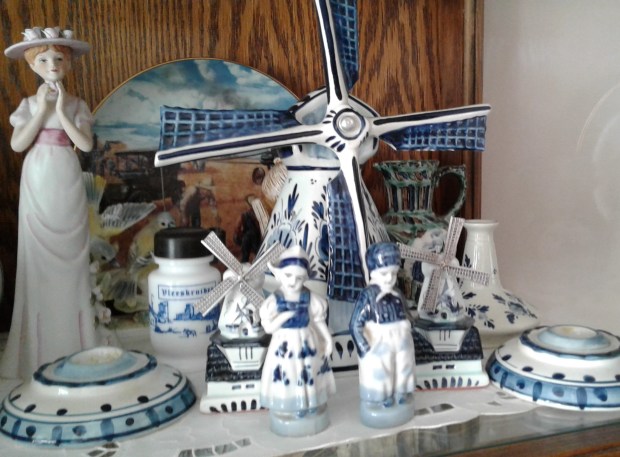
Dutch Inheritance

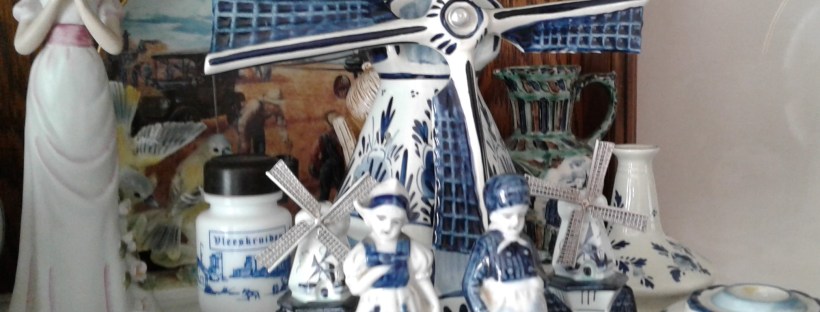
Dutch china       It’s a sad fact of modern life that when you receive an inheritance letter in the mail, you automatically assume it’s a scam and throw it away – especially if it’s from someone who promises that if you will only oblige and send your bank account information the money will soon be on it’s way.    But as it turns out not all inheritance letters are scams.

Tulips

          It’s almost tulip season again, which always reminds me of my grandmother.   I have blogged about my Irish Roots (see also A Visit to an Irish Graveyard), but not about my Dutch ancestors.   My maternal grandparents were from Holland but I never knew any relatives from that side of the family because they immigrated to Canada in 1922.   My grandmother was from a family of seven siblings and my grandfather ten, and being from the same village she was friends with some of my grandfather’s sisters.   In this picture, which was taken in front of the family home just before she immigrated, my grandmother is in the back row, second from the right. Gramma's family (2) My grandparents were married the week before Christmas and left on a boat to New York, arriving in Ellis Island on New Year’s Day 1922.    According to the Ellis Island archives, they traveled with two other couples, one of which was my grandfather’s sister and her husband.   Two of his other sisters and their spouses were already here in Canada, a country where things were supposed to be more prosperous, especially after WW1.    My grandmother had grown up on a small farm and my grandfather worked on the boats on the canals, but there wasn’t much farm land available or work to be had, after he put in his mandatory four years of service in the army reserves.   In order to come to Canada, you had to pass a medical and be sponsored by a Canadian farmer for a year, so they decided to settle in a small Ontario town where there was already a small contingent of Dutch people.   

      I used to tease my grandmother that the ocean liner came over on was her honeymoon cruise, as she was just newly married.   She was 24, the baby of the family and a homebody, and I suspect had she known she would never see any of her family again, she never would have left.    Her parents did not want them to go – but ah, the things we do for love.   She boarded the boat with a large wicker trunk containing all her worldly possessions, her trousseau, blankets and household items, and wearing her mother’s brooch.   I suspect her mother knew they would not be coming back.   She was the only one of their party not seasick on the way over, but if you pretended you were and stayed below deck then you got an orange, which was a luxury at the time.  She remembered having a nice turkey dinner on Christmas Day.   When they got through Ellis Island, they were immediately whisked away to a waiting train enroute to Canada.   They got off the train in Niagara Falls, stepping into a foot of snow, with no boots, as they were not used to that much snow back home. 

       Times were not as prosperous as promised.   They worked in the sugar beet fields to meet the sponsorship requirements.   They had to learn how to speak and write English.   My grandmother’s English was good by the time we were kids but she always had a trace of an accent, and certain words were mispronounced, Kalander for calendar and sleep-out for sleep in, and if she was discussing something with my mother that she didn’t want little ears to hear, she spoke in Dutch.   My grandfather was a quiet man, a real Checker fiend who would never let a poor kid win!   After they had been here a few years, they thought about trying their luck in the US (Chicago), and had a family passport picture taken, (my mother is the baby), but changed their plans when the Depression hit in the 1930’s.  

Gramma passport picture (2)

Those were hard years, but my mother said they always had enough food to eat, unlike some families.   An uncle was a butcher and used to supply them with meat.   It was shameful to go on the dole, considered a last resort.  Only if you were sick or starving would you apply for food stamps, otherwise you made do or did without.   It was WW2 which brought them into relative prosperity, as all four of them, including my 16 year old mother and her brother, worked in the war plants, which enabled them to save enough for a down payment on a farm two hours away, (and right across the road from my father, so effectively she married the boy next door).  

It was nice having my grandma right across the road, as we visited frequently, and she would feed us Gouda cheese, homemade root beer and those Dutch ginger windmill cookies which are still available today, plus it meant we didn’t have to travel far at Christmas and holidays.    She was a kind woman, but strong in her opinions and philosophy, could debate any topic, and she raised my mother to be a strong woman.   We were raised to be strong and independent too.   There were no helpless damsels in distress or pampered princess types in my family.    She loved to knit and crochet and tried to teach me once, but I was hopeless.   Her afghans came  in bright colors and I still have a brown/orange/green one she made for me when I was away at school.   She always painted her kitchen farm table an aqua green, where we sat talking many an afternoon, with the white curtains fluttering in the summer breeze and a cat curled up on top of the freezer.   She favored lime green aprons, (it was the sixties), and often wore one even when not cooking, but my mother was by far the better cook.    Emigrating so young she had no one to show her and Canadian food was different from back home.   She had a set of those shallow European soup bowls in her (blue and white) china cabinet long before they were all the rage here.   In her later years, she was starting to lose her vision and hearing, but her mind was still sharp, and she knew everything that was going on in the world and still had an interest in life.    She always told me I was the best of the bunch, because I would go and visit her after she moved into town and bring her cans of lobster, (she had grown up on seafood).   I wish I had visited more often.   You don’t realize what an influence a grandparent has on you until after they are gone.   The last time l was there, she grabbed my hand when I left, her hands were so warm – a few weeks later she was dead from a sudden stroke.  

      I suspect my grandmother always regretted coming to Canada.  She missed her family.   In her old age, she said she was a woman without a country.   When the stairs got to be too much for her she moved into a one floor house in town and hung a photo of her childhood home on the living room wall where she could see it every day.    In this picture are her mother, brother, sister and young niece.

Dutch home

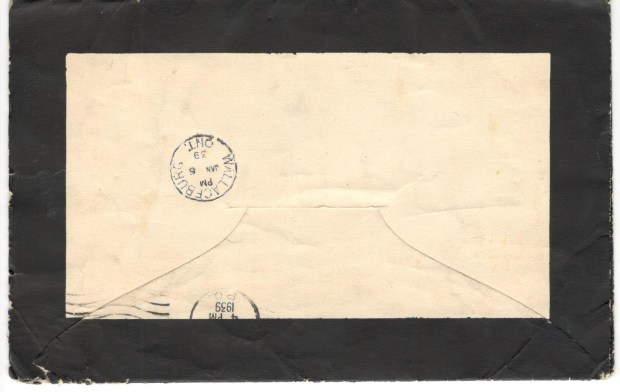
Even if they could have afforded it, my grandpa would probably never have gone home for a visit, as he suspected she wouldn’t have come back, but after the Depression, came the war, and then her parents were dead.   My mother remembers getting the black edged envelopes containing the death notices in the mail and my grandmother dissolving into tears.  Death notice envelope 3 (2)          After my grandfather died, my sister tried to talk her into taking us to Holland on a trip but she said she was too old (she was only in her early 70’s) but I don’t think she wanted to go by then, fifty years had gone by, it had been too long.   But she continued to send airmail letters back and forth to her brothers and sisters over the years.   They sent her a bouquet of tulips for her 80th birthday.   Her siblings all lived well into their 90’s, the last one dying at 95, still riding his bike around town.   They had moved into town by then too, as their farm had been swallowed up by development.   My grandmother herself lived to be 96 in her own home – she was the last of her family and many condolence letters arrived from nieces and nephews in Holland after she died.
       Flash forward to five years ago when my mother received an inheritance letter in the mail.   A cousin had died and she was entitled to 1/17th of her estate, if she would just sign off for the debts of the estate and return said form as soon as possible.   The English was poor, the grammar worse.  Obviously a scam, who would sign for debts for someone they didn’t even know.   Although my mother was aware of this cousin (the young girl in the picture above), we thought it quite strange, and I assumed scammers, ever a resourceful lot, must have been cruising Ancestry.com for single elderly people  and their distant out of country relatives.   I googled the law firm on Facebook – a group of women lawyers, all wearing navy suits and white shirts, and a few testimonials, all in Dutch – this was in the days before google translate was a feature.   I put the letter aside.   A few months went by.   I mentioned it to my brother when he was home, and he decided to email them – no response.    Six months went by and another letter arrived, this one an official looking form.    By then I was beginning to think it might possibly be true.   But why didn’t they just pick up the phone, they had my mother’s address, exactly as it was wrongly printed in the phone book.   I decided to take the official looking form to the library.    One of the new librarians was Dutch and I had commented on her accent one day as it reminded me of my grandmothers.   She informed me it was a tax form from the Dutch government.  She had emigrated many years before but had an overseas phone plan as she still had relatives back home, so she very kindly offered to call the law firm for me and speak to them in Dutch.   It was legitimate – not a scam at all, and there were no debts – the estate taxes had all been paid off.   My mother had only to send her bank account information, and a copy of her passport.   In the meantime, I received an email from the relative in charge of the estate, assuring me it was not a scam, and they were all waiting for her to sign off.    He sent a copy of the obituary which I later asked the librarian to translate.  By then I had gone through my grandmother’s papers and found a condolence letter from a nephew, and called him, as he spoke English.   We emailed a bit, I asked for some stories about the deceased cousin, and he said he would email later, but he never did.   I wish I knew more about her life, I know she took care of the old folks but nothing else about her.   She must have died without a will as the estate was split among all those cousins.  By then my mother was thinking maybe she would just decline her share and let someone who had looked after her have it, but she wasn’t allowed to decline as then it would go to her children and get even more complicated.    Several weeks went by while the euro continued to drop.   The exchange rate is usually fairly stable at 1.5 but it was down to 1.3.    I emailed the law firm when to expect the money so I could keep an eye on the bank account we had opened, and they said there were now 36 people who had to sign off.  I quite  liked the idea that I have 36 relatives I have never met, surely there must be a family genealogist among them.   Eventually, about a year after the first letter, my mom received about $7,000 worth of euros, which she later used for a new air conditioner/furnace.   I wish she had spent it on something extravagant, like a trip to Holland, but my mother is practical, and at 93, her travelling days are over too.  

Luckily, if you are an immigrant now,  you have much better ways to communicate than my grandmother did – email, Skype, Facebook, getting on a cheap economy flight for a visit.    Be grateful for ways to stay in touch.   Remember when you chose a man or a job or a country, you are choosing a lifestyle.  Choose wisely.   If you want to travel, go when you are young – don’t wait until it’s too late.   Eat plenty of Gouda cheese – it’s good for your bones.  When you grow old, make a will.   Stay interested in life.   Be strong but be kind.  Plant or buy some tulips and enjoy! 

PS.    Do you have a relative who especially influenced your life?     

Dutch Inheritance - AMc

 (Next week in Come From Away, I will be tackling the timely topic of immigration from a genealogical point of view…if I’m brave enough.)   


Irish Roots

Irish Cottage - AMc - 1988

Irish Cottage – 1988

Genealogy websites are full of facts, names and dates, some accurate some not, but what makes genealogy addicting are the stories that make these people come to life.  Often these stories are only of interest to the family members, but even if you are not a big fan of history, viewed in the broader context of the immigration issue, it might be worthwhile to record one family’s struggle to survive, for we all came from someplace else.   The Irish potato famine (1845-49) was a national tragedy.  One quarter of the Irish population either immigrated or died from starvation or disease.   I think of my Irish ancestor’s story whenever I read of newly arrived immigrants struggling to start over or the desperate migrants escaping on those overloaded boats in the Mediterranean Sea, for this kind of crisis is still going on all over the world.  (see postscript)

A few thoughts on my Irish roots, but first a bit of family history….

              The phase the homeplace (the name of my blog), is self-explanatory to country folk.  While you may own several farms, the homeplace is the one where your home is, or the original homestead.  I grew up on a hundred acre farm which had been settled in 1849 by my Irish ancestors who had immigrated from Leitrim County just before the worst of the potato famine. My great great grandparents Patrick and Mary,

Patrick and Mary
Patrick and Mary – (tin type)

 and four of their six children arrived in Canada penniless in October of 1846 with an original party of twenty or more, having lost three on the coffin ship on the way over and one teenage old son in the Quebec bush when they decided to jump ship in the St. Lawrence River during the cholera quarantine.   I have a record from the National Archives of Canada, dated Oct 16 1846, for the three brothers who had to borrow one pound for water transport from Port Toronto to where they settled.   My great grandfather John, who was fourteen at the time, stayed behind in Ireland because he had a chance to go to school with the overseer/landlord’s son.   He came a year or two later on a ship through New York.  An uncle, the single one of the three brothers, was dispatched to pick him up, although he had little recollection of the journey other than it was a long way along lots of water.   His mother Mary, walked thirty miles along Indian trails through the bush to the nearest post office to get the note telling them when and where he was coming.     It was late October when they arrived here, and the Indians helped them build a hut, otherwise they never would have survived the first winter.   Several years later they bought the homeplace farm – for poor Irish tenant farmers to own land was a dream come true.   They prospered, and John married Ellen a schoolteacher in 1870 and they had nine children.

Family Portrait
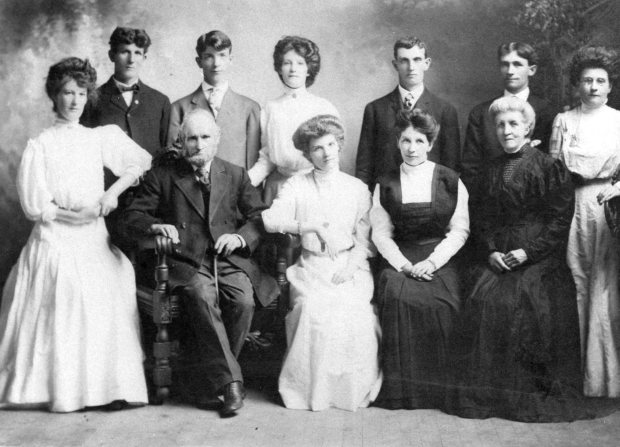
John and Ellen Family Portrait – 1912

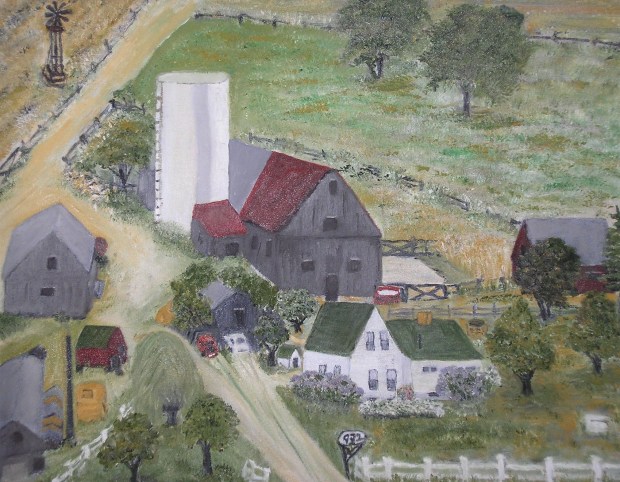
  My grandfather, who I never knew as he died before my parents were married, inherited the farm, and is the second from the right back row.  The only one in the picture I ever met was my Aunt Bea, the one with the glasses standing on the far right, as she used to come visit the farm when I was a young child but she died when I was eight so my memory is vague.    I have inherited my mass of frizzy hair from the Irish clan, we all have lots of hair, as well as their deep set eyes.   It is interesting to see the resemblance and family traits down through the generations.   I first started doing genealogy in 2003 when I was between jobs and had lots of time, searching paper records mostly, as there was little online then.  Someday I’ll join Ancestry.com and pick up the trail again.   My father never knew his grandfather so all I have are some notes from him and my uncle, and of course the family stories.   (The homeplace was sold and the house and barn torn down twenty years ago after my dad died.   My mother painted it in 2005 from an aerial photograph, which is the picture on the blog home page and below). 

The Homeplace - AMc - 2005

The Homeplace – 2005

Many of us have these family stories passed down through the years, and of course there are also gaps in the tales – missing pieces.   A favorite past time of genealogists is conjecture, which is a way of filling in those gaps.   Some things I have always wondered about.  How did they make the decision to stay or go, or was it made for them?  They left late in the year when it was evident from the potato blight that the crop had failed.  Did they have to pay their own passage or did the landlord pay it for them?   Who did John stay with when he was left behind?   His grandparents had elected not to make the journey as they were too old, but how did  Mary and Patrick feel about leaving their parents behind?  How hard it would have been to say goodbye, knowing they would never see them again.  Did they die during the potato famine as the worst year 1847 was still to come?  Who paid for John’s passage when he came later?  Presumably by then people were aware of the bad conditions on the coffin ships, so perhaps that is why he came through New York.  And how did Mary feel about leaving her child behind?  I read somewhere that the Irish Catholics were not permitted to be educated, so was the golden opportunity to stay and finish school  such a rarity as to justify what must have been a difficult decision.  Or maybe 14 wasn’t considered a child back then and would it be any different than sending your 17-year-old off to school today?  It must have been devastating for Mary to have lost her oldest son in the bush.  They heard rumors that he was up in northern Ontario but by the time they got word to him he had moved on out west.  (I might have a whole other set of relatives in western Canada, or the US as borders were fluid back then).

My uncle had an interesting story about Mary in his notes.   In the spring of the second year a surveyor came through the woods and inquired who they were.   He informed them there was a letter at a community along the river for them, presumably word of where and when John was to arrive.  Mary, reportedly a tall robust woman, set out walking to collect it.  There were no roads then, just a blazed trail with trees felled across the swamp land to walk on.  When she got to the post office six miles away, they told her they had sent it to a hamlet four miles south, so she walked along the river to that post office, where they told her they had not known of any family by that name so they had sent the letter on to a bigger town to the north, so she walked along the river to that town and finally got the letter.  She must have been overjoyed to finally get the letter, although it is doubtful she could read it as she signed the land deeds with an X.   It began to get dark, and Patrick became worried that she had not come home.  He set out along the trail and encountered her carrying a big sack of flour on her head which she had purchased in the town.  All told she had walked about thirty miles to get the letter!    I sometimes think of this story when I’m sitting at my little farm table (1870), which is my computer desk.  Could they have ever imagined a future world of instant communication, Skype and email?

And what about John, how did he feel about being left behind, separated from his family and witness to all those people dying.  Were his grandparents still alive when he left?   Was he all alone on the ship or traveling with people he knew?   Would he have been worried that he wouldn’t be able to find his uncle on the docks in New York, or that he wouldn’t show up at all.   By the few accounts we have, in his later years he was a gruff old man (and he looks gruff in the picture), but is that the gruffness of poor health and old age or from damage to one’s psyche at a young age?   Were the conditions on his ship any better than on the Canadian ships?

For an understanding of the conditions on the coffin ships, check out…..Famine Diary by James J. Mangan, a first person tale of the journey, based on Gerald Keegan’s diary.  (Goodreads link)  A must read for anyone of Irish descent, it is a disturbing account.  There is such a memorable description of the hunger of the potato famine, that to this day, I can not stand to see a scrap of potato left uneaten on a plate without thinking of the heartbreaking descriptions in this book.   Although their tenant farms were small, an acre of land could grow enough potatoes to sell and to keep ten people fed over the winter, but when the blight hit, there was nothing to sell or to eat.   (Another good book is The Coming of the Irish to Canada – Flight from Famine – by Donald Mackay).

And what about that tale of jumping ship?  Is it even plausible?  My uncle’s notes say the ship hit rough weather and head winds and took six weeks to cross the Atlantic.  Ships fever broke out and three of their party died, but which three?  Whoever they were, their burial would have been at sea.  They arrived at an island in the St. Lawrence for quarantine, most likely Grosse Isle.   It was a requirement that all be in good heath for several weeks before proceeding to the mainland, but the immigration post on the island was grossly understaffed, so there were many ships lined up in the river waiting to unload.   First one got sick, then another, and time began to pass.  Finally, they arranged to be smuggled to the mainland from where they promptly disappeared into the bush to avoid the authorities.  This is how they lost their son, as there would have been no way to find him.  But how did he get separated?  Did some of them elect to swim over?  Or did they bribe someone to row them over, seven of the fourteen were children, two young babies, so that is more likely the case.   Is this any different than the migrants now on the boats in the Mediterranean?  You take your chance for survival, for you and your children.  How did they eventually get to where they settled?  They had to apply for a loan of one pound (National Archive record) for water transport, so we know they were broke, and even if they had any money they would have had to pay the smugglers.    I was only able to account for 14 people on the journey, all descendants from the three brothers, plus the 3 who died, so who were the others and did some of the party remain in quarantine.   Why did they come to the area where they settled?  Someone in Ireland knew where to send the letter re John’s arrival so they must have had some idea of where they were going to settle, unless they sent word back home after they were here.  I have tantalizing tidbits about a relative who might have been here already, but I have been unable to trace it further like so many dead ends in genealogy.   Genealogy is like a jigsaw puzzle you try to piece together, but sometimes the pieces just don’t fit.  So many unanswered questions…I would like to be a time traveler for a day to fill in the blanks.

When they arrived here it was October and winter was soon upon them.  The advertisements that went up about Lower Canada depicted it as having abundant food and game and a tropical climate, so they arrived with bare feet and straw hats, unaware that Canada had snow.  The Indians helped them erect some kind of hut to get through the first winter.

First Homestead - AMc - 2017

First Homestead –  2017

They didn’t know the countryside was covered in forest and the drainage poor until they arrived.  They were frequently sick from drinking stagnant swamp water.  They spent the next year clearing enough trees on higher ground to erect a house and permit the planting of crops.  The local Indians were friendly and played a major role in showing them how to survive, although they never knocked prior to entering, so when the men were all out in the fields an Indian would walk into the house and scare the womenfolk, as they had heard many stories of scalping.  (My apologies to the indigenous people but those were the fears at the time).   My uncle’s notes say that at first, they would gladly have returned to Ireland, but after a few years they moved to a different site, (the homeplace), with better soil and drainage, and things improved rapidly to well above what they would have had in Ireland.  They were land owners, and at least there was plenty of food to eat.  I can trace their increasing prosperity through the agricultural census, so many acres cleared, bushels of corn and wheat, livestock owned.  Eventually they must have had enough money to have their pictures taken, the pictures are tintypes, probably from around 1865.   By the early 1900’s, John and Ellen had wallpaper and crystal and monogrammed silverware in the old farmhouse.

Christmas on the Farm
Christmas Dinner on the Farm

 I still have the crystal bowl in this picture, in fact I have several of these bowls from the attic, family heirlooms.

My mother used to make potato soup when we were growing up, which was basically a bland affair of mashed potatoes, milk, a bit of onion for flavor, and salt and pepper.   It was my father’s family recipe, and upon retrospect, that was probably what they ate back in Ireland, nothing fancy.  We thought it was good at the time but had nothing to compare it with.   I still love potato soup but have moved on to more flavorful varieties.   It’s strange but I don’t remember eating potato soup at all when I was in Ireland in the 1980’s.  I had tacked a few days onto a trip to venture into Leitrim County, which was off the beaten tourist path.  After spending a few days viewing microfilm at the Dublin library, I took the train to Carrick-on-Sharon, as I was not brave enough to drive on the left, with all those white cross marks on the road pointing out where tourists had been killed.  I’ll leave that story for another time, as it is long and involves a hired driver not a day under eight-five who kept falling asleep at the wheel, and a foggy cab ride to a churchyard lost in the mountain mists in what I am sure must be the most desolate part of the country.  (see March 2019 blog – A Visit to An Irish Graveyard).    It was a surreal experience, but I could see why they left, nothing but rocks, and not picturesque rocks by the sea like in Connemara.  How could they ever have farmed such poor land?  Sometimes it is better to make the decision to leave for hope of a better life.   Some day I would like to go back and rent a cottage for a month and see if I can find any long-lost kin, as the priest had gruffly remarked that the area was polluted with people of my surname.

My father would always call me on St. Patrick’s Day and say, “Top of the Morning to you,” and I would answer, “and the rest of the day to you!”  It’s a great day to be Irish, but even if you’re not, I hope you enjoy some green beer or Irish coffee.   

Quote of the Day:   “Give me your tired, your poor, your huddled masses yearning to breathe free.”    (from plaque on the Statue of Liberty)   

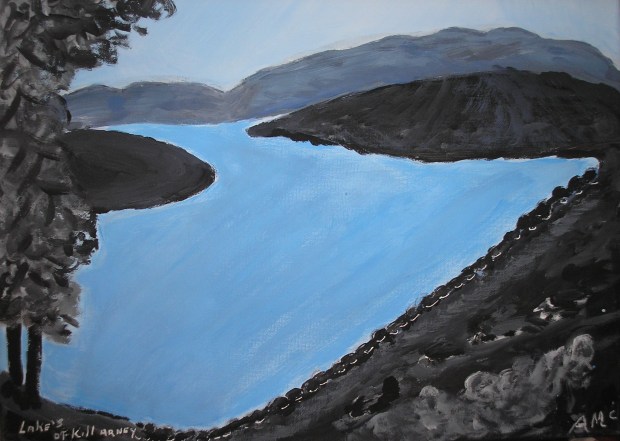
The Lakes of Killarney - AMc - 2018

The Lakes of Killarney – AMc – 2018

Song of the Day:   That’s an Irish Lullaby – Bing Crosbymusic link

Over in Killarney, many years ago
My mother sang a song to me in tones so soft and low
Just a simple little ditty in her good old Irish way
And I’d give the world if I could hear that song of hers today

Postscript:  For those interested in reading more about the very complicated issue of the Mediterranean migrant crisis I recommend two books,  Cast away: true stories of survival from Europe’s refugee crisis, by Charlotte McDonald-Gibson, a journalist, which chronicles the journey of several individuals and families, and Tears of Salt by Dr. Pietro Bartolo, a physician’s story of the medical treatment of the refugees on an island off the coast of Italy.   Both are excellent reads.  

Ann and Hugh

Great Aunt Ann and Hugh – (tintype)