Many of us have extra time on our hands these days, especially if you’re currently in lock-down and no longer have that daily commute to work – extra time to read, start a hobby, or attack that long list of things you always wanted to do. For some people staying home more has been a difficult adjustment, for others it’s a prelude to what retirement might be like someday and an opportunity to think about how you might like to spend your golden years.
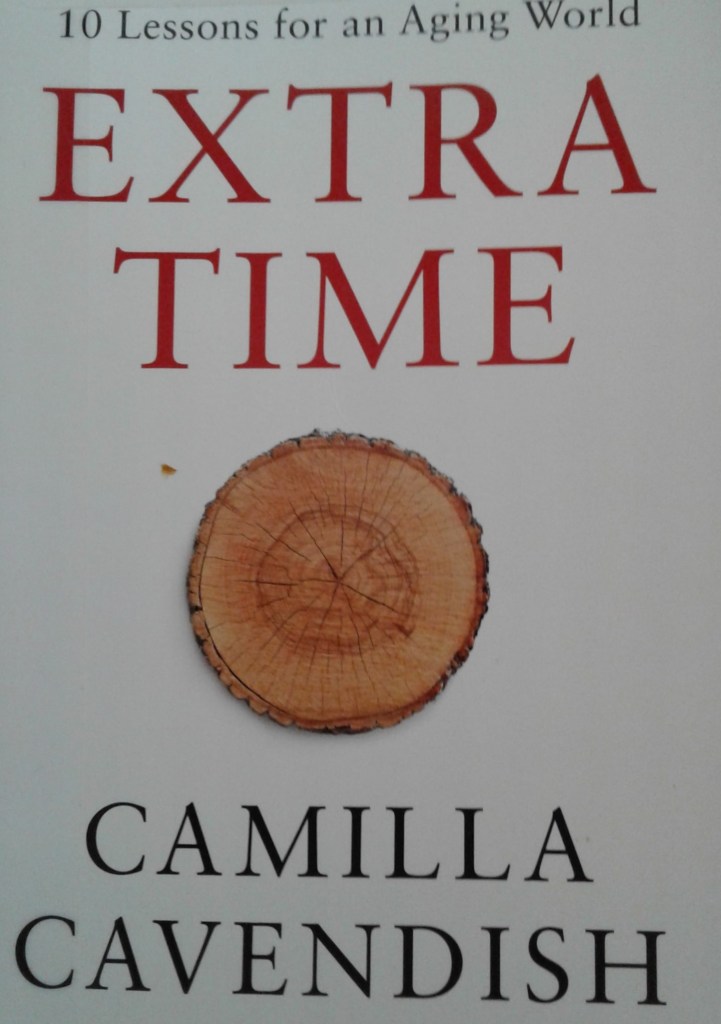
This month’s Literary Salon pick, is Extra Time – Ten Lessons for An Aging World, a non-fiction book by Camilla Cavendish.
Publishers Blurb: (from Goodreads)
“From award-winning British journalist, Camilla Cavendish, comes a profound analysis of one of the biggest challenges facing the human population today.
The world is undergoing a dramatic demographic shift. By 2020, for the first time in history, the number of people aged 65 and over will outnumber children aged five and under. But our systems are lagging woefully behind this new reality. In Extra Time, Camilla Cavendish embarks on a journey to understand how different countries are responding to these unprecedented challenges.
Travelling across the world in a carefully researched and deeply human investigation, Cavendish contests many of the taboos around ageing. Interviewing leading scientists about breakthroughs that could soon transform the quality and extent of life, she sparks a debate about how governments, businesses, doctors, the media and each one of us should handle the second half of life. She argues that if we take a more positive approach, we should be able to reap the benefits of a prolonged life. But that will mean changing our attitudes and using technology, community, even anti-ageing pills, to bring about a revolution.”
Discussion:
With average life expectancy reaching into the mid-80’s now and people retiring early, we may have another 20 or 30 years of extra time. This thought-provoking book takes a look at the culture surrounding ageing in our society, and changes to the way we view ageing now. While not everyone agrees that 60 is the new 40, it’s true that many more of the “young-old” are enjoying active healthy lifestyles much longer than before. I remember thinking my parents were middle-aged at 40, and now people that age are going back to school, having babies, taking up sky-diving.
It’s no secret I like a good non-fiction book, especially one with a well-researched basis. This book delves into how different countries are handling the ageing epidemic without producing a strain on their economies or health-care systems, by exploring different ways of caring for the elderly or “very old.” Certainly the number of COVID deaths in nursing and retirement homes is telling us our current system is not working, and calls for government reform are ineffective if standards are never enforced. Many homes are understaffed and underfunded, as we have found out during the pandemic. Here in Canada they had to call in the military reserves to help feed and care for patients in particularly hard hit homes in Quebec and Ontario, a national disgrace, especially as many of them were privately-owned-for-profit places. I wonder how much cognitive decline ensues when residents are locked in their rooms every day without the stimulation of activities or even company at mealtimes.
There is a chapter on research into anti-aging strategies and one on implementing programs to give seniors a purpose in life and a meaningful way to give back. Think of how many healthy seniors there are whose talents are wasted as they are considered too old to work or contribute. Certainly it helps to have a purpose in life or a passionate pursuit of some kind, like my mother with her art – taking up painting at the age of 87 when she stopped driving. Of course my mother is fortunate to have her health and with all her relatives living well into their 90’s, a good dose of genetic luck. In a recent interview about her late-in-life art career, the radio host remarked, in her introductory comments, “Many people have second acts in their lives, but few well into their 90’s…..”
What would you like your second act to be? For those who dread old age, I found this book to be a positive, hopeful and uplifting read.
PS. Of course, the most tragic disease of old-age is Alzheimer’s. Just as I was posting this, I received an email about a new book by neurosurgeon Dr. Sanjay Gupta. As I find his COVID advice to be both realistic and scientific, I’ll add this one to my future-to-read list. Keep Sharp – Build a Better Brain at any Age – by Sanjay Gupta.
(762 words)
 thehomeplaceweb