Chill November

     November is a dreary month with nothing much to recommend it.   Bare trees, gray skies, and chilly temperatures with nothing to look forward to except perhaps the Black Friday sales (we had our Canadian Thanksgiving in October) and the jingling of distant Christmas bells.   This year we had several pleasant weeks of t-shirt weather with record breaking temperatures, followed by sweater-weather perfect for yard-work cleanup, but now we’re deep in the chill of November. 

Unlike their human equivalents, the snowbirds, who are stuck here in the wintry north this year, deprived of their annual jaunts to Florida, Arizona, and all places warm, the Canadian geese are honking their way south.

Honk if you’re heading south….

This photo is courtesy of Linda, who recently blogged about a Canadian Goose Convention. It has always amazed me how the geese can elect a leader (hopefully without all the current drama), adopt a flight plan (ideally bi-partisan) and wing their way south in a perfect V formation to a better place in the sun.   But knowing how cantankerous geese can be, I doubt it’s all smooth sailing.   Anyone who has ever sought to capture geese in-flight has eventually given up, as by the time their loud honking announces their presence and you whip out the camera, they are long past.   We do have some geese who overwinter here in a park, where an industrial plant ejects warm waste water into a nearby creek, but they are annoying creatures who deposit green goop all over instead of winging their way south like good little geese should.     

This painting “Chill November” depicting the annual migration of the geese against a frosty background, was painted by Canadian artist, Tom Thomson, in 1916-17. 

Chill November – Tom Thomson, 1916-17, oil on canvas.

After WW1 had ended, a group of local women, who had been part of the Red Cross volunteers raising money for the war effort, decided to form a committee, known as the Women’s Conservation Art Association. Their aim was to purchase art for a public gallery they hoped to open someday in the city.  After four years of war and with the Spanish flu still raging, perhaps they dared to hope for a brighter future?

Their focus was on acquiring Canadian art, and at the forefront of this movement was the now iconic Group of Seven, (see Wikipedia link), an association of male landscape painters known for their scenes of the Canadian wilderness, especially Algonquin Park.  Tom Thomson (see Wikipedia link), although often included in this famous group, knew several of the members but died tragically before it was formed.    There is much mystery and speculation about his death during a fishing expedition in 1917. The official report was accidental drowning – his canoe found adrift and his body 8 days later with a large gash on his head – but was it an accident or murder, suicide or revenge – the tall tales abound.  He was only 39 and as often happens, the mystique surrounding his early and sudden death only added to the value of his work.       

“Chill November” was one of the art committees first acquisitions in 1920.   Last spring I attended a hundred anniversary exhibit of the painting, which was accompanied by artifacts surrounding it’s purchase and a preliminary sketch on loan from another gallery.

Wild Geese – preliminary sketch for Chill November – Tom Thomson 1916

The small (8X10) preliminary sketch Wild Geese, was painted “plein air” in the summer of 1916 in Algonquin Park and served as the model when he painted Chill November in his studio in Toronto the following winter as was his custom, for the wilderness trips were not suited to larger canvases.

I like to picture Tom lying in his canoe on a dark and chilly afternoon, studying that V formation, as the geese pass overhead – maybe having a sip of whiskey from his flask, for he was known to have a drink or two…

Chill November, is a large piece at 34 X 40 inches. This is not the best shot unfortunately, as the lighting was soft in the gallery with the spotlights making it too dim for picture taking. The painting itself was sacred of course, as anything of artistic merit is, but as a history lover, what I liked most about the exhibit was the historical documentation of the purchase.

Here’s a copy of some of the correspondence, as Dr. James McCallum, a Toronto ophthalmologist and early patron of the Group of Seven, tries to steer the art committee, towards this particular piece.     
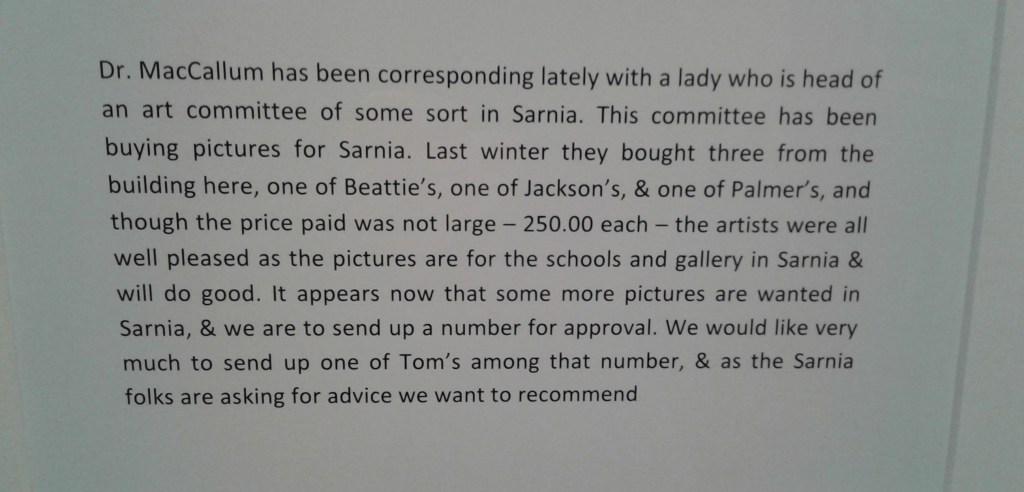
At that time, $600 was a fair bit of money to spend on one painting, but they did, and here is the cash ledger book recording the purchase, and incidentally not a bad return on their investment with today’s current value at one million plus.   

There was lots of other historical information on display including a booklet documenting how it was loaned out over the years, for it was a well traveled painting, plus information about the artists life.

He displayed no early artistic talent – his painting evolved from his job as a graphic designer and his love of the great outdoors. From 1913 on he spend his summers working as a fishing guide in Algonquin Park, and once a fire ranger, sketching on the side, occasionally sponsored by Dr. McCallum who owned a cottage on Georgian Bay. Predominately known as a landscape painter, he was well into his 30’s before he sold his first painting (1913) and in his short career produced 400 oil sketches on wood panels and 50 larger oil canvases. Known for expressing self-doubt, he would sometimes give away his sketches if someone admired them – one was recently unearthed in someone’s basement and sold for half a million. A turning point in his career came in 1914, when the National Gallery of Canada began to acquire his paintings, a recognition unheard of for an unknown artist. His love of color and broad brush strokes remind me of Van Gogh, although his subject matter was the wilderness – trees, skies and rivers.

Dr. McCallum’s history of first meeting the Painter of the North

He does look like a lumberjack in that picture, but he cleaned up well.

His most famous painting, The Jack Pine, an iconic image of the Canadian wilderness, resides in the National Gallery of Canada in Ottawa. (Wikipedia link)

Jack Pine – Tom Thomson 1917

The women’s art committee continued to raise money and bought several other Group of Seven paintings, which along with Chill November, were part of the 25 pieces they donated to the city library in 1956 when they disbanded.  I remember going to visit the art room atop the main library branch, and being underwhelmed.   All the good stuff was stored in vaults for security reasons.

In 2012 the city finally got it’s own art gallery, to the tune of 9 million dollars worth of fund raising.  It was a case of either having a proper temperature/humidity-controlled environment or getting rid of all the art.  Much public complaining ensued about wasting tax payers money, especially when they renovated an old heritage building downtown, but with the aid of government funding and corporate donations plus a large benefactor after whom the gallery was named, they met their goal, a hundred years late. (They now number 1253 pieces in their permanent collection, many through private donations). There was a lot less complaining after the Beaverbrook Masterworks exhibit came through in 2015 (a major coup for a small gallery) and the public got to view the famous 13 foot high Salvador Dali painting, “Santiago El Grande.” – truly an awesome sight. Even those who haven’t had much exposure to art, can learn to like it, myself included.  

I had little interest in the art world until my mother started painting (age 87) and exhibiting (age 90), and even now I sometimes find it to be a strange and foreign land. (When I was in school you were either an “artsy-type” or a “science nerd”, now known as a “STEMi” but never both, now most colleges want a well-rounded individual). If someone had told me decades ago that I would be hanging around the fringes of the art world in my retirement I wouldn’t have believed them. I’m still puzzled about why one painting is worth so much, while another, much nicer, is not. Art tends to be subjective, while science deals in reality. Abstract painting seems to be very popular, but is the genre I struggle the most to appreciate and understand, as well as art installations which may be thought-provoking but sometimes just seem too weird. A trip to the Museum of Modern Art (MOMA) in New York in my younger years, left me baffled over the display of a solitary three-dimensional fence post, similar to the weather-beaten ones on my parents farm. I recall taking a picture of it to show my dad.  

So that brings us to the question – what place does art and culture have in lifting our spirits in troubled times, for 2020 has definitely been a year of gloom and doom.   If you don’t have art, music, books, movies, or whatever form of culture you happen to enjoy, aren’t the days all just the same – work, eat, sleep, repeat, with nothing to look forward to and nothing to soothe your soul. (Books are my preference, but lately while walking, I have Moonlight Sonata on endless repeat. It seems the perfect soundtrack for these gloomy November days).

What possessed those women one hundred years ago to spend their left-over funds on art?  They were war-weary, and pandemic-weary. Certainly, there were more worthwhile and practical causes to spent the money on, with returning soldiers unable to support themselves and the Spanish flu leaving many families without incomes.  Or did they feel the world needed some culture instead, a glimpse of hope for a brighter future?  Maybe they felt buying a piece of beauty was the better purchase, something to lighten their days and to last for always.  

Here is a letter documenting the turnout to view the paintings in 1920, (hopefully they wore masks).

The Library building was crowded and hundreds of people came to see the paintings….

Even if you’re of the opinion that Chill November is a rather gloomy picture, you have to admire it’s very Canadianness.  It’s the way the country was, a land full of wilderness….and geese on the wing!

What will be remembered of us, a hundred years from now?   Time will tell…..in the meantime – bundle up.  It’s chilly out there!  
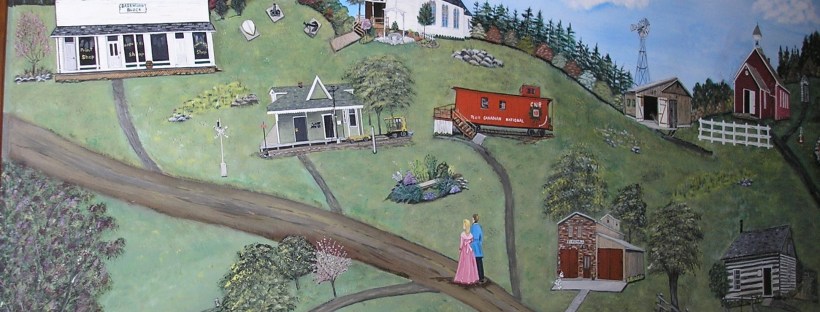
Pioneer Village

Victorian Tea China        Last month I blogged about a Victorian tea party I attended on the grounds of a local museum.    If you are a history lover, please join me for part two of the tour,  a visit to yesteryear.   

Moore museum collage

While the Victorian cottage is one of the original buildings on the museum site, there are many others.   Most have been moved to the site, including a one room schoolhouse, a small church and a log cabin from the days of the early settlers, as well as a local lighthouse.           

The 1919 church with the original pipe organ in the corner.


The one room schoolhouse.

schoolhouse

At the risk of sounding like someone from Little House on the Prairie, I seldom admit I once attended a one room schoolhouse.   It was located less than half a mile down the road from our farm, within walking distance even for a first grader, and was the same school my dad and all his ancestors had attended.   In 1963 the government closed all the remaining rural schools, and our parents drove us into town to the Catholic school until the bus system was started a few years later.  

What do I remember from my year and a half there?   Not much, as I was only six.   The big wood burning stove, so hot you could cook hot dogs wrapped in tin foil on top for lunch, schoolhouse

games of baseball for all ages at recess, getting the strap once (just a little tap on our hands) for talking in class and being made to stand in the corner with my cousin – much more humiliating.  schoolhouseThe teacher was always yelling and in a bad mood – can you imagine trying to teach 40 kids of all ages.   It may sound archaic, but I suppose it would be similar to home schooling now, with different age appropriate lessons.    As there were only three of us in grade one, myself, my cousin and an unkempt boy whose family no one knew, we did not get much attention, but I must have absorbed something from listening to her teach the older grades, as when we were given tests at the new school I passed with 92%.  (They thought we were country hicks who would have to be held back a year).   My new grade two teacher was pleasantly surprised and told my parents I was smart, a moment I remember to this day.   I always had a friendly rivalry with the boy sitting in front of me over who would get top honors, sometimes it was him, sometimes me, and as I went on to graduate from the University of Toronto, it didn’t to me any harm, although I admit some kids who needed extra attention were not as lucky.    

Compare this slate with the tablets of today.   I vaguely remember the sound of the school bell being rung.  

schoolhouse

At the one room schoolhouse the grade ones were let out half an hour early, and my cousin, who lived next door, and I would dawdle along, catching tadpoles in the ditches, playing in the snowbanks and making up fairy stories, the road being lined with beautiful trees, (channeling Anne of Green Gables here), and arrive home the same time as my siblings.    It seems I remember more than I had thought.   

Here is a picture of the class of 1934, with the school in the background appearing larger than I remember. 

schoolhouse dad

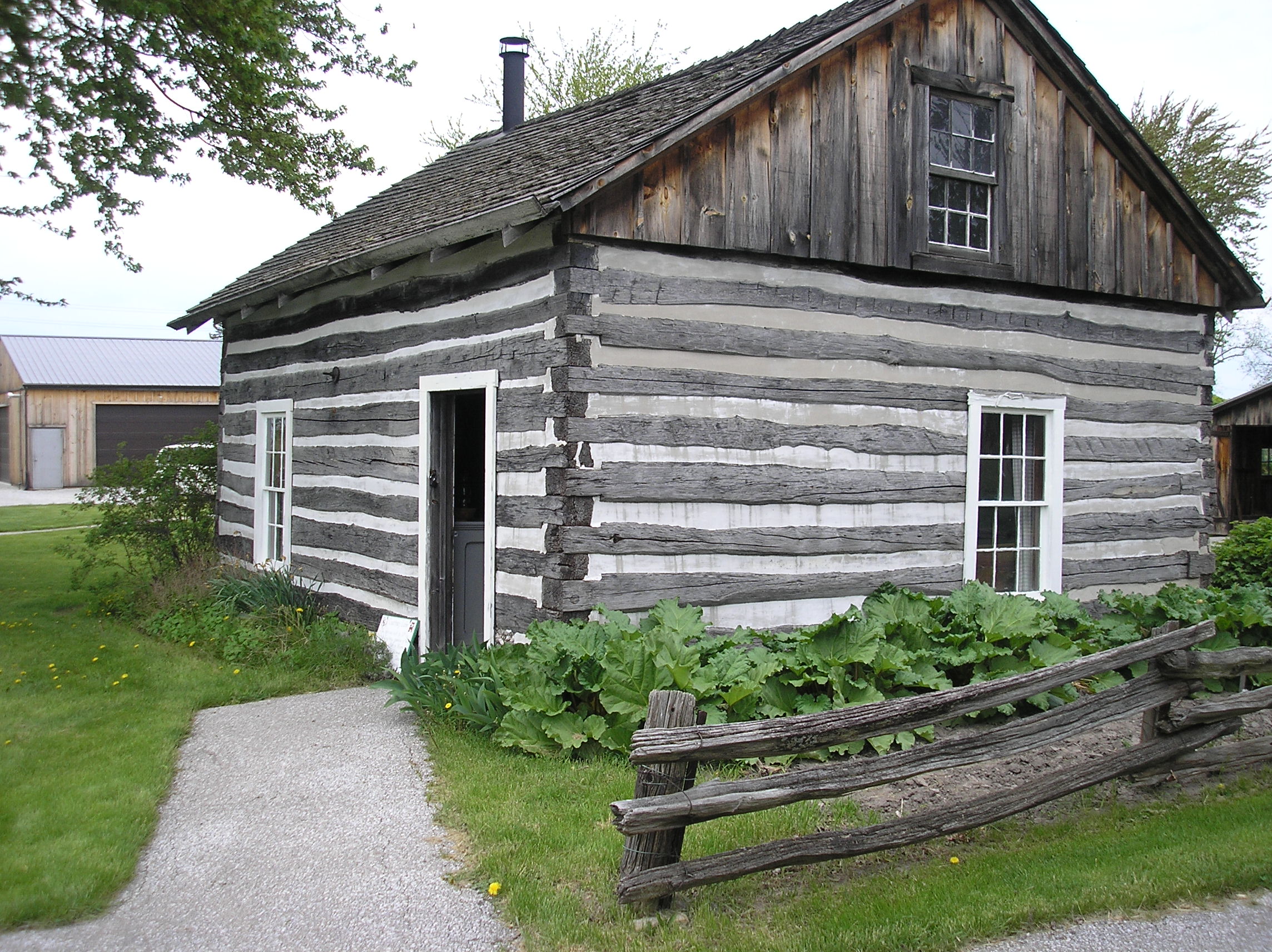
This is a log cabin from 1874, not a replica but an actual cabin moved to the site to preserve a part of history. 

cabin

My great-grandparents John and Ellen were married in 1870 and I try to imagine my Irish ancestors living in such a small drafty house during their early years on the farm.  The old white farmhouse I grew up in had two parts, the initial smaller dwelling and a larger addition with bedrooms upstairs to accommodate their growing family of nine children. 

This picture of an old stove certainly puts my complaints about the ongoing delays in my kitchen reno into perspective.   What my ancestors would have given for such modern conveniences as a stove you could turn on with the touch of a button.

cabin

Not too keen on the sleeping arrangements, a loft accessed by very steep stairs.    I remember my dad saying some of his uncles slept upstairs in the granary when it was new, which probably looked like this.  I imagine it was freezing in the winter, hence the quilts. 

cabin

Open concept floor plans were popular back then too!   We have an antique farm table dating from 1870, longer than this one.  

cabin

While most farms had large vegetable gardens, including rhubarb, and were mainly self-sufficient,

cabin

there were times you simply had to go into town for a few provisions at the general store,  

general store

and perhaps a new hat.

general store hats

The model train room, which boasts three large train sets, is always a hit with the guys.  

model train

 As well as the individual buildings, there is a large agricultural building full of old farm implements such as this cutter/sleigh.    We had one just like it and my dad sometimes took it for a spin behind the Clydesdales.

cutter sleigh

There is also a large exhibition hall, with a marine room and different display rooms and lots of historical archives.   It does seem strange that my Barbie/Skipper carry case has now achieved vintage status.   

vintage toys

I remember playing with this doll house too. 

vintage doll house

Several volunteers were setting up the loom for a display of weaving the day of our visit, a time consuming process.   There was no fast fashion back then.  

loom

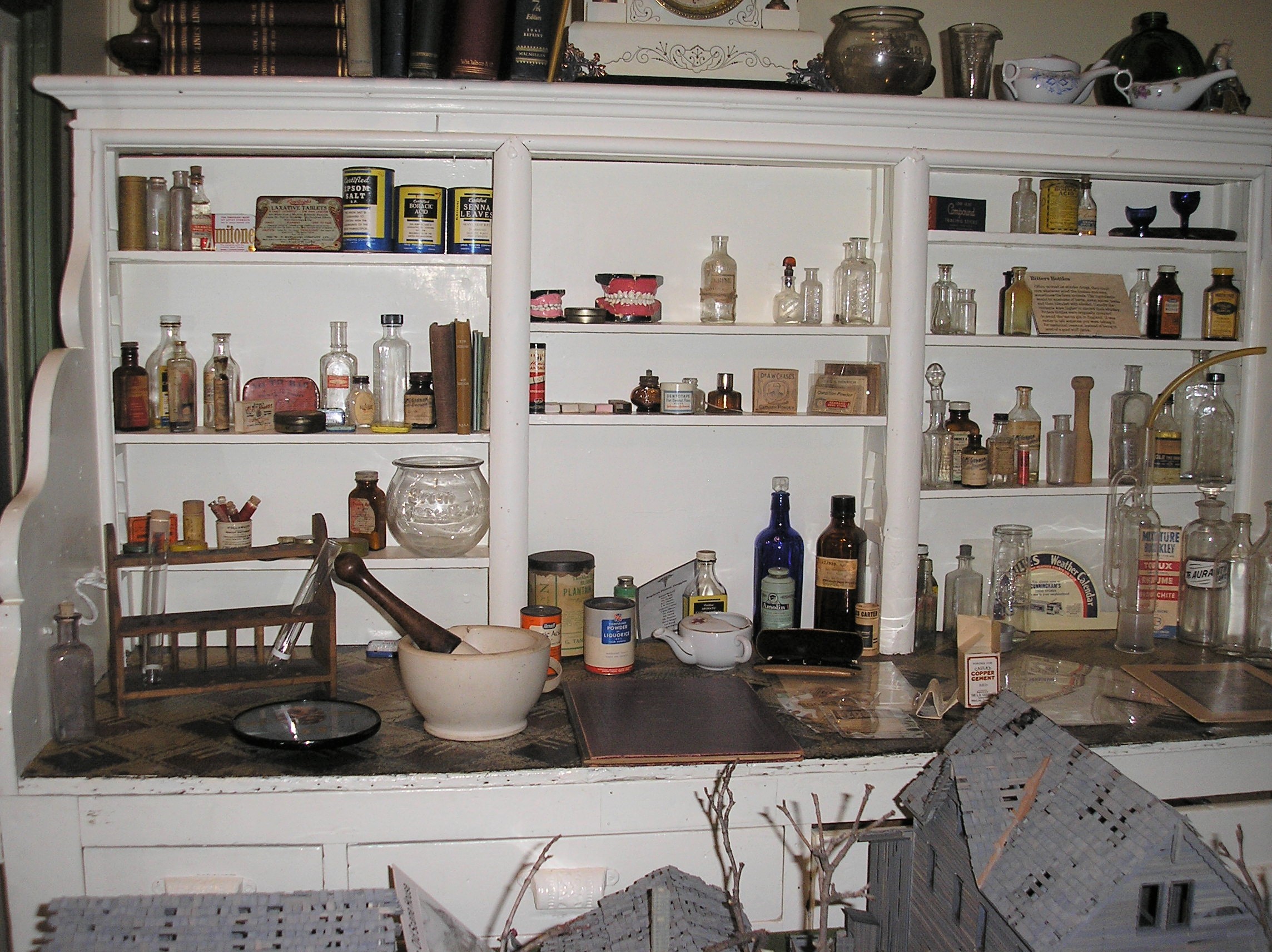
And of course, I always enjoy looking at old medical exhibits, such as this infirmary,

infirmary

and pharmacy.   

pharmacy

The tools of my trade

Perhaps somewhere among those antique bottles is a clue for my (long neglected) murder mystery?    Agatha Christie used the knowledge acquired during her days as an apothecary apprentice when writing her books.   

When I think back to the changes in my profession over the past one hundred years – the invention of penicillin and antibiotics, vaccines, insulin – these are discoveries which saved lives.   In my student days pharmacy labels were prepared on typewriters, not as ancient as this one as ours were electric with correcto-tape.

typewriter

The last forty years of my career has seen the implementation of computers (a massive improvement for record keeping, drug information and drug interactions), clot-busters for preventing damage in heart attack and stroke, palliative care measures for end of life, improved chemotherapy, drugs for depression and mental illness, biologicals for autoimmune diseases, and more new drugs on the market than you can possibly keep up with.   When I think of the future – targeted chemotherapy, gene therapy, cures for diseases never thought possible – it is amazing the amount of change that can happen over the course of a century. 

One Christmas my father was given one of those autobiography books to document your life for the grandchildren.   One of the questions was what are the most important changes you have seen in your life as compared to that of your grandparents.  

“When my grandparents settled here the land was all bush.   Roads were Indian trails.  People lived far apart.   They had to build houses, barns, roads, clear land.   Walking and horses were the main modes of travel.   Machinery was crude or non-existent.   Since then tractors and combines have been invented.  Hydro, paved roads, cars, radios, toasters, tvs, micowaves, computers.   Household goods and furnishings have changed such as washers and dryers, refrigerators and stoves, air conditioning in summer and furnaces in winter instead of a wood stove.    My mother churned butter and we had an ice box and a root cellar for vegetables, an outhouse, no running water in the house and having to heat water on the stove for a bath.    Materials are softer now than the scratchy clothes I wore as a child.  You have toys now that we never dreamed of.   The biggest changes are education and modern schools, and medicines and childhood diseases.”

My father was a child of the Depression, and one of changes he recalled was hydro.  The farm didn’t get hydro until after WW2, 1947, and all of a sudden you had lights in the barn and weren’t milking cows by lantern light, and you could stay up late with hydro in the house.   Worth thinking about  the next time I grumble because the power is out a few hours due to a storm.   As to the future, he commented on computers and the internet which was just starting up.   In the twenty years since he died we now have – Google, Youtube, Facebook, Wikipedia, Skype, Instagram, Twitter, Siri, Spotify, Netflix, IPods, IPads, GPS, digital cameras and clouds which are not rain clouds, although we have plenty of those too!   We are now testing cars that drive themselves, robots and artificial intelligence.   It feels like something out of the Jetsons –  that old 60’s cartoon about a futuristic world which was very predictive.   Does anyone else remember the theme music?

What will the future hold?    Maybe someday my old 1986 DOS computer, currently residing in the basement, with it’s orange blinking screen and large floppy disks, will be on display at the museum, resting behind the electronics exhibit, along with a  Sony Walkman and a ghetto-blaster.

As a history lover, I feel it is important to preserve our heritage, and I hope you have enjoyed this peek into the past.  

Postscript:   My mother painted the log cabin (two versions), but she placed it in winter time, as my ancestors arrived here in late October, not expecting snow.   Is the lighthouse a beacon to the new world?    You can tell I’ve been hanging around the art world too much…

Postscript:  This is my 100th post.  I never would have imagined that!


A Victorian Tea

Every May 24th weekend one of our local museums hosts their annual Victorian Tea, complete with freshly baked scones, white tablecloths and fine china.   

 The May 24th holiday weekend in Canada is called the Victoria Day weekend, because May 24 was Queen Victoria’s birthday.   Older people may remember the schoolyard rhyme children chanted years ago – “the twenty-fourth of May / Is the Queen’s birthday; / If they don’t give us a holiday / We’ll all run away!”    Now many people don’t even know who Queen Victoria was, unless you watch the PBS TV show Victoria, but she was Britain’s longest reining monarch, although Queen Elizabeth surpassed her in 2015.   She became Queen at age 18 and reined over the British Empire for 63 years, from 1937 until her death in 1901, a period known as the Victorian era.   She married her cousin Albert, had nine children and survived 20 different governments and 11 prime ministers.   After her death, her birthday was made a federal holiday, which was eventually was moved to the Monday preceding May 24 because of the weekend.   Queen Victoria most likely would have approved as weekends were an invention of the Victoria era.   This May 24th marks the 200th anniversary of her birth in 1819. 

Victorian Tea CottageNote: the Union Jack (Canada did not get it’s own Maple Leaf flag until 1965) and the old fashioned lilac bush (see Lilac Time)

The Victorian cottage is one of many buildings on the museum site, whose mandate is to display our past customs and heritage.   Many have been moved to the site, including a one room schoolhouse, a small church and a log cabin from the days of the early settlers, but the cottage was part of the original grounds.   It is a small one floor dwelling, built in 1893,  which was used by a Detroit woman as a summer home until her death, when it was donated to the museum.    She was known as the cookie lady, for her kindness in treating the neighborhood children to sugar cookies on the veranda when they were passing by. 

Victoria Tea Cottage

 It consists of a good sized dining room, living room and  kitchen and two very small bedrooms.   

Victorian Tea

Victorian Tea Cottage

The inside still looks as it did during the time she lived there, floral wallpaper, quilts and all.  

China cabinet Victorian Tea

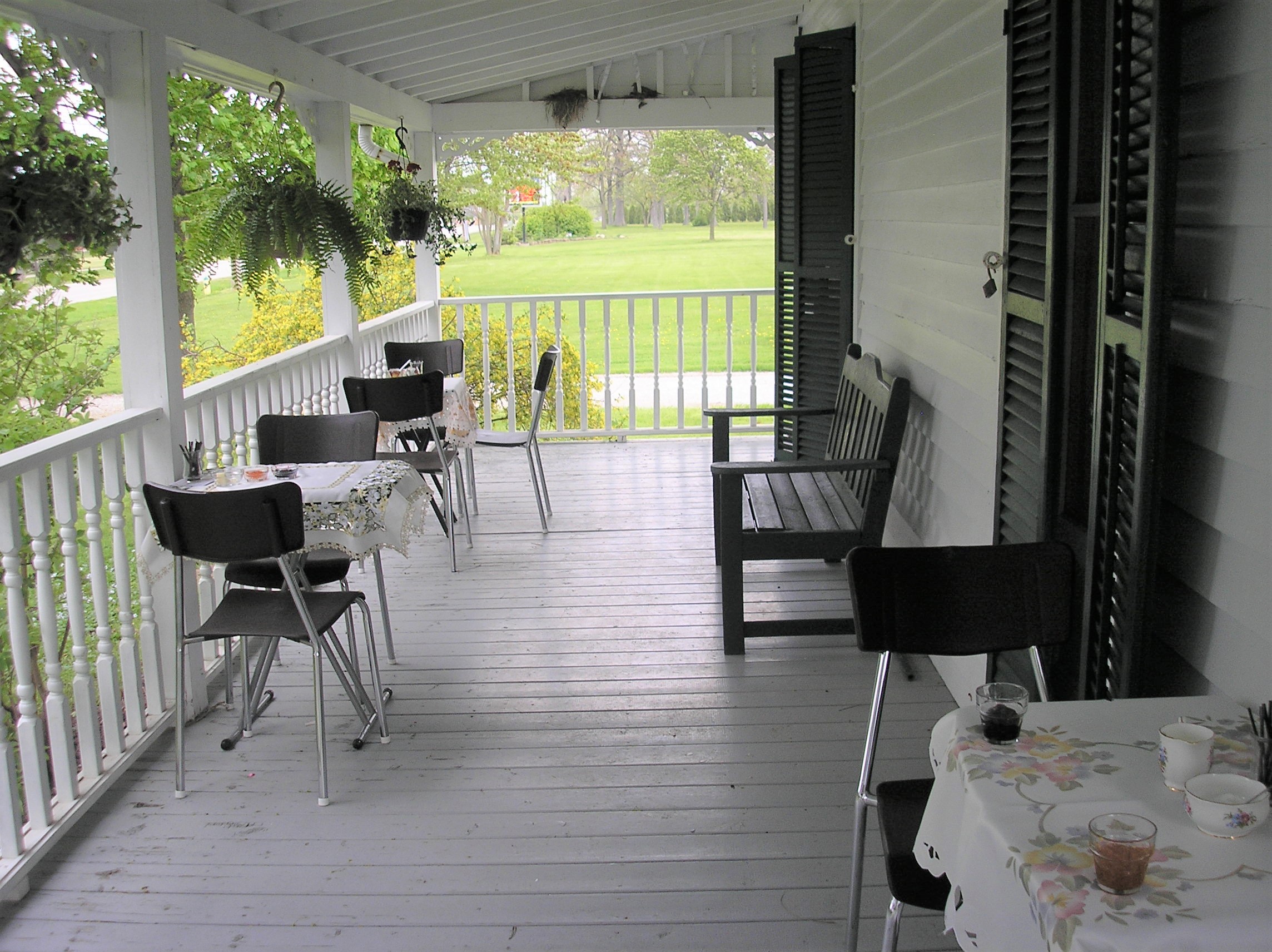
The problem with the Victoria Day weekend is that the weather is usually guaranteed to be cold, rainy and miserable, which does not deter the campers, as it is considered the unofficial start to summer.   It seldom fails, whereas the following weekend, the US Memorial Day is often quite nice.  Still, not one to let a bit of rain (or even forty days of it like this spring), get in the way of a good tea spread, I decided to attend.   The last time I was there,  it was miraculously a warm and sunny day, with a pleasant breeze coming off the river, and we were able to take our tea outside on the veranda, as opposed to inside huddled beside the stove.     It was such a fine day we lingered over a second cup.  

Victorian Tea cottage

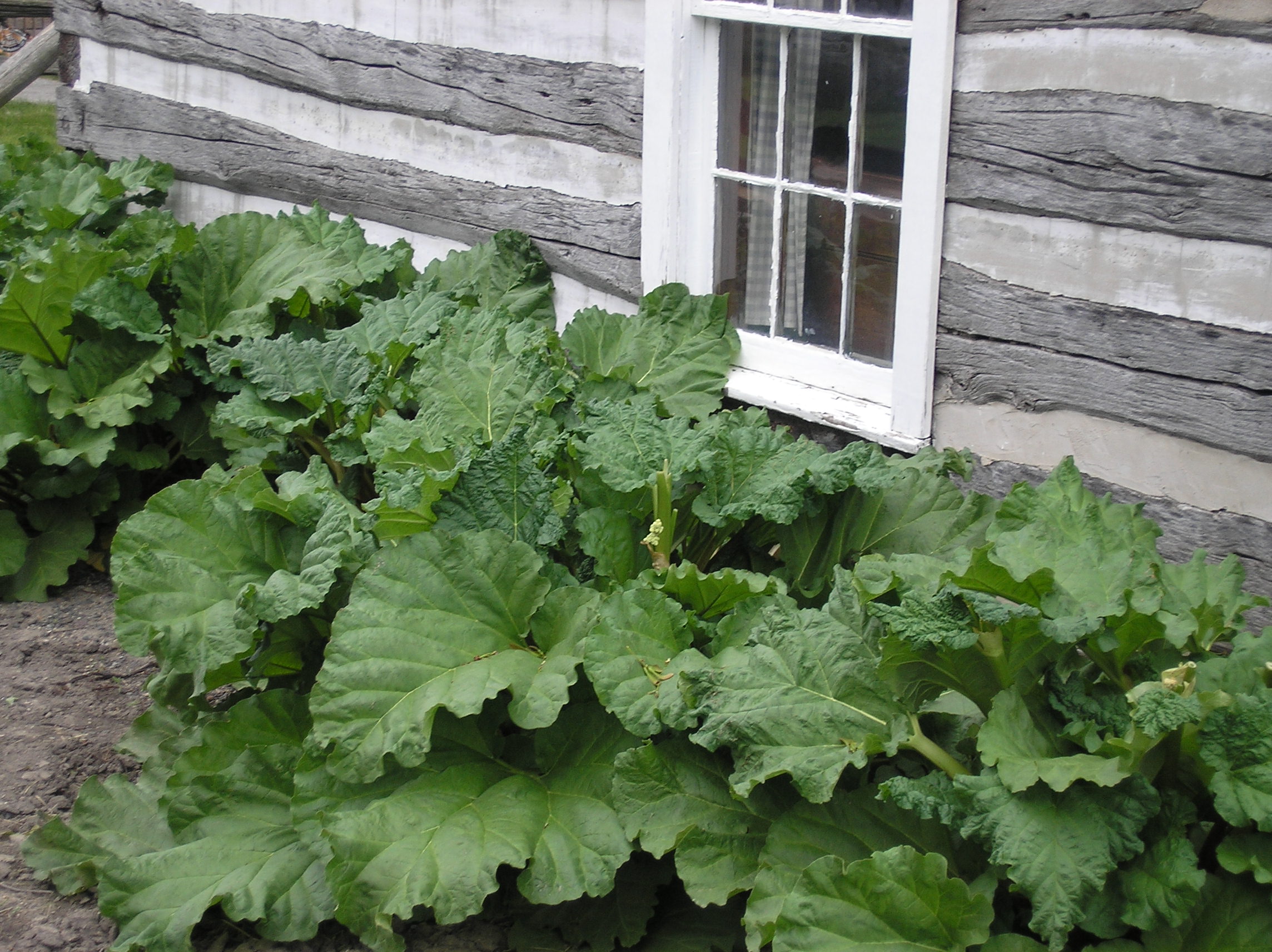
Although the day started out warm and sunny, the forecast was rain by 3pm, (I’m quite serious about the forty days of rain), so we set out early and decided to tour the buildings first (my friend had never been there), as we could always sit inside later if it started to pour.   On our walk about, I noticed a big patch of rhubarb growing beside the log cabin and took some pictures which I could have used in last week’s Rhubarb Lunar Cake blog.  (It’s never too late to edit!)  

Rhubarb

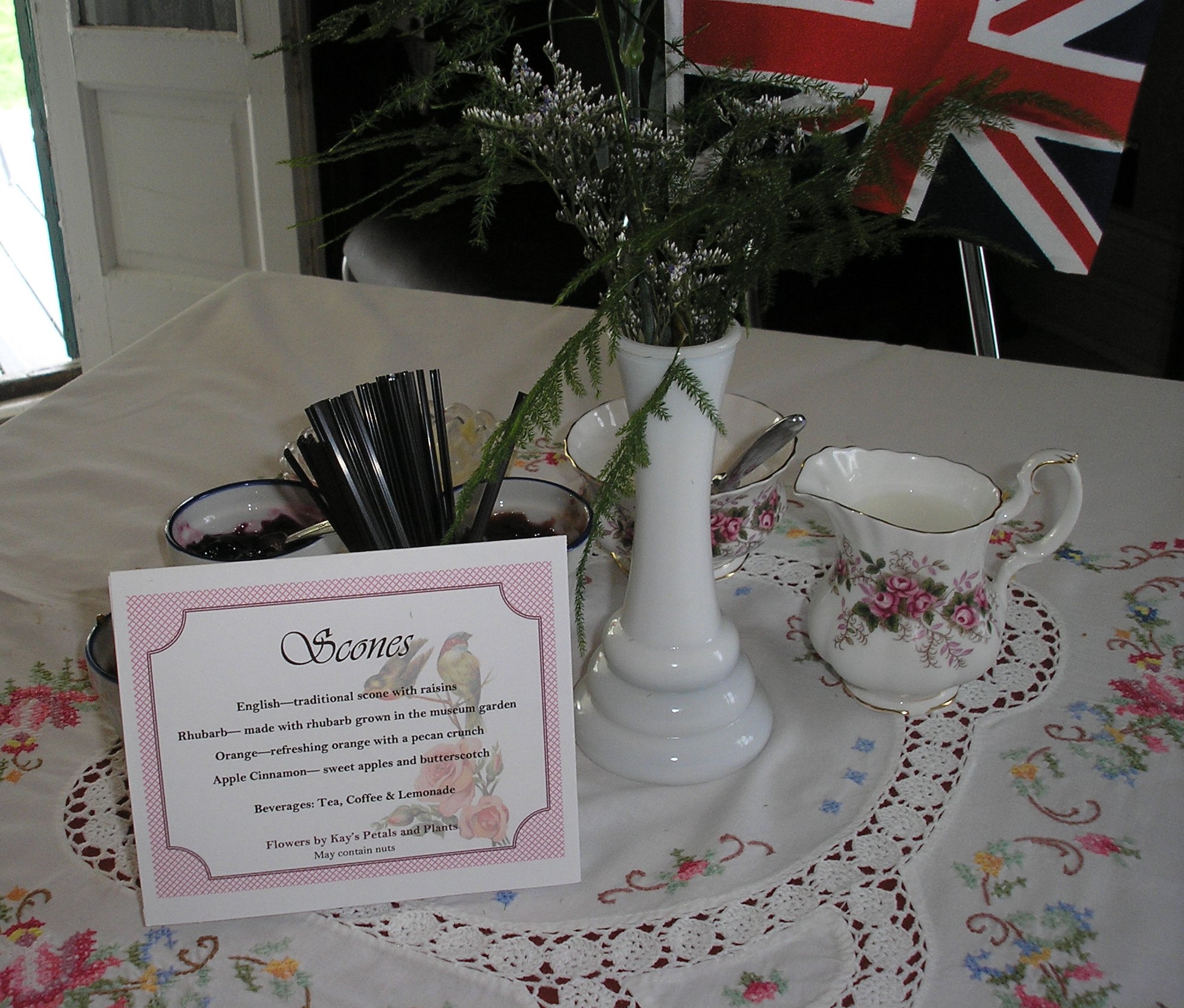
There’s something so civilized about a tea party and the clink of china tea cups, shades of Downton Abbey.    Each small table was laid with white tablecloths, cream and sugar sets, crystal butter dishes, jars of strawberry jam and a colorful mixture of china cups and plates. 

Victorian Teat

 The servers, young and old, were dressed in the costume of servants of the day, complete with frilly caps and white aprons.   The wind was so strong, their aprons were billowing in the breeze and the tablecloths were threatening to blow away, so we decided to sit inside. 

Victorian Tea

The only occupant of the veranda was a bird nesting high up in the rafters, most likely anticipating left over crumbs.   

Bird nesting

 Even inside, with the veranda doors open, it was so windy that our vase of flowers blew over soaking the tablecloth, which they removed and replaced with one even more exquisitely embroidered.   Our server, a charming young girl of about ten, inquired as to our choice of tea and scones – raisin, rhubarb, orange or apple cinnamon.   

Victorian Tea China

 Such a difficult decision, but my choice is always the rhubarb – it was divine, light and fluffy, and I am still trying to get the recipe, a carefully guarded secret.    Unfortunately I forgot to take a picture of it before it was consumed!   Victorian Tea Cottage

They make up to 400 scones for the day, using the cottage’s own wood-fired stove.  (Note the mirror at the top – I guess that was to check your appearance after slaving over a hot stove all day?)    The cost of the tea was $7.50 with donations to the museum fund, ordinary admission being $5, a bargain for the price.    

Exactly at 3 pm as predicted, the skies opened up and rained on our lovely tea party.   Oh well, there’s always next year…I’m sure I’ll be back.  

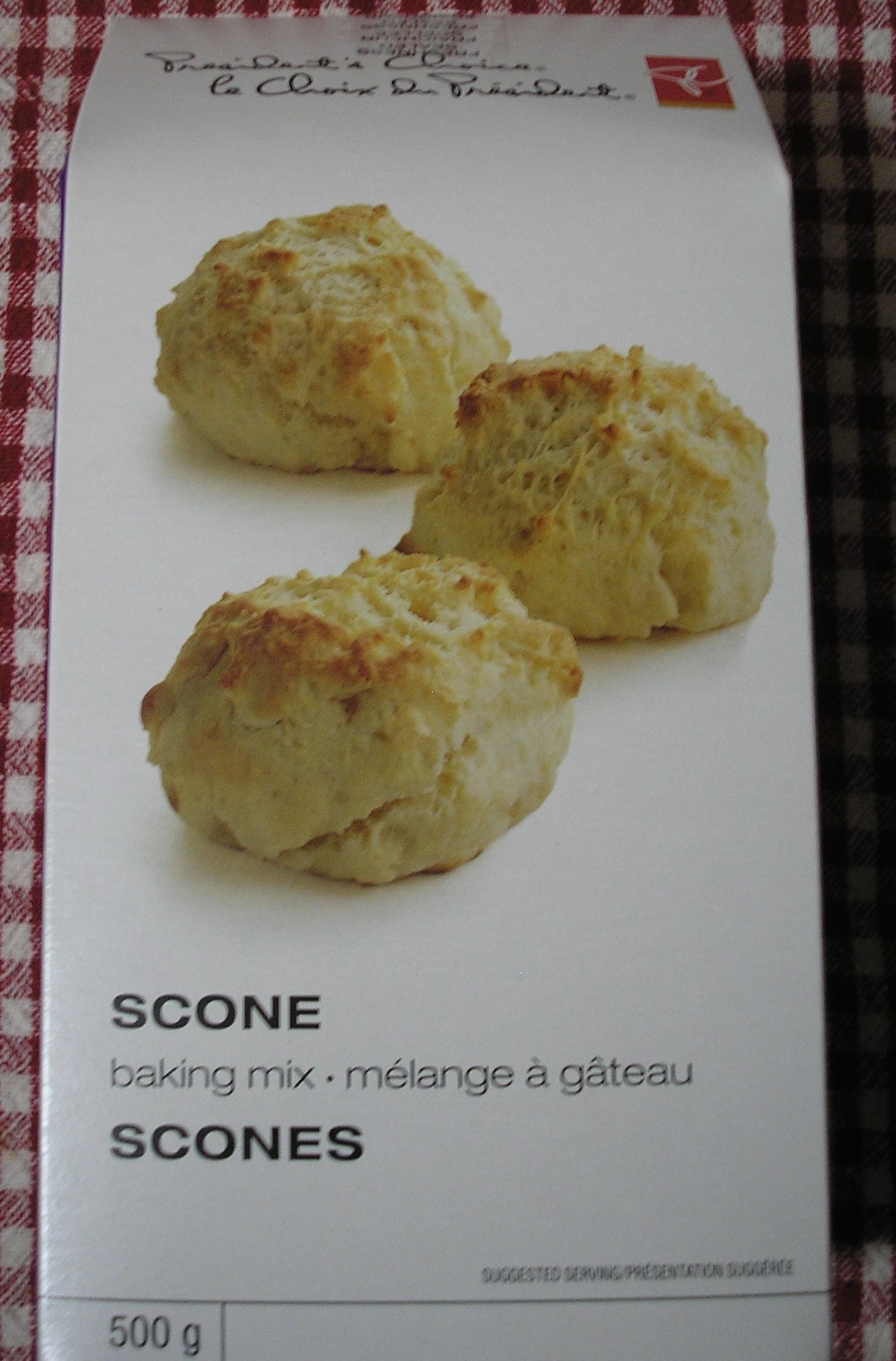
Postscript:   Easy rhubarb scones, only for truly lazy cooks or those whose kitchens are about to be torn apart.   Mix this, Rhubarbwith this, Rhubarb scones

bake as directed,  Rhubarb sconesand you get this.  Rhubarb scones

Enjoy with a nice cup of tea in a china cup!