Review of Books – Summer 2022 – Part One

     My quarterly review of books has morphed into six months again – I guess I must have been too busy reading.   Since I last posted a general review in February (see link Review of books Winter 2022) I’ve read so many books that I can’t remember what some of the earlier ones were about, other than the vaguest impression, so I’ll just try to hit the highs (and lows) of my reading list.  While I read many excellent books last winter, this selection was more mixed, (although all are rated a 4 or 5 star on Goodreads), not necessarily an issue when nicer weather prevails.  Sometimes you just want a book you can pick up and put down, without staying up too late.  So pretend you are in a bookstore browsing, and perhaps there will be something to tempt you when those chilly days arrive. 

Squirreling away books – from a circulating Facebook post

 (Note: these are not necessarily in the order in which I read them. This is Part One of a two Part post….because you know….it was long.
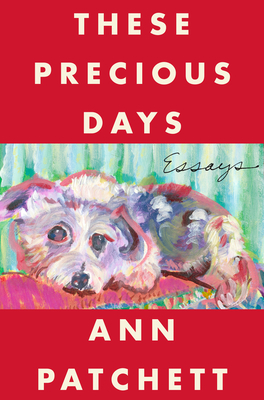
Ann Patchett is one of my favorite authors – I’ve enjoyed her novels, (State of Wonder, Commonwealth) so when her book of essays – on home, friendships, family and writing – came out I ordered it.   I loved the first half of the book, about growing up wanting to be a writer, and having her three dads at her wedding, her difficulty in getting rid of her old typewriter, her decision years ago not to have children. I felt like I had found a new friend, but then I came to a very long piece which comprised the latter third of the book, about her relationship with Tom Hanks publicist, Sooki, who was diagnosed and eventually died of pancreatic cancer.  Ann Patchett owns an independent bookstore in Nashville, and their acquaintance came about when she scheduled an in-store reading of Tom Hank’s book of short stories, (Ordinary Type) many of which were about typewriters.  (That book is a whole other topic, and while I love Tom Hanks he should stick to acting as struggling writers in garrets all over the world could have done better given the opportunity.  Maybe it was a pandemic project but he is now working on a novel about the movie industry due out next year, which is being billed as an ambitious project.)   Ann Patchett and her physician husband helped Sooki find an oncologist for experimental treatment and even invited her to stay with them in their home for six months while she was undergoing treatment during the pandemic.  She warns that the downside of staying with a writer is that you get written about but perhaps she thought she was memorializing her? Sooki, being a very private person, and fighting for her life, mostly kept to the basement flat.  She was probably too sick to socialize, but the author seemed somewhat obsessed with the idea that their friendship should have been closer. That’s the problem with memoir – you can unknowingly reveal some less attractive aspects to your personality.  Otherwise, the book was good, and the writing lovely, but that last essay just spoiled the whole thing for me. Sometimes when something about a book really bothers me I’ll hop over to Goodreads and read the reviews – all five star and glowing, so it must just be me.  

I’m a big fan of British mystery writers, including Ruth Ware, so I really enjoyed this, her sixth and best book so far – a who-done-it about a group of six first year students at Oxford.  She’s come a long way since her first book, In A Dark Dark Wood.  (Others are The Woman in Cabin 10, The Turn of the Key, One by One)  Although the two female room-mates have nothing in common, they strike up a friendship, until one night the popular one, The It Girl, is found murdered in her room.  The creepy dorm porter is charged and found guilty, but ten years later, after he dies in jail still pleading his innocence , a journalist starts snooping around. The book is told, partially in flashback, by the other room-mate who is by then married to the It Girl’s old boyfriend.   It was very well done and very suspenseful, and fairly long at 400 pages.  It took me back to my university days, where the friendships you made were often forged during the first few weeks, although our porter was a kind elderly gentleman, whose job seemed to be sorting the mail into the mail slots (yes, those were the days my friends, you got mail), while keeping an eye on the front door, although he could certainly glare with disappointment when you came creeping in in the wee small hours of the morning, so I totally understand why the protagonist chose to climb over the stone wall near the back entrance.  This was easily my favorite suspense novel of the year so far.    

The other book, Local Gone Missing, is about a female British detective on medical leave in a small seaside town when a local man disappears on the night of a music festival.  A good read – this was my first book by this author. 

I was a big fan of Grantchester, the Masterpiece series set in 1950’s Cambridge about a whiskey-swilling, jazz-loving young vicar and his crime-solving detective friend Geordie, at least I was until the storyline descended into repetitive dross, probably inevitable given it is currently in season seven.  While there is always a murder in each episode, and a moral of sorts, I find the secondary characters are often the best part.  The TV series was based on a series of books by the author James Runcie, whose father was a vicar in that era.  I read the first book in the series, Sidney Chambers and the Shadow of Death, (it sounds like a Hardy Boys title) more out of curiosity, and then the second, Sidney Chambers and The Perils of the Night.  The books are composed of self-contained chapters of some of the murders in season one and two, but as I already knew the outcome from the tv show I didn’t find it too suspenseful, although it was well written and sometimes insightful.  At the end of book two, they married him off to that simpering Hildegarde, and that was it for me, although his snobby friend Amanda was an equally annoying choice.  Poor Sidney, such terrible taste in women.  There are six books in the series, including the prequel in the war years.

The Tenth Nerve – a brain surgeon’s stories of the patients who changed him – was a memoir written by a Vancouver doctor, with each chapter about one of his more memorable cases.  I love a good medical book and the brain is such an interesting thing.  The tenth nerve refers to a new cranial nerve he discovered while operating on several patients with the same painful throat condition.  I found it well written and very interesting, if you like that kind of thing.
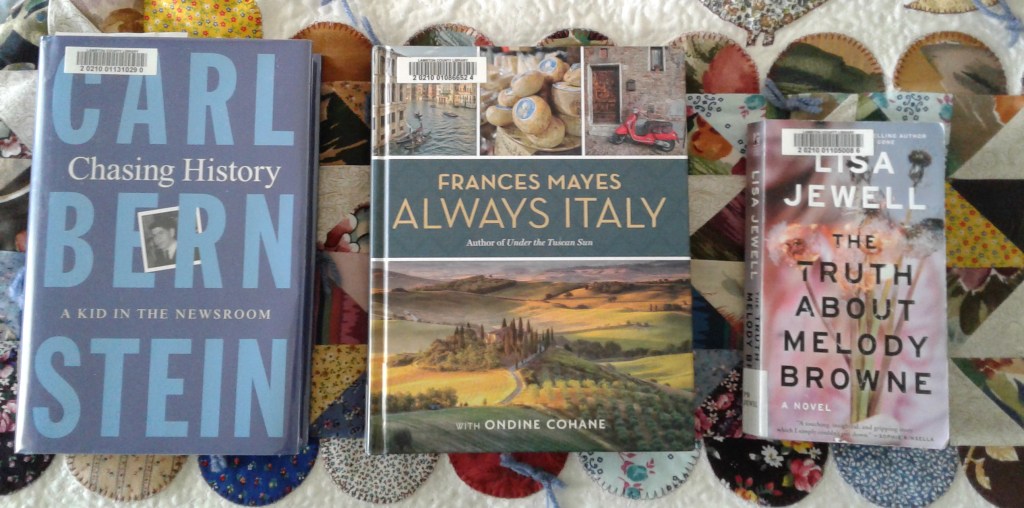
I love Frances Mayes so I was anticipating a travelogue in the vein of her usual Under the Tuscan Sun format, but this was more of a National Geographic guidebook, with sections on different parts of Italy – perfect if you were traveling there and wanted some background info on what to see and do in each region.  Unfortunately, the print was so tiny that I didn’t even skim through it.  There being no Italy in my foreseeable future, I returned it to the library, where the librarian, who has been to Italy five times (pause while I recover from turning green with envy) devoured it and pronounced it very good.   

I abandoned the Carl Bernstein book, which deals with his early years in the news industry in the 50’s and 60’s, after about fifty pages as I just didn’t find it interesting. 

The Truth About Melody Jones – is early Lisa Jewell,  2009, and yes she wrote about dysfunctional families even then.  A single mother has no memories of her life before age nine and seeks to uncover the truth behind her early life.   This was a paperback with very tiny print, but I persisted as I didn’t have anything else to read at the time.   

Bittersweet – How Sorrow and Longing Make Us Whole –  Susan Cain is the same author who brought us the wonderful 2012 non-fiction book, Quiet – a gift for introverts everywhere.  I was expecting an equally fascinating read.  I can’t even describe what this book was about, as the concept was so vague and shifting, that the book left me baffled and disappointed.  Not recommended – unless you want to wade through 300 pages looking for a few insights.   Billed as a masterpiece on the power of a bittersweet outlook on life, I would pass….and pass the dark chocolate.

This Agatha Christie autobiography was easily my favorite biography of the year, even though it was written in the 1960’s and published in 1977, a few years after the authors death.  I knew next to nothing about this elusive author, who led such a fascinating life.   See blogs – Agatha Christie – An Autobiography and Some Thoughts on Writing.

When I was growing up short stories were to be found in every periodical, even fashion bibles like Seventeen, and women’s magazines like Redbook and Ladies Home Journal.  (I used to devour my mother’s copies and not for the recipes.)  I vaguely remember short story collections coming back in favor for a brief moment in the 1980’s, but other than a few authors like Alice Munroe (who may be Canadian but I have never understood the exultation of, ditto for Margaret Atwood), they seem to have become extinct in popular fiction.  So I was surprised to see these two selections under New Releases. Maybe Tom Hanks started a trend?  Unfortunately, I abandoned both after skimming a few of the stories as they just didn’t grab me, although I admit I didn’t give the Lily King one much of a chance.  As for the Brooker Prize winner, Roddy Doyle, it was set in Dublin in the early days of the pandemic.  The first story involved a middle aged man who is diagnosed with coronary heart disease – yes, the 60’s is the decade when things start to fall apart –  and faces his own mortality.   I don’t get why he is a Brooker prize winner – when his command of English includes so much unnecessary profanity.   

Historical fiction about Jane Austen’s long neglected sister, Cassandra.  Excellent – blogged about it – see link. A first novel from this promising author.
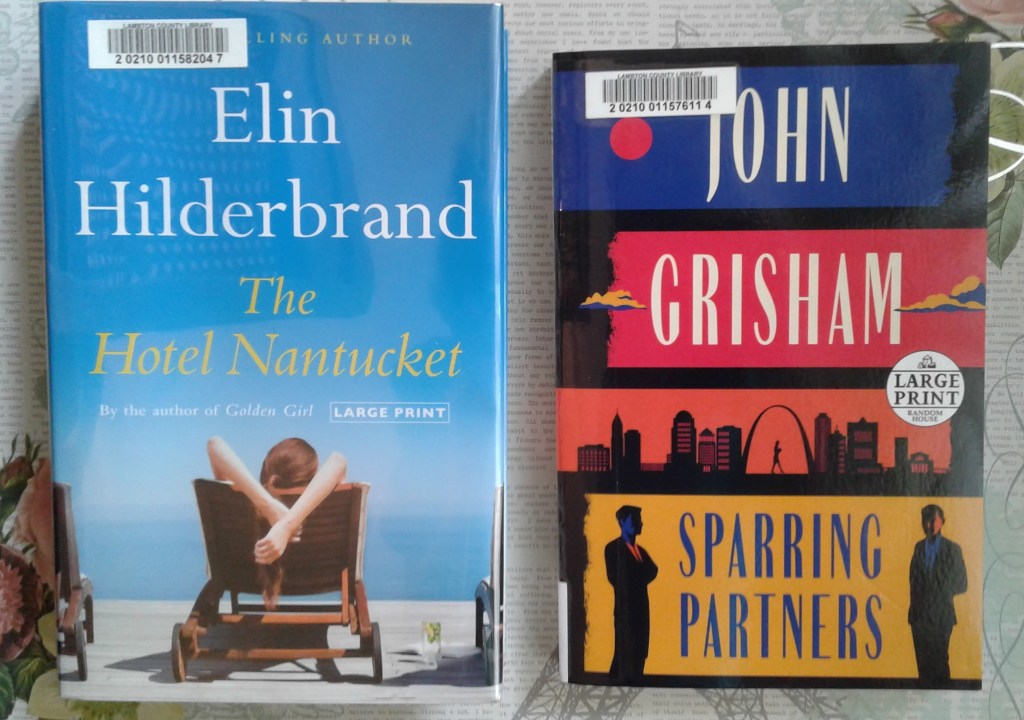
Classic Elin Hilderbrand beach read about the restoration of an old Nantucket Hotel. The usual flawed characters, with too much bed-hopping, alcohol and food, but I did like the bit about the ghost.  She keeps saying she’s going to retire, but I don’t see any sign of it as she has a book of short stores coming out soon, Endless Summer. 

Sparring Partners – a novella and two short stories, one of which is about a prisoner who receives a visitor in his final hours on death row.  Sparring Partners is about two brothers who loathe each other and inherit their father’s once prosperous law firm.  I devoured these, but then anything by John Grisham is immensely readable.  His annual legal thriller, Biloxi Blues is due out soon.  I recently read an older novel of his, The Broker, (in large print, which pleasantly passed the time while waiting seven hours in ER for a CAT scan – only in Canada, folks), which was about a DC white-collar criminal jailed over secret documents who is issued a last minute pardon during the waning days of a corrupt US presidency.  (How prescient of him, given it was written in 2005) He is provided with a new identity by the CIA and set down in the middle of Italy where he must learn to blend in and learn the language with the help of a tutor. (Ah, the food, wine and scenery, such a hardship)  The aim –  to see which foreign government will pick him off – the Saudis, the Chinese, the Russians or the Israelis?  A good read and satisfying ending.  I think back then he took more care with his endings.  

Speaking of endings, I’ll wrap this up. See you next week for Part Two.

PS. The squirrel above squirreling away books instead of nuts, reminds me that my 2018 blog, How To Make A Chestnut Wreath, is trending again. It’s my second most popular post.

Bloomsbury Girls – The Literary Salon

Historical fiction seems to be a popular genre these days, especially books set in Europe or Britain during WW2. Starting with The Nightingale by Kristen Hannah, there have been so many of this type released over the past few years it’s hard to keep track of them all, let alone read them. Another popular choice involves anything with a bookstore in it’s title. While I tend to be a sucker for these kinds of books, they sometimes don’t live up to the hype, but combine the two, and you get the absolutely delightful read, Bloomsbury Girls by Natalie Jenner.

Publishers Blurb:

The internationally bestselling author of The Jane Austen Society returns with a compelling and heartwarming story of post-war London, a century-old bookstore, and three women determined to find their way in a fast-changing world.

Bloomsbury Books is an old-fashioned new and rare book store that has persisted and resisted change for a hundred years, run by men and guided by the general manager’s unbreakable fifty-one rules. But in 1950, the world is changing, especially the world of books and publishing, and at Bloomsbury Books, the girls in the shop have plans:

Vivien Lowry: Single since her aristocratic fiance was killed in action during World War II, the brilliant and stylish Vivien has a long list of grievances – most of them well justified and the biggest of which is Alec McDonough, the Head of Fiction.

Grace Perkins: Married with two sons, she’s been working to support the family following her husband’s breakdown in the aftermath of the war. Torn between duty to her family and dreams of her own.

Evie Stone: In the first class of female students from Cambridge permitted to earn a degree, Evie was denied an academic position in favor of her less accomplished male rival. Now she’s working at Bloomsbury Books while she plans to remake her own future.

As they interact with various literary figures of the time – Daphne Du Maurier, Ellen Doubleday, Sonia Blair (widow of George Orwell), Samuel Beckett, Peggy Guggenheim, and others – these three women with their complex web of relationships, goals and dreams are all working to plot out a future that is richer and more rewarding than anything society will allow.

About the Author: Natalie Jenner was a new find of mine, after reading The Jane Austen Society, which I blogged about in 2020 (see link) – a post WW2 story about how a group of diverse villagers came together to save Jane Austen’s Chawton cottage. It was a good read for a first book, if a bit uneven, but this newest one is just brilliantly done. She must feel a great sense of satisfaction having two bestsellers, after five failed publishing attempts earlier in her life. (link) A life long lover of books, she owned an independent bookstore in Oakville, Ontario for awhile, so she knows her subject matter. She graduated from U of T with degrees in English literature and Law and worked as a corporate lawyer in Toronto, which probably came in handy for reading all those book contracts. (Translation rights sold to 20 countries.)

Discussion: This book was described by one Goodreads reviewer as Mad Men meets You’ve Got Mail. I never watched the TV show Mad Men – although I loved the fashions, I couldn’t get past the sexist attitudes, (not to mention the cigarette smoking), and abandoned it after the first few episodes. This is a 50’s book, but told from a feminist point of view.

I loved the clever way the author used the manager’s rules for employees at the head of each chapter, and then had the characters proceed to break each and every one. The characters are well drawn and not cliche, as so many of these books can be. Properly cast, it would make a good movie or tv series of the kind PBS/Masterpiece is famous for. I also liked the way she wove the real life authors and historical figures of that era into the plot. Plus it had a suspenseful but heartwarming ending. I always enjoy a bit of karma in my books.

I liked the way the author has carried forward several of the characters from her first book, including Evie Stone, the maid in the Great House at Chawton who helped to catalogue the library and then went on to study at Cambridge. Although connected, each book can be read as a stand alone. In an interview the author discusses her upcoming third book, due in 2024, where she transports one of the Bloomsbury girls to 1950’s Italy – shades of Audrey Hepburn in Roman Holiday – bring it on!

This is a book about strong women and a great read for book and bookstore lovers.

PS. While we may admire the elegant fashions of the 50’s who would want to go back to the chauvinistic rules and inequality of those years? I was lucky to grow up in the first wave of the women’s movement, with the invincible feeling that I could do anything if I worked hard enough. I think sometimes people forget what we fought for. Rise up, women of the world, rise up!

#Beach Blues – Wordless Wednesday

When those September clouds start to roll in – the end of summer blues set in.
Dock sitting seems desolate when the sky is cloudy and the river water is a dark blue. (Note how long the freighter is in the background.)
It makes you grateful when the sun comes back out and sparkles on the water.
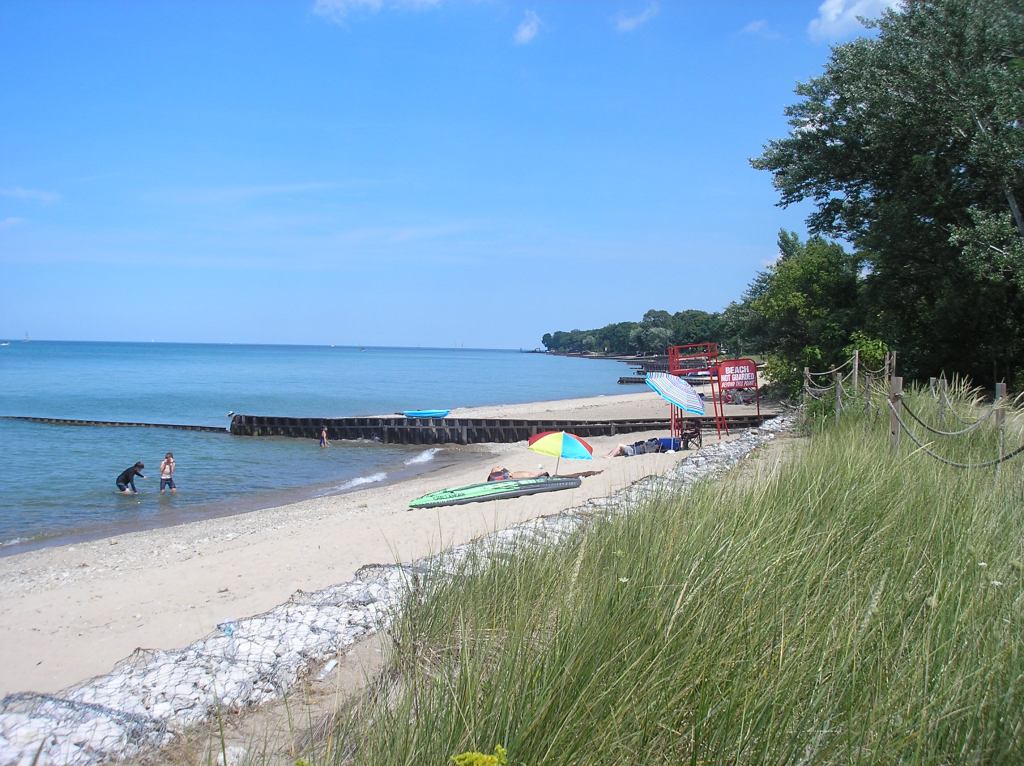
But there’s still time for one last trip to the beach.
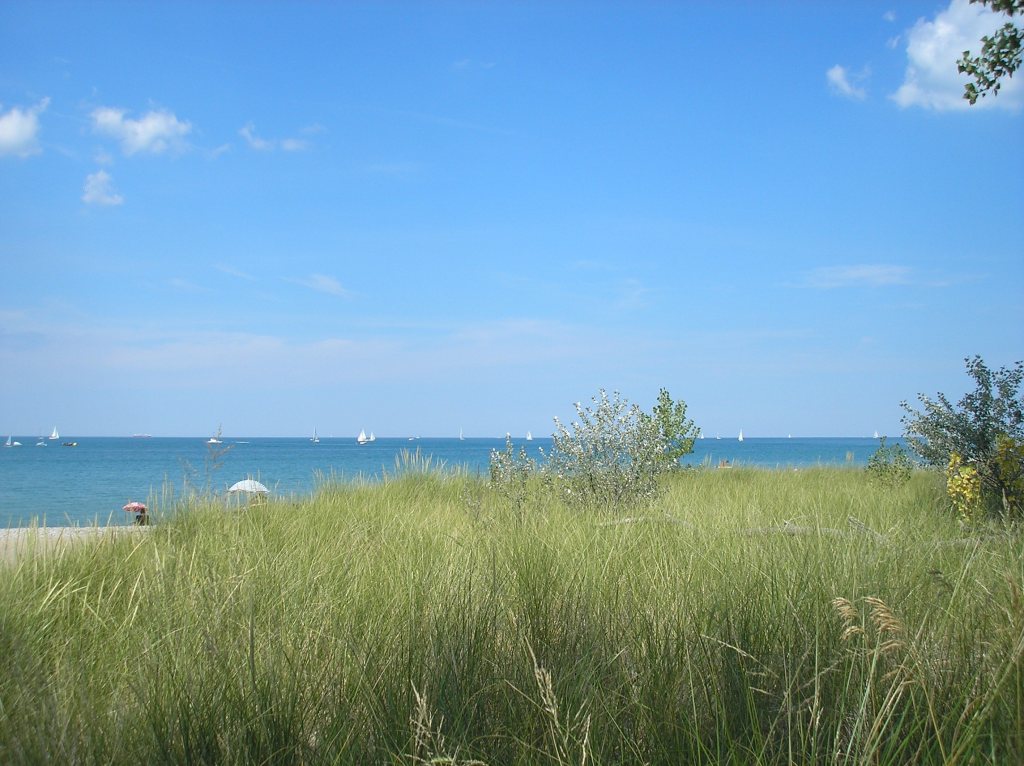
There were lots of sailboats out, behind the beach grass.
We’re lucky to have a hundred acre park with a beach right in the city. This photo is from the 1950’s before the parking lot was paved and before erosion set in.
The section in the top of the photo is private property with deeded beach rights, so you seldom see anyone walking along there. I’ll take the house with the gazebo!
There were lots of different variations of blue, depending on the intensity of the sun.
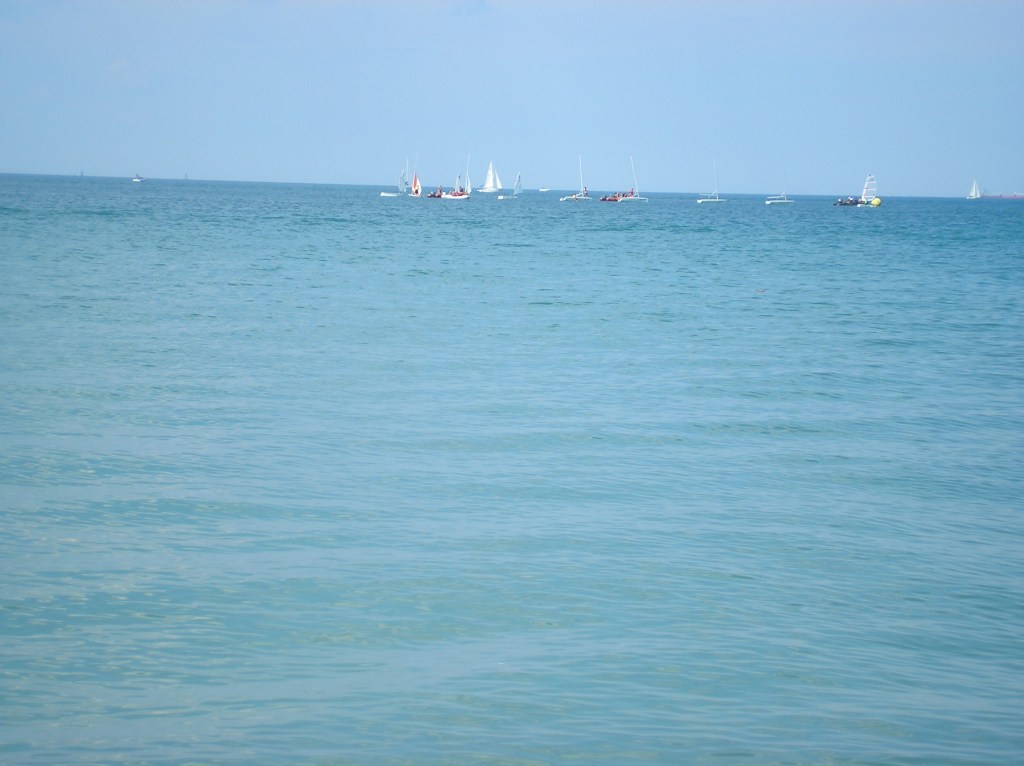
Darker blue with more sailboats.
The circle of smaller sailboats in the distance is the beginners class from the yacht club.
I like to check out all the colorful beach umbrellas.
It was a picture perfect day – something to store up until next year.

#August Flora and Fauna – Wordless Wednesday

Beach grass.
River birches along the beach. I love to watch their silver leaves blowing in the breeze off the lake.
Fall flower beds at the entrance to the park.
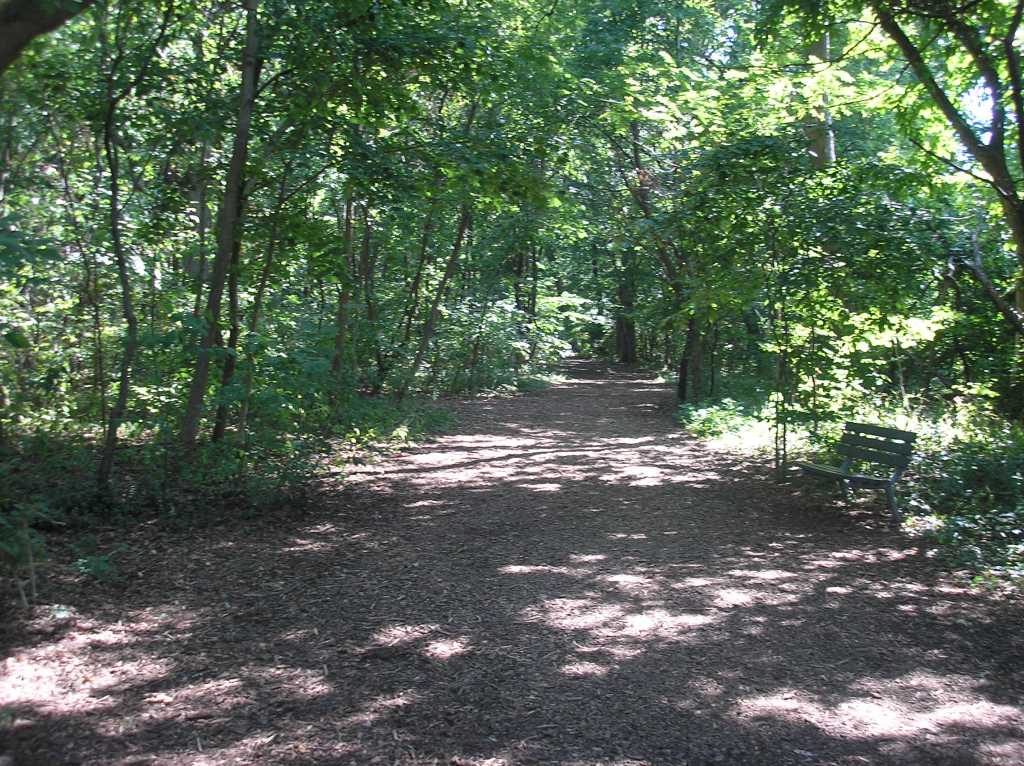
Woodland path in the park – an example of a Carolinian forest according to the sign. I intend to walk this some day when tick season is over, as it is home to a snowy white owl and many species of birds.
Another park with beautiful beds. I’m always happy to see pinks in the park.
A shady spot to sit and watch the water.
A riot of color in front of a riverside condo.
My harvest of “novelty” purple bush beans. The verdict – pretty color – tasted like a bean when sampled raw – but somehow lacking in flavor once cooked.
Zinnias for sale at the farmers market.
Walking past the dill reminds me of my mother canning pickles.
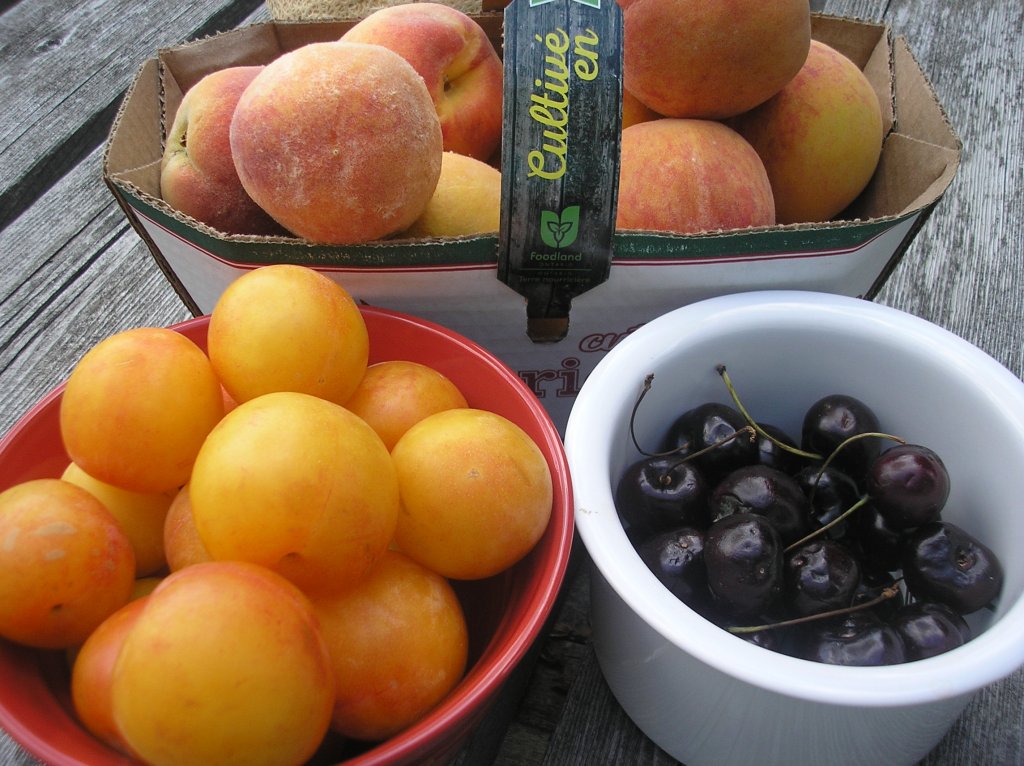
Summer fruit…..one of the best things about August.
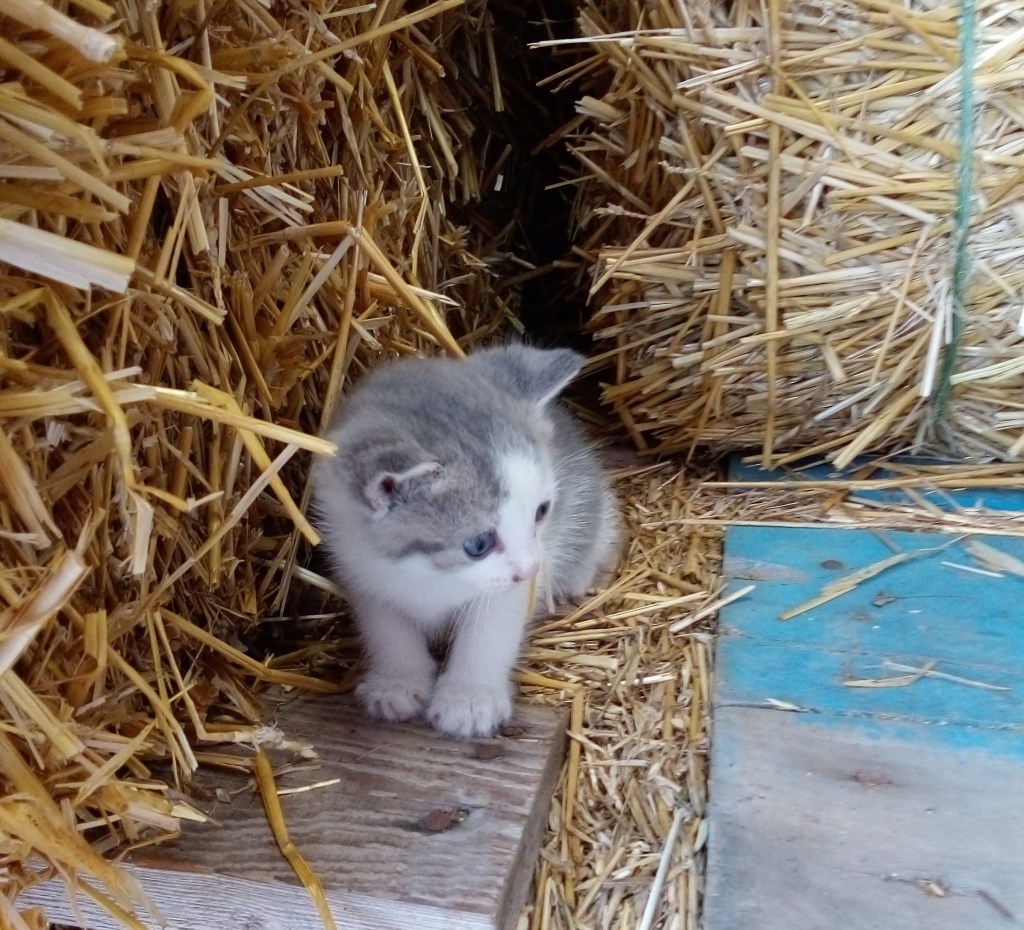
And now for the fauna part – kittens at a fruit stand out in the country.
A big attraction for the kids.
And last but not least – my new summer favorite flavor. Hey, it’s green!

My Tennessee Mountain Home – #Song of the Day

I’m not a big fan of country music or bluegrass, but this song has been stuck in my brain since I heard it on Classic Hit Parade a few weeks ago, not only for it’s catchy melody but for the imagery of the lyrics which are an ode to a porch on a summer afternoon. It might also have something to do with the crickets and fireflies which always herald August to me and the waning days of summer when evening shadows fall.

Although the lyrics are lovely, I find myself focusing on the instrumentals the more I listen, but just for fun I’ve set the lyrics to pictures.

My Tennessee Mountain Home was written and recorded by Dolly Parton in 1973 as a tribute to her childhood memories of growing up in rural Tennessee, but I much prefer Maria Muldaur’s version. Maria Muldaur was an American folk/blues/country singer, best known for her quirky 1973 hit “Midnight at the Oasis.” I remember listening to her in my dorm room and fellow boomers may recognize the album cover. So pour yourself a glass of iced tea or lemonade, pull up a chair and have a listen to the best fiddle/banjo chorus ever.

Here are the lyrics.

Photo by Kaleigh Sawers on Pexels.com

Sittin’on the front porch on a summer afternoon
In a straight-back chair on two legs leaned against the wall

Photo by Danijela Dannie on Pexels.com

Watch the kids a-playin’ with june bugs on the string
And catch the glowin’firelies when evening shadows fall

ln my Tennessee mountain home
Life is as peaceful as a baby’s sigh
In my Tennessee mountain home
Crickets singing in the fields nearby

Honeysuckle vines cling to the fences along the lane
Their fragrance makes the summer wind so sweet

Photo by Frank Cone on Pexels.com

And on a distant hilltop an eagle spreads its wings
And a songbird on a fence post sings a melody

Photo by Anthony on Pexels.com

Instrumental toe-tapping Chorus – makes you want to square dance!

Walkin’ home from church on Sunday with the one you love
Just laughin,’ talkin’ makin’ future plans
And when the folks ain’t lookin’ you might steal a kiss or two
Just sittin’ in the porch swing holdin’ hands

Repeat Chorus

I hope you have enjoyed this latest addition to my summer soundtrack!

Miss Austen – The Other Sister

Due to the perennial popularity of Jane Austen,  An Interview with Jane Austen, remains my most read post to date, but the topic of today’s blog is her much neglected sister, Cassandra Austen – keeper of the flame or literary arsonist, depending on your point of view. 

While Jane Austen died relatively young (age 41 – 1817) after enjoying a few years of moderate publishing success, her sister Cassandra lived until old age, (age 72 -1845), long enough to know that Jane’s fame would long outlive her.  Cassandra died a decade before her nephew James wrote his famous biography about his aunt which served to revive her popularity but also enshrined her reputation as a sweet and pleasant old maid.  Jane’s letters told another story – witty and often full of satire and snark, they revealed a side of Jane’s personality that Cassandra felt was best forgotten….and so she destroyed 400 of them in the  years before her death.  One can assume that Cassandra thought she was doing the right thing in preserving Jane’s legacy, but what Janeite scholars wouldn’t give for those letters!  Only 160 survive and they provide the most revealing glimpses into her personality.

But what do we know about Cassandra?  Separated by two years, Cassandra was the responsible older sister, to Jane’s more sparkling and clever personality. They were close, the only girls in a large family, with her mother famously remarking that if Cassandra decided to cut her head off, Jane would too.  Their father believed in education, and they spent time away in boarding schools, as well as learning at home where he ran a boy’s boarding school to supplement his vicar’s income.  It was here that Cassandra met her future fiance, the young reverend Tom Fowle of KINTBURY.   They were considered an ideal match, but as he was in need of money for the marriage, he signed on as a ship’s chaplain on a voyage to the West Indies and died there of yellow fever.  Cassandra was heartbroken and like Jane, never married, sharing a household with her sister and parents for the remainder of her life, first in Bath and then later after their father’s death, at Chawton Cottage.

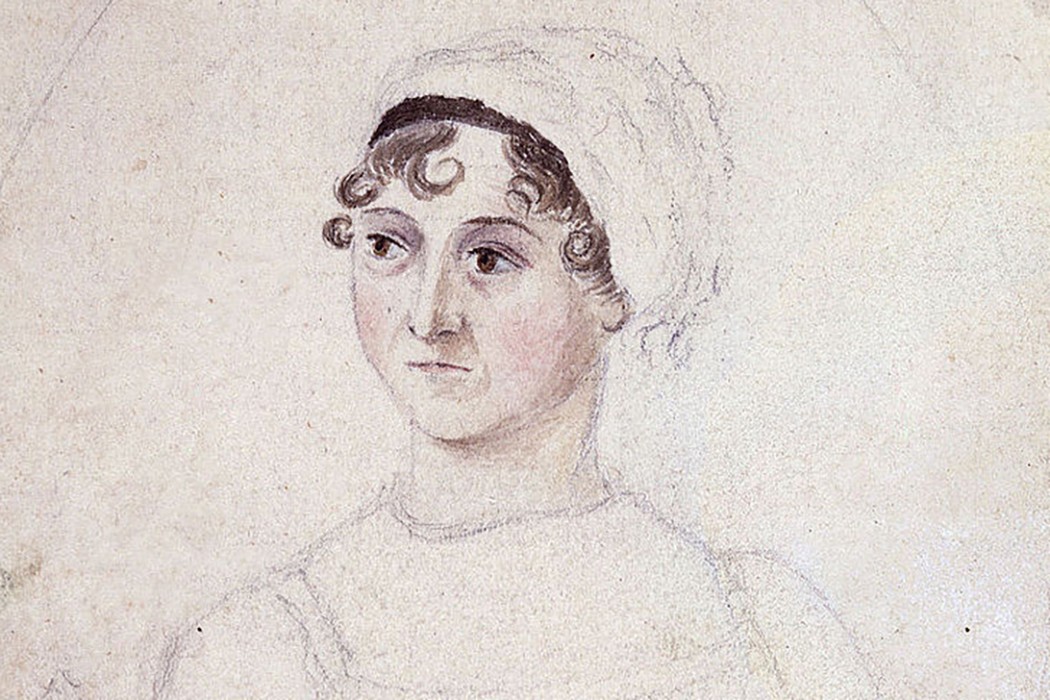
Cassandra spent a considerable amount of time at her brother’s houses assisting with childbirth (two of her SIL’s had eleven children), so the letters flew back and forth between the sisters and other family members.   Cassandra was the quiet capable one.  It was commonly acknowledged that she ran the Chawton household, which allowed Jane the time to write in her later years.  She was also the prettier of the two (the old pretty vs smart debate), and as a watercolorist, her two drawings of Jane provide the only evidence we have of her appearance.

Small 4 X 3 sketch in the National Portrait Gallery London and the basis of the later Victorian version now on the British bank notes.

As for Cassandra herself, there is only a black and white silhouette, as seen in this Ten Things to Know About Cassandra article. (link)

These are the bare facts of Cassandra’s life and about all you will get in most biographies of Jane Austen, but doesn’t it leave you curious about Cassandra? Although history relegates her to a shadowy supporting figure, did she have her own story to tell, as Gill Hornby, the author of Miss Austen, writes.

Publishers Blurb:

Whoever looked at an elderly lady and saw the young heroine she once was?

England, 1840. For the two decades following the death of her beloved sister, Jane, Cassandra Austen has lived alone, spending her days visiting friends and relations and quietly, purposefully working to preserve her sister’s reputation. Now in her sixties and increasingly frail, Cassandra goes to stay with the Fowles of Kintbury, family of her long-dead fiancé, in search of a trove of Jane’s letters. Dodging her hostess and a meddlesome housemaid, Cassandra eventually hunts down the letters and confronts the secrets they hold, secrets not only about Jane but about Cassandra herself. Will Cassandra bare the most private details of her life to the world, or commit her sister’s legacy to the flames?

Moving back and forth between the vicarage and Cassandra’s vibrant memories of her years with Jane, interwoven with Jane’s brilliantly reimagined lost letters, Miss Austen is the untold story of the most important person in Jane’s life. With extraordinary empathy, emotional complexity, and wit, Gill Hornby finally gives Cassandra her due, bringing to life a woman as captivating as any Austen heroine. 

About the Author: Gill Hornby is the author of two novels, as well as The Story of Jane Austen, a biography of Austen for young readers. She lives in Kintbury, England with her husband and children.

After noting that the author lived in Kintbury, I was inspired to find out more about her and found this fascinating article about how the book came to be.  (link) After moving to the village she discovered that she lived on the site of the old Fowle vicarage, the home of Cassandra’s fiance.  In a bit of serendipity, she was asked to write a book about Jane Austen for young readers and was drawn into Cassandra’s story.  Enjoying the same scenery that Cassandra had once viewed, the author found she began to haunt her mind – perhaps her ghost was lingering about the place, asking for her story to be told, longing for a bit of notoriety for herself.    

Discussion:

As a fan familiar with all things Austen, I found this book intriguing.  Of course, it’s historical fiction, an imagining of someone’s life, but it was surprisingly well researched and well done, which made it a believable read.        

The story is told from the point of view of Cassandra in her old age, re-visiting the Fowle vicarage after the death of her fiance’s brother in order to retrieve both her and Jane’s letters to his wife Eliza.  Interspersed are flashback chapters to the time of her engagement and subsequent grief (1795), their years in Bath where her parents retired with the added hope of finding husbands for the girls (1805), and their years alone in Chawton cottage (1913). Instead of focusing on Jane’s alleged romantic affairs, this time it is Cassandra who takes centre stage, but after meeting the perfect man at a seaside resort, Cassandra turns him down.  (It never fails to amaze me how three promenades in the company of family chaperones could net a marriage proposal, but for the sake of the plot it works.)

The dialogue and letters captured the spirit of a Jane Austen novel, and in some cases exceeded it. Here are a few excerpts. “ Once home, Jane at once sat down to her writing with an air of great satisfaction.  She had repulsed Mr. Hobday with an expert efficiency.  She could return to her invented world.”   Of course ,Jane knows it is really Cassandra he is interested in.  “What matters a bad sister off in the background.…I am quite sure I saw sparks flying off him.  I think one caught my bonnet.  Because of you and your charms, I might have gone up in smoke.”

The author presents some perfectly plausible explanations for certain episodes in Jane’s life, such as her one and only marriage proposal.  (see link to post by Caroline, JA’s great niece). When Cassandra refuses her suitor, Jane accepts a marriage proposal from Mr. Wrong in Every Way, hoping that seeing her settled will free her sister to marry herself, but changes her mind when she realizes Cassandra has no wish to marry. This decision, hastily reversed the following day after a sleepless night, has long remained a puzzle considering Jane’s well known opinion on marrying for love.

Why did Cassandra reject Mr. Right’s proposal?  After the death of her fiance she had made a pact with a vengeful God never to marry again. While spending a very quiet Christmas with her mild-mannered fiancé and his family at the Fowle rectory she realizes she has doubts, and after his death, felt those doubts were a curse of sorts. (Her fiancé had left her a small legacy which might have compounded her guilt).  Or was the pledge just an excuse when the truth was she missed her sister and her boisterous Austen family and didn’t want to be so far away from home.  Perhaps it was not true love after all but a long held expectation?

Although marriage might have been an ideal and an economic necessity for women of the time, it also meant motherhood and a high risk of death in childbirth.  Two of her SIL’s died shortly after birthing their eleventh child and Cassandra was often called in to help care for the children.  Being an aunt in those days might have seemed the safer occupation.

The sub plot of the novel concerns what will happen to the three spinster Fowle daughters after their father’s death when they must vacate their own vicarage.  The plight of the spinster in Austen’s world was often the centre of Jane’s books, but wasn’t it possible to forge a purposeful, happy and contented life without a husband or children, as the author illustrates? 

As an aging and joyless spinster Cassandra knew well that she was made fun of, but perhaps she destroyed the letters, as much to protect her own story as to hide certain aspects of Jane’s.  The other spectre raised is that of Jane’s moods and bouts of melancholy, and this is surely an interesting aspect and pure conjecture as I have never heard reference to such, but it has been the downside of many a brilliant and creative mind, particularly those who seek fame and success. 

 “Of course, their cottage (Chawton) had been a place of great joy when they had lived there together.  But that joyfulness was Jane’s natural and dominant emotion was far from the truth.  Oh the power upon reputation brought by an untimely death and a modicum of fame and success!  Still, she thought as she gathered her things, she would not contest that legend, if that was what they chose to send out to posterity.  The moodless Jane Austen.  What a splendid image.  She rose from her chair.  Now it only remained to destroy all evidence to the contrary.”

 Reading through the letters she notes, “She stumbled across references to Jane’s high spirits, remembered and smiled.  That those spirits were, sometimes, perhaps too high, that the happiness had an almost hysterical edge to it, that this tended to happen when they were in the comfort of the stable established homes of their family and friends, these were not observations that Cassandra had shared with Eliza.  She had chosen to keep them to herself.  But the other extreme of Jane’s temperament, the seemingly endless days in the darkness, these she had written of, for she had to tell someone. Cassandra licked a finger and flicked through, searching for the letters of danger.  There.  January 1805. That was where it all began…..” According to the book, their father’s death started Jane’s downward spiral into despondency, and indeed those were years when she wrote nothing at all.  

As a beloved and devoted sister and best friend, Cassandra knew that Jane would not, could not write again, until she was settled into a home of her own, so she hinted to her rich brother Edward, who owned several estates, including Godmersham Park, that they needed a place of their own – Chawton Cottage was offered and accepted, and Jane began to write and revise and publish, and the rest is history. 

After Jane’s death, Cassandra wrote, “I have lost a treasure, such a sister, such a friend as never can have been surpassed. She was the sun of my life, the gilder of every pleasure, the soother of every sorrow; I had not a thought concealed from her, and it is as if I had lost a part of myself.” 

Such a close sisterly bond is a rare and wonderful thing, so perhaps that fateful bonfire was Cassandra’s final gift to Jane after all. They were private people, and would remain private for eternity, and doesn’t that add to the mystique?

Author’s Note:  “It is a matter of family record that, in the last years of her life, Cassandra Austen looked over the letters that she and her sister had exchanged.  All those she found open and confidential – the majority of them, then – she burned.  We cannot doubt that there would have been a long and deep correspondence between both Cassandra and Jane, and the Fowle family at Kintbury.  None of this has, as yet, come to light.   The letters in this novel are entirely imagined.   The beneficiary of her will was Isabella, now married – she left 45 pounds, and to Elizabeth, the only one left unmarried, she bequeathed the extraordinary sum of one thousand pounds – presumably in reparation of that bequest she herself had received so many years before.”   

Of note, this novel is being developed into a four-hour Masterpiece miniseries.  (link) Just my cup of tea!

The author also just released a new book, Godmersham Park (link) in June – might as well ride the Jane Train while you can.   Of course, it’s all pure speculation, as the best of historical fiction is, but I’ll be ordering it anyway.

The Year of Not Gardening

It’s been a bad year for gardening. I’ve done very little other than admire the flowers which survived the harsh winter, both mine and other people’s. I lost several lavender bushes, a favorite purple clematis, two older established John Cabot/David Austen rose bushes, and most of the ever-bearing strawberry plants. Other things came up looking pathetic including my hardy Knock Out Roses which did not seem as lush this year especially the ones facing north, not to mention a half dead birch tree and lilac bush. Blame it on the weird spring, with the temperatures yoyoing up and down so much.

In early May when all the hanging baskets were out for Mother’s Day, it seemed too cold to be buying plants which I would only have to bring in and out of the garage. So I waited until it got warmer. Then it was too hot, then cool again…..by then I had waited too long to buy dipladenia – all the pink ones were sold out. I was busy was other things and then it was too late for anything, although I did scoop up three Red Twig Dogwood bushes for half price to try and replace the privacy hedge the new neighbours had cut down. (Why oh why?) Otherwise my sole flower expenditure this year was a hibiscus plant, plus some lettuce seeds (I couldn’t find seedlings), one beefsteak tomato, and a new rhubarb plant. The plus side of not having any hanging baskets is not having to water, as rain has not been as plentiful either and now in mid-July the lawns are as dry as August, although we did get a glorious rain this morning.

Here’s a mini-tour of the good and the bad.

My mothers purple geraniums, with a twenty year spread.
Her honeysuckle bush, which is almost too sweet smelling to me.
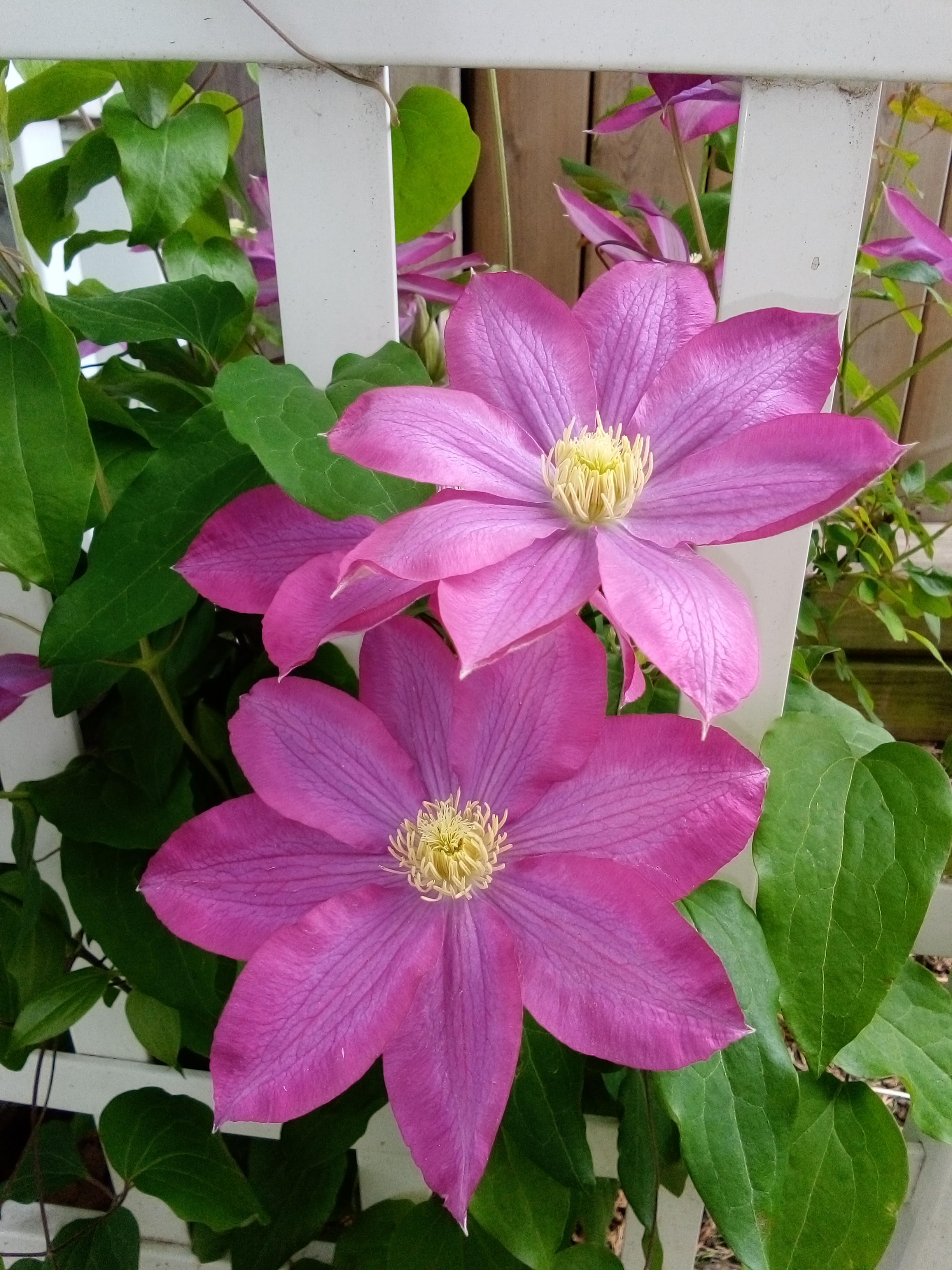
My fuchsia clematis did well and is inching it’s way up the side arbor.
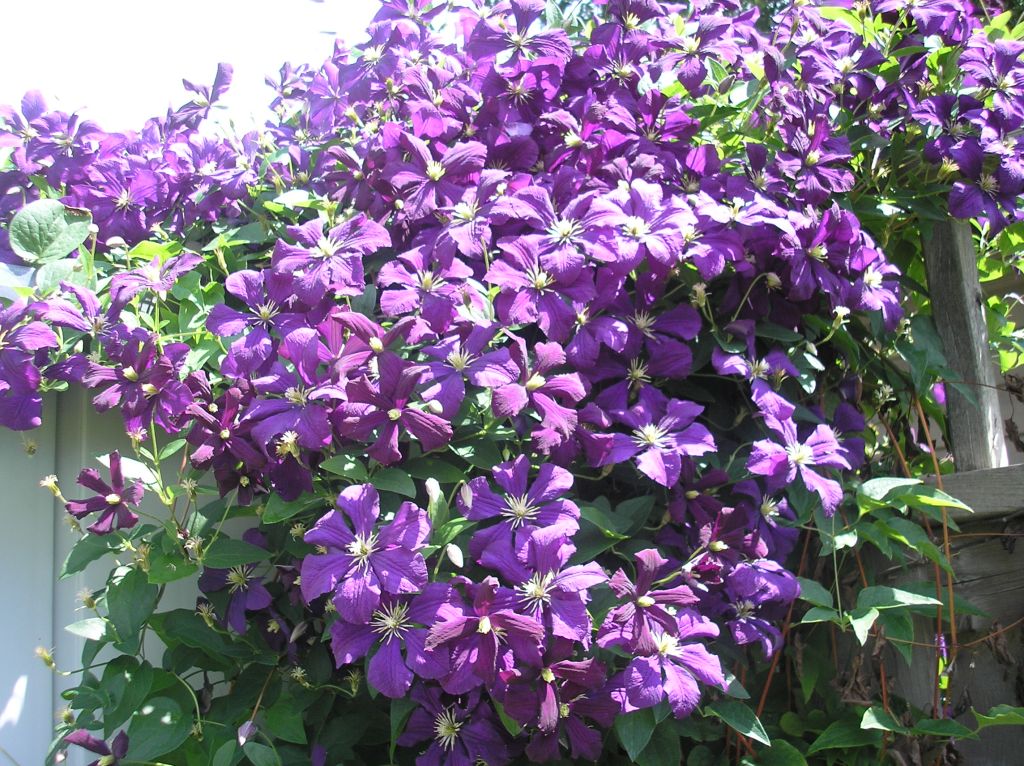
The purple clematis was very prolific too at climbing the garden shed.
I had better luck turning the hydrangeas blue this year due to a double dose of aluminum sulfate, which has gone way up in price, but note the dead lavender bush in front of it.
The rest of the lavender was meh, although the butterflies enjoyed it.
One bloom-again lilac bush did well, the other is half dead. My regular lilac bushes had very few blooms. Ignore the weeds, I did. (Note – Creeping Charlie cannot be halted without pesticides which are illegal here.)
I had five of these pink dipladenia pots last year, but they sold out early as everyone now knows they are drought resistant.
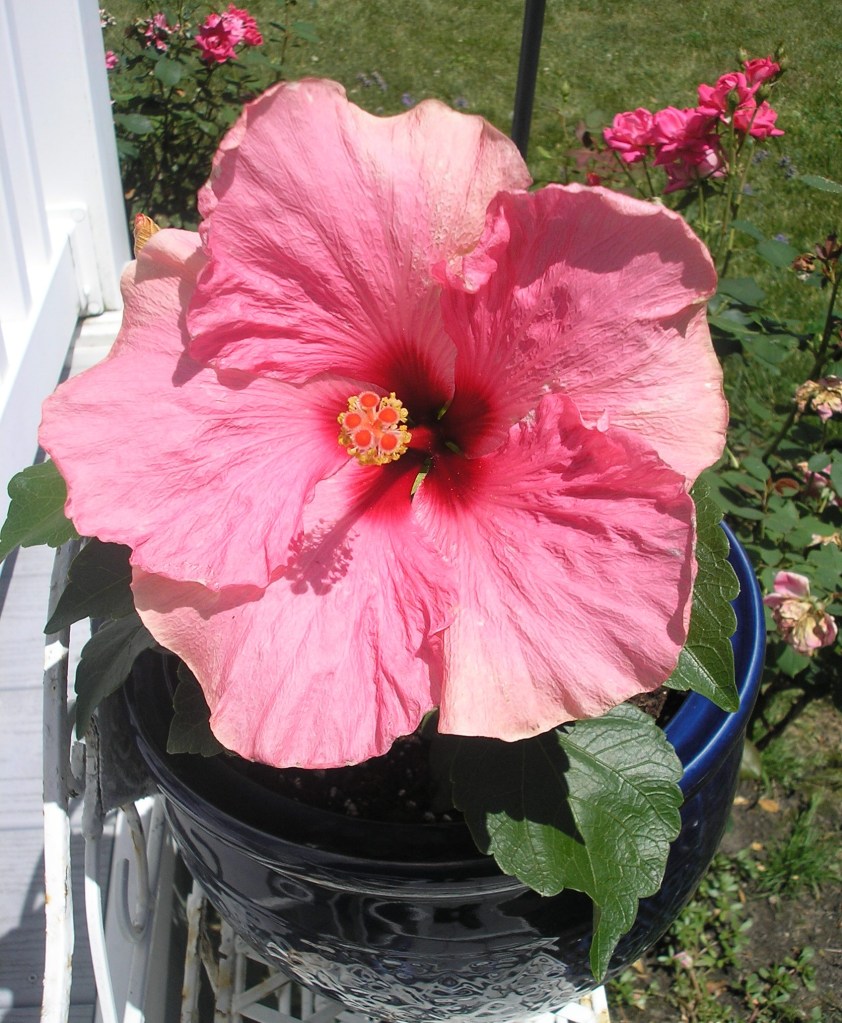
My solitary flower purchase – a pink hibiscus.
As for the vegetable garden, I planted five packages of lettuce, all different varieties, three came up, one mixed salad variety was so strangely peppery tasting that it was inedible, even to the rabbits which snuck under the chickenwire. The hardware store sold out of chickenwire so I couldn’t even reinforce it.
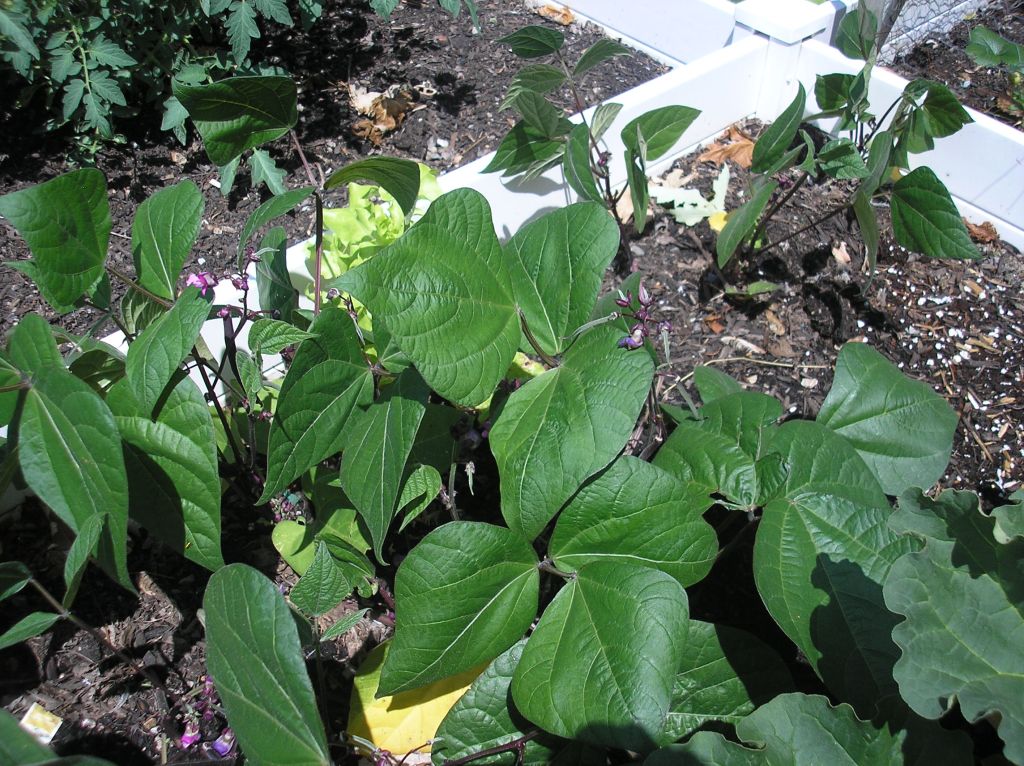
These bush beans are from a freebie packet the library was giving away as part of the One Tomato project. They are supposed to be purple but turn green when cooked….we shall see….
The rhubarb was thin and spindly, but at least the bunnies didn’t make a nest under it like they did last year. I haven’t harvested it yet. I bought another plant for next to it in case it’s lonely.
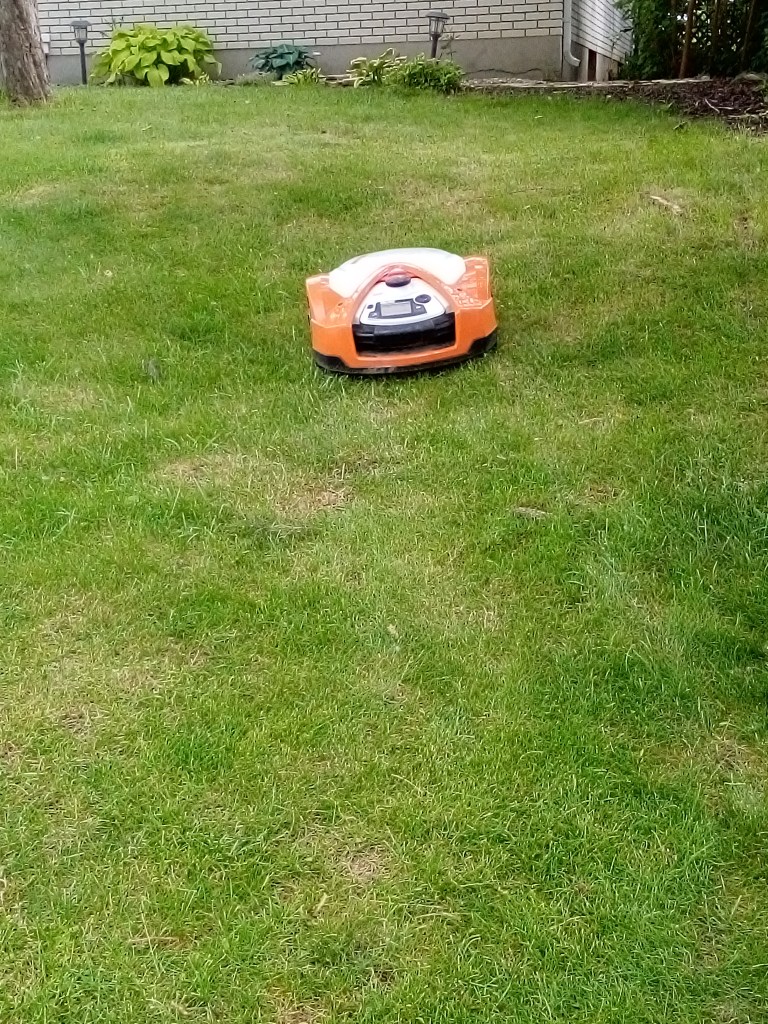
As seen in the neighborhood – a grass-cutting robot? It wasn’t doing a very good job as it was zigzagging all over and banging into trees like a drunken soldier. I’ve never heard of such a thing so maybe it was an indoor Roomba which went rogue! (I googled – The Terra is made by the same company IRobot and retails for around $1000 – it probably needed to be set up or maybe it was giddy from escaping to the great outdoors?)
And last but not least, this month’s puzzle – my kind of gardening this year!

A Garden Party – The Queen’s Jubilee

I went to a garden party….in honor of the Queen’s 70th Jubilee on Jun 4.  Canada is a commonwealth country, so I grew up singing God Save the Queen in grade school, along with our national anthem, Oh Canada.  One of my very first memories is of the Queen’s visit to my city in 1959, although as a wee tyke of three I wouldn’t have had any idea of who she was, but I do vaguely remember standing on the riverbank near the church watching the Royal Yacht glide by.  All I knew was an important person was onboard, so we had to wait…and wave.

The Guest of Honour

So when I read that the city was throwing a garden party in honour of the queen’s 70th anniversary on the throne, I went straight to the website to sign-up…..but the registration was already full, as the event was limited to only two hundred people.  So I spoke to a very nice lady at city hall who put us on the waiting list, whereby I happened to mention that my mother at 96 was the exact same age as the Queen.  (I’m not without my devious ways.)  A few days later an invitation arrived via email – Hear Ye, Hear Ye – you have been added to the Queen’s guest list.  Attendees were encouraged to dress up and wear a hat, including vintage 50’s styles from the era of the Queen’s visit.

Attendance was limited at this exclusive event as they wanted to model it after the Queen’s own garden parties. She holds three every year on the grounds of Buckingham Palace and one in Scotland – a tradition dating back to the time of Queen Victoria in the 1860’s.  The parties are by invitation only and fancy dress is required.  Tea, scones and cake are served to about 10,000 people.  It’s a way for the Queen to recognize and reward public service, and a chance for her to mingle.  This year due to mobility issues, other members of the royal party filled in. Here’s a link to more information about the Queen’s annual Garden Party.  

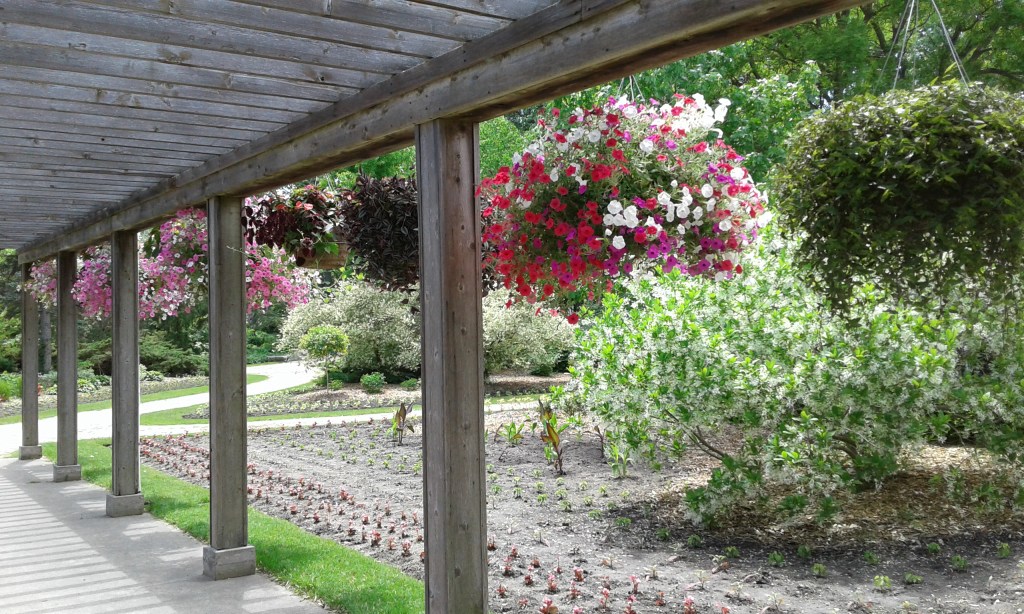
The day of the party dawned warm and sunny, with a delightful breeze – one of those perfect June days you so seldom see anymore.  The venue was a public park with beautiful gardens (I posted about Plein Air Painting here in Sept. 2019 when the flowers were at their peak) and we walked through the arbour strung with hanging baskets to the registration desk.  

Pink is my favorite color for flowers

Chairs were set up under the large shade trees for the required speeches, with every stripe of politician represented – federal, provincial, municipal.  A pipe band opened the ceremonies.

And then to the food tent – we snagged a table in the shade.  The food was wonderful…..the traditional tea party fare.

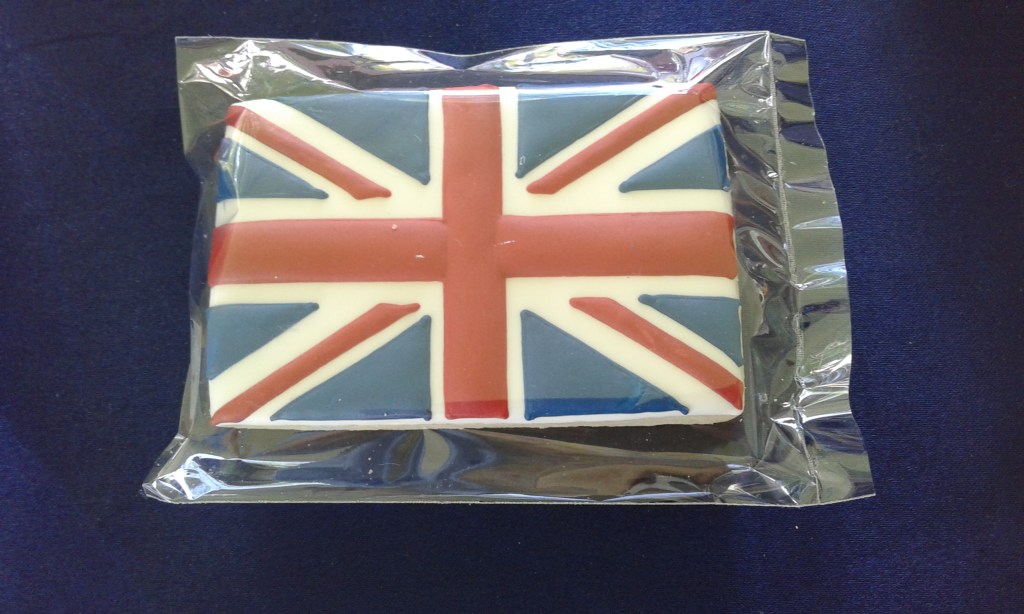
The sandwiches – salmon, tuna, egg, cucumber – were all excellent.  I tried my first cucumber sandwich – where else can you find a cucumber sandwich but at a tea party!  And scones of course, and all kinds of dessert squares, and cookies, including these special Union Jack ones.

These individually wrapped souvenirs were sugar cookies with royal icing – almost too pretty to eat, but I managed.

There were macrons in red, white and blue.  I’m always disappointed by macrons, as they look better than they taste, and aren’t they French?

There was tons of food left-over, as witnessed by the trays of sandwiches behind the tables, so I hope the food bank benefited. 

There was no cost for the tickets as the event was paid for by a heritage grant, but I wonder if some of the people who RSVP’d forgot to show up, or changed their minds, although there did seem to be a good crowd there, including a few people who were walking through the park and asked if they could join in.   

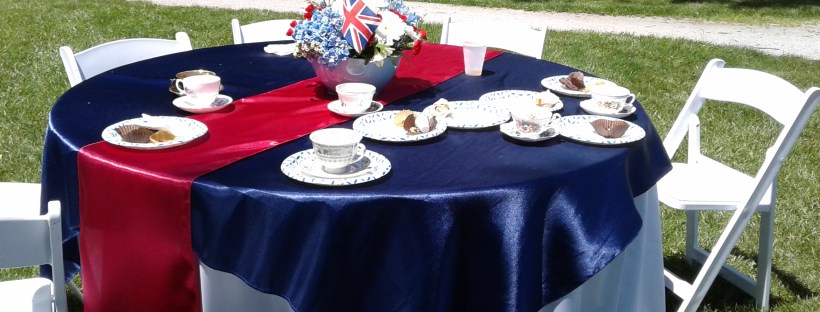
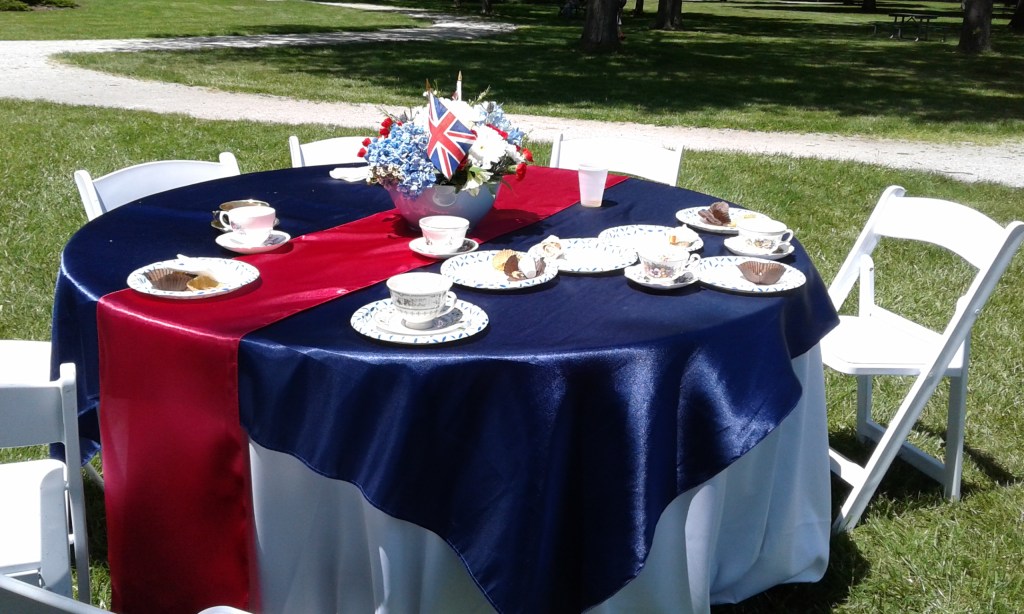
The table décor was lovely, and a few lucky souls got to take the centrepieces home.

I really liked these royal blue satin tablecloths.

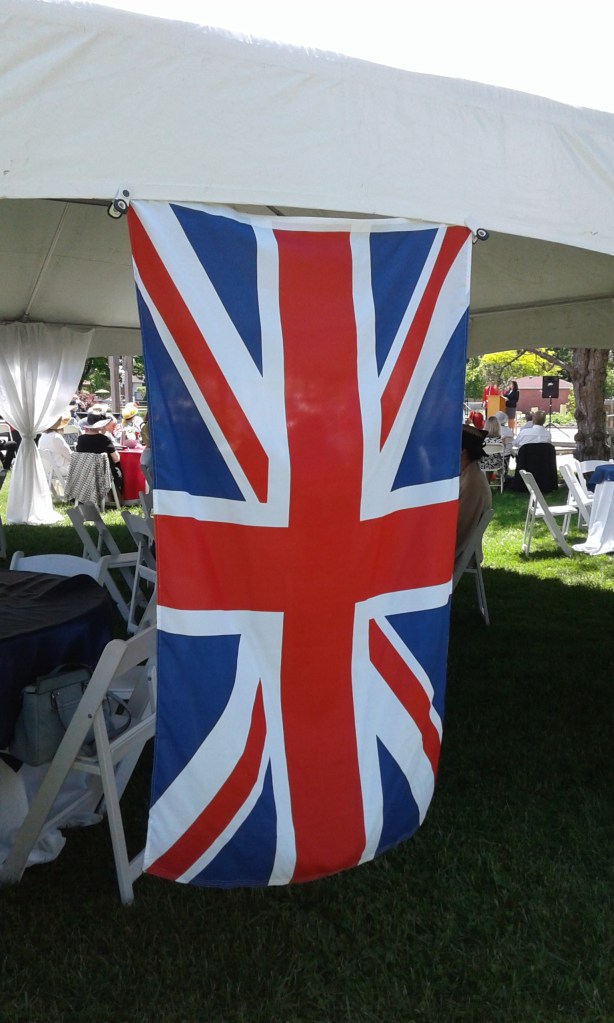
There were flags,

and tents.  Nothing says fancy summer party like a white tent.

Ladies Who Lunch in Hats

It was fun to check out people’s outfits, and their hats.

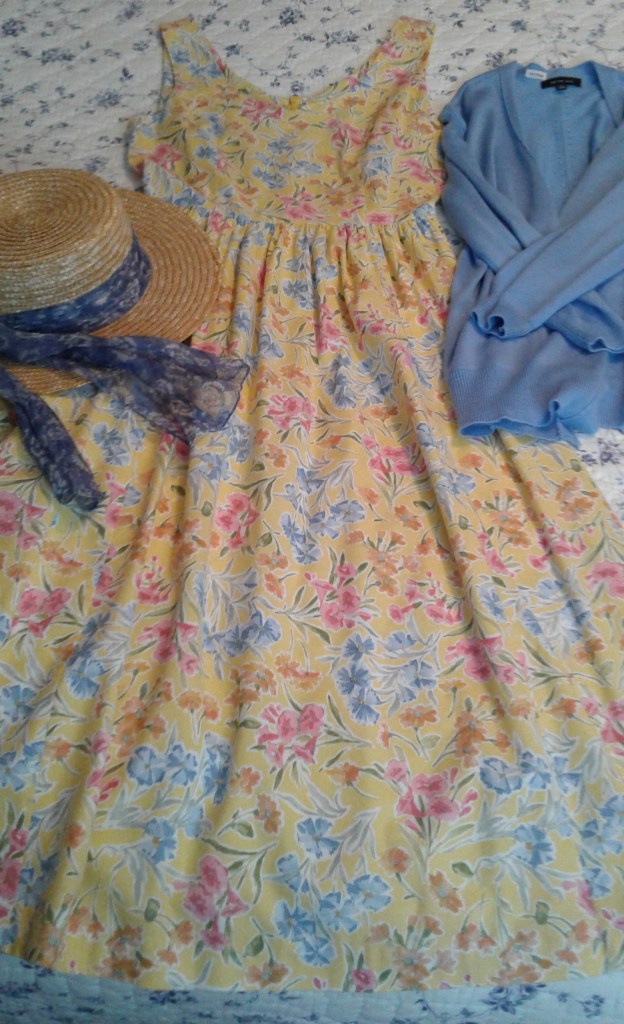
Vintage Laura Ashley (British Designer)

I wore a floral yellow dress from the 80’s, and got several comments on it, but sensibly wore flat sandals, although I did see a few people tottering around on impossibly high heels, sinking into the grass.  I’m too old for that and too afraid I’ll fall over and break something. I needed the sweater because it was cool enough in the shade, and also to cover my arms, as I don’t do sleeveless anymore. It felt strange to wear a dress again, for the first time in five years. I wasn’t too happy with my hat, an old straw relic also from the 80’s, but didn’t have time to look for anything else. Plus, I think those fascinators are silly things on most people.

A vintage clutch purse which closes with a satisfying click, like all 50’s style purses do, including the Queen’s. She has over 200 of her iconic brand, in many colors. It’s rumored that she sends secret signals to her staff with her purse, shifting it’s location to indicate that she wishes to be rescued from a conversation or wants a dinner to wrap up.

My mother’s pearls

And pearls of course, there were lots of pearls in evidence.

After lunch, there was an enactment of the Queen’s life put on by a local theatre group, with various members representing the queen at different stages in her career.  No matter what people might think of the monarchy, there’s no denying the Queen has lived a long life of dignified service, not to mention surviving all those family scandals. She must be a woman of fortitude, strength and resilience.

Afterwards, we wandered through the garden pathways admiring the baskets, although the flower beds themselves were just newly planted. 

All in all, it was a beautiful day and a wonderful party.  Long live the Queen!

Ain’t We Got Fun – The Roaring Twenties

Fun has been in short supply lately due to the pandemic, so it was with some anticipation that I attended a summer theatre production last month – a musical set in the Roaring Twenties. It was my first time in an indoor venue with 500 other people in several years, but we were lucky as we had great seats, mid-way left orchestra, and the three seats in front of us were empty.  We put my mother on the aisle, and wore our masks, although many people did not. 

The entire season from 2020 was held over until this year.  I ordered the tickets way back in February and was lucky to get a cancellation, as people are so desperate for fun after two years of lock-down, that most people held onto their seats.  It was really nice to be in a theatre again.

The stage

I’ve always been a big fan of the Roaring Twenties decade – Downtown Abbey, Fitzgerald & Company, the hairstyles and fashions of the flappers, but have to admit that other than the Charleston and a few other tunes, I didn’t know much about the music of the era. 

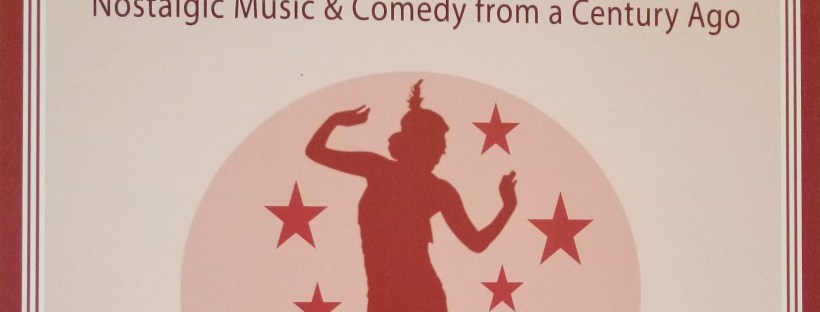
The setting was a speakeasy on New Years Eve 1928 and it was two hours of non-stop music, dancing and fun.  Here’s the songlist.

I was surprised how many of the songs I recognized (and my mother, being born in 1926, knew them all) but some of them were surprising as I associate them with other decades and singers –  like Ray Orbison’s Are you Lonesome Tonight, Guy Lombardo’s Auld Lang Syne and It Had to Be You, which I always thought of as a 50’s crooners song.

The lyrics of some of these songs seem almost quaint by today’s standards – Tea for Two and Ain’t She Sweet for example, with Let’s Do It and Making Whoppee being the most risque. Although after googling Ain’t We Got Fun – see below – perhaps the lyrics (Mr. Stork?) are not so innocent after all, but better suggestive than downright crude.

“Are you tired of smutty lyrics that make the air turn blue” says the opening song on Zoomer Media’s – Your All Time Classic Hit Parade TV show. (My mother watches this on Vision TV Channel 24 on Friday nights at 8:30 – it’s a half hour of pure nostalgia.)  Alicia Ault from the show’s trio, The Ault Sisters, played a lead role in the Roaring Twenties musical, although I didn’t realize it until after I read the playbill. The sisters look so much alike it’s hard to tell them apart.

Many of these songs are memorable even if you don’t know what time period they came from. Will the songs from today’s 2020 decade be remembered a hundred years from now?  Somehow I doubt it. When you think of all the changes music has gone through over the years, I wonder what they’ll be listening to then? (Hopefully we’ll be listening to a choir of angels.)

The costumes were lovely.  

 Yes, I know, no photos allowed in the theatre, but I did ask one of the ushers if I could take a picture of this dress.  If I ever go to a Roaring Twenties party I want a dress like that, complete with the fringe on the bottom.  Her headband was nice too.

The choreography was wonderful, ending with the Charleston,

and a toast to the New Year. I don’t know how they can sing and dance like that and not be out of breath….or in need of a beverage or two.

All in all, it was a swell performance, or in the lingo of the decade, the bees knees, the cat’s pyjamas….well you get the picture!   (Here’s a link to more slang from the 1920’s.)

PS.  The second Downton Abbey movie – A New Era, also set in 1929, is out for home viewing soon. Has anyone seen it?